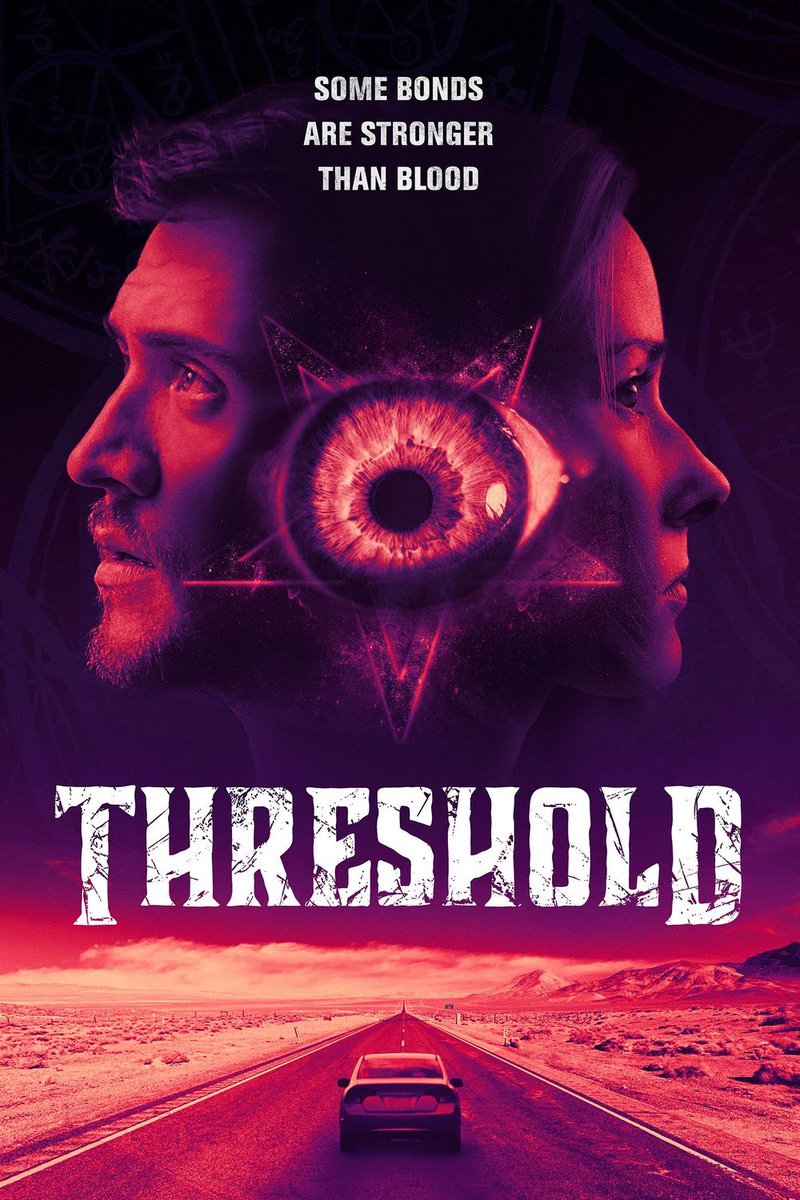
My review for #Threshold, which won for Best Horror Feature Film in the 2020 Tabloid Witch Awards ...
Virginia ( #MadisonWest ) is acting crazy again. Her family suspects she's back on drugs. She insists this time it's different. She is possessed. Not your usual demonic possession. Instead, Virginia had joined a cult where they "did something" to her and this guy. Bonded them together, in some occult fashion. Each can inhabit and experience the other's body.
This man can make Virginia do things. Hurt others. Hurt herself. She can resist. Fight him. But the bond can only be broken if one of them dies. Virginia thinks he wants to kill her for that reason. She intends to find and kill him first.
Virginia's brother, Leo ( #JoeyMillin ), thinks drugs are making her paranoid. But he humors her. He will drive Virginia across country to find this man. Presumably he's in Las Vegas. But if they don't find him, she agrees to return to rehab.
Threshold is a small, intimate film, more creepy than scary. It's structured as a road trip film, screen time largely devoted to Virginia and Leo driving to Las Vegas, laughing, fighting, and sight-seeing along the way. The few other actors have only scant lines and brief moments. Because this pair are siblings rather than lovers (as in #JeepersCreepers ), the promise of romance is removed, allowing us to fully focus on their paranormal dilemma.
Threshold is also psychological horror. We, like Leo, are uncertain if Virginia is possessed or merely hallucinating. A somber malevolence permeates the film, but the threats are intimated rather than explicit. Leo witnesses some unnerving incidents, but they are essentially harmless and could be coincidence. A cloaked figure runs past him in the hallway. Is it a cultist following Virginia, or merely a kid trying out his Halloween costume? (Yes, Threshold is set in late October).
Finally, because of the film's meandering "slow burn" plot structure, quietly menacing atmosphere, psychological complexity, and overall ambiguity, Threshold may also be classified as horror art. The following phrase is often unjustified and pretentiously self-applied, but in this case it fits: Threshold is "a thinking person's horror film."
Threshold is not strikingly original. It feels a bit like #ItFollows, in that a young person insists that an unseen terror is stalking her, to everyone's disbelief. Its ending was no surprise, reminding me of both #TheBlairWitchProject and #TheRing. (I can't explain why without spoilers.)
But originality is rare in horror. Threshold displays moody lighting and beautiful photography, despite being shot on iPhones. Principal leads West and Millan offer strong performances as the sister and brother duo. Engaging characters that will draw you into to story, wanting to see how it turns out. Some viewers might grow impatient with the film's slow pace, but, yes, Threshold is horror art.
Threshold is co-directed by #PowellRobinson and #PatrickRYoung
-- review written by Thomas M. Sipos
My review for #ImmortalReflections, which won for Best Dramatic Horror Short Film in the 2025 Tabloid Witch Awards ...
Lisa (#MartaManzoni) is interviewing Elira (#BiancaTopor), a postmortem photographer. Elira confesses to being afraid of death. But she is also enamored with the beauty of death. And with a certain chair that someone used to commit suicide with, centuries ago.
Directed by #AndreaRCiobanu, Immortal Reflections is a #VictorianGhostStory set in modern times. Its ghosts are not scary, but quiet, dignified, and melancholy. A somber atmosphere pervades the film. The sumptuous production design supports its Victorian ambiance. Colors are vivid but subdued, emphasizing shades of green (the color of growth and life?). The cinematography's soft focus contributes to the film's subdued atmosphere.
Everything about Immortal Reflections softens against painful reality. Elira tries to soften death for her clients by preserving their loved ones' memories. She tries to prepare and soften Lisa against some bad news. The film's aesthetics soften its dark "surprise ending" for the viewer. Death and its ghosts are not to be feared, but sadly embraced when met.
Immortal Reflections is a horror art film. A slow burn, old fashioned ghost story, beautifully presented, moody and memorable.
-- written by Thomas M. Sipos
#HorrorFilmContest #HorrorFilmContests #HorrorFilmAward #HorrorFilmAwards #HorrorFilmFestival #HorrorFilmFestivals #PostmortemPhotography #Ghosts #GhostFilms #GhostMovies
My review for #LoveStory, which won for Best Dramatic Horror Short Film in the 2024 Tabloid Witch Awards ...
Love Story is a perfect gem of a horror film. At under six minutes, there are no superfluous shots, dialog or mise-en-scene. Like the facets of a fine diamond, every creative element serves a purpose, contributing to the story, characters, or themes. And to a deeply unsettling, frightening ending.
We begin with a young woman (played by writer/director #BridgetBarbara) walking about her house one night. Her life seems idyllic. She is happy and smiling, obviously in love with the man sleeping in their bedroom. Her boyfriend or husband, we don't know. But then she hears an otherworldly voice.
A lot happens in this short film. Barbara's tight script conveys much. With limited dialog, we have a setup, several surprises, an intriguing character, and an unexpected final twist. It's hard to surprise a jaded viewer who's seen thousands of horror films and TV episodes, but Love Story surprises.
Nor is this final twist a simple jump scare, as in too many horror shorts. Love Story's twist changes our understanding of the woman, her goals, her relationships, even who she is. But again, in unanticipated ways. In frightening ways. But not in an arbitrary way. The final twist redefines previous events, but it also flows naturally from those events. Earlier she was making silly faces in the mirror, but now we understand why.
#DerekHaager did both cinematography and sound design, and both are first rate. His shots of the forest are dark and ominous. He also uses #DarioArgento style colored lights, but sparingly and with purpose. Just a deep pink light, limited to the bedroom, emphasizing the woman's idealization of romantic love. But this pink, which seemed idyllic at first, feels perversely creepy by the end. Once we understand what's going on, we feel differently about the woman and her pink bedroom.
As for sound design, a deep, slow, sonorous pitch underlies most of Love Story, contrasting the joyous events on screen; an ominous undercurrent threatening that joy. Then we hear the voice -- a distorted voice -- which progresses through several tonal phases, revealing new aspects about the characters. Again, the distortions are creepy, but appropriate to the story. We end on a final crescendo of music, a celebration of dark victory. As with the pink lights, this normally uplifting sound feels deeply unsettling in the context of the story.
Haager's soundtrack conveys the story's shifting moods and expectations, its emotional and dramatic turns, while also instilling fear and revealing information. It contributes much to make Love Story a frightening horror gem.
The art decor is likewise admirable. The Hummel figurines -- a boy and girl kissing -- are appropriate to the story. But as with the pink lights and music, what initially felt innocent feels sinister as the story unfolds.
Barbara is to be commended for overlooking no detail, and excising anything that doesn't serve her story, character, or themes -- which serve as the foundations of her frightening film. That's much better than a threadbare tale relying on random jump scares, the work of all too many filmmakers.
Love Story is a substantive tale told in under six minutes, making it a mini-masterpiece of horror.
-- written by Thomas M. Sipos
#HorrorFilmContest #HorrorFilmContests #HorrorFilmAward #HorrorFilmAwards #HorrorFilmFestival #HorrorFilmFestivals
In 2008, when #Cheerbleeders won the Tabloid Witch Award for Best Comedic Horror Short Film, I interviewed director Peter Podgursky, which I reprint below:
An unpopular, goth high school boy gains occult powers over the cheerleaders. He then orders the now rabid cheerleaders to attack the football team, then everyone else, so he can take over the high school. His unpopular, goth girlfriend decides that things have gone too far -- and she must stop him.
Cheerbleeders rehashes old stereotypes. The smart, bullied, dark-haired goth kids vs. the blond, bullying football jocks and cheerleaders. Filmmaker #PeterPodgursky admits that Cheerbleeders's has an obvious #Heathers influence, among many others. Heathers editor, #NormanHollyn, was one of his professor's at #USCFilmSchool, and the two discussed the films "Heatherness."
Although a USC student film, Cheerbleeders has professional production values, and is entertaining and funny. The film was shot on super 16mm film and "finished on HD Cam. The fanciest piece of gear we used was a doorway dolly." Locations included the USC campus, Podgursky's and a girlfriend's houses, and a football field in Oxnard, California.
"The big set piece is during a homecoming football game," says Podgursky. "We drove to my old high school, and shot a real homecoming game in Blackfoot, Idaho. We brought my actress with us so we could put her in the crowd shots. Both teams lent me their football gear for the movie. Then we found a lookalike football field in Oxnard to shoot at."
Podgursky wrote the lead role specifically for #LaurelVail, someone he'd known since age sixteen. "She went to high school in the next town over. We met through district drama competitions."
Lead actor #WyattFenner appeared in Podgursky's first short film at USC. "I didn't want to cast him, because he kind of looks like me. In a lot of student films, the main characters look like the filmmakers. It's weird. So I auditioned lots of actors that didn't look like me. Wyatt was friends with a girl I was seeing. She asked me to audition him. I had no intention of casting him, but he was the first guy that had the chops. He was in the acting BFA program at USC, a great program for actors.
"#MoniqueSoltani, who plays the TV reporter, was a TV reporter in Idaho for a while. She auditioned for a short I was producing before I made my own thesis. I thought it would be really fun for her to play herself in Cheerbleeders."
Podgursky has a BA in theater from Idaho State University, and now an MFA in film production from USC. "If you look at the credits of my film, you'll see a list of industry mentors. These guys and gals are my heroes. I'm so grateful they mentored me. I don't think Cheerbleeders would have been nearly as good without their input."
Cheerbleeders has screened at several film festivals. It won Best Short at the 2008 #PhoenixFearFilmFestival.
-- written by Thomas M. Sipos
#HorrorFilmContest #HorrorFilmContests #HorrorFilmAward #HorrorFilmAwards #HorrorFilmFestival #HorrorFilmFestivals
My review for #REMTheLucidDreamer, which won for Best Avant-Garde Horror Short Film in the 2015 Tabloid Witch Awards ...
A young woman falls in and out of sleep -- but when is she awake, when is she only dreaming that she is awake?
Blatantly surreal films are easy to make. Just show a series of bizarro images. Much harder is a film wherein events play on the edge, the viewer uncertain if an incident is real or a dream. In R.E.M. (The Lucid Dreamer) it's sometimes obvious the woman is dreaming, but not always. She herself is at times uncertain. Upon "waking" she tries to determine whether she's really awake or still dreaming.
As befits a horror film, the images are nightmarish. But to his credit, filmmaker #KyleJMacias offers no gore, no shocks. Shocks are easy. Instead, the woman's dream images are unsettling. They emerge slowly from the shadows, the closet, from under the bed ... then creep slowly toward her.
Lighting and sound contribute mightily to R.E.M.'s eerie atmosphere, both in how they're used, and how they're not. The sets are sparse and pedestrian. Instead of relying on weirdly surreal set décor, R.E.M. emphasizes contrasting use of light and shadows, sound and silence.
The few make-up and visual effects are simple and off-the-shelf. R.E.M. demonstrates how imagination and creativity can substitute for big budget sets and special effects.
Each year certain themes are prevalent among Tabloid Witch entries, as if something is in the air. In addition to #LucidDreaming, R.E.M. touches on the phenomenon of "#SleepParalysis" -- one of several such entries this year .
-- written by Thomas M. Sipos
#HorrorFilmContests #HorrorFilmAwards #HorrorFilmFestivals #REM #LucidDreams
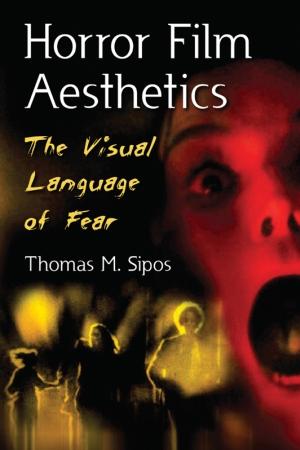
This is a book about horror film aesthetics. That sounds abstract and theoretical, but quite the contrary, this book is intended to be pragmatic. A practical and useful guide for aspiring horror filmmakers. This book analyzes how various cinematic tools -- acting, makeup, costuming, set décor, framing, photography, lighting, editing, and sound -- have been used by past films to effectively (or in some cases, ineffectively) create horror on screen.
"This book is an 'aesthetic how to' guide for horror filmmakers. Not to help them copy past films, but rather, to spark their imaginations. To expand their understanding of the horror genre -- its nature and appeal to viewers -- and their appreciation for the full creative potential of their film and video equipment. Aspiring filmmakers often read technical manuals to learn what the buttons on their cameras do, but they don't bother to learn how to use those buttons creatively. I know this as a horror film fan, critic, and journalist, and also from screening films for the Tabloid Witch Awards horror film contest and festival, which I founded in 2004 and continue to manage.
This is not a book about how to use film and video gear. This is a book about how to use film and video gear effectively. In a way that conveys your horror story and themes in a clear, entertaining, and frightening manner.
Student and independent filmmakers should find this book useful, but it is also intended for the hardcore fan. I hope this book will enable fans to 'see things' in horror films they may have previously missed, and thus gain a deeper appreciation for the genre. An appreciation that leads to greater viewing pleasures.
On Amazon: https://t.co/poBg1sXaX6
#HorrorFilmAesthetics #FilmAesthetics #HorrorFilmmaking #HorrorFilmmakers #IndependentFilmmakers #IndependentFilmmaking #Aesthetics
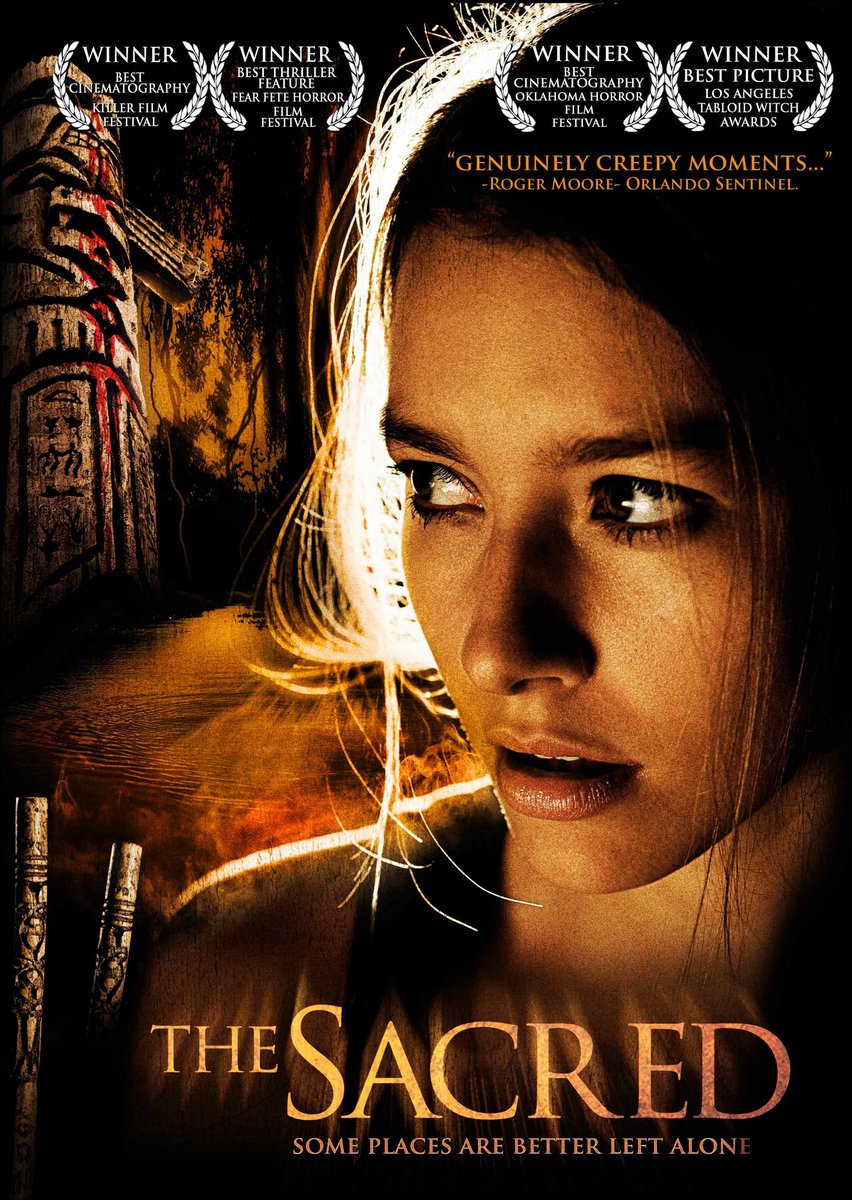
My review for #TheSacred, which won for Best Horror Feature Film in the 2010 Tabloid Witch Awards ...
Five young people enter a Florida swamp land to conduct archeological research on an extinct Native American tribe. The land was reputedly a place where this tribe executed their murderers, rapists, and other evildoers. Legend has it that all this evil spilt blood has spiritually poisoned the land. To walk safely on this tainted soil, your heart must be pure. Woe to passersby who carry dark secrets.
The young explorers scoff at the legend. They discover some old Indian sticks used in magic. One of them makes the mistake of testing these sticks -- unleashing the evil in the land. Endangering those not of pure heart.
#JoseZambranoCassella's The Sacred is an old-fashioned horror morality tale. There's some nice photography, evocative mood music, and a lush jungle backdrop.
#JohnKyle offers a standout performance as a grizzled scout who hires out his boat to take the young folk up the river. His imposing height and weather-worn face (looking part Indian) is physically ideal for the role, as is his gruff voice and laconic delivery.
#LaurenBrown is noteworthy in her role as a vain young nurse with a skeleton in her closet. Initially a self-centered bimbo, she turns terrified and agonizingly remorseful when confronted with her past sins -- and immanent death.
-- written by Thomas M. Sipos
#HorrorFilmContest #HorrorFilmContests #HorrorFilmAward #HorrorFilmAwards #HorrorFilmFestival #HorrorFilmFestivals #NativeAmericanHorror #FloridaHorror #FloridaHorrorMovies #FloridaHorrorFilms
In 2009, when #HeDiesAtTheEnd won the Tabloid Witch Award for Best Horror Feature Film, I interviewed director Damian McCarthy, which I reprint below:
A man is working in an office, late one night. He's alone. The lights are dim. His computer asks him if he'd like to know how he will die.
He Dies at the End is a simple film. One room, one actor, no dialogue, under 5 minutes. Yet in that brief time span, with those few elements, the film does everything a great horror film should do.
It establishes a creepy atmosphere, heightens suspense, and ends on a genuine scare. Many longer, bigger budgeted horror films offer less suspense and no real scares, earning He Dies at the End 2009's Tabloid Witch for Best Dramatic Horror Short Film.
He Dies at the End comes from Ireland, making this the second year that Best Dramatic Horror Short went to a foreign film. In 2008, the award went to Germany's #Vadata, another minimalist tale.
Yes, the Tabloid Witch appreciates minimalist horror. #Oculus won 2006's Best Horror Short. All three of these films were mostly limited to one room, starring one actor each. You don't need big budgets to tell a scary story.
"I wanted to make an old-fashioned supernatural horror film," says writer/director #DamianMcCarthy. "The story's universal. Everyone in the world has felt uneasy while on their own in some place.
"In the last few years, every horror film is tie them up, cut them up. Every possible way to kill someone must have been filmed; it's not scary anymore. They're fun to watch, but they don't leave you looking over your shoulder. I wanted to see if I could scare an audience with a non-violent, black and white, dialogue free film.
"Horror filmmakers have a big arsenal of ghosts, demons, monsters, the devil. He Dies at the End relies on the unknown, which is the most terrifying thing as the audience imagines all sorts of horrible possibilities."
McCarty cites #EvilDead2 and #Ringu as influences. The latter "is the most terrifying, unsettling and simple horror film ever made. It is all suggestion. If they show you something to be afraid of, it's just a glimpse or a reflection in a TV screen."
As with Oculus and Vadata, He Dies at the End makes admirable use of sound. Because there's no dialogue, sounds assume greater importance in establishing atmosphere and suspense. "Sound -- and more importantly, silence -- in Ringu was a huge inspiration for He Dies At The End," says McCarthy. "Evil Dead 2 was a big influence for it's balance between comedy and horror."
Of his sole actor, #FintanCollins, McCarthy says, "All Fintan had to rely on was his facial expressions, and his turns and glances to the door. Fintan's a true film actor. He knows the camera will pick up every little blink. He did a great job keeping things sedate in the beginning, and subtle when the horror kicks in. It would have broken the tension if it had been played with more obvious terror in his face."
McCarthy studied film and TV production at #StJohnsCollege, in Cork, Ireland. He's writing his first feature script. His next short film, Hatch, will premiere at the #NewYorkCityHorrorFilmFestival.
He Dies at the End was shot on HDV, in black and white for atmosphere. "I wanted the office to be full of shadows and dark corners," says McCarthy. "Black and white in horror movies suggests the threat is more supernatural -- like a ghost or demon. It gives the office a haunted house look. There were practical reasons too. (1) I wanted the questions posted onscreen to stand out clearly. (2) We had no money. Our monster was not exactly #HRGiger's #Alien, so we needed to keep him as dark as possible. In the end, though, I think that he did look fairly rubbish added to the whole thing."
The film was edited on Final Cut Pro. "I did the music on Garage Band. I used industrial generator and pulsing noises for the atmosphere." The film premiered at #Film4Frightfest in London. Since then "it has screened all over the world. And now the Tabloid Witch Awards Best Dramatic Horror Short, which is an amazing honor and something I am extremely proud of. I am a big fan of Oculus, a previous winner, so it's nice to have our film in such company.
-- written by Thomas M. Sipos
#HorrorFilmContest #HorrorFilmContests #HorrorFilmAward #HorrorFilmAwards #HorrorFilmFestival #HorrorFilmFestivals #IrishHorror #IrishHorrorMovies #IrishHorrorFilms
My review for #TheWitchHuntersAreComing, a British film that won for Best Comedic Horror Short Film in the 2019 Tabloid Witch Awards ...
We received several #Mocumentaries this year, parodying different television formats. The Witch Hunters Are Coming targets reality shows such as COPS. But instead of following police on patrol, this film tracks two witch hunters who work for Britain's Occult Management Department.
#Witchcraft is once again illegal in the United Kingdom. Siddarth and "Dorothy from Kansas" are tasked to investigate accused witches, collect evidence, and if circumstances warrant, terminate with extreme prejudice. Dorothy is ever prepared with her bucket of water for just such eventualities.
The Witch Hunters Are Coming succeeds on three levels. It successfully satirizes witches in popular culture, making references to Snow White and The Wizard of Oz. It also parodies #RealityTV. There's the hyper-dramatic music, the producers trying to squeeze tension from every mundane incident. The hosts who address the camera during slow moments when nothing's happening, either with filler material or a promise of something exciting soon to happen. It's all very cute and entertaining.
But we also discern a theme. The term "witch hunt" has come to mean persecution of a politically unpopular person or group. And so, on a third level, the film functions as political commentary.
By some reports, Britain is becoming an increasingly PC society, speech ever more restricted, the police and local authorities ever more intrusive. Siddarth and Dorothy work in cooperation with London's local councils (a real political entity). They are government agents going after politically unpopular -- or even imaginary? -- villains.
The Witch Hunters Are Coming can be enjoyed as an innocent comedy. Yet its thematic content, intentional or not, gives the film an added dimension, raising it above mere laughs, into something intriguing and thought provoking. Written and directed by #JamesAtkins.
-- review written by Thomas M. Sipos
#HorrorFilmContest #HorrorFilmContests #HorrorFilmAward #HorrorFilmAwards #HorrorFilmFestival #HorrorFilmFestivals #BritishHorror #EnglishHorror #WitchHunters
My review for #TheHatMan, which won for Best Horror Documentary in the 2019 Tabloid Witch Awards ...
Director #KyleJMacias is a man obsessed. He's completed several short films about #SleepParalysis and/or the Hat Man. Those are his recurring topics. (Similar to #ErichVonDaniken and his focus on #AncientAstronauts.) And so, with all that research under his belt, Macias has been building up to this: a feature length documentary on the subject.
The Hat Man is a dark figure who appears at night. He's part of that modern pantheon of strange creatures popularized by AM radio's #GeorgeNoory and the late #ArtBell. Although Hat Men most closely resemble #ShadowPeople, they also overlap with ghosts, aliens, inter-dimensional beings, #SlenderMan, #MenInBlack, the #GreenMan, et al. Macias's documentary covers some of these related creatures, including Shadow Men, #UFOAbductees, and #Djinn (i.e., #Genies).
#TheHatManDocumentedCasesOfPureEvil (the film's full title) follows a traditional documentary format. Interviews with paranormal experts and people who've seen the Hat Man. Artists sketches from those eyewitness encounters. Reenactments of Hat Man sightings. All of it set to appropriately ominous music.
It's a slick, informative, and entertaining documentary. You don't have to believe to enjoy. You can study the Hat Man as an actual supernatural creature, or you can turn off the lights on Halloween night and watch The Hat Man for goosebumps.
-- written by Thomas M. Sipos
#HorrorFilmContest #HorrorFilmContests #HorrorFilmAward #HorrorFilmAwards #HorrorFilmFestival #HorrorFilmFestivals #Paranormal #Supernatural
My review for #DisregardTheVampire, which won for Best Horror Documentary in the 2020 Tabloid Witch Awards ...
#MikeMessier is a Rhode Island based, micro-budget filmmaker. A few years ago, he attempted a feature film, Disregard the Vampire. Principal photography commenced, but was never completed due to lack of funds. Determined to salvage something from his project, Messier reedited some footage, added new interviews, and created this 40 minute record of his failed production.
(Its full title is #DisregardTheVampireAMikeMessierDocumentary, so as to distinguish it from the abandoned feature.)
There's an #EdWood quality to Messier's documentary. He comes across as a man whose ambition, enthusiasm, and promotional skills exceed his artistic reach. Like Wood, Messier has gathered a repertoire of actors and technicians who believe in him. An actress praises Messier's ability to raise funds and bring people together for a project. She suggests his promotional skills would serve well on other people's films.
Sometimes this work seems less documentary than #Mockumentary. Disregard the Vampire (the unfinished feature) was plagued with problems. A snowstorm delayed filming, thus limiting their shooting days. The lead actor dropped out due to a death in the family. At the last minute, Messier cast a lounge singer who'd never acted before. The singer opines that singing and acting are the same; it's all performing.
Well, some singers have made a successful crossover, some have not. But none of Messier's cast or crew is short on confidence. They discuss their aborted vampire project as if it were great art. Whether such self-assessments are justified, viewers must judge from the feature's clips, seen out of context and lacking a post-production polish.
Big studios often release promotional documentaries, heavy on mutual admiration and self-praise. There's some of that in Messier's documentary. But a raw honesty also shines through. Interview subjects appear unselfconsciously sincere rather than calculating. And Messier's exaltations over his grandiose creative visions are tempered with self-deprecating admissions of frustrations and failure. Overall, his documentary is a noteworthy addition to the history of low-budget, indie horror filmmaking.
-- written by Thomas M. Sipos
#HorrorFilmContest #HorrorFilmContests #HorrorFilmAward #HorrorFilmAwards #HorrorFilmFestival #HorrorFilmFestivals #VampireFilms #VampireMovies
My review for #Demon, a British film that won for Best Horror Feature Film in the 2012 Tabloid Witch Awards ...
Writer/director #MarkDuffield took on a difficult challenge for a low-budget film -- he made a period piece, placing his story in #VictorianLondon. But his creative ambition paid off. Demon is a visually resplendent English horror film that pays worthy homage to those #HammerHorror period pieces starring #PeterCushing and #ChristopherLee.
Demon is about a cursed young man (#AndrewMullan) transformed by love into a blood-sucking -- you guessed it! -- demon. Combining horror and romance, Demon resembles vampire romances such as #BramStokersDracula. As you might expect, a morally pure, beautiful young woman (#ClareLangford) falls in love with the star-crossed monster -- who in turn struggles against destroying this woman that he loves.
As Lorcan, Mullan successfully tackles a role offering a broad range of emotional nuances. When we first meet him, Lorcan is the perfect Victorian gentleman. Reserved and polite. Then loves blossoms in his heart -- and he struggles against his emerging demonic side. By film's end, Lorcan is a blood-sucking monster who wishes he weren't, who dreads harming the woman he loves, but who can't help what he is.
Make-up artist #JamesAlexander's demon looks like what a demon's supposed to look like -- claws, pointy ears, leathery wings, etc. There is nothing wrong with a traditional interpretation when aesthetically appropriate. Demon does strive for a traditional, Hammer ambiance, and Alexander's make-up well supports that goal -- and on a low budget.
Interior sets, outdoor locations (modern artifacts hidden by an admirable use of low camera angles and tight shots), costumes, and acting all contribute to Demon's #Victorian ambiance, showing both the genteel and seedy sides of #GaslitLondon. The film's music -- from starkly tense strings, to lush, tragio-romantic orchestral scores -- -- effectively supports the film's shifting dramatic turns.
-- written by Thomas M. Sipos
#DemonMovie #HorrorFilmContest #HorrorFilmContests #HorrorFilmAward #HorrorFilmAwards #HorrorFilmFestival #HorrorFilmFestivals #EnglishHorror #EnglishHorrorFilms
My review for #RondoAndBob, which won for Best Horror Documentary in the 2022 Tabloid Witch Awards...
#JoeOConnell's Rondo and Bob is a dual biography about two men who never met. Horror actor #RondoHatton (1894-1946), and #RobertABurns (1944-2004), whose long career in low-budget horror filmmaking began as an art director for #TheTexasChainsawMassacre. O'Connell uses parallel editing to contrast the dramatic and emotional similarities and differences in their lives.
Hatton was relegated to horror roles by his deformed appearance, the result of #Acromegaly. He had no particular love for horror. Acting was a gig. Burns also claimed to have no love for horror, though he made much of his living from it.
Rondo and Bob is a highly ambitious work. O'Connell's extensive research includes much archival footage and many interviews. A vast array of horror professionals and celebrities offer commentary on Hatton, Burns, and the genre itself (e.g., #DeeWallace, #StuartGordon, #FredOlenRay, #JoeBobBriggs, and too many others to mention.)
But this is not solely a talking heads documentary. O'Connell has actors recreate scenes from both Hatton's and Burns's lives. Ronda and Bob is a cinematic scrapbook composed of photos, film clips, interviews, archival footage, and recreations. One minute we're seeing Burns discuss his life, then we see #RyanWilliams portraying the adult Burns, then a photo of Burns as a child, then #JosiahSwanson portraying Burns as a child.
A unifying theme emerges, linking the two men. Both Hatton and Burns felt distanced from people. Hatton was physically deformed. Burns was likely autistic. Both men desired human connection but felt barred by personal circumstances from fully participating in human life.
Rondo and Bob is an important historical work, and an engrossing viewing experience for fans of horror and filmmaking in general.
-- written by Thomas M. Sipos
#HorrorFilmContest #HorrorFilmContests #HorrorFilmAward #HorrorFilmAwards #HorrorFilmFestival #HorrorFilmFestivals
In 2007, when #SkinDeep won the Tabloid Witch Award for Best Comedic Horror Short Film, I interviewed director Erasmo Romero III, which I reprint below:
Skin Deep is one sick puppy of a film. Perversely funny, so much so that it remains inoffensive despite its warped forays into necrophilia and infant abuse. (You might abuse "Lucy" yourself -- she is one savage baby!) Imaginative, creative, colorful, inventive, and hilarious. Many films brag about being twisted and edgy; Skin Deep delivers.
Running at 9 minutes, Skin Deep retells the #Frankenstein story (with shades of #ItsAlive) in bright, primary colors, on German expressionist sets. The protagonist is a Victorian Era mad scientist who builds the baby girl that his corpse bride can't give him. But then his stitched-together baby daughter turns medieval on him.
"Skin Deep came to mind when reading a #TwilightZone screenplay about dolls that came to life," said filmmaker #ErasmoRomeroIII. "I thought, perhaps a child should be made like a doll, to complete the false family of a man. Frankenstein was a great influence. Especially the bond between man and child/monster."
Visual influences include silent films, #CirqueDeSoliel, #BramStokersDracula, #CorpseBride, #PhantomOfTheOpera, and #GeraldBrom's artwork.
Skin Deep benefits from actor #JamesRollyson. Like any great comedic actor, Rollyson has an expressive, rubbery face that twists into a broad range of outlandish mugs. His acting is hammy, but appropriate for his satirical, over-the-top role.
Generally, comedic actors get no respect at awards time. There were certainly many fine dramatic performances to choose from this year, particularly Matt Ryan in By Appointment Only. But James Rollyson's Skin Deep co-star was a butt-ugly puppet, and still, Rollyson delivers an expressive performance that remains a delight to watch over repeated viewings. He deserves Best Actor honors.
Romero had wanted someone with a theatrical background, and had seen Rollyson perform in a piece by #JosephFontano, who puppeteered 'Lucy,' the savage infant.
Skin Deep is enlivened by its inserts of comic book cartoons and models, and by exteriors that were obviously shot on stage.
"I wanted a theatrical approach, with sharp and distinct shapes, and bold colors," said Romero. A world "set in Victorian/Edwardian attire, with splashes of #GermanExpressionism. My DP, #JosephKolber, was a miracle worker for lighting."
"The animations were hand drawn, taken into Photoshop for color, then edited into Final Cut Pro," said Romero.
He is enrolled at the #ArtInstituteOfCalifornia, Los Angeles, where Skin Deep was shot on a Sony DSR 370 MiniDV camera.
-- written by Thomas M. Sipos
#HorrorFilmContest #HorrorFilmContests #HorrorFilmAward #HorrorFilmAwards #HorrorFilmFestival #HorrorFilmFestivals
My review for #Vlad, which won for Best Horror Feature Film in the 2004 Tabloid Witch Awards (quotes from director Michael D. Sellers are from the press kit) ...
CIA spook-turned-filmmaker #MichaelDSellers revisits the #Dracula legend in Vlad, the tale of four exchange students who travel to Romania to write papers on Wallachian prince #VladTheImpaler (1431-76), the historic Dracula, popularized by #BramStoker in his 1897 novel, Dracula.
Little do the students know, they are the focus of competing conspiracies to prevent, or help, Dracula's return from undeath so he may lead post-Communist Romania to new greatness.
#BradDourif (#LordOfTheRings, #TheHazing) leads the good conspirators trying to halt Dracula and his secret society of nationalist followers. Dourif assigns #BillyZane (#TwinPeaks, #Titanic) to protect the students and retrieve Dracula's magic necklace that opens the portals of time.
Dracula is played by #FrancescoQuinn (#Platoon), who imparts a feral taint to his role. As Dracula, Quinn precedes his every statement with a delightfully subtle half-snarl, suggesting a monster beneath human form. His portrayal evokes #ChristopherLee, who likewise emphasized Dracula's beastly side, as opposed to #GaryOldman's romantic Dracula in 1992's #BramStokersDracula.
Yet storywise, Vlad resembles Bram Stoker's Dracula more so than the Lee films. Both Bram Stoker's Dracula and Vlad are at least partially rooted in history. Both films reference Dracula's war with the Ottoman Turks and his wife's suicide. Yet they take contrasting approaches to history.
Quinn's Dracula is pure monster, whereas Oldman's Dracula is motivated and redeemed by love. These contrasting approaches are underscored by the films' log lines. The log line for Bram Stoker's Dracula was "Love Never Dies." For Vlad it's "Evil Never Dies."
But despite Quinn's beastly Dracula, Vlad adds a romantic twist to events when Dracula's magic necklace causes a rip in time, transporting Ilona (#IvaHasperger), the daughter of an English mercenary who fought the Turks at Constantinople, to the students camping in a forest. Fortunately, one of the students (#NicholasIrons) speaks Middle English, and can thus communicate, and fall in love, with Ilona.
That Ilona only speaks an indecipherable (to modern audiences) Chaucerian English is a nice cinematic innovation. Normally, movie time travelers have no trouble speaking and understanding medieval English, which always sounds like stilted modern English. What's more, Hasperger and Irons speak Middle English with convincing fluency.
Likewise, Zane affects a convincing Romanian accent, with one downside. Although his character speaks fluent English, he always says "da" instead of "yes." One of film critic #RogerEbert's pet peeves is that every foreign character, no matter how fluent their English, will revert to their native tongue to say "yes." In his book of movie clichés, Ebert refers to "yes" as "the hardest word in English."
But this is the script's fault, not Zane's. The actor offers a fine, if all too short, performance as one of Dracula's adversaries.
Vlad is scripted by film director Michael D. Sellers. Sellers graduated NYU's film school in the 1970s, soon after which he began a ten-year career in the CIA. Over that time Sellers was stationed in Moscow, Ethiopia, and the Philippines. His cover in the Philippines was that of a record and film producer, and he produced several Philippine language films.
Sellers says filmmaking and espionage are similar in their use of makeup effects (for disguises, in the latter case), and in their use of psychology. Filmmakers must know psychology to create convincing characters, while intelligence officers must understand psychology to recruit people to spy for them.
Seller says, "The CIA certainly taught me how to dive into a new culture and try to get beneath the surface and understand it, and that was what I did with Romania and Vlad. On our first trip out there, I found two of the actors who play major roles in the film, #MonicaDavidescu and #EmilHostine, both of whom are major theater actors in Romania, and both of whom just took me under their wing and introduced me to people, everyone from scholars to, in Monica's case, the inhabitants of the tiny Carpathian village where she grew up."
Davidescu plays one of the students, a Romanian exile living in Paris. The remaining two students are filled by #KamHeskin and #PaulPopowich.
Dracula stalks both Heskin and Hasperger, because both blondes resemble his dead wife. But unlike Oldman with #WinonaRyder's Mina, Quinn's Dracula is crueler toward his "loves."
Seller's CIA training continues to help him learn new languages fast. "I was able to get more deeply into the [Romanian] culture in a short time than I might otherwise have been able to. Being able to pick up the language quickly helped -- even though I didn't know that much, you'd be surprised how far 1,000 words can get you, at least in terms of creating some good will and breaking down barriers. People appreciate that you take the efforts to learn their language, and they respond to the seriousness of the effort you put out."
Vlad opened September 2004 at a few Los Angeles theaters.
-- written by Thomas M. Sipos
#HorrorFilmContest #HorrorFilmContests #HorrorFilmAward #HorrorFilmAwards #HorrorFilmFestival #HorrorFilmFestivals #Vampires #VampireMovies #VampireFilms






![TabloidWitch's tweet photo. My review for #Vlad, which won for Best Horror Feature Film in the 2004 Tabloid Witch Awards (quotes from director Michael D. Sellers are from the press kit) ...
CIA spook-turned-filmmaker #MichaelDSellers revisits the #Dracula legend in Vlad, the tale of four exchange students who travel to Romania to write papers on Wallachian prince #VladTheImpaler (1431-76), the historic Dracula, popularized by #BramStoker in his 1897 novel, Dracula.
Little do the students know, they are the focus of competing conspiracies to prevent, or help, Dracula's return from undeath so he may lead post-Communist Romania to new greatness.
#BradDourif (#LordOfTheRings, #TheHazing) leads the good conspirators trying to halt Dracula and his secret society of nationalist followers. Dourif assigns #BillyZane (#TwinPeaks, #Titanic) to protect the students and retrieve Dracula's magic necklace that opens the portals of time.
Dracula is played by #FrancescoQuinn (#Platoon), who imparts a feral taint to his role. As Dracula, Quinn precedes his every statement with a delightfully subtle half-snarl, suggesting a monster beneath human form. His portrayal evokes #ChristopherLee, who likewise emphasized Dracula's beastly side, as opposed to #GaryOldman's romantic Dracula in 1992's #BramStokersDracula.
Yet storywise, Vlad resembles Bram Stoker's Dracula more so than the Lee films. Both Bram Stoker's Dracula and Vlad are at least partially rooted in history. Both films reference Dracula's war with the Ottoman Turks and his wife's suicide. Yet they take contrasting approaches to history.
Quinn's Dracula is pure monster, whereas Oldman's Dracula is motivated and redeemed by love. These contrasting approaches are underscored by the films' log lines. The log line for Bram Stoker's Dracula was "Love Never Dies." For Vlad it's "Evil Never Dies."
But despite Quinn's beastly Dracula, Vlad adds a romantic twist to events when Dracula's magic necklace causes a rip in time, transporting Ilona (#IvaHasperger), the daughter of an English mercenary who fought the Turks at Constantinople, to the students camping in a forest. Fortunately, one of the students (#NicholasIrons) speaks Middle English, and can thus communicate, and fall in love, with Ilona.
That Ilona only speaks an indecipherable (to modern audiences) Chaucerian English is a nice cinematic innovation. Normally, movie time travelers have no trouble speaking and understanding medieval English, which always sounds like stilted modern English. What's more, Hasperger and Irons speak Middle English with convincing fluency.
Likewise, Zane affects a convincing Romanian accent, with one downside. Although his character speaks fluent English, he always says "da" instead of "yes." One of film critic #RogerEbert's pet peeves is that every foreign character, no matter how fluent their English, will revert to their native tongue to say "yes." In his book of movie clichés, Ebert refers to "yes" as "the hardest word in English."
But this is the script's fault, not Zane's. The actor offers a fine, if all too short, performance as one of Dracula's adversaries.
Vlad is scripted by film director Michael D. Sellers. Sellers graduated NYU's film school in the 1970s, soon after which he began a ten-year career in the CIA. Over that time Sellers was stationed in Moscow, Ethiopia, and the Philippines. His cover in the Philippines was that of a record and film producer, and he produced several Philippine language films.
Sellers says filmmaking and espionage are similar in their use of makeup effects (for disguises, in the latter case), and in their use of psychology. Filmmakers must know psychology to create convincing characters, while intelligence officers must understand psychology to recruit people to spy for them.
Seller says, "The CIA certainly taught me how to dive into a new culture and try to get beneath the surface and understand it, and that was what I did with Romania and Vlad. On our first trip out there, I found two of the actors who play major roles in the film, #MonicaDavidescu and #EmilHostine, both of whom are major theater actors in Romania, and both of whom just took me under their wing and introduced me to people, everyone from scholars to, in Monica's case, the inhabitants of the tiny Carpathian village where she grew up."
Davidescu plays one of the students, a Romanian exile living in Paris. The remaining two students are filled by #KamHeskin and #PaulPopowich.
Dracula stalks both Heskin and Hasperger, because both blondes resemble his dead wife. But unlike Oldman with #WinonaRyder's Mina, Quinn's Dracula is crueler toward his "loves."
Seller's CIA training continues to help him learn new languages fast. "I was able to get more deeply into the [Romanian] culture in a short time than I might otherwise have been able to. Being able to pick up the language quickly helped -- even though I didn't know that much, you'd be surprised how far 1,000 words can get you, at least in terms of creating some good will and breaking down barriers. People appreciate that you take the efforts to learn their language, and they respond to the seriousness of the effort you put out."
Vlad opened September 2004 at a few Los Angeles theaters.
-- written by Thomas M. Sipos
#HorrorFilmContest #HorrorFilmContests #HorrorFilmAward #HorrorFilmAwards #HorrorFilmFestival #HorrorFilmFestivals #Vampires #VampireMovies #VampireFilms](https://pbs.twimg.com/media/HKBtUUOaYAAYugY.jpg)


