That’s good to consider. Did you see from the side view, the upper thoracic vertebrae, visibly pulsing posterior? There’s no doubt that there’s a tremendous amount of force inside his body from the bullet or some imaginary exploding microphone or something. But even though his posture is not as bad as it can sometimes be, it’s still the most curved part of his spine and he was still shot from that upward angle.
With other variables, such as being shot from such a far distance the yaw may have tilted it downward, and if it was a frangible bullet it would’ve started to further change the yaw, as it would have been cartwheeling, and it may have fragmented down and up and all directions.
Clearly, it wasn’t a round that stayed traveling in the same direction that it was shot from. So the possibility of yaw before impact, hitting soft tissue causing it to start to fragment and further cart wheeling when hitting his spine from that angle may have caused it to retain
They didn’t cover up a crime scene. After the authorities, take samples and take a bunch of pictures. Were you expecting them to leave the crime scene up till these court proceedings?
Did you know that with every crime scene it just takes two or three days for them to analyze relevant aspects of the scene take a bunch of pictures and then they cleaned it all up.
We’re in this case if there’s a ton of blood that saturated the grass instead of just watering it and leaving that area, an emotional scarf for every student walking by they decided to pave it and make it look nice and turn it into a memorial
Charlie meant a lot to many people and I think they did a wonderful service too. Make the area look nice instead of horrific blood scene to be kept up for an indefinite amount of time. Please tell us how long you wish they would’ve kept the scene up?
📐Also keep in mind that from the side view, his hunched posture, you can see that Charlie obviously has excessive “kyphosis” in his thoracic cage and slumped posture that when the bullet entered his body from an elevated position, it must’ve gone through his lower cervical vertebrae and THEN his upper thoracic vertebrae VERTICALLY DOWN HIS SPINE which explains why the [ frangible] bullet retained inside him instead of blowing through him.
If he had been shot straight on from a horizontal angle or if his posture were different and more upright, the bullet would’ve gone through a single vertebrae and probably come out the backside.
But because of this angle, it probably smashed into multiple different vertebrae vertically going down his spinal column.
On some of these views of the shot, you can actually see his T1 through T4 bulge posterior because of that dissipating expanding force from the bullet
But since it wasn’t pointed horizontally, it’s no surprise that it retained inside of him under the circumstances
You also have to acknowledge that a frangible bullet is designed to fragment upon impact, but all these people, posting tests of .30 .06 online are using a regular round which is designed to penetrate through.
and a lot of these research studies indicate that from such a far distance away, the yaw of the traveling bullet can be offkilter and already tilting downward, then when it hits tissue and starts to fragment, it starts to tumble or cartwheel, and by the time it hit his vertebral column going downward, a lot of the force gets retained inside of him instead of having to blow through
Evidence shows that Miss caliber of rifle can definitely stay retained inside a human body upon impact. But you are spending a baseless claim that it’s impossible. What if the bullet was frangible? What if also he was hit from a high trajectory and Charles slip posture put his spine in a position that made the bullet penetrate vertically downward deeper into a torso?
Have you explored these concepts or just creating fairytales?
✅Multiple peer-reviewed studies in medical journals confirm that high-velocity bullets like those from .30-06 rifles can fail to exit, especially with frangible style bullets, and bone impact:
On high-velocity rifles and no exit: “High-velocity rifle bullets can cause damage both directly in the permanent cavity created by their path and in the temporary cavity formed by energy transfer due to tumbling or deformation of the bullet… A penetrating wound is one where the bullet enters the body or a structure but does not exit.”
• On spine/bone impact causing no exit: “Sometimes, due to bone obstruction the bullet remains in the body… The bullet remains intact unless it hits a bone, and fragmentation is minimal.”
https://t.co/XFCxiGB5bb
• A 2022 review in Emergency Medicine International on gunshot wound ballistics shows retained bullets in high-velocity injuries, noting that soft-point or hollow-point ammunition expands rapidly (up to 1.5-2x diameter), creating larger wound channels but dissipating kinetic energy faster, often leading to no exit. In cases involving the spine, the dense vertebral bone can cause yaw (tumbling), fragmentation, or deflection, halting penetration. The authors cite autopsy data where retained bullets were common in torso/neck shots from rifles like the .30-06, even at ranges of 100-300 yards where velocity remains high but angle affects outcome.
• A 2010 study in Legal Medicine describes a similar caliber to .30-06 followed a non-linear trajectory after facial entry, deflecting off bone and retaining in the parapharyngeal space without exit. The authors attribute this to impact angle causing instability and energy loss, common in spinal-adjacent hits.
• In a 2015 J of Neurosurgery: Spine case of a combat-related .30-caliber intradural gunshot to the thoracic spine, the bullet was retained in the spinal canal after vertebral fracture, with no exit due to bone absorption of energy. Expanding bullets exacerbate this by mushrooming on bone contact.
• A 2023 ACS Case Reviews in Surgery report on a cervical spine gunshot details a retained bullet..no exit, due to oblique angle and bone deflection—mirroring scenarios where a .30-06 hits the spine from a distance (e.g., 100-200 yards, where velocity drops to ~2,200-2,500 fps, reducing penetration).
• Pathology Outlines (2021) notes that rifle bullets can be retained w/out exit if they fragment or deflect on bone like vertebrae, especially w expanding tips that prioritize tissue disruption over pass-through.
Expanding Bullets (e.g., Soft-Point or Hollow-Point): These “spread open on impact. increasing frontal area and drag. A 2012 U.S. Army Research Lab report on .30-06 ballistics states that soft-point loads (common for hunting) expand reliably, limiting penetration..often insufficient for exit in thicker torsos or after bone hits. In humans/animals, this can result in retention, especially if the bullet yaws after spinal impact.
• .30-06 reduced loads notes they mushroom well but penetrate less (10-15 inches in tissue), increasing retention likelihood without exit, particularly at distances >100 yards where air drag further slows the bullet.
• Dense bone like vertebrae absorbs ~30-50% of kinetic energy, cause ricochet or tumbling. At 200 yards, velocity loss combined w expansion makes exit less likely.
https://t.co/Kr7zkvFftw
📐Also keep in mind that from the side view, his hunched posture, you can see that Charlie obviously has excessive “kyphosis” in his thoracic cage and slumped posture that when the bullet angle entered his body from an elevated position, it must’ve gone through his lower cervical vertebrae and THEN his upper thoracic vertebrae VERTICALLY DOWN HIS SPINE which explains why the [ frangible] bullet retained inside him instead of blowing through him.
If he had been shot straight on from a horizontal angle or if his posture were different and more upright, the bullet would’ve gone through a single vertebrae and probably come out the backside.
But because of this angle, it probably smashed into multiple different vertebrae vertically going down his spinal column.
On some of these views, you can actually see his T1 through T4 bulge posterior because of that dissipating expanding force from the bullet
Yes, please explain how they did not account for the high angle at which the shot was traveling and his slumped posture which shows the force would’ve been going down his spinal canal. Also hitting soft tissue first with a frangible bullet means it would’ve immediately started to fragment and cartwheel, which means upon hitting his vertebral column. It would’ve already been changing direction completely
If you watch the impact happen on Charlie from a side view, you can see his upper thoracic bones bulge posterior because of the dramatic amount of dissipating force hitting those bones.
Had he been struck from behind? It would’ve gone through a tiny bit of skin and hit a vertebrae and it would have caused more of an explosion impact.
Had someone shot him from below upward or if she had much more upright posture and leaning back and had Tyler shot him from straight on it would’ve gone through a single vertebrae and probably come out the back
Any questions?
Exactly. And he’d have to tell each of the skillets several degrees to replicate the high angle at which Tyler shot down from. Then if you look at Charlie’s slumped posture, the bullet would have hit the soft tissue started to cartwheel, and upon hitting his cervical vertebrae it would have penetrated downward through his other upper thoracic vertebrae dissipating most of the force. The direction of the bullet immediately shifts when it impacts such a high angle. That could’ve been at least 12° combined between the angle they were shot from and his slumped posture.
I’ve seen people actually do a correct analysis and showing this. I just can’t find the reference right now.
OK now do it while angling the skillet at a 12° angle. The experiment would obviously fail because the bullet direction would “yaw” and “tumble” into a cartwheel, and upon hitting the second skillet, the bullet would already be facing down and not hit it with the sharp tip.
Now look at the high angle that Charlie was shot from combined with his posture and you’ll see that you can’t just invent some random implausible scenario and then think it matches.
✅👉Upon impact it must’ve gone through his lower cervical vertebrae and THEN his upper thoracic vertebrae VERTICALLY DOWN HIS SPINE which explains why the [ frangible] bullet retained inside him instead of blowing through him.
If he had been shot straight on from a horizontal angle or if his posture were different and more upright, the bullet would’ve gone through a single vertebrae and probably come out the backside.
But because of this angle, it probably smashed into multiple different vertebrae vertically going down his spinal column.
On some of these views, you can actually see his T1 through T4 bulge posterior because of that dissipating expanding force from the bullet
✅Multiple peer-reviewed studies in medical journals confirm that high-velocity bullets like those from .30-06 rifles can fail to exit, especially with frangible style bullets, and bone impact. PubMed-indexed articles emphasize that while high-velocity projectiles create temporary cavitation and often pass through, variables like bullet expansion and skeletal hits increase the likelihood of retention:
On high-velocity rifles and no exit: “High-velocity rifle bullets can cause damage both directly in the permanent cavity created by their path and in the temporary cavity formed by energy transfer due to tumbling or deformation of the bullet… A penetrating wound is one where the bullet enters the body or a structure but does not exit.”
• On spine/bone impact causing no exit: “Sometimes, due to bone obstruction the bullet remains in the body… The bullet remains intact unless it hits a bone, and fragmentation is minimal.”
https://t.co/XFCxiGB5bb
• A 2022 review in Emergency Medicine International on gunshot wound ballistics discusses retained bullets in high-velocity injuries, noting that soft-point or hollow-point ammunition expands rapidly (up to 1.5-2x diameter), creating larger wound channels but dissipating kinetic energy faster, often leading to no exit. In cases involving the spine, the dense vertebral bone can cause yaw (tumbling), fragmentation, or deflection, halting penetration. The authors cite autopsy data where retained bullets were common in torso/neck shots from rifles like the .30-06, even at ranges of 100-300 yards where velocity remains high but angle affects outcome.
• A 2010 study in Legal Medicine describes a high-velocity rifle bullet (similar caliber to .30-06) that followed a non-linear trajectory after facial entry, deflecting off bone and retaining in the parapharyngeal space without exit. The authors attribute this to impact angle causing instability and energy loss, common in spinal-adjacent hits.
• In a 2015 Journal of Neurosurgery: Spine case of a combat-related .30-caliber intradural gunshot to the thoracic spine, the bullet was retained in the spinal canal after vertebral fracture, with no exit due to bone absorption of energy. Expanding bullets exacerbate this by mushrooming on bone contact.
• A 2023 ACS Case Reviews in Surgery report on a cervical spine gunshot details a retained bullet..no exit, due to oblique angle and bone deflection—mirroring scenarios where a .30-06 hits the spine from a distance (e.g., 100-200 yards, where velocity drops to ~2,200-2,500 fps, reducing penetration).
• Pathology Outlines (2021 forensic guide) notes that rifle bullets can be retained w/out exit if they fragment or deflect on bone like vertebrae, especially with expanding tips that prioritize tissue disruption over pass-through.
Expanding Bullets (e.g., Soft-Point or Hollow-Point): These “spread open on impact. increasing frontal area and drag. A 2012 U.S. Army Research Lab report on .30-06 ballistics states that soft-point loads (common for hunting) expand reliably, limiting penetration..often insufficient for exit in thicker torsos or after bone hits. In humans/animals, this can result in retention, especially if the bullet yaws after spinal impact.
• Reduced Recoil Loads: These use lighter powder charges, dropping velocity (e.g., from 2,800 fps to 2,200-2,400 fps), which reduces penetration depth. A 2016 discussion in The High Road (forensic/ballistics forum) on .30-06 reduced loads notes they mushroom well but penetrate less (10-15 inches in tissue), increasing retention likelihood without exit, particularly at distances >100 yards where air drag further slows the bullet.
• Dense bone like vertebrae absorbs ~30-50% of kinetic energy, per a 1999 Duke University review on ballistic wounding. Oblique angles cause ricochet or tumbling. At 200-300 yards, velocity loss combined w expansion makes exit less likely.
https://t.co/Kr7zkvFftw
This shot is perpendicular to the posture of the dummy and not connected to body. The shot from Tyler to Charlie was at a downward angle, and Charles posture was slim forward, which means the majority of the energy went vertically down his neck into his upper thoracic and upon impact it undoubtedly cartwheeled and upon hitting several of the front aspect of his vertebral bodies of his lower neck and upper thoracic the energy dispersed outward enough to show that his upper thoracic visibly post posterior as you can see from the lateral view when he was shot. You can literally see his back upper bones, pulse backwards stretching his skin. You can see the energy dispersed inside, even pushing fluid up to make the hair on the back of his head shoot up momentarily.
Had he been shot sitting up straight and someone shooting from a lower angle upward it would’ve gone through a single vertebrae and blasted out the back.
✅Multiple peer-reviewed studies in medical journals confirm that high-velocity bullets like those from .30-06 rifles can fail to exit, especially with frangible style bullets, and bone impact. PubMed-indexed articles emphasize that while high-velocity projectiles create temporary cavitation and often pass through, variables like bullet expansion and skeletal hits increase the likelihood of retention:
On high-velocity rifles and no exit: “High-velocity rifle bullets can cause damage both directly in the permanent cavity created by their path and in the temporary cavity formed by energy transfer due to tumbling or deformation of the bullet… A penetrating wound is one where the bullet enters the body or a structure but does not exit.”
• On spine/bone impact causing no exit: “Sometimes, due to bone obstruction the bullet remains in the body… The bullet remains intact unless it hits a bone, and fragmentation is minimal.”
https://t.co/XFCxiGB5bb
• A 2022 review in Emergency Medicine International on gunshot wound ballistics discusses retained bullets in high-velocity injuries, noting that soft-point or hollow-point ammunition expands rapidly (up to 1.5-2x diameter), creating larger wound channels but dissipating kinetic energy faster, often leading to no exit. In cases involving the spine, the dense vertebral bone can cause yaw (tumbling), fragmentation, or deflection, halting penetration. The authors cite autopsy data where retained bullets were common in torso/neck shots from rifles like the .30-06, even at ranges of 100-300 yards where velocity remains high but angle affects outcome.
• A 2010 study in Legal Medicine describes a high-velocity rifle bullet (similar caliber to .30-06) that followed a non-linear trajectory after facial entry, deflecting off bone and retaining in the parapharyngeal space without exit. The authors attribute this to impact angle causing instability and energy loss, common in spinal-adjacent hits.
• In a 2015 Journal of Neurosurgery: Spine case of a combat-related .30-caliber intradural gunshot to the thoracic spine, the bullet was retained in the spinal canal after vertebral fracture, with no exit due to bone absorption of energy. Expanding bullets exacerbate this by mushrooming on bone contact.
• A 2023 ACS Case Reviews in Surgery report on a cervical spine gunshot details a retained bullet..no exit, due to oblique angle and bone deflection—mirroring scenarios where a .30-06 hits the spine from a distance (e.g., 100-200 yards, where velocity drops to ~2,200-2,500 fps, reducing penetration).
• Pathology Outlines (2021 forensic guide) notes that rifle bullets can be retained w/out exit if they fragment or deflect on bone like vertebrae, especially with expanding tips that prioritize tissue disruption over pass-through.
Expanding Bullets (e.g., Soft-Point or Hollow-Point): These “spread open on impact. increasing frontal area and drag. A 2012 U.S. Army Research Lab report on .30-06 ballistics states that soft-point loads (common for hunting) expand reliably, limiting penetration..often insufficient for exit in thicker torsos or after bone hits. In humans/animals, this can result in retention, especially if the bullet yaws after spinal impact.
• Reduced Recoil Loads: These use lighter powder charges, dropping velocity (e.g., from 2,800 fps to 2,200-2,400 fps), which reduces penetration depth. A 2016 discussion in The High Road (forensic/ballistics forum) on .30-06 reduced loads notes they mushroom well but penetrate less (10-15 inches in tissue), increasing retention likelihood without exit, particularly at distances >100 yards where air drag further slows the bullet.
• Dense bone like vertebrae absorbs ~30-50% of kinetic energy, per a 1999 Duke University review on ballistic wounding. Oblique angles cause ricochet or tumbling. At 200-300 yards, velocity loss combined w expansion makes exit less likely.
https://t.co/Kr7zkvFftw
You get off to a bad start by exaggerating easily verifiable claims. Tyler did have a lot of shooting experience as it was told by his family. A coworker has testified that Tyler bragged about being a marksman and a good shot. His family owned guns and went out shooting. He didn’t have to be a hitman to point a gun at a stationary target and pull the trigger.
📐Also keep in mind that from the side view, his hunched posture, you can see that Charlie obviously has excessive “kyphosis” in his thoracic cage and slumped posture that when the bullet angle entered his body from an elevated position, it must’ve gone through his lower cervical vertebrae and THEN his upper thoracic vertebrae VERTICALLY DOWN HIS SPINE which explains why the [ frangible] bullet retained inside him instead of blowing through him.
If he had been shot straight on from a horizontal angle or if his posture were different and more upright, the bullet would’ve gone through a single vertebrae and probably come out the backside.
But because of this angle, it probably smashed into multiple different vertebrae vertically going down his spinal column.
On some of these views, you can actually see his T1 through T4 bulge posterior because of that dissipating expanding force from the bullet
📐Also keep in mind that from the side view, his hunched posture, you can see that Charlie obviously has excessive “kyphosis” in his thoracic cage and slumped posture that when the bullet angle entered his body from an elevated position, it must’ve gone through his lower cervical vertebrae and THEN his upper thoracic vertebrae VERTICALLY DOWN HIS SPINE which explains why the [ frangible] bullet retained inside him instead of blowing through him.
If he had been shot straight on from a horizontal angle or if his posture were different and more upright, the bullet would’ve gone through a single vertebrae and probably come out the backside.
But because of this angle, it probably smashed into multiple different vertebrae vertically going down his spinal column.
On some of these views, you can actually see his T1 through T4 bulge posterior because of that dissipating expanding force from the bullet
✅Multiple peer-reviewed studies in medical journals confirm that high-velocity bullets like those from .30-06 rifles can fail to exit, especially with frangible style bullets, and bone impact. PubMed-indexed articles emphasize that while high-velocity projectiles create temporary cavitation and often pass through, variables like bullet expansion and skeletal hits increase the likelihood of retention:
On high-velocity rifles and no exit: “High-velocity rifle bullets can cause damage both directly in the permanent cavity created by their path and in the temporary cavity formed by energy transfer due to tumbling or deformation of the bullet… A penetrating wound is one where the bullet enters the body or a structure but does not exit.”
• On spine/bone impact causing no exit: “Sometimes, due to bone obstruction the bullet remains in the body… The bullet remains intact unless it hits a bone, and fragmentation is minimal.”
https://t.co/XFCxiGB5bb
• A 2022 review in Emergency Medicine International on gunshot wound ballistics discusses retained bullets in high-velocity injuries, noting that soft-point or hollow-point ammunition expands rapidly (up to 1.5-2x diameter), creating larger wound channels but dissipating kinetic energy faster, often leading to no exit. In cases involving the spine, the dense vertebral bone can cause yaw (tumbling), fragmentation, or deflection, halting penetration. The authors cite autopsy data where retained bullets were common in torso/neck shots from rifles like the .30-06, even at ranges of 100-300 yards where velocity remains high but angle affects outcome.
• A 2010 study in Legal Medicine describes a high-velocity rifle bullet (similar caliber to .30-06) that followed a non-linear trajectory after facial entry, deflecting off bone and retaining in the parapharyngeal space without exit. The authors attribute this to impact angle causing instability and energy loss, common in spinal-adjacent hits.
• In a 2015 Journal of Neurosurgery: Spine case of a combat-related .30-caliber intradural gunshot to the thoracic spine, the bullet was retained in the spinal canal after vertebral fracture, with no exit due to bone absorption of energy. Expanding bullets exacerbate this by mushrooming on bone contact.
• A 2023 ACS Case Reviews in Surgery report on a cervical spine gunshot details a retained bullet..no exit, due to oblique angle and bone deflection—mirroring scenarios where a .30-06 hits the spine from a distance (e.g., 100-200 yards, where velocity drops to ~2,200-2,500 fps, reducing penetration).
• Pathology Outlines (2021 forensic guide) notes that rifle bullets can be retained w/out exit if they fragment or deflect on bone like vertebrae, especially with expanding tips that prioritize tissue disruption over pass-through.
Expanding Bullets (e.g., Soft-Point or Hollow-Point): These “spread open on impact. increasing frontal area and drag. A 2012 U.S. Army Research Lab report on .30-06 ballistics states that soft-point loads (common for hunting) expand reliably, limiting penetration..often insufficient for exit in thicker torsos or after bone hits. In humans/animals, this can result in retention, especially if the bullet yaws after spinal impact.
• Reduced Recoil Loads: These use lighter powder charges, dropping velocity (e.g., from 2,800 fps to 2,200-2,400 fps), which reduces penetration depth. A 2016 discussion in The High Road (forensic/ballistics forum) on .30-06 reduced loads notes they mushroom well but penetrate less (10-15 inches in tissue), increasing retention likelihood without exit, particularly at distances >100 yards where air drag further slows the bullet.
• Dense bone like vertebrae absorbs ~30-50% of kinetic energy, per a 1999 Duke University review on ballistic wounding. Oblique angles cause ricochet or tumbling. At 200-300 yards, velocity loss combined w expansion makes exit less likely.
https://t.co/Kr7zkvFftw
@RealAlexJones@catturd2 It didn’t go through his neck as in a single vertebrae. It went through multiple different vertebrae because of his posture and the height it with bullet entered into him from an elevated position.
First off, he was shot from much much further way. By the time it hit him, it had likely already pitched off from being directly straight, slow down quite a bit, and then I traveled through multiple different roadway because of the way his posture was and how the shot came from a high angle
In this little funny video you shared does the boy use a frangible bullet? Nope. He used a bullet that was designed to continue through an object after it is hit where a frangible bullet can immediately expand and it’s not designed to go through. It’s the victim.
keep in mind that from the side view, his hunched posture, you can see that Charlie obviously has excessive “kyphosis” in his thoracic cage and slumped posture that when the bullet angle entered his body from an elevated position, it must’ve gone through his lower cervical vertebrae and THEN his upper thoracic vertebrae VERTICALLY DOWN HIS SPINE which explains why the [ frangible] bullet retained inside him instead of blowing through him.
If he had been shot straight on from a horizontal angle or if his posture were different and more upright, the bullet would’ve gone through a single vertebrae and probably come out the backside.
But because of this angle, it probably smashed into multiple different vertebrae vertically going down his spinal column.
On some of these views, you can actually see his T1 through T4 bulge posterior because of that dissipating expanding force from the bullet
This is more like his posture. keep in mind that from the side view, his hunched posture, you can see that Charlie obviously has excessive “kyphosis” in his thoracic cage and slumped posture that when the bullet angle entered his body from an elevated position, it must’ve gone through his lower cervical vertebrae and THEN his upper thoracic vertebrae VERTICALLY DOWN HIS SPINE which explains why the [ frangible] bullet retained inside him instead of blowing through him.
If he had been shot straight on from a horizontal angle or if his posture were different and more upright, the bullet would’ve gone through a single vertebrae and probably come out the backside.
But because of this angle, it probably smashed into multiple different vertebrae vertically going down his spinal column.
On some of these views, you can actually see his T1 through T4 bulge posterior because of that dissipating expanding force from the bullet
Charlie even defended the 2025 bombings on Iran facilities of nuclear warheads and said he trusted President Trump!
i’ll tell you another thing. With all the negative sentiment fired at Ben Shapiro by Candace and her followers, it’s evident that Charlie Kirk would’ve been standing up against these viewpoints and defending Ben Shapiro as a friend and as someone with whom he aligned with pretty much perfectly with his position on Israel.
Once again, Candice and her fed slop style character assassination has turned people has ruined Charlie’s legacy. Candice has convinced people to hate Ben Shapiro! She has torched his legacy and many of the things he accomplished by disparaging his viewpoints and literally speaking for him claiming that he is coming to her in dreams. Remember, Charlie hasn’t spoken with Candice since 2019. He’s publicly said he disagrees w her so vehemently on topics that it would normally turn people against each other and become enemies, but said he has chosen to keep a friendly colloquial distant acquaintance with her, but kept his distance. And none of us are surprised why. She has burned bridges with every single person she has ever worked with in every organization. She has backstabbed nearly every single person in the conservative movement.
Now, I don’t want to speak for Charlie and how he would’ve responded to this second wave of attacks on all of Iran’s military sites because I’ve heard him in the past say he was cautious of a full regime change not because it was immoral, but only because of the potential blowback in my cause. But I think having a balanced understanding of his views on the last couple days he was alive is important rather than just believing what Candice says.





![ILuckjaw's tweet photo. 📐Also keep in mind that from the side view, his hunched posture, you can see that Charlie obviously has excessive “kyphosis” in his thoracic cage and slumped posture that when the bullet entered his body from an elevated position, it must’ve gone through his lower cervical vertebrae and THEN his upper thoracic vertebrae VERTICALLY DOWN HIS SPINE which explains why the [ frangible] bullet retained inside him instead of blowing through him.
If he had been shot straight on from a horizontal angle or if his posture were different and more upright, the bullet would’ve gone through a single vertebrae and probably come out the backside.
But because of this angle, it probably smashed into multiple different vertebrae vertically going down his spinal column.
On some of these views of the shot, you can actually see his T1 through T4 bulge posterior because of that dissipating expanding force from the bullet
But since it wasn’t pointed horizontally, it’s no surprise that it retained inside of him under the circumstances
You also have to acknowledge that a frangible bullet is designed to fragment upon impact, but all these people, posting tests of .30 .06 online are using a regular round which is designed to penetrate through.
and a lot of these research studies indicate that from such a far distance away, the yaw of the traveling bullet can be offkilter and already tilting downward, then when it hits tissue and starts to fragment, it starts to tumble or cartwheel, and by the time it hit his vertebral column going downward, a lot of the force gets retained inside of him instead of having to blow through](https://pbs.twimg.com/media/HMoSaQhbgAAoE0s.jpg)
![ILuckjaw's tweet photo. 📐Also keep in mind that from the side view, his hunched posture, you can see that Charlie obviously has excessive “kyphosis” in his thoracic cage and slumped posture that when the bullet angle entered his body from an elevated position, it must’ve gone through his lower cervical vertebrae and THEN his upper thoracic vertebrae VERTICALLY DOWN HIS SPINE which explains why the [ frangible] bullet retained inside him instead of blowing through him.
If he had been shot straight on from a horizontal angle or if his posture were different and more upright, the bullet would’ve gone through a single vertebrae and probably come out the backside.
But because of this angle, it probably smashed into multiple different vertebrae vertically going down his spinal column.
On some of these views, you can actually see his T1 through T4 bulge posterior because of that dissipating expanding force from the bullet](https://pbs.twimg.com/media/HMoNbIEaQAA7MQd.jpg)

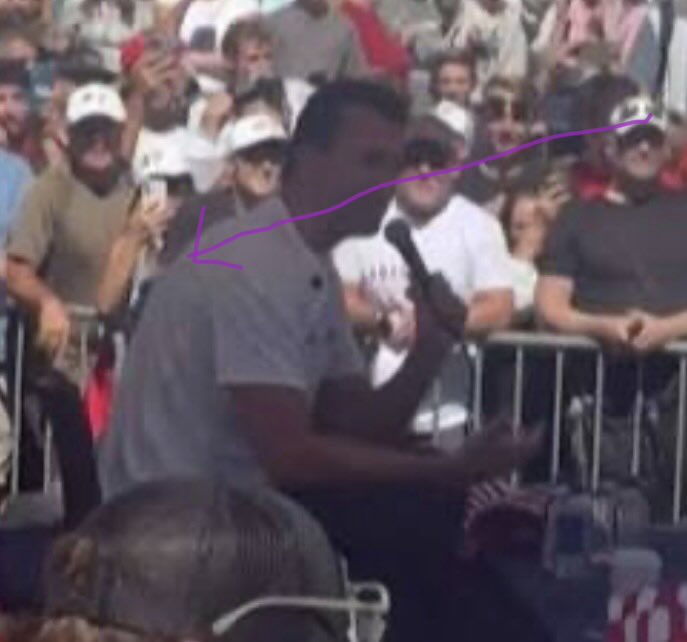
![ILuckjaw's tweet photo. OK now do it while angling the skillet at a 12° angle. The experiment would obviously fail because the bullet direction would “yaw” and “tumble” into a cartwheel, and upon hitting the second skillet, the bullet would already be facing down and not hit it with the sharp tip.
Now look at the high angle that Charlie was shot from combined with his posture and you’ll see that you can’t just invent some random implausible scenario and then think it matches.
✅👉Upon impact it must’ve gone through his lower cervical vertebrae and THEN his upper thoracic vertebrae VERTICALLY DOWN HIS SPINE which explains why the [ frangible] bullet retained inside him instead of blowing through him.
If he had been shot straight on from a horizontal angle or if his posture were different and more upright, the bullet would’ve gone through a single vertebrae and probably come out the backside.
But because of this angle, it probably smashed into multiple different vertebrae vertically going down his spinal column.
On some of these views, you can actually see his T1 through T4 bulge posterior because of that dissipating expanding force from the bullet](https://pbs.twimg.com/media/HMoLt_abUAAmqQ7.jpg)
![ILuckjaw's tweet photo. You get off to a bad start by exaggerating easily verifiable claims. Tyler did have a lot of shooting experience as it was told by his family. A coworker has testified that Tyler bragged about being a marksman and a good shot. His family owned guns and went out shooting. He didn’t have to be a hitman to point a gun at a stationary target and pull the trigger.
📐Also keep in mind that from the side view, his hunched posture, you can see that Charlie obviously has excessive “kyphosis” in his thoracic cage and slumped posture that when the bullet angle entered his body from an elevated position, it must’ve gone through his lower cervical vertebrae and THEN his upper thoracic vertebrae VERTICALLY DOWN HIS SPINE which explains why the [ frangible] bullet retained inside him instead of blowing through him.
If he had been shot straight on from a horizontal angle or if his posture were different and more upright, the bullet would’ve gone through a single vertebrae and probably come out the backside.
But because of this angle, it probably smashed into multiple different vertebrae vertically going down his spinal column.
On some of these views, you can actually see his T1 through T4 bulge posterior because of that dissipating expanding force from the bullet](https://pbs.twimg.com/media/HMoJXQfacAAgIo7.jpg)

![ILuckjaw's tweet photo. keep in mind that from the side view, his hunched posture, you can see that Charlie obviously has excessive “kyphosis” in his thoracic cage and slumped posture that when the bullet angle entered his body from an elevated position, it must’ve gone through his lower cervical vertebrae and THEN his upper thoracic vertebrae VERTICALLY DOWN HIS SPINE which explains why the [ frangible] bullet retained inside him instead of blowing through him.
If he had been shot straight on from a horizontal angle or if his posture were different and more upright, the bullet would’ve gone through a single vertebrae and probably come out the backside.
But because of this angle, it probably smashed into multiple different vertebrae vertically going down his spinal column.
On some of these views, you can actually see his T1 through T4 bulge posterior because of that dissipating expanding force from the bullet](https://pbs.twimg.com/media/HMme3-fbUAEeBHk.jpg)
![ILuckjaw's tweet photo. This is more like his posture. keep in mind that from the side view, his hunched posture, you can see that Charlie obviously has excessive “kyphosis” in his thoracic cage and slumped posture that when the bullet angle entered his body from an elevated position, it must’ve gone through his lower cervical vertebrae and THEN his upper thoracic vertebrae VERTICALLY DOWN HIS SPINE which explains why the [ frangible] bullet retained inside him instead of blowing through him.
If he had been shot straight on from a horizontal angle or if his posture were different and more upright, the bullet would’ve gone through a single vertebrae and probably come out the backside.
But because of this angle, it probably smashed into multiple different vertebrae vertically going down his spinal column.
On some of these views, you can actually see his T1 through T4 bulge posterior because of that dissipating expanding force from the bullet](https://pbs.twimg.com/media/HMmetS_bgAAz-hH.jpg)


