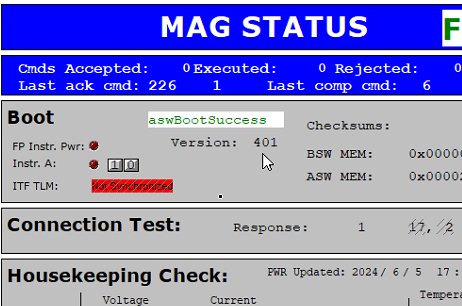
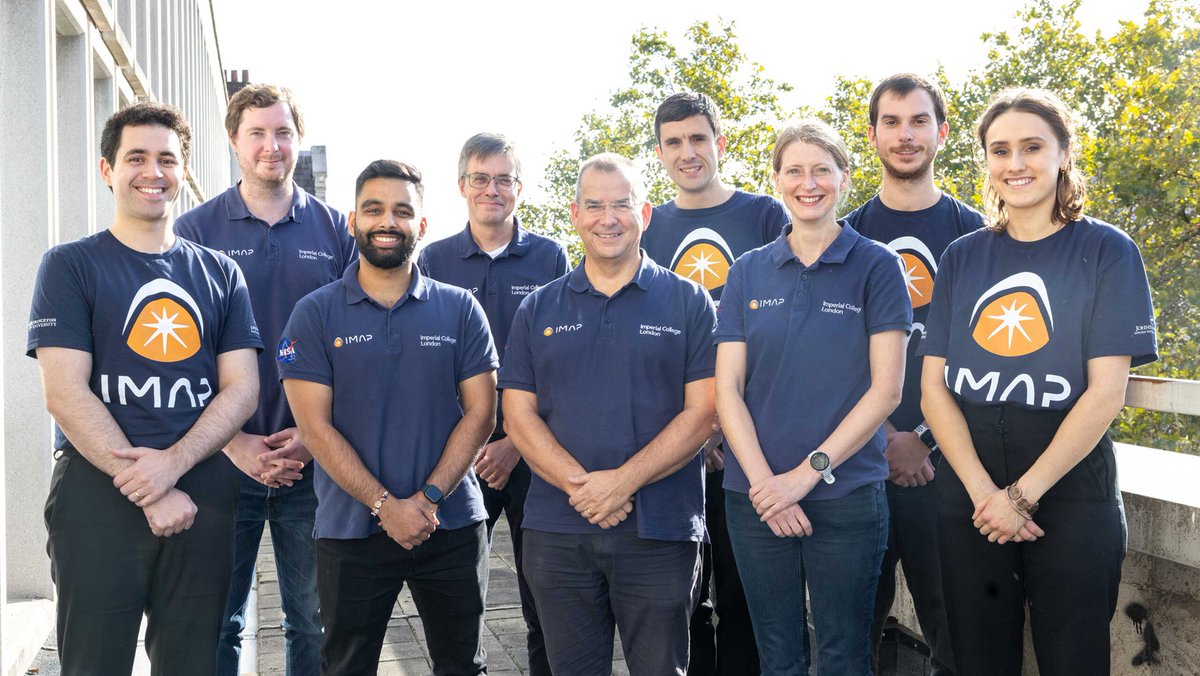
We have just updated the software on the flight instrument to Alastair's latest creation, v4.05. This is feature complete and is the version we expect to fly. It also brings a key improvement: data compression which will double the amount of burst mode data we can return.
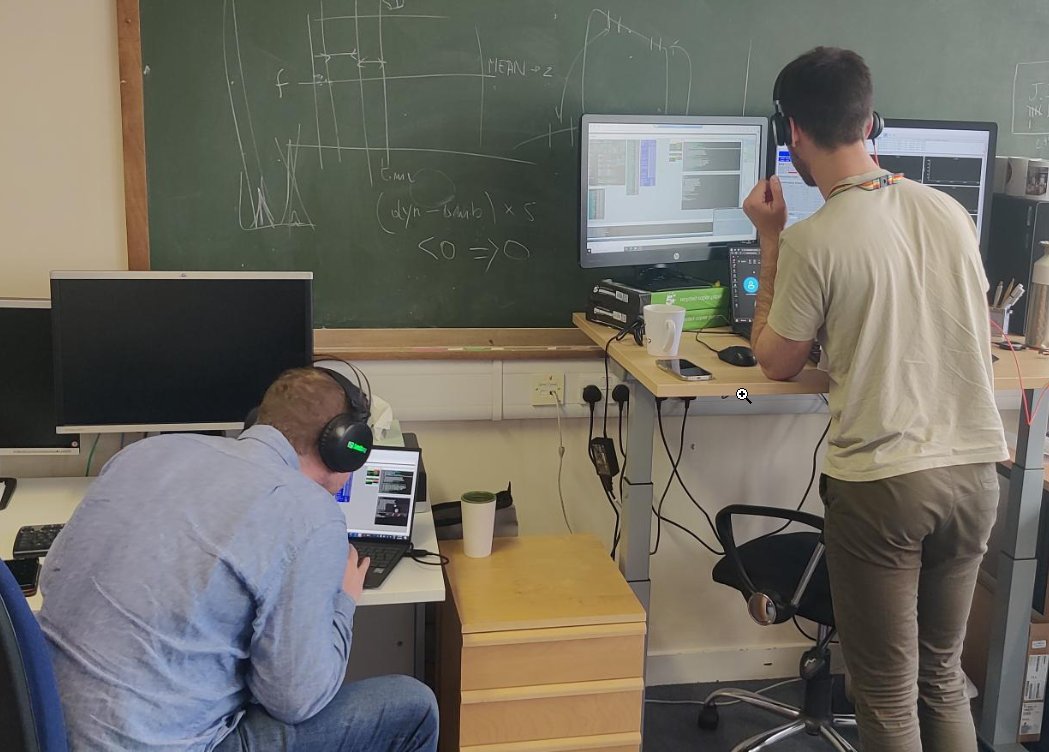
Today we updated the software on the flight model instrument to v4.01, verified the upload and successfully booted into the new version. A calm and smooth experience, just how we like it. And yes we do still have blackboards.
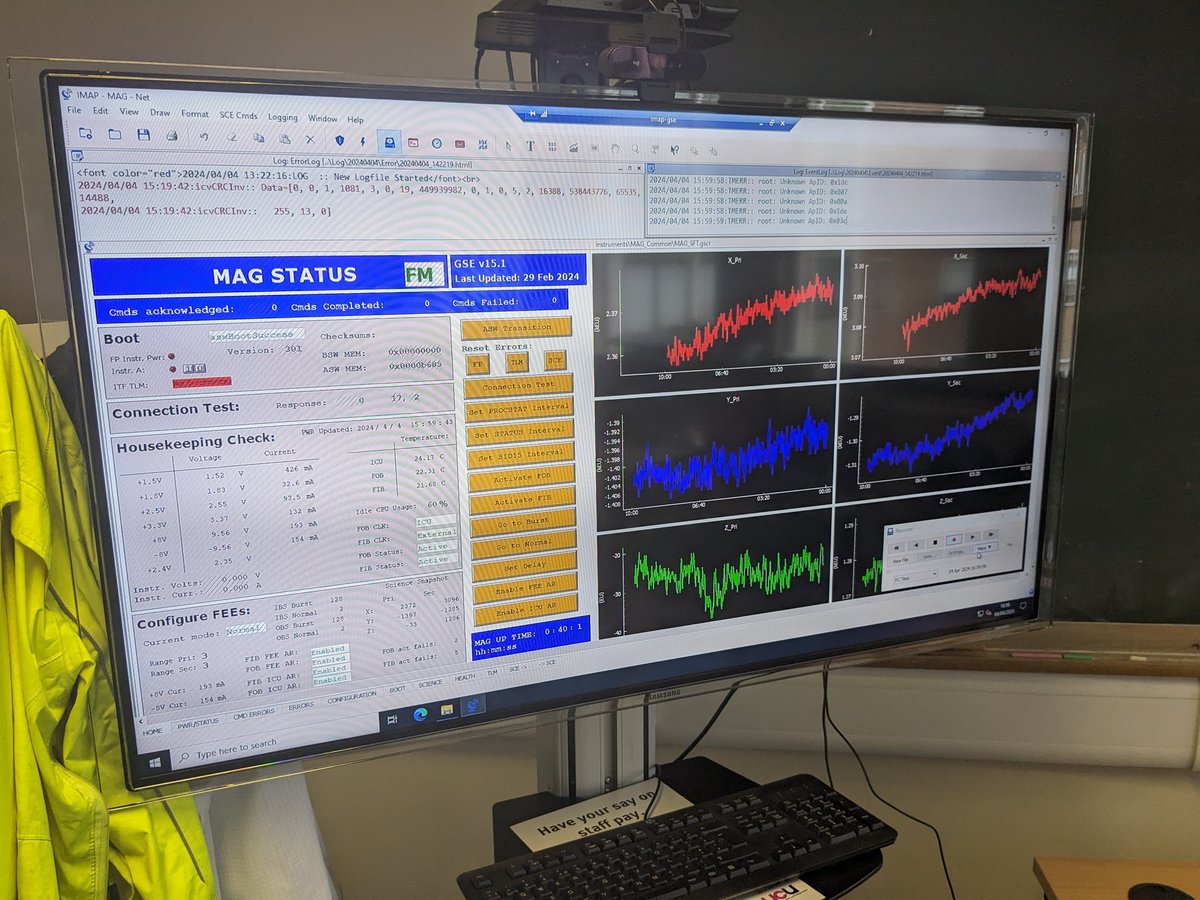
Today MAG was powered up on the spacecraft, along with two other instruments, to help us get ready for early in flight operations. A very smooth experience with nominal performance. Thanks to the MAG, spacecraft and payload operations center teams.
Today we remotely powered the flight model while it was connected to the spacecraft - great team work from @ImperialPhysics , @JHUAPL and @LASPatCU . A bit stressful in places but a successful test and the instrument performed perfectly.
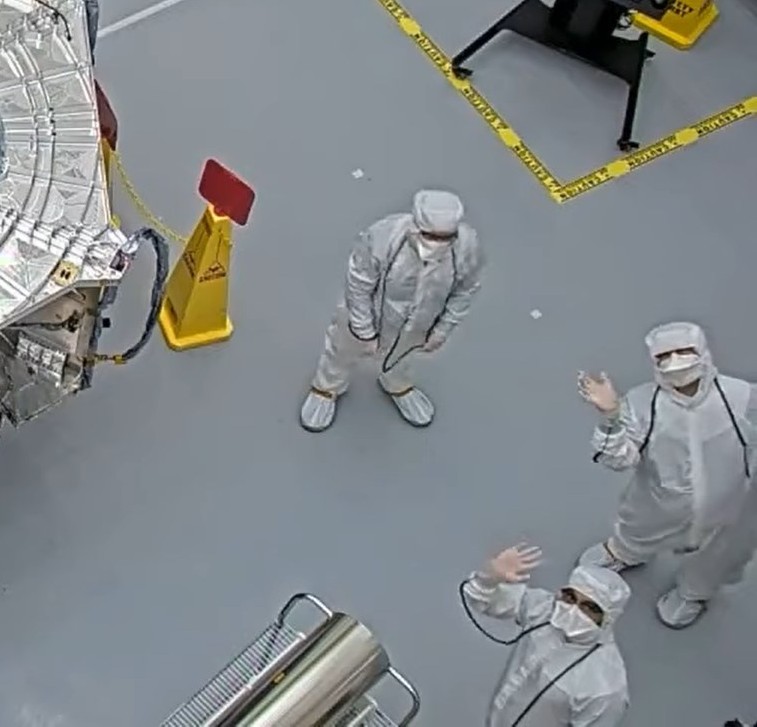
Wave back to Alan and Mihir in the cleanroom with IMAP, as they return the MAG sensors following EMC testing. Follow along right now via the live feed below. https://t.co/1Zd2YP7hdt
This week Alan, Chris and Mihir have travelled to @JHUAPL with the MAG engineering model to conduct some additional EMC testing and close an outstanding issue before flight. This is going smoothly. Thanks to everyone at APL for the support.
In the coming months the MAG team will support boom integration, spacecraft-level magnetic characterisation and observatory level tests, before the spacecraft moves to the Cape later in the year. Stay tuned for updates but for now it is time to go home.
I also personally appreciate the huge amount of work by the mission PI David McComas, @Dr_ThomasZ and @NASAScienceAA to help us get on to IMAP. It was not easy, for a while it looked impossible, and without their support it would not have happened. Thank you.
We are not done. There are still a few technical niggles (EMC, some software bugs to be squashed) and we need to develop our ground processing and calibration pipeline but we are in a very good place.
We are also grateful to @spacegovuk for the funding to build the instrument, as well as their technical and engineering support. Inter-agency projects are never easy and we truly appreciate all their help in making it possible for us to join the @NASASun IMAP project.
A personal note from the IMAP MAG science lead. This is the team that has designed, built, tested and qualified a magnetic field instrument in less than three years from funding to spacecraft integration. It is an enormous achievement and I am hugely proud of what they have done.
We have also been helped by a huge team of @imperialcollege administrators, grant managers, workshop technicians and of course Felix who runs the @imperialphyiscs Level 8 coffee room without which we could not function.
We are grateful to everyone who has helped us along the way including the engineering teams @JHUAPL and @SwRI as well as our reviewers, whose experience and advice were so useful to us. The sheer size of the team for a project like this is extraordinary.
This is the IMAP magnetometer, which is an evolution of the @SolarOrbiterMAG instrument that has been operating successfully in space for over four years.
For those following along: this afternoon we verified correct instrument and spacecraft behaviour in the event of an anomaly condition that requires a power off. This evening we will run a 'comprehensive performance test' to confirm good operation of the instrument.
Very happy to report that today we powered on the MAG instrument on the spacecraft and took good science data. Great work from everyone @JHUAPL@LASPatCU and of course @ImperialPhysics - Go IMAP!