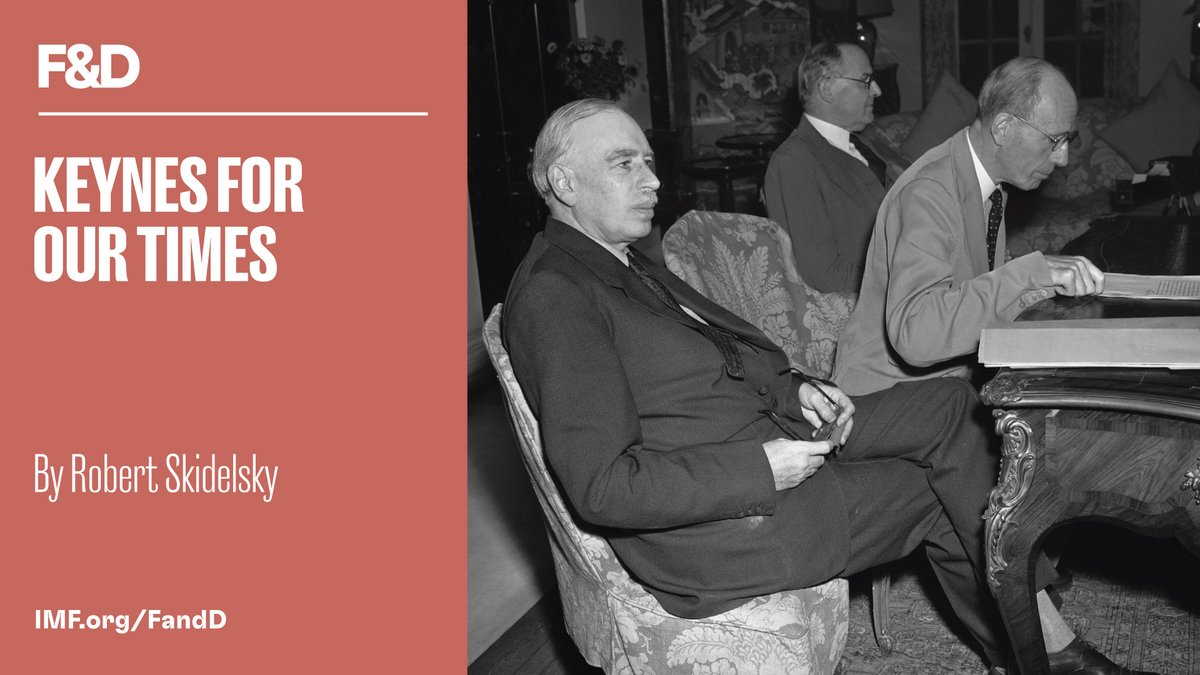
Economic growth is a means not an end, Robert Skidelsky, the world’s leading Keynes authority, who died in April aged 86, writes in his final article for F&D magazine. https://t.co/FVKPMXYT8L
Free trade created winners and losers at a scale economists failed to anticipate, especially across regions, Gordon Hanson writes in F&D magazine. https://t.co/m6TSgjsIoE
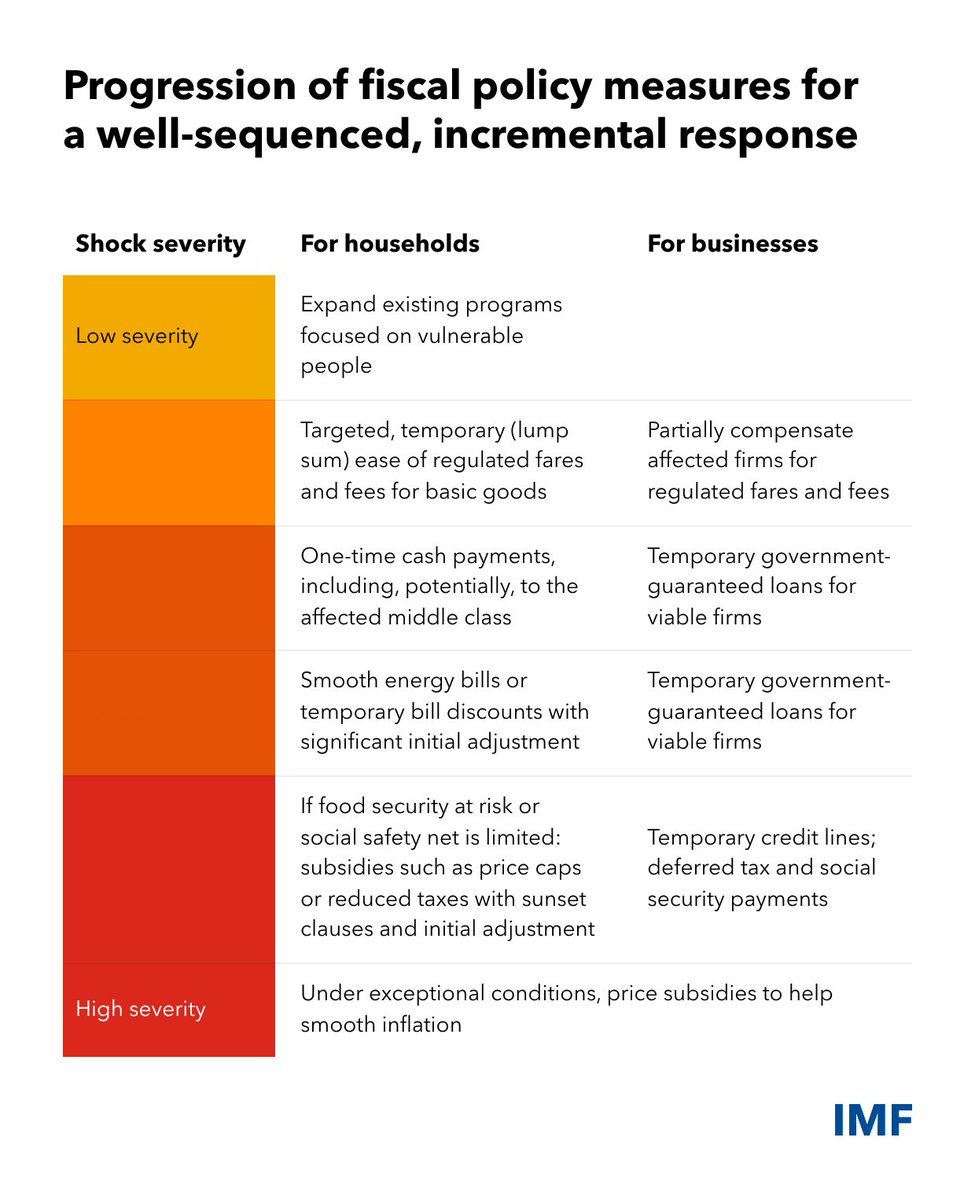
Governments can respond to energy and food price shocks in ways that help vulnerable people and keep businesses open without further straining public finances. See our blog. https://t.co/iNWfO0ucXm
Economic growth does not lead people to work less. What matters instead are policy choices about education, pensions, and labor rules, Amory Gethin and Emmanuel Saez write in F&D magazine. https://t.co/j4AHAC5EnJ
Xin Li, Senior Economist, SPR; Anamaria Maftei, Economist, FAD; and Ranil Manohara Salgado, IMF Senior Regional Resident Representative, met with ACC Members to discuss key policy priorities and legislative developments to strengthen good governance and anti-corruption efforts.
🔴 LIVE NOW: Watch the public preview launch of StatGPT, the IMF Statistics Department’s AI-powered platform. See how natural language AI provides direct access to official statistics, while preserving trust and accuracy. https://t.co/vPB2UxTmav
IMF Managing Director @KGeorgieva announced that Tobias Adrian will retire as IMF's Financial Counsellor and Director of the Monetary and Capital Markets Department, effective August 31, 2026. Big thanks for his outstanding leadership and contributions over the years. https://t.co/N9AZfr9Ukj
The global economy now uses roughly half as much energy per dollar of output as it did in 1980, helping cushion oil shocks. Read more in F&D magazine. https://t.co/uIBOYR9eU2
Energy price shocks demand thoughtful policy choices to support people and businesses and encourage conservation. That means fiscal responses should be temporary, targeted, timely, and tailored. Read our new blog: https://t.co/FN6V2EaWCz
New AI tools that threaten supercharged cyberattacks are a financial stability risk, not just technical or operational issues. See our blog on resilience and safeguarding global markets. https://t.co/eln39y66cz
Nobel Laureate Edmund Phelps argued that grassroots innovation, not top-down policy, drove prosperity. Ordinary people working across businesses powered the economies that achieved mass flourishing. Read his F&D magazine article. https://t.co/9q2uQATvjQ
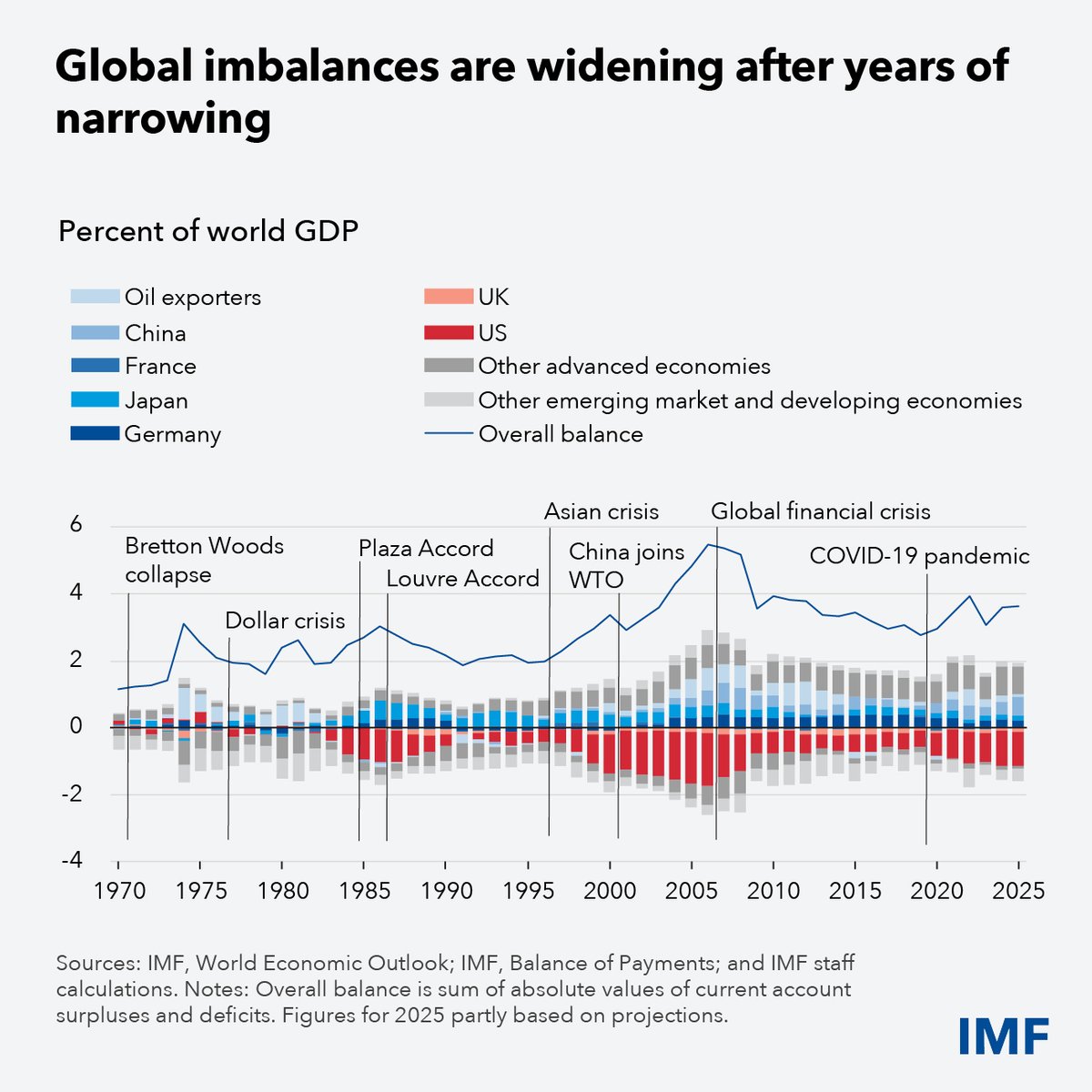
The gap between countries running large trade surpluses and those running large deficits is growing. Sound domestic policies, not trade barriers, remain the path to durable rebalancing. See our blog for more. https://t.co/UfYUGEjUVy
Governments can respond to energy and food price shocks in ways that help vulnerable people and keep businesses open without further straining public finances. See our blog.
https://t.co/iNWfO0ucXm
While financial markets have turned more sanguine after the initial Middle East shock, underlying vulnerabilities remain elevated:
* Bond market fragilities
* Pressure on emerging markets
* Concentrated asset valuations
* Financial vulnerability amplification
#GSFR@NSEIndia
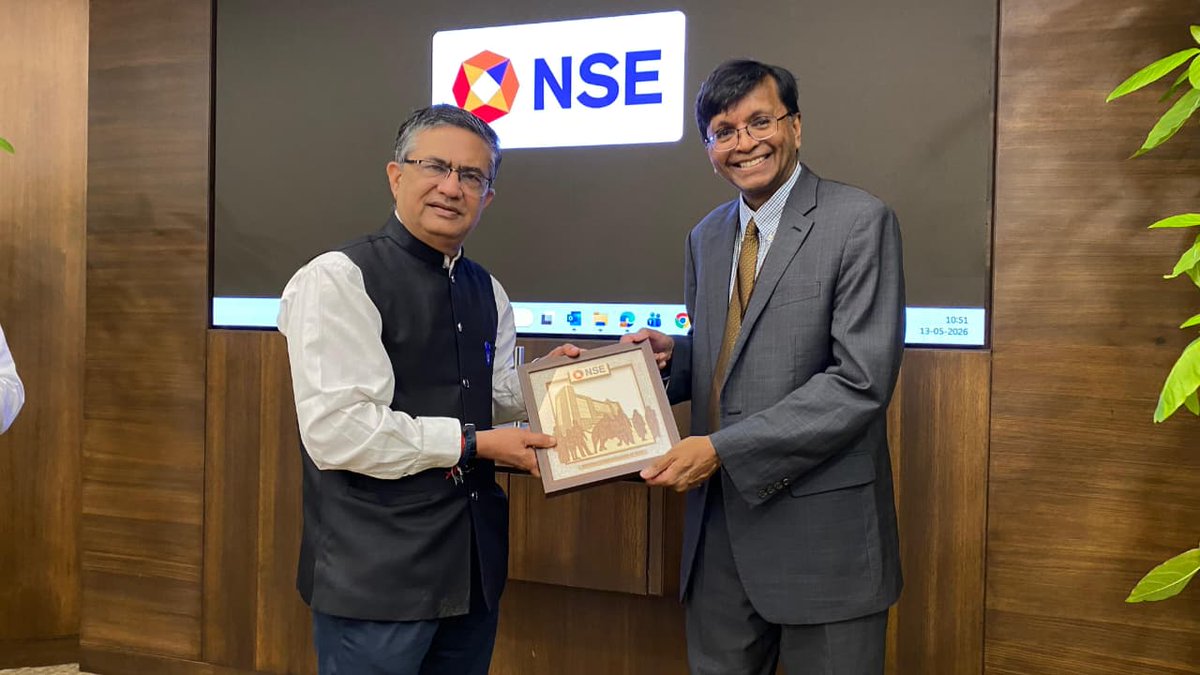
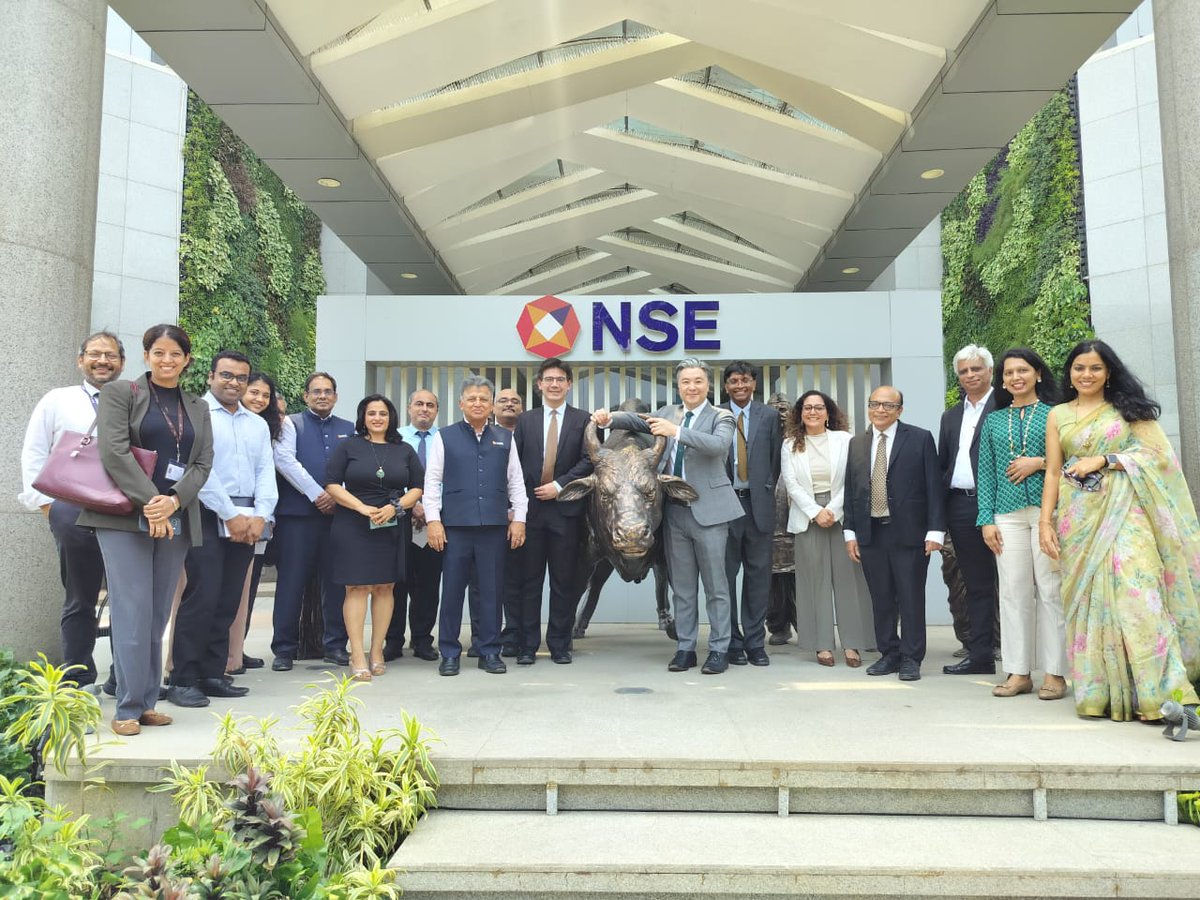
Warm thanks to @NSEIndia for hosting the presentation of @IMFNews Global Financial Stability Report. We discussed (1) why markets may be underpricing current geopolitical and macro-financial risks and (2) why policy preparedness and resilience remain critical. #GSFR
Being a mother has shaped how I see the world, teaching me resilience, empathy, and responsibility for the next generation. Wishing all mothers a very happy Mother’s Day. Thank you for everything you give every day.
In this week’s Weekend Read: the global economy faces risks from war-driven supply disruptions, while AI introduces new financial stability challenges. Explore fiscal pressures in emerging economies, Asia-Pacific trade, and why policy credibility matters. https://t.co/UyMQeO7Xb3
Exclusive: The Asia-Pacific head of the IMF tells me ''tariffs coming down from 50% to 10% and financial conditions that were accommodative proved to be tailwinds that offset the impact of the energy shock, which itself accounts for about half a percent of the GDP." @IMFNews
Today we mark the anniversary of the IMF’s Executive Board. First convened on May 6, 1946, at a defining moment for the world, it laid the foundation of an institution built on cooperation & shared responsibility. Eighty years later, these principles remain our greatest strength.