@AzizOuldIsmail Thank you for this valuable manuscript! Candidates are always asking What are programs looking for? The programs that understand and push for goodness of fit are going to get the best candidates
Medical school can feel overwhelming at times. It’s important to understand your boundaries and when to say no for better wellbeing. Learn more: https://t.co/YSYPP97MgF
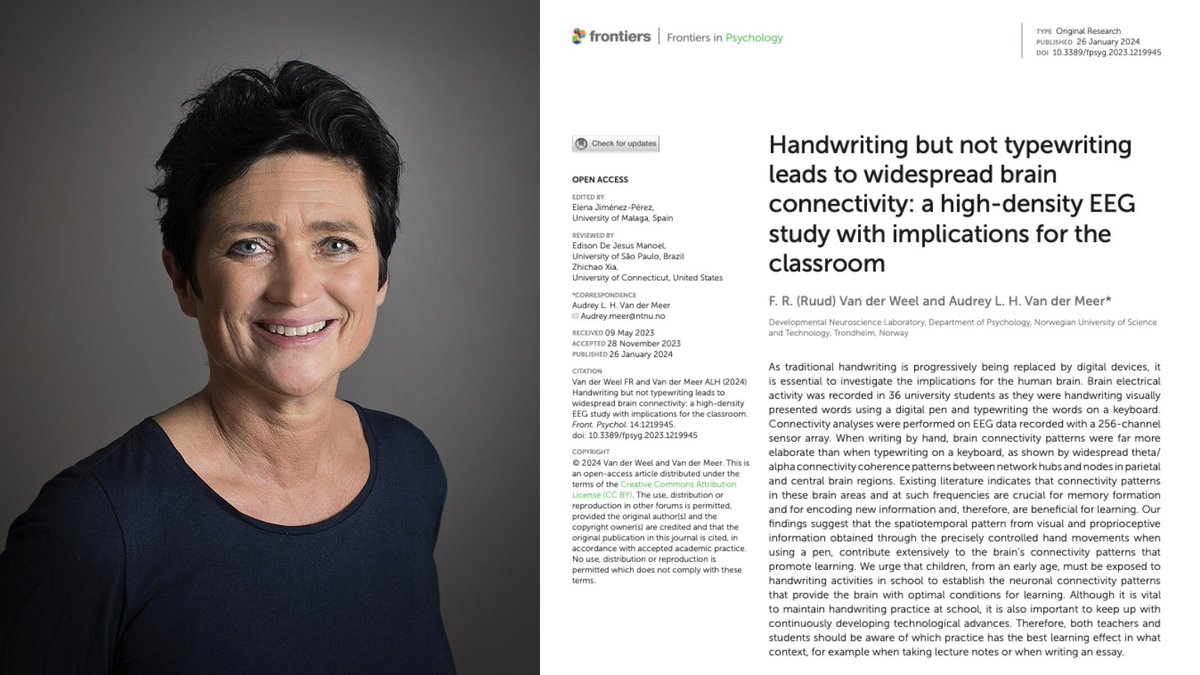
A Norwegian neuroscientist spent 20 years proving that the act of writing by hand changes the human brain in ways typing physically cannot, and almost nobody outside her field has read the paper.
Her name is Audrey van der Meer.
She runs a brain research lab in Trondheim, and the paper that closed the argument was published in 2024 in a journal called Frontiers in Psychology. The finding is brutal enough that it should have changed every classroom on Earth.
The experiment was simple. She recruited 36 university students and put each one in a cap with 256 sensors pressed against their scalp to record brain activity. Words flashed on a screen one at a time.
Sometimes the students wrote the word by hand on a touchscreen using a digital pen, and sometimes they typed the same word on a keyboard. Every neural response was recorded for the full five seconds the word stayed on screen.
Then her team looked at the part of the data most researchers had ignored for years, which is how different parts of the brain were communicating with each other during the task.
When the students wrote by hand, the brain lit up everywhere at once.
The regions responsible for memory, sensory integration, and the encoding of new information were all firing together in a coordinated pattern that spread across the entire cortex. The whole network was awake and connected.
When the same students typed the same word, that pattern collapsed almost completely.
Most of the brain went quiet, and the connections between regions that had been alive seconds earlier were nowhere to be found on the EEG.
Same word, same brain, same person, and two completely different neurological events.
The reason turned out to be something nobody had really paid attention to before her work. Writing by hand is not one motion but a sequence of thousands of tiny micro-movements coordinated with your eyes in real time, where each letter is a different shape that requires the brain to solve a slightly different spatial problem.
Your fingers, wrist, vision, and the parts of your brain that track position in space are all working together to produce one letter, then the next, then the next.
Typing throws all of that away. Every key on a keyboard requires the exact same finger motion regardless of which letter you are pressing, which means the brain has almost nothing to integrate and almost no problem to solve.
Van der Meer said it plainly in her interviews.
Pressing the same key with the same finger over and over does not stimulate the brain in any meaningful way, and she pointed out something that should scare every parent who handed their kid an iPad.
Children who learn to read and write on tablets often cannot tell letters like b and d apart, because they have never physically felt with their bodies what it takes to actually produce those letters on a page.
A decade before her, two researchers at Princeton ran the same fight using a completely different method and ended up at the same answer. Pam Mueller and Daniel Oppenheimer tested 327 students across three experiments, where half took notes on laptops with the internet disabled and half took notes by hand, before testing everyone on what they actually understood from the lectures they had watched.
The handwriting group won by a wide margin on every question that required real understanding rather than surface recall.
The reason was hiding in the transcripts of what the two groups had actually written down.
The laptop students typed almost word for word, capturing more total content but processing almost none of it as they went, while the handwriting students physically could not write fast enough to transcribe a lecture in real time, which forced them to listen carefully, decide what actually mattered, and put it in their own words on the page.
That single act of choosing what to keep was the learning itself, and the keyboard had quietly skipped the choosing and skipped the learning along with it.
Two studies. Two countries. Same answer.
Handwriting makes the brain work. Typing lets it coast.
Every note you have ever typed instead of written went into your brain through a thinner pipe. Every meeting, every book highlight, every idea you captured on your phone instead of on paper was processed at half depth.
You did not forget those things because your memory is bad. You forgot them because typing never woke the part of the brain that would have made them stick.
The fix is the thing your grandmother already knew.
Pick up a pen. Write the thing down. The slower road is the faster one.
35 days until #ECFMG releases the 2027 ERAS Token on June 24. Before you decide how many programs to apply to, know what it'll cost. Free 2027 ERAS Program Cost Calculator → your total in 30 seconds 👇 https://t.co/3STfkdRGHl #Match2027#IMG
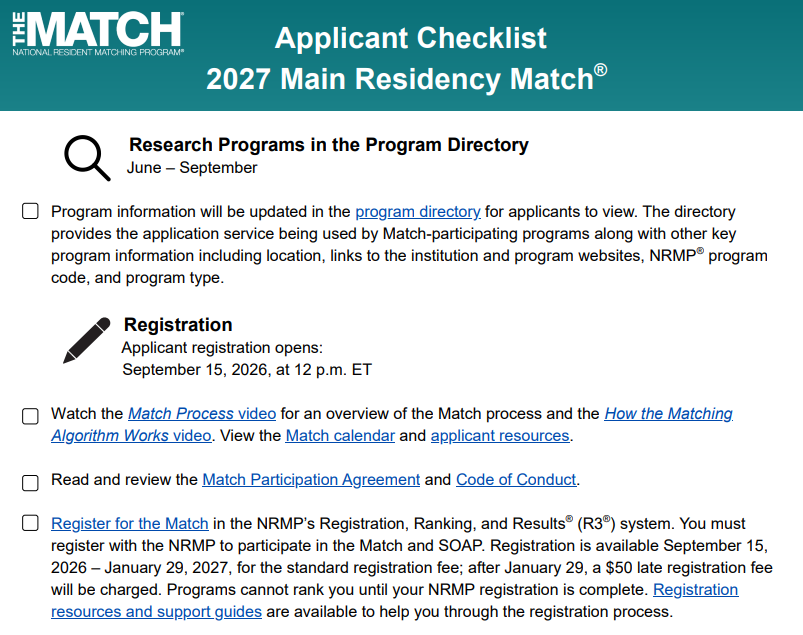
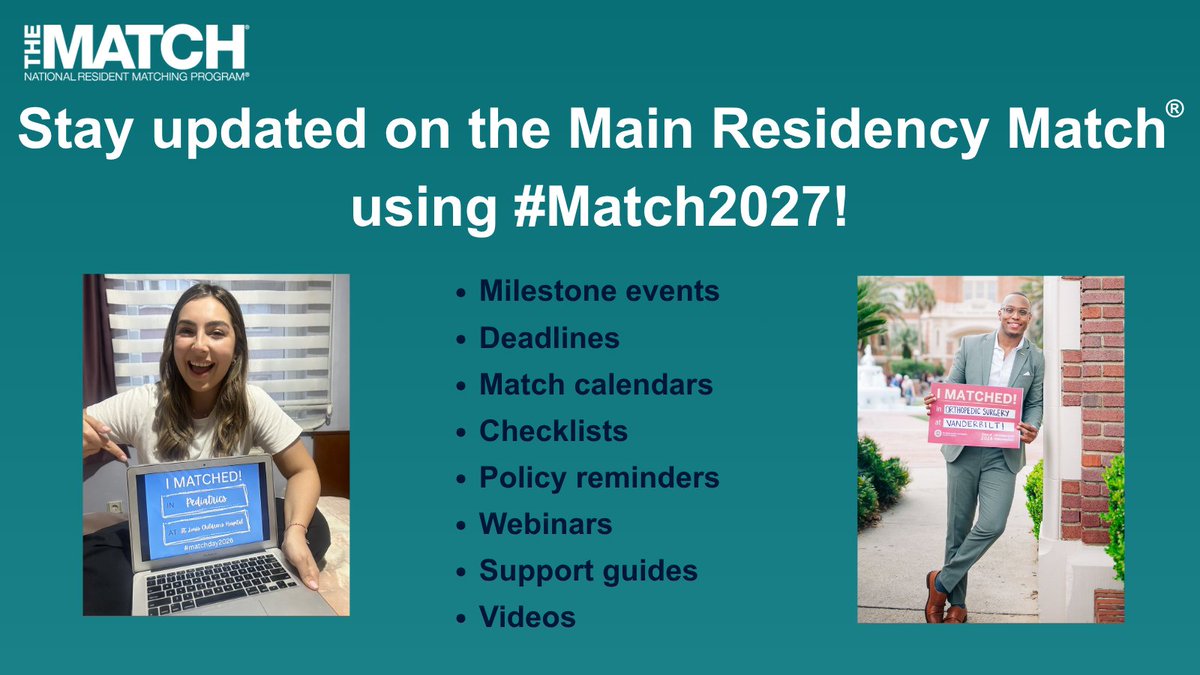
Follow NRMP's social media channels and use #Match2027 to stay on track with Main Residency Match events and deadlines!
X: https://t.co/PSV5oMux7B
Facebook: https://t.co/nhYGQrnwWA
LinkedIn: https://t.co/rjmLmLjY7O
YouTube: https://t.co/FsLXnwuiev
#Match2027#MedStudent#IMG
5 years of data. Thousands of applicants. One clear conclusion. The IMG Match is not random—it follows patterns. Our latest analysis breaks down:
• Match trends (2019–2024)
• US vs Non-US IMG outcomes
• Specialty-level positioning
• What actually drives selection
If you're applying without this, you're guessing.
Read here:
https://t.co/wAQKVgkkMV
#ResidencyMatch #IMGPrep #MatchStrategy #imgmatch #meded
Most applicants read the NRMP Program Director Survey at face value. That’s a mistake. Program selection is driven by patterns, filters, and institutional behavior—not just survey responses. #MEDED#Match2026 Learn more - https://t.co/PI8fnFctRP
IMGPrep Evidence based overview of determinants-of-emergency-medicine-residency-selection-for-international-medical-graduates #emergencymedicine
https://t.co/dprOQpWClt
If you certified your Rank Order List (ROL) for #Match2026, NRMP wants to hear from you! Check your email inbox for the NRMP Applicant Survey invitation, live until 3/15📅
Some email providers filter out our campaign. If you can’t find your invitation, contact [email protected].
#Match2026 Tip! Residency applicants - list your application service ID (e.g. AAMC ID, ResidencyCAS ID) in NRMP's R3 system. Listing your application service ID is helpful for programs as they search applicants and create rank order lists.
📢 USMLE Updates for 2026: Major test delivery software changes are coming to Step 1, Step 2 CK, and Step 3.
🔹 New testing interface with improved navigation & adjustable image contrast
🔹 Step 3 moves to shorter, more frequent blocks starting March 10, 2026
🔹 Step 1 & Step 2 CK will follow with updated software in Q2 2026
🔹 Exam content, scoring & total testing time remain unchanged
🔹 Practice with the correct tutorial version for your test date
👉 https://t.co/Z79PvVGwDZ
#USMLE #MedEd #IMGPrep
Nine or more years out of medical school and struggling to match into U.S. residency? Time since graduation is a screening variable not a verdict. It requires structured academic re-engagement, documented recent clinical activity, and deliberate positioning. The IMGPrep Re-Entry Program is designed specifically for older graduates. Financial aid is available for qualified candidates.
Learn more:
https://t.co/in27NKgyhX
Retweeting this for every #Match2026 applicant.
The NRMP Applicant Survey Reports are not casual reading. They provide actual data on what applicants prioritize when ranking programs and how decision patterns evolve year to year. If you are serious about strategy, review prior reports and watch for the March 5 release. Applications should never lack understanding, strategy and clear direction = Goodness of Fit
#MedEd
NRMP’s annual Applicant Survey Reports shed light on what factors applicants consider when ranking residency programs. Explore our past years’ survey and keep an eye on your inbox March 5 if you're a #Match2026 participant🩺: https://t.co/ytjeLHqj52
#MedEd
It is the Rank Order List Deadline for the Emergency Medicine #FellowMatch! Your rank order list must be certified by 9 pm ET.
Applicant guide: https://t.co/vV9o0RKqpb
Program guide: https://t.co/nVeoOHilsk
Best wishes @SCUFellowships, @NAEMSP, @IEM_Fellowships, & @acmtmedtox!
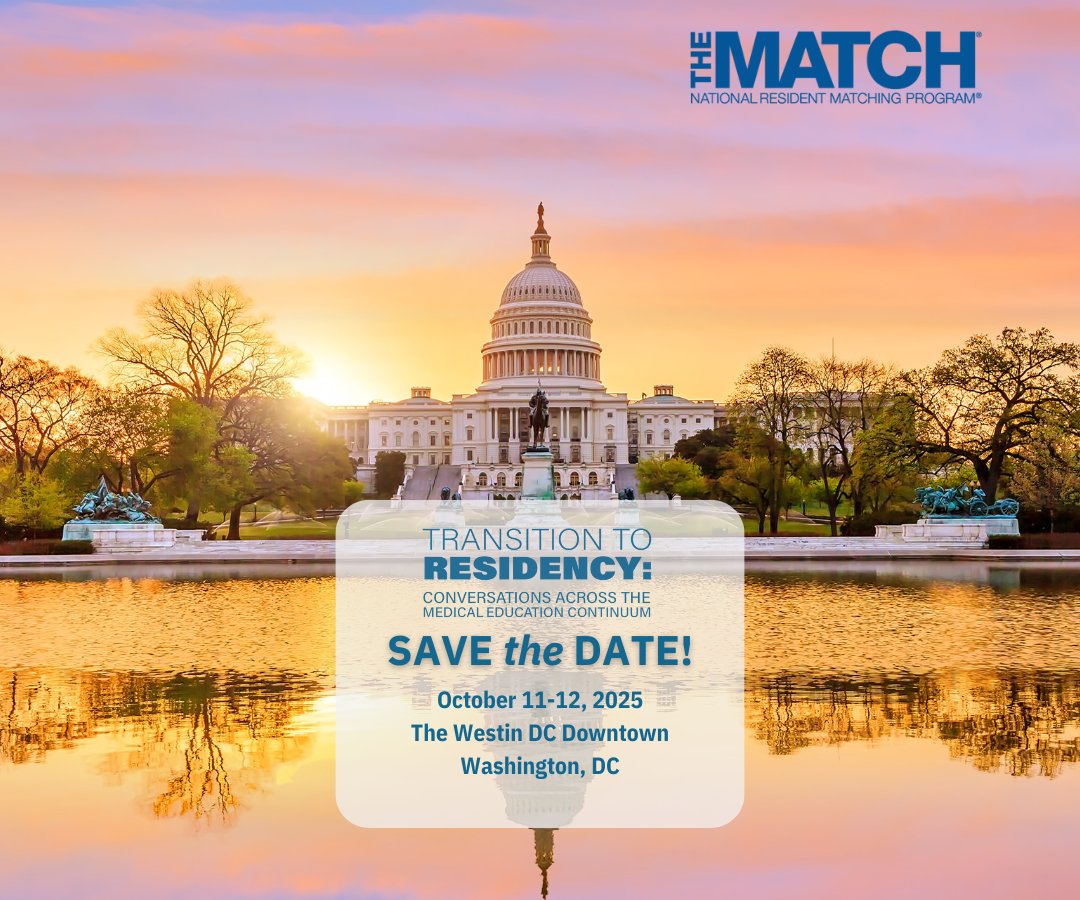
The countdown is on! The #NRMPConference is happening Oct 11–12 in DC. Get ready for impactful plenaries, engaging breakout sessions, book signings, and a special philanthropy event with @UWNCA!
Excited to share that NRMP leadership is hosting an invitation-only Match Summit today with student leaders and medical school officials to educate on The Match and explore ways to fortify the matching process and enhance the Match experience.
#NRMP
Intealth Update
Intealth reports progress on MyIntealth processing:
3,800 certificates | 6,200 Pathways | 17,000 MSPEs | 16,700 transcripts processed in Sept.
Program Directors were reminded by AAMC & Intealth that some application documents continue to upload after Sept 24, so updates may appear later in PDWS.
IMGPrep continues to monitor developments and encourages applicants to stay patient and keep all documents current.
🔗 https://t.co/Iio8qqCJIg
#IMGPrep #ECFMG #MyIntealth #ERAS2026 #ResidencyMatch #MATCH2026
📢Mark your calendars! NRMP’s Transition to Residency Conference is happening Oct. 11-12, 2025, at the Westin DC in downtown Washington, DC. Stay tuned for more details!
#NRMPConference#GME#MedEd