Nature lover, butterflies, ants and their interaction, all the nature, Spain, music, dancing, working on conservation, vegetables, stitching, living ecofriendly
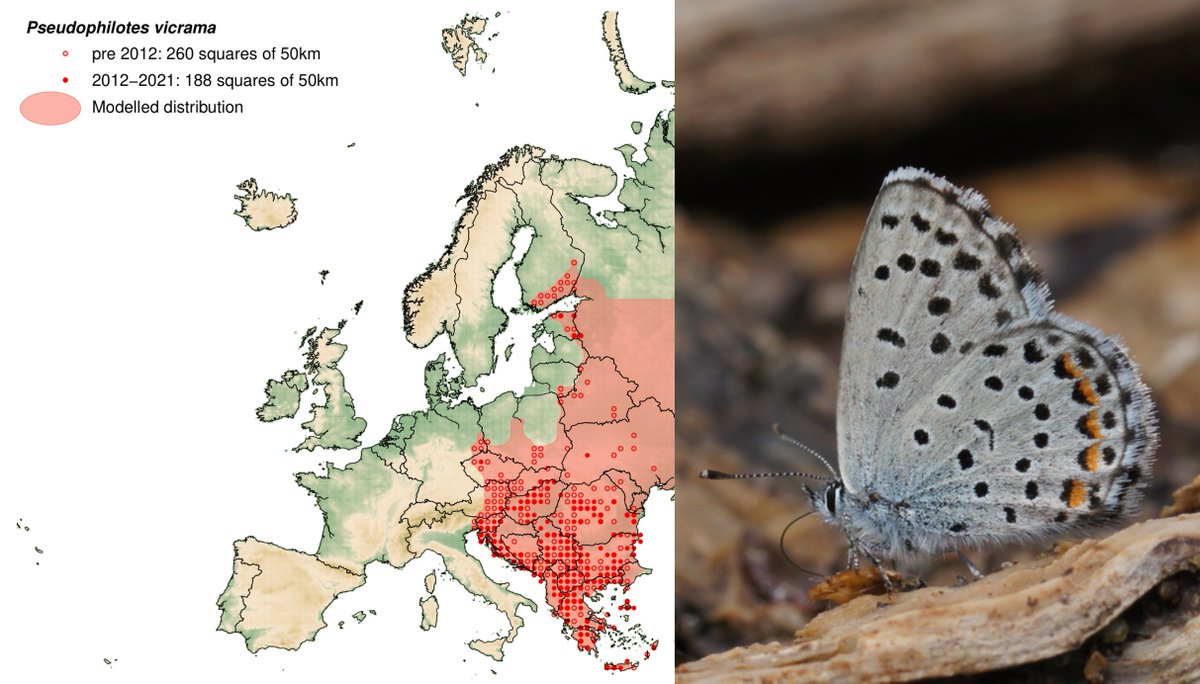
The small Eastern Baton Blue (Pseudophilotes vicrama) declined in most of N and C Europe, but is still widespread in SE Europe. It occurs on dry grasslands on sandy or stony soils, south-facing slopes with grassy vegetation, on steep slopes, railway embankments and road verges
On a mud-puddling site hundreds or even thousands of butterflies can gather for minerals (mostly males). During 40 years of butterflying I have see quite a few, but this site in SE France can now be added. Mostly Chalkhill Blue (P coridon).
The Dutch Grassland Butterfly indicator (https://t.co/mlrqzXg3VS) shows a decline of more than 70%. It will be hard to achieve an increasing trend in 2030, as required in art 11 in the Nature Restoration Regulation (https://t.co/LvN2EnMoFd).
Usually we see Tau emperors (Aglia tau, tau-vlinder), a large day-active moth, racing by, the males always seem in a hurry to find females. But this time we found a male sitting. What a spectacular moth!
Butterflies increasing in NL: Large Tortoiseshell (N polychloros, grote vos). Took me years to see my first when I started butterflying, now a regular butterfly in my area, especially in early spring. In https://t.co/uqTqNhZFAf I argue this is mostly a result of migration from E
At the end of the year we can look back at the butterfly year 2024 in NL. What went up, what went down, and what species things did we notice? A threat in English. /1
Butterflies Critically Endangered in NL: Large Heath (C tullia, veenhooibeestje). Once on all wet places on sandy soil with some peat, now restricted to a few sites in the north, 2 of them having good populations.
Butterflies Critically Endangered in NL: Dingy Skipper (E tages, bruin dikkopje). Once widespread over half of NL on dry grasslands, in 1990 only 2 pops left, now 5, all in S Limburg. Before 1990 2nd gen small, nowadays larger than 1st gen thanks to climate warming.
Lost habitat has been restored to spread and establish a more balanced butterfly metapopulation. Works great for the vegetation, however the ants don't colonize it as fast as we want them to do. There are challenges ahead!🐜🐜🐜🐜🦋
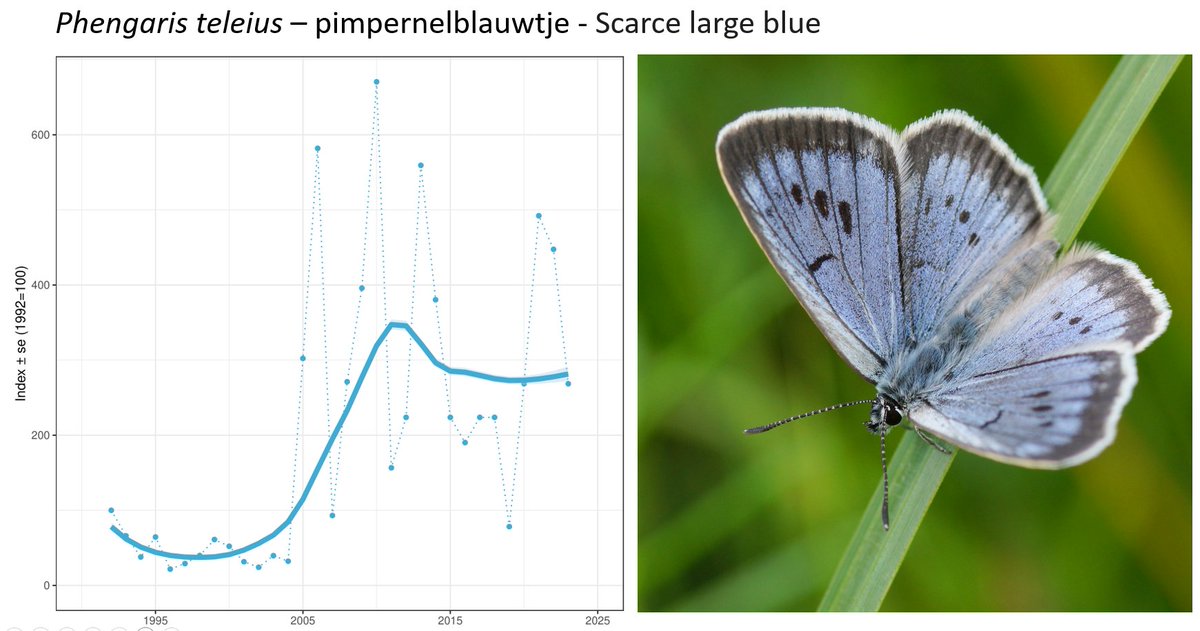
Butterflies critically endangered with only 1 population in NL: Scarce Large Blue (P teleius, pimpernelblauwtje). From its reintroduction in 1990 until 2005 the populationsize was at a low level. After that it shows large fluctuations, not uncommon in parasites.
Butterflies Critically Endangered with only 1 population left in NL: Tree Grayling (H statilinus). Restricted to dry heathlands with sanddunes. Populationsize last summer 10-20 adults. Nearest populations in E Germany. Victim of rapid succession by N deposition.
With the adoption of the Nature Restoration Law last summer the Grassland Butterfly Index (GBI) is one of the indicators for biodiversity in agricultural ecosystems (art. 11). The GBI for both EU27 and NL show a marked decline after 2012 with no sign of slowing down.
Monday night (7/10) looks by far the pick of the nights. Worth also keeping a look out for Crimson Speckled (U. pulchella) and Monarch (D. plexippus) during the day on Monday and Tuesday.
👉The intensity of agriculture in 7 countries that entered the EU in 2004 and 2007 increased after the accession, while farmland bird population trends started to decline.
🧐Read the new paper based on the PECBMS data in Science of the Total Environment:
https://t.co/AlfGHg61TV