The International Network Against Cyber Hate unites organizations around the world, to counter and address all forms of online discrimination. Join us!
🌐 We are excited to present our Hub, designed to help users navigate the flood of hate and disinformation. The algorithm recognises and maps bots spreading hate and fake news on TikTok 🤖 🚀
https://t.co/Mlkitqp9iQ
@MODiscriminatie
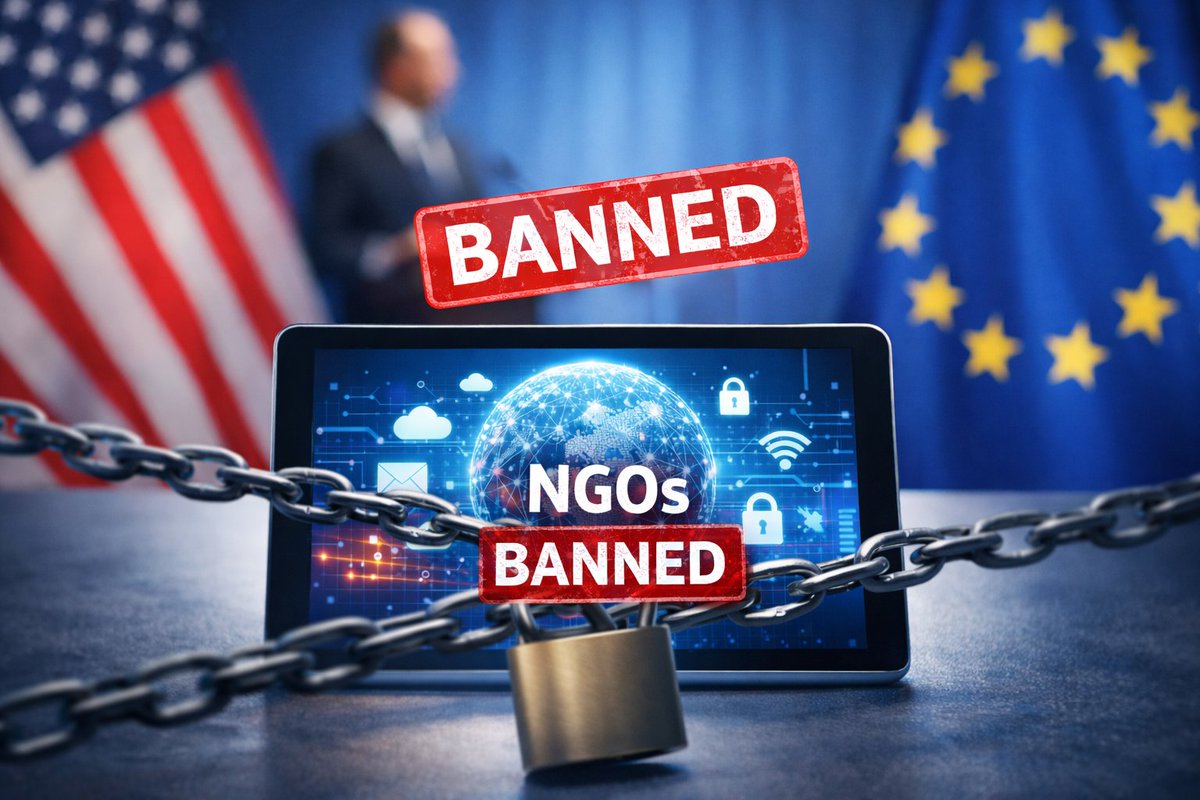
On February 3, 2026, the United States House Committee on the Judiciary published a second report seeking to portray the EU's Digital Services Act (DSA) as a tool for online censorship. In this report, a number of NGO's, including INACH, were labelled as "censorious" without further substantiation. In light of this challenge to the EU's democratic rule of law, the EU must protect its sovereign ability to govern its societies and stand firm in enforcing the DSA. INACH's full statement is available on our website and hub.
#EuropeanUnion #DigitalServicesAct
We are pleased to announce that Fox Oliver will be joining INACH as an intern for the coming months. As he rounds out his degree in Communication Science at the University of Amsterdam, he will be assisting us with research and communication duties. His background studying mis- and disinformation will also help us to advance our research focusing on the intersectionality of disinformation and hate speech. Welcome Fox!
Today marks International Holocaust Remembrance Day. On this occasion, INACH would like to highlight the newly released paperback edition of The Routledge History of Antisemitism, which includes a chapter by INACH member and co-founder Rafał Pankowski of the Never Again Association. As antisemitism continues to manifest in online environments, this publication offers a comprehensive glossary and analysis of the ways in which antisemitism persists in digital spaces. #HolocaustRemembranceDay
#HolocaustMemorialDay
#neveragain
Digital platforms allow propaganda to spread rapidly.
Awareness of these tactics is key to safeguarding our digital spaces from manipulation and misinformation.
#DigitalAwareness
Online reactions spread fast—but they aren’t always informed. Understanding cancel culture encourages critical thinking in how we engage digitally.
#DigitalAwareness
We are excited to share DigiQ's latest monitoring report on the Notice and Action mechanism under Article 16 of the Digital Services Act (DSA). You can read their report via our Hub!
#DSA#digitalrights#onlinesafety#contentmoderation
https://t.co/EynSUIGm6D
Gaslighting is a harmful form of manipulation that often goes unnoticed. Increasing awareness helps recognise these patterns and support those affected.
#Gaslighting#DigitalSafety
The Appeal Centre Europe is opening new pathways for addressing harmful content.
Working across several major VLOPs and expanding its scope, the Centre enables users and organizations to dispute policy-violating material that often falls outside traditional mechanisms. This includes content that isn’t illegal but still poses risks to safety, dignity, and community standards.
As platforms adapt to the DSA’s new enforcement landscape, this mechanism is becoming an essential resource for those tackling online hate.
Under the DSA, everyone becomes part of the solution.
This session highlights Article 16, which requires platforms to provide simple, user-friendly ways to report illegal content — and to act on those reports. Trusted flaggers, dispute settlement bodies, and everyday users all play a role in safer online spaces.
Follow INACH for more DSA insights ahead of our 2026 events.
The hardest part of online regulation is the “grey zone” — the space between free speech and harmful speech.
In this session, Google representative reflects on how the DSA’s new architecture reshapes responsibilities and strengthens the need for collaboration with NGOs, civil society, and public authorities. These partnerships help platforms better understand context, identify emerging forms of hate, and protect users without undermining expression.
Stay tuned to INACH for more discussions like this as we build toward our 2026 events.
Hate speech doesn’t only target individuals, it threatens freedom of expression itself.
In this talk, the European Commission explains how EU laws and policies work together to combat hate offenses while protecting fundamental rights. Strengthened strategies on anti-racism and anti-semitism aim to ensure underrepresented voices are heard and protected across Europe.
Keep following INACH for more insights like this and updates on our 2026 initiatives.
“The far right isn’t just rising, it’s becoming mainstream.”
In this keynote, Anna Kresteva highlights a critical shift: the mainstreaming of far-right ideas. Themes once pushed from the margins — anti-migration, anti-LGBTQ+, and exclusionary identity politics — are now echoed by mainstream actors, reshaping public discourse.
More conversations like this will continue at INACH’s upcoming 2026 events.