A National Collective of Post Incarcerated Leaders and Human Rights Defenders that operate projects to End Mass Incarceration. Together - United - #WEmakeCHANGE
"They never tell you that menopause behind bars is a special kind of hell. That the inferno building inside your chest will meet triple-digit Texas heat and create something that feels like slow torture, designed by people who have forgotten you are human."https://t.co/RZ6JNT5T2t
Thank you, @NewYorkStateAG, for putting the full weight of your office behind preserving the legacy of 300 of our ancestors. Their history must never be erased.
I’m opening my home in Sugar Hill for an evening in support of @DriveChangeNYC, an organization that gives young people the opportunity to build culinary skills, gain meaningful work experience, earn income, and access the support they need to build careers in the hospitality industry.
I’m especially excited to host a conversation with @smallsalexander — award-winning chef, restaurateur, author, and activist — and @MsKalilahMoon, Executive Director of Drive Change, about the role the hospitality industry can play in creating meaningful economic opportunity for justice-involved young adults.
Can’t make it? You can still support the work. Donations in lieu of attendance are welcome, and every dollar helps Drive Change provide training and support to young New Yorkers. Buy tickets here: https://t.co/BHDZH4bxSR
I’ll match the first $5,000 in donations.
I'm so excited for Congressional Black Caucus Week—folks from all over the country are pouring into Washington for real talk on the challenges hitting Black America and all of us: rising costs, mental health, attacks on our right to vote and the work to make the American Dream is real for us all.
Louisiana is imprisoning people beyond their release dates. Multiple people are filing a class-action lawsuit for being detained after courts had authorized their freedom.
One woman said she lost over 100 days.
A previous departmental review found that over 2,000 people were overdetained annually by an average of roughly 71 days. Between 2012 and recent years, roughly 25% to 27% of people released from state custody were held past their legal release date.
Millions of dollars in taxpayer funds are paying jails to incarcerate people who are legally free.
This is obviously an egregious violation of basic civil liberties. Regardless of how we may personally feel about any incarcerated individuals, the continuation of captivity after the state's legal authority has expired is basically kidnapping and false imprisonment.
Detaining an individual past the expiration of their court-ordered sentence is a violation of the Due Process Clause of the Fourteenth Amendment. This should be much bigger news.
Our federal government has an obligation to put an end to unconstitutional overdetention.
there is a well documented history of federal surveillance, investigations, disruption and attempts to discredit major Black political and civil rights organizations and leaders, particularly during the 1950s, 1960s and early 1970s. The FBI’s COINTELPRO program was expanded to include the Black Panther Party and other Black political movements, while Martin Luther King Jr. was subjected to extensive FBI surveillance and an effort to discredit him. National Archives records describe COINTELPRO operations directed against King, the Southern Christian Leadership Conference and organizations categorized by the FBI as Black nationalist groups.
What makes this history especially important is that government surveillance was not limited to people advocating violence or committing crimes. The FBI itself later acknowledged that COINTELPRO tactics included infiltrating organizations, creating divisions, spreading damaging information and attempting to discredit groups even when there was little or no evidence of unlawful activity. The program was formally ended in 1971, and its methods were subsequently criticized by Congress for infringing First Amendment rights.
Martin Luther King Jr. is one of the clearest examples. Despite becoming internationally known for nonviolent protest and receiving the Nobel Peace Prize, King was considered a threat by FBI Director J. Edgar Hoover, who believed he had communist influences around him. The FBI monitored King, attempted to undermine his reputation and even sent him a threatening anonymous letter. At the same time, other movements were being investigated as the federal government increasingly treated Black political organizing, Black nationalism and demands for racial justice through the lens of domestic security.
This history does not mean that every government investigation was illegitimate or that every person targeted was simply an innocent activist. The Black freedom struggle contained many different organizations, philosophies and strategies, ranging from Christian nonviolence to Black nationalism, socialism, armed self-defense and community organizing. The important lesson is that political dissent and criminal activity are not automatically the same thing, and historical records show that government agencies sometimes blurred that distinction. Understanding that difference is essential if we want to discuss Black political history honestly rather than reducing it to slogans.
The story of Black freedom movements is therefore not only about famous speeches and protests. It is also about surveillance files, political pressure, infiltration, media narratives, community programs, voting rights campaigns and the struggle over who had the power to define Black political demands as legitimate or dangerous. Those records are now part of the historical archive, allowing us to examine what actually happened rather than relying only on the stories that were told at the time.
If you love our content and would like to support the page, you can buy us a coffee here: https://t.co/K1AhtZuOFs or tap Link in Bio
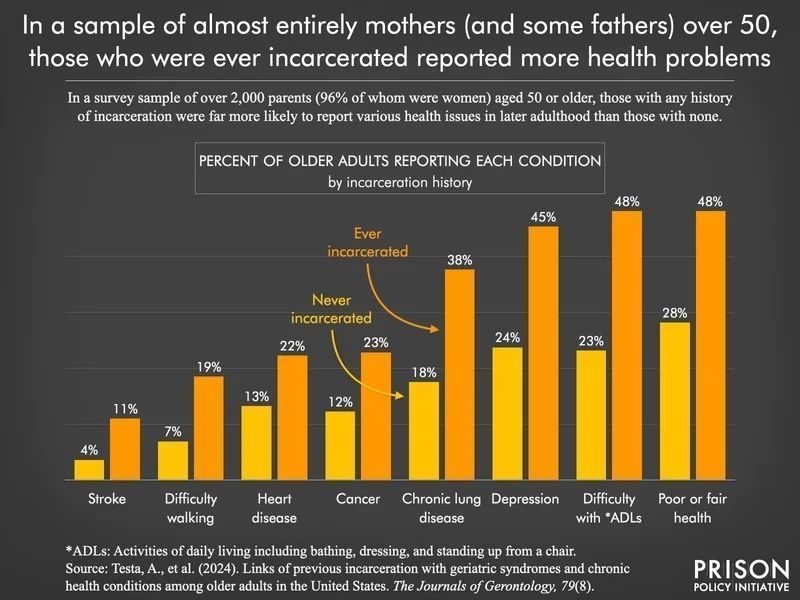
After 50, formerly incarcerated people have higher rates of stroke, cancer, heart disease, and chronic lung disease.
Mass incarceration has created a public health crisis.
@DRichardsQNS The problem with gentrification is that is paves pathways for local residents to be disenfranchised from the communities they built, it drives new ownership instead of paying homage to historical residents and movements that shaped this great city.
The former executive director of Queens Defenders and her ex-husband were sentenced to prison on Tuesday after siphoning off over $656,000 from the nonprofit, - @Jacob_Kaye_
https://t.co/L3gcKBIj2z
Question, because we have never seen you within the spaces of progressive work, aside from socialism what’s are some concrete policies that will reduce carceral systems do you have? Are you for ending solitary ? Closing Rikers ? What resources are you building for RCs? &many more
The Most Vital Resource for a returning citizen’s success is … Housing
So proud to be apart of this year’s supportive housing event
👉🏻2026 Full Conference Program and Workshop Schedule | 2026 Conference | Events | Supportive Housing Network of New York https://t.co/LqATIjjzo0
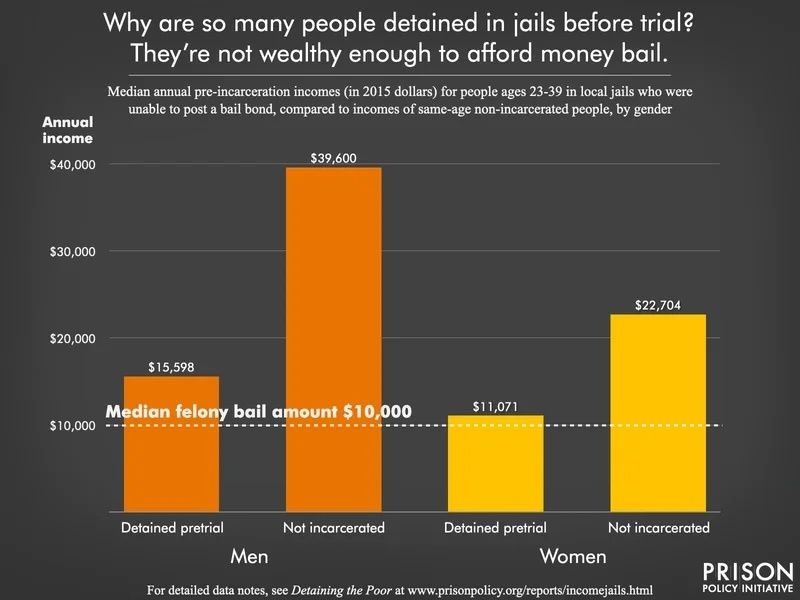
The system is designed to target poor people.
70% of all people in jails are unconvicted, and most are there simply because they can't afford bail.
For them, the median felony bail amount is the equivalent of 8 months’ income.
Shirley Chisholm. Coretta Scott King. Eleanor Holmes Norton.
They built the road we walk on.
Today — International Black Women's History Day — we say their names and we keep moving. ✊🏾
#BlackWomensHistoryMonth#WinWithBlackWomen