Join my book club on my Subscription List to discuss Black History and African history Books📚
It’s for anyone who enjoys thoughtful reading and conversation.
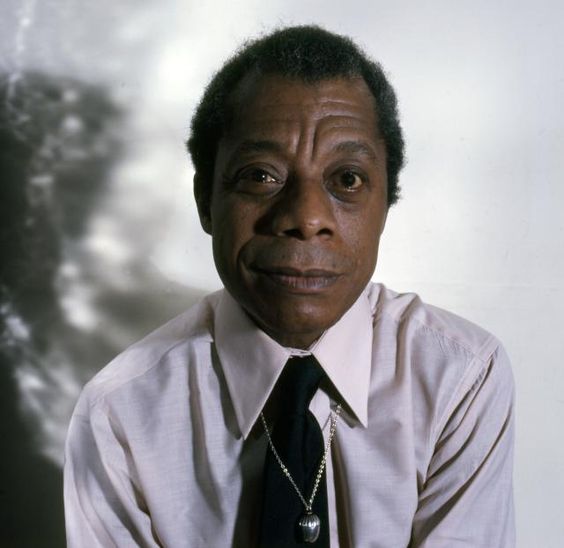
"The police in this country make no distinction between a Black Panther or a black lawyer or my brother or me. the cops aren’t going to ask me my name before they pull the trigger."
—James Baldwin
November 11, 1831 — Christian freedom fighter Nat Turner was executed on this day for leading a slave rebellion in Virginia.
In 1831, he saw a solar eclipse, which he believed was a sign from God and he started the most deadly slave revolt, the Nat Turner Rebellion.
MISSISSIPPI, 1969. White landowners weaponized starvation, evicting Black sharecroppers who tried to vote. Fannie Lou Hamer bought 680 acres of farm land and built an independent Black food system.
In the Mississippi Delta, the struggle for voting rights was also a struggle for economic survival. During the Jim Crow era, Black sharecroppers who attempted to register to vote risked losing their jobs, homes and livelihoods. White landowners used their control over farmland and employment to punish Black families who challenged the racial order. Fannie Lou Hamer knew this cruelty personally. After attempting to register to vote in 1962, she was fired from the plantation where she worked and forced to leave the home where she had lived for nearly two decades.
Rather than allow poverty and intimidation to keep Black families dependent on white landowners, Hamer pursued a different kind of freedom. In 1969, she established the Freedom Farm Cooperative in Sunflower County, Mississippi, beginning with 40 acres of farmland. The project eventually expanded to approximately 680 acres, creating opportunities for poor Black families to grow their own food, raise livestock, build homes and develop economic independence.
The cooperative was much more than a farming operation. It established community gardens, a pig bank, a tool-lending program, affordable housing initiatives and educational opportunities. Families who had been pushed out of traditional agricultural employment could participate in a community built around shared resources and collective ownership. Its produce helped feed more than a thousand families in the surrounding area.
Hamer understood that political rights meant little if families could still be controlled through hunger, unemployment and homelessness. She believed that owning land and producing food were essential parts of genuine freedom. Her work connected the fight for civil rights with food security, economic justice and Black land ownership.
The Freedom Farm Cooperative eventually faced financial difficulties, natural disasters and other challenges, closing in the mid-1970s. But its significance went far beyond the years it operated. Fannie Lou Hamer demonstrated that the struggle for equality was not only about being allowed to vote. It was also about having the land, resources and economic power to live independently and with dignity.
Selma Burke was a sculptor & member of the Harlem Renaissance movement, best known for her bas-relief portrait of President Franklin D. Roosevelt
She never received credit for her portrait of President Franklin D. Roosevelt which was later featured on the US dime.
—In 1943, Franklin D. Roosevelt sat for a portrait by a young African-American artist from Mooresville. That artist was Selma Burke.
However, John R. Sinnock’s signature is on the dime, and he receives credit for the work while Burke’s portrait, which she spent two years working on, is only recognized as an inspiration and model for the final image used on the coin. According to Lisa E. Farrington, author of “Creating Their Own Image, The History of African-American Women Artists,” Sinnock made “barely perceptible alterations.”
HONORS
As well as a sculptor, Burke was also a lifelong student and educator, winning numerous awards and fellowships. She earned her first degree from Winston-Salem State University in North Carolina and eventually graduated with a Master of Fine Arts from Columbia.
She started her first art school in 1940, eventually starting her second in 1946, and opened the Selma Burke Art Center in Pittsburgh, which operated from 1968 to 1981.
Burke is an honorary member of Delta Sigma Theta sorority. She received several honorary doctorate degrees during her lifetime, including one awarded by Livingston College in 1970 and one from Spelman College in 1988.
Milton Shapp, then-governor of Pennsylvania, declared July 29, 1975, Selma Burke Day in recognition of the artist's contributions to art and education. Her papers and archive are in the collection of Spelman College.
Burke was a member of the first group of women – along with Louise Nevelson, Alice Neel, Georgia O'Keefe, and Isabel Bishop – to receive lifetime achievement awards from the Women's Caucus for Art, in 1979. She received the award from President Jimmy Carter in a private ceremony in the Oval Office.
She received a Candace Award from the National Coalition of 100 Black Women in 1983 and the Pearl S. Buck Foundation Women's Award in 1987.
She died in 1995 at the age of 94.
For generations, Black Americans have served in the U.S. military while returning home to a country that often denied them the same rights and dignity they had been asked to defend. Their service took place against a contradiction that defined much of American history: fighting for democracy abroad while segregation, discrimination and racial violence remained realities at home.
To those who served and loved the country that did not love them back. Happy #VeteransDay
During World War II, more than one million Black Americans served in the armed forces. They served in segregated units, faced discrimination in military facilities and were often denied the same opportunities for promotion and recognition as white servicemen. The Tuskegee Airmen became famous for their combat record, while the Montford Point Marines served in a Marine Corps that had excluded Black men from its ranks until 1942.
Black veterans also became important figures in the struggle for civil rights. Returning servicemen expected the freedoms they had defended overseas to apply to them at home. Some faced violence simply for wearing their uniforms. Veterans such as Isaac Woodard, who was brutally attacked and blinded by a South Carolina police chief shortly after returning from World War II, became symbols of the injustice Black servicemen encountered.
Their story continued through Korea, Vietnam and later conflicts. Military service did not erase racism, but Black veterans repeatedly challenged the idea that citizenship and sacrifice could be separated by race.
This Veterans Day, remembering Black veterans means honoring both their service and the difficult history surrounding it. They served a country that was often unwilling to fully recognize them, yet their courage helped expand the meaning of American citizenship for generations that followed.
For those who are old enough to remember, Elvis Presley released “Hound Dog” in 1956, his biggest worldwide hit record. Few recall that Big Mama Thornton released the song first in 1953.
Willie Mae “Big Mama” Thornton was already making music history before Elvis Presley turned “Hound Dog” into an international sensation. Thornton recorded the song on August 13, 1952, and it was released by Peacock Records in 1953. Written specifically for her by young songwriters Jerry Leiber and Mike Stoller, the recording became a major R&B success, spending seven weeks at number one on the Billboard R&B chart.
Thornton's version was a powerful blues performance, driven by her commanding voice and unapologetic delivery. She sang about a woman who had finally had enough of a dishonest and unfaithful man. Her interpretation gave the song its original character and made it one of the defining recordings of her career.
In 1956, Elvis Presley recorded his own version, which became one of the biggest hits of his career and reached audiences around the world. His recording was influenced in part by a rearranged version performed by Freddie Bell and the Bellboys in Las Vegas. Although several artists had recorded the song before him, Elvis's version became the one most widely remembered by mainstream audiences.
Thornton's story reflects a wider pattern in American music history. Black blues and R&B musicians created sounds, styles and songs that helped shape rock and roll, yet white performers often received much greater commercial recognition and financial rewards when those songs reached larger audiences.
Big Mama Thornton was far more than the woman who sang “Hound Dog” before Elvis. She was a formidable blues artist whose influence deserves recognition in her own right. Her original recording was inducted into the Grammy Hall of Fame in 2013.
"The police in this country make no distinction between a Black Panther or a black lawyer or my brother or me. the cops aren’t going to ask me my name before they pull the trigger."
—James Baldwin
Selma Burke was a sculptor & member of the Harlem Renaissance movement, best known for her bas-relief portrait of President Franklin D. Roosevelt
She never received credit for her portrait of President Franklin D. Roosevelt which was later featured on the US dime.
—In 1943, Franklin D. Roosevelt sat for a portrait by a young African-American artist from Mooresville. That artist was Selma Burke.
However, John R. Sinnock’s signature is on the dime, and he receives credit for the work while Burke’s portrait, which she spent two years working on, is only recognized as an inspiration and model for the final image used on the coin. According to Lisa E. Farrington, author of “Creating Their Own Image, The History of African-American Women Artists,” Sinnock made “barely perceptible alterations.”
HONORS
As well as a sculptor, Burke was also a lifelong student and educator, winning numerous awards and fellowships. She earned her first degree from Winston-Salem State University in North Carolina and eventually graduated with a Master of Fine Arts from Columbia.
She started her first art school in 1940, eventually starting her second in 1946, and opened the Selma Burke Art Center in Pittsburgh, which operated from 1968 to 1981.
Burke is an honorary member of Delta Sigma Theta sorority. She received several honorary doctorate degrees during her lifetime, including one awarded by Livingston College in 1970 and one from Spelman College in 1988.
Milton Shapp, then-governor of Pennsylvania, declared July 29, 1975, Selma Burke Day in recognition of the artist's contributions to art and education. Her papers and archive are in the collection of Spelman College.
Burke was a member of the first group of women – along with Louise Nevelson, Alice Neel, Georgia O'Keefe, and Isabel Bishop – to receive lifetime achievement awards from the Women's Caucus for Art, in 1979. She received the award from President Jimmy Carter in a private ceremony in the Oval Office.
She received a Candace Award from the National Coalition of 100 Black Women in 1983 and the Pearl S. Buck Foundation Women's Award in 1987.
She died in 1995 at the age of 94.
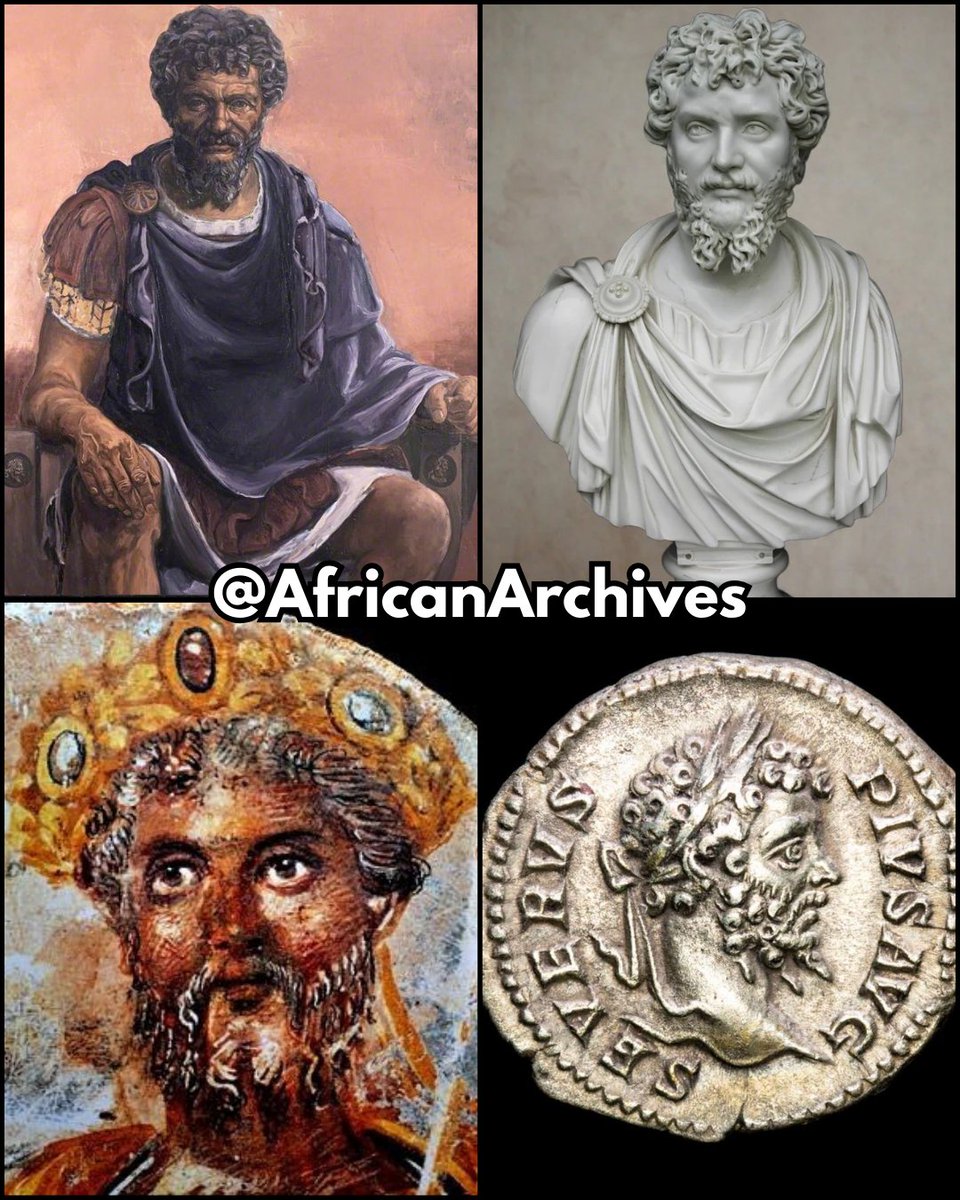
Septimius Severus was Rome’s first African emperor who ruled from 193 to 211 CE.
Born in Leptis Magna in present-day Libya, Severus came from a prominent North African family of Punic and Roman heritage. At a time when the Roman Empire stretched across three continents, his rise from the African province of Africa Proconsularis to the imperial throne demonstrated the diverse nature of Rome’s elite.
After the assassination of Emperor Pertinax in 193 CE, the empire plunged into chaos during what became known as the Year of the Five Emperors. Septimius Severus, then a powerful general commanding Roman legions along the Danube, marched his troops to Rome and successfully seized power, becoming emperor.
Once in control, Severus strengthened the Roman military, increased soldiers’ pay, and reorganized the army to secure loyalty and stability across the empire. His reign was marked by several military campaigns, including victories in the East against the Parthian Empire, where Roman forces captured the city of Ctesiphon.
Severus also expanded Roman influence in Britain, personally leading campaigns north of Hadrian's Wall in an attempt to subdue tribes in modern-day Scotland.
Beyond military reforms, he founded the Severan dynasty, which continued through his sons Caracalla and Geta, shaping Roman politics for years after his death.
Septimius Severus died in 211 CE in York, Britain, while still campaigning with his army. His famous advice to his sons before his death was recorded as:
"Be harmonious, enrich the soldiers, and scorn all other men."
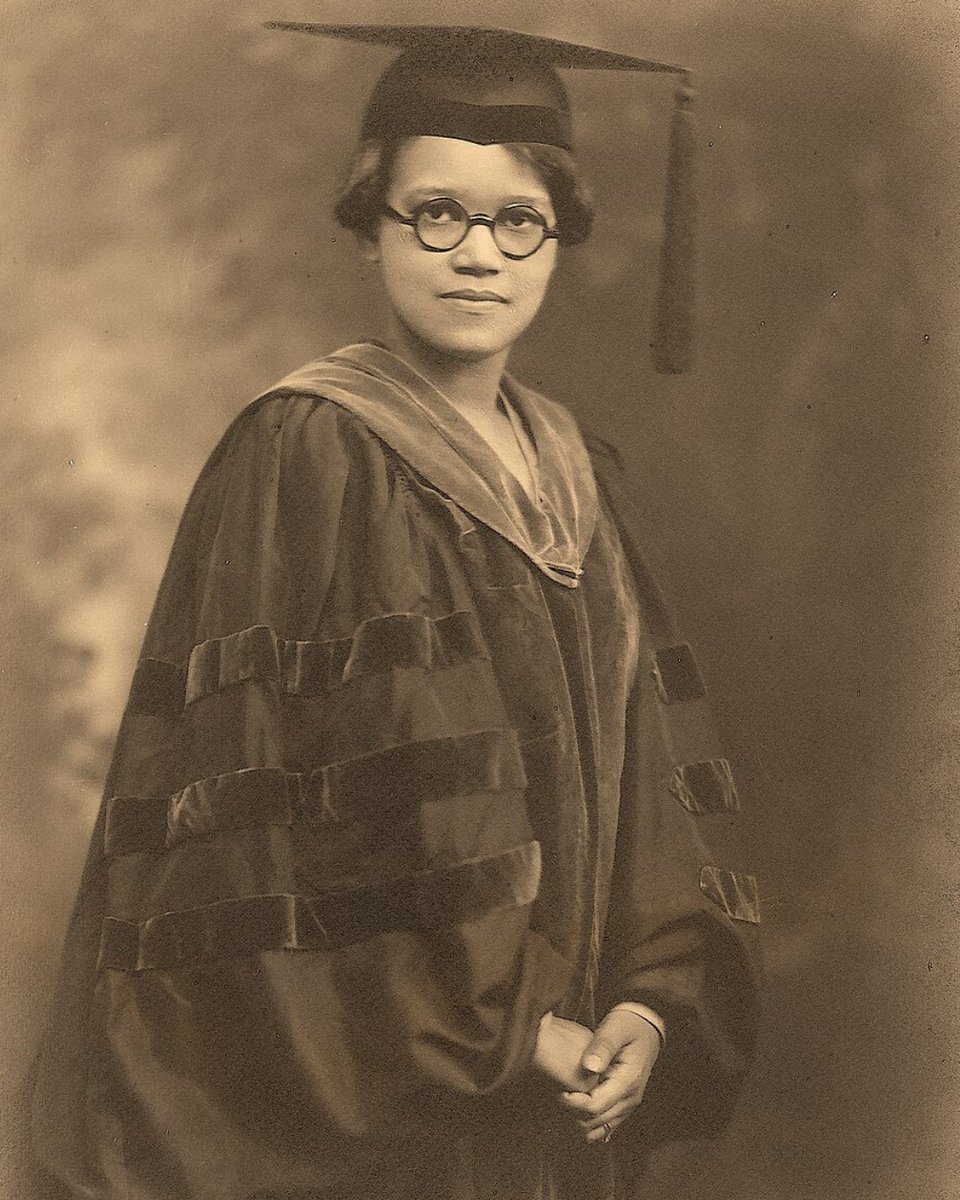
Sadie Tanner Alexander was the first Black American to earn a Ph.D. in economics (1921), the first Black woman to graduate from the University of Pennsylvania Law School, the first Black woman admitted to the Pennsylvania Bar, and the first national president of Delta Sigma Theta Sorority, Inc.
Septimius Severus was Rome’s first African emperor who ruled from 193 to 211 CE.
Born in Leptis Magna in present-day Libya, Severus came from a prominent North African family of Punic and Roman heritage. At a time when the Roman Empire stretched across three continents, his rise from the African province of Africa Proconsularis to the imperial throne demonstrated the diverse nature of Rome’s elite.
After the assassination of Emperor Pertinax in 193 CE, the empire plunged into chaos during what became known as the Year of the Five Emperors. Septimius Severus, then a powerful general commanding Roman legions along the Danube, marched his troops to Rome and successfully seized power, becoming emperor.
Once in control, Severus strengthened the Roman military, increased soldiers’ pay, and reorganized the army to secure loyalty and stability across the empire. His reign was marked by several military campaigns, including victories in the East against the Parthian Empire, where Roman forces captured the city of Ctesiphon.
Severus also expanded Roman influence in Britain, personally leading campaigns north of Hadrian's Wall in an attempt to subdue tribes in modern-day Scotland.
Beyond military reforms, he founded the Severan dynasty, which continued through his sons Caracalla and Geta, shaping Roman politics for years after his death.
Septimius Severus died in 211 CE in York, Britain, while still campaigning with his army. His famous advice to his sons before his death was recorded as:
"Be harmonious, enrich the soldiers, and scorn all other men."
George Grant, the first Black Professor at Harvard University, invented the modern golf tee.
Previously, golfers carried around buckets of sand, placing their balls on little piles as they went.