Denzel Washington on a boys club field trip. The group went to the mount vernon, NY police station, where he was chosen as police commissioner for the day, 1960.
In 1971, civil rights activist Ann Atwater and Ku Klux Klan leader C.P. Ellis, initially bitter enemies, were brought together to co-chair a community event in Durham, North Carolina, leading to an unexpected friendship and Ellis renouncing the Klan.
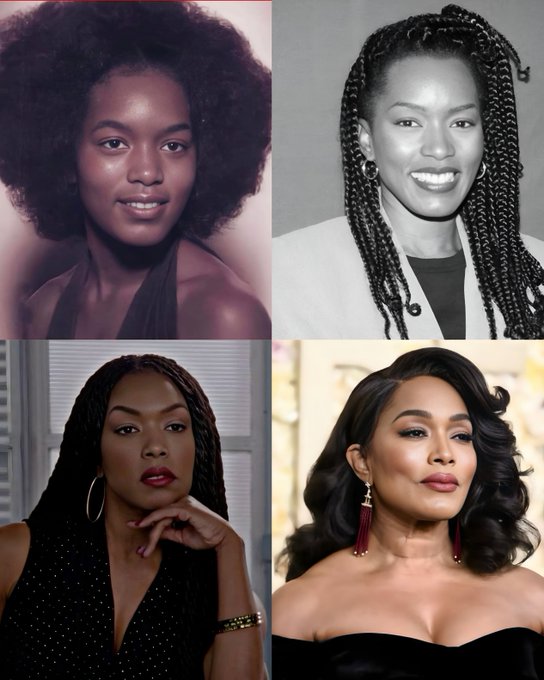
Angela Basett through the years
Born in New York City and raised in St. Petersburg, Florida, Bassett graduated from Yale University, where she earned both a bachelor's degree in African American Studies and a Master of Fine Arts from the Yale School of Drama. At a time when leading roles for Black actresses were limited, she dedicated herself to mastering her craft rather than chasing fame.
Her breakthrough came in 1993 when she portrayed Tina Turner in What's Love Got to Do with It. Bassett's transformation into the legendary singer was so convincing that it earned her a Golden Globe Award and an Academy Award nomination for Best Actress. The performance remains one of the greatest biographical portrayals in film history and inspired countless actors to approach real life roles with the same level of dedication.
She continued to make history by bringing influential Black women to life on screen, portraying figures such as Betty Shabazz, Rosa Parks, Katherine Jackson, Coretta Scott King, and Queen Ramonda in Black Panther. Each performance reflected careful research and deep respect for the women whose stories she was entrusted to tell.
Angela Bassett has also challenged Hollywood's long standing stereotypes. Throughout her career, she has often chosen roles that highlight the complexity, resilience, and leadership of Black women. Whether playing a queen, a civil rights figure, a grieving mother, or a determined professional, she has consistently reminded audiences that Black stories deserve to be told with depth and dignity.
In 2023, Bassett received an Honorary Academy Award in recognition of her extraordinary contributions to cinema. The honour celebrated not only her remarkable body of work but also the influence she has had on generations of performers who saw in her a path that once seemed impossible.
Barry Jennings was killed shortly after exposing the truth on 9/11.
Barry Jennings is remembered as one of the many people who experienced the events of September 11, 2001, from inside the World Trade Center complex. His story has attracted significant public attention over the years because of interviews he gave describing what he witnessed that morning and because his account has been the subject of ongoing debate.
Jennings was the Deputy Director of Emergency Services for the New York City Housing Authority. On the morning of the attacks, he was instructed to report to the city's emergency command centre, which was located on the 23rd floor of World Trade Center Building 7. Along with Corporation Counsel official Michael Hess, he became trapped inside the building after the attacks unfolded.
In later interviews, Jennings described hearing loud explosions, encountering damaged stairwells, and eventually becoming stranded for several hours before being rescued. His recollections became widely discussed because they differed in some respects from other accounts and raised questions that have been examined by journalists, investigators, engineers, and researchers over the years.
Following the attacks, multiple official investigations, including those conducted by the 9/11 Commission and the National Institute of Standards and Technology, examined the collapse of the World Trade Center buildings. Those investigations concluded that World Trade Center 7 collapsed later that afternoon after fires, ignited by debris from the collapse of the North Tower, caused critical structural failures. Jennings' eyewitness account remains part of the historical record, but it has not led officials to change those findings.
Barry Jennings passed away in August 2008, just days before the release of the National Institute of Standards and Technology's final report on World Trade Center 7. His death has been the subject of speculation online, but there is no verified evidence that he was killed because of his statements about 9/11 or that his death was connected to the official investigations. Public records indicate that he died from natural causes.
Cicely Tyson and Diana Ross at the Oscars, 1973.
he 45th Academy Awards, held in 1973, brought together some of the most celebrated names in entertainment, but for many viewers, seeing Cicely Tyson and Diana Ross seated among Hollywood's biggest stars carried a significance that went far beyond the ceremony itself.
At a time when meaningful opportunities for Black actors and performers were still limited, Tyson and Ross had already begun reshaping what success could look like in American entertainment. Their presence at the Oscars represented years of determination, extraordinary talent, and a refusal to accept the narrow roles that had long been offered to Black artists.
Cicely Tyson had built a reputation for choosing roles that reflected dignity, strength, and humanity. Rather than accepting stereotypes, she often turned down parts that she believed misrepresented Black life. In 1973, she became one of the first Black women ever nominated for the Academy Award for Best Actress for her unforgettable performance in Sounder. Her portrayal of Rebecca Morgan earned widespread acclaim and demonstrated that powerful storytelling could challenge long held prejudices.
Diana Ross arrived at the Oscars that same year after delivering a remarkable acting debut in Lady Sings the Blues, where she portrayed jazz legend Billie Holiday. Already one of the world's biggest music stars as the former lead singer of The Supremes, Ross surprised critics with her dramatic performance and also received a nomination for Best Actress. It was a rare achievement for a singer making the transition to film, and it proved that her talents extended far beyond the recording studio.
The fact that two Black women were nominated for Best Actress in the same year was historic. It reflected a slow but meaningful shift in an industry that had often overlooked Black performers despite their immense contributions to American culture. While neither Tyson nor Ross took home the Oscar that night, their nominations opened doors and inspired future generations of actors to believe that excellence could eventually be recognised on the industry's biggest stage.
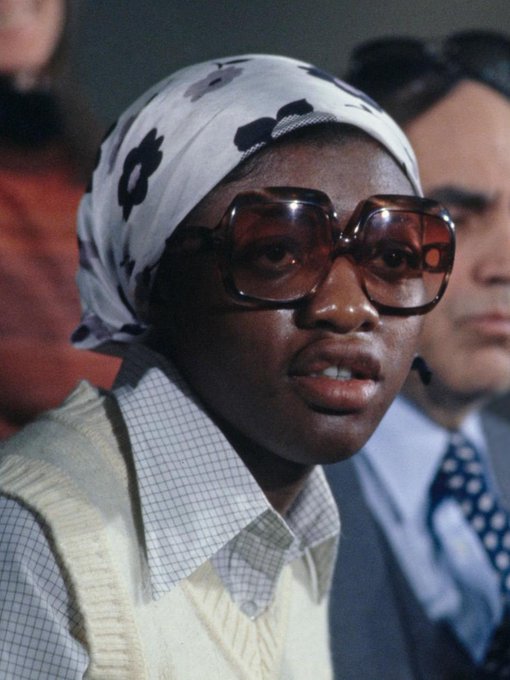
In 1974, Joan Little, a black inmate killed a white prison guard who was in the process of sexual assaulting her. She became the first woman in US history to be acquitted of murder on the grounds of self-defense against sexual assault.
In 1974, a case from North Carolina forced Americans to confront difficult questions about race, justice, sexual violence, and the rights of women to defend themselves.
Joan Little was a 20-year-old Black woman serving time in jail when she said a white prison guard, Clarence Alligood, entered her cell and sexually assaulted her at knifepoint. During the struggle, Little took control of the ice pick the guard had been using to threaten her and stabbed him. She escaped from the jail but was captured several days later.
Rather than treating the case as one of survival, prosecutors charged Joan Little with first degree murder, a crime that carried the possibility of the death penalty at the time. The case immediately drew national attention. Civil rights organisations, women's rights groups, labour unions, religious leaders, and thousands of ordinary Americans rallied behind her, arguing that no woman should be punished for defending herself against sexual assault.
What made the case especially significant was the broader context. For generations, Black women who experienced sexual violence often found little protection from the legal system. Their testimonies were frequently ignored, and their attackers were rarely held accountable. Many supporters believed Joan Little's trial represented not only her fight for justice but also the fight to have Black women's voices taken seriously in American courts.
During the trial, the defence argued that Little had acted in self defence while resisting a violent sexual assault. After hearing weeks of testimony, the jury agreed. On August 15, 1975, Joan Little was found not guilty.
The verdict made history. Joan Little became the first woman in the United States to be acquitted of murder after successfully arguing that she acted in self defence against a sexual assault. Legal scholars have since recognised the case as a landmark moment in discussions about self defence, women's rights, and the treatment of sexual violence within the justice system.
Her case also helped spark broader conversations about conditions inside prisons, the vulnerability of incarcerated women, and the need for greater accountability when abuse occurs behind prison walls. While many challenges remain today, Joan Little's trial is remembered as an important turning point that highlighted issues too often overlooked.