INSS launches and engages in innovative, relevant, high-quality research that shapes the public discourse of issues on Israel's national security agenda.
Between Anti-Zionism and Antisemitism: The Boycott of Jewish-Owned Businesses in Philadelphia
INSS Researcher Alec Mauer writes:
On November 8th, the day before Kristallnacht, several anti-Israel groups staged a protest promoting a boycott of local Jewish and Israeli-owned restaurants, intending to drive “Zionists businesses” out of Philadelphia. Notably, about half of the restaurants targeted are owned by American Jews who are not citizens of Israel.
The event was notable for two reasons: firstly, the local DSA chapter backed the event unequivocally, denouncing antisemitism while ignoring how the organizers of the event had incorporated the ethnic slur “Zios” in their initial announcement. Second, unlike the scenes endemic to so many campus protests over the last three years in which counterprotesters were usually numerical footnotes in relation to their anti-Israel counterparts, the local Jewish community effectively organized a sizable response; separated by a robust police cordon, 200 pro-Israel and pro-Jewish counterprotesters arrived to challenge the 300 masked anti-Israel and antisemitic protesters. Meanwhile, the targeted Jewish restaurants struggled to serve their clientele that day because of the long lines of patrons engaged in a counter-boycott.
The event showcased the extent to which some antizionist organizations target American Jews, blaming them for the actions of Israel, in what is defined as antisemitic under the IHRA definition. Moreover, it demonstrated that these organizations are successful in forming coalitions with other groups otherwise committed to multiculturalism, but that are willing to engage in anti-Jewish discrimination.
However, there are also reasons to be hopeful. The local Jewish community’s response was robust and effective. Moreover, despite antizionism’s growing salience within public discourse and political life, mainstream Democratic politicians did not hesitate to condemn the event. Philadelphia’s mayor, along with the state attorney general and governor of Pennsylvania, all denounced the boycott as a flagrant act of antisemitism, in what can be viewed as an ongoing commitment by most officeholders – Democrat and republican – to protect Jewish citizens.
From a Popular Tourist Destination to a Center of Protest: Is Thailand Changing Its Attitude Toward Israelis?
INSS researcher Elad Ben David and Chen Plotkin, a doctoral candidate in the Department of Asian Studies at The Hebrew University of Jerusalem, write:
Thailand has long been a favorite destination for Israelis, and relations between the two countries have traditionally been positive. In recent months, however, anti-Israel discourse has intensified in the country, leading to protests against Israeli tourists and Chabad activities, particularly in Phuket and Bangkok. In an unusual move, the Thai citizenship of Rabbi Yosef Chaim Kantor, one of the leading Chabad emissaries in the country, was recently revoked for violating naturalization terms related to his dual citizenship. Against the backdrop of the growing campaign to delegitimize Israel since October 7, these developments raise the question of whether criticism of Israel is also expanding into opposition to the presence of Jewish institutions associated with it, even in a country such as Thailand.
As in the West, where Muslim minorities have taken part in protests, some members of Thailand’s Muslim community, which makes up about 5 percent of the population, have joined protests against Israelis and Chabad institutions over the war in Gaza. But unlike in the West, where protests against Israel are primarily tied to activism around the Palestinian issue, the protests in Thailand are more complex and reflect a combination of factors: criticism of the behavior of some Israeli tourists and businesspeople, the rise of nationalist sentiment following border disputes with Cambodia in 2025, and the impact of the war in Gaza on public opinion.
For example, two prominent demonstrations were held on September 10 and October 31, outside the Israeli Embassy in Bangkok and on the island of Phuket. They were led by nationalist activist Sondhi Limthongkul, one of the leaders of the "Yellow Shirts" movement in the 2000s. Demonstrators called for the visa exemption for Israelis to be shortened and for foreign businesses and organizations to be expelled from the country. The protests have nevertheless remained limited in scale. The largest, in Bangkok, drew only about 500 people. Most criticism has focused on tourist areas where tensions have arisen between Israelis and local residents, especially Pai in the north, Phuket, and the southern islands.
It is important to note that although these trends may point to the spread of anti-Israel discourse to distant arenas, the revocation of Rabbi Kantor’s citizenship does not prove that the Thai government has chosen to adopt an anti-Israel policy. Over the past year, the Thai government has also expelled tourists and businesspeople who were citizens of countries other than Israel after they operated shell companies, clashed with locals or other tourists, or engaged in criminal activity such as arms and drug trafficking. This policy also included shortening the visa exemption to 30 days for citizens of 59 additional countries, including the United States, Australia, and the United Kingdom. In light of all this, it is still too early to determine whether Thailand’s policy toward Israel has undergone a substantive change.
Israel’s Ministry of Diaspora Affairs included Imam Omar Suleiman, one of the most influential Muslim leaders in the United States, on its list of leading influencers spreading antisemitism. But could this labeling actually undermine the fight against antisemitism and the delegitimization of Israel?
INSS researcher Elad Ben David explains why labeling Suleiman as antisemitic could be a strategic mistake – and what Israel could do differently >>> https://t.co/AGvfKkolEm
The Situation at the Front and the Strikes on Energy Infrastructure — What Might Kyiv and Moscow Agree on in Abu Dhabi?
Arkady Mil-Man, former Israeli Ambassador and Head of the Institute's Russia Program, writes:
On November 10–11, trilateral talks between Ukraine, Russia, and the United States will resume in Abu Dhabi, following the meeting that took place in Geneva on February 17–18. Since then, Ukraine has regained control of territory in the Lyman area, and Russia has intensified its strikes against Ukrainian energy infrastructure. After four years and eight months of full-scale war, the Kremlin still hopes that continued fighting will yield concessions it has yet to secure at the negotiating table.
On the front, Moscow is struggling to achieve its objectives. Putin frames the conquest of the Donbas as inevitable, but the Russian military has yet to encircle the main cities in Donetsk Oblast that remain under Ukrainian control. Disrupting Russian supply lines with drones has helped Ukrainian forces launch counterattacks and seize the initiative in several sectors. In September and October, Russia lost more territory than it captured, although its forces continue to advance in some areas. Moscow continues to demand that Kyiv cede territories that the Russian army has failed to capture, and the likelihood that Kyiv will agree is low.
As the Russian military struggles to reach a decisive outcome on the front, the Kremlin is intensifying its attacks on the Ukrainian home front. Strikes on power grids, industrial plants, and ports are intended to weaken the economy and wear down the public's resilience. Disruptions to heating and water supplies in Kyiv ahead of winter illustrate the toll on civilians. Ukraine’s central bank forecasts a 0.4 percent contraction in 2026, compared with its previous forecast of 1.8 percent growth. Against this backdrop, Kyiv met with its partners in Brussels on November 4–5 to discuss postwar reconstruction and funding for defense needs in 2027 if the fighting continues. Budgetary pressure is also mounting in Russia: the projected federal deficit is nearly double the original target, while oil and gas revenues dropped by approximately 14 percent in January–October compared with the same period last year.
The talks, mediated by Steve Witkoff and Jared Kushner, may clarify where agreements could be reached even before a comprehensive ceasefire. Kyiv wants to discuss prisoner exchanges, the return of Ukrainian children transferred to Russia, and commercial maritime safety in the Black Sea. Regarding security guarantees, Kyiv wants to know which of its allies will respond if Russia attacks again, by what means, and how quickly. Britain and France are preparing to conduct drills in Poland to rehearse a potential force deployment after the fighting ends, while Moscow opposes the stationing of foreign troops in Ukraine.
The Kremlin's willingness to compromise also depends on decisions made in Washington. The Trump administration reached an agreement with Moscow on the supply of Russian diesel fuel and suspended some sanctions under the Graham Act. At the same time, about $2 billion in allied funding is still missing for already approved purchases of U.S. weapons for Ukraine. Further concessions granted to Russia before it fulfills its commitments, coupled with potential delays in weapons deliveries to Kyiv, could encourage the Kremlin to stall. The Democratic victory in both houses of Congress has raised hopes in Kyiv for expanded aid, but the new Congress will only convene in January, while the Trump administration is conducting the Abu Dhabi talks.
Meanwhile, Beijing has confirmed that discussions are underway regarding a potential trilateral meeting between Xi Jinping, Trump, and Putin on the sidelines of the APEC summit in Shenzhen. The meeting has not yet been officially confirmed. If the war is discussed, Moscow will be able to advance its position in Kyiv’s absence.
In Abu Dhabi, the immediate test ahead of winter will be the feasibility of a mutual pause in strikes. According to an outline raised in pre-meeting preparations, Russia would suspend its attacks on Ukraine’s energy infrastructure, while Ukraine would suspend its attacks on Russia’s oil industry facilities, including refineries. Such an arrangement would require agreement on which facilities it covers and on a mechanism for documenting violations. The question is whether halting strikes on refineries will justify, in the Kremlin's eyes, temporarily relinquishing a leverage point that has taken on greater importance as the Russian army's advance on the frontline has slowed.
Tensions are rising in the Middle East, and all eyes are on the U.S. military posture in the region. How extensive is the American military presence, and how is it changing in response to developments?
Track the deployment of U.S. forces across the Middle East with the interactive map by the Institute for National Security Studies >>> https://t.co/YnvaCZX12t
The Democratic tsunami has reached Washington - and it is expected to change the rules of the game in U.S.-Israel relations. What will become of U.S. security aid to Israel? What measures against Israel could be advanced in Congress? And can Israel influence the direction of these developments?
INSS researchers Ted Sasson and Avishay Ben Sasson-Gordis analyze the implications of the Democrats’ landslide victory and the options available to Israel in the new political landscape >>> https://t.co/yMZE1EbOTo
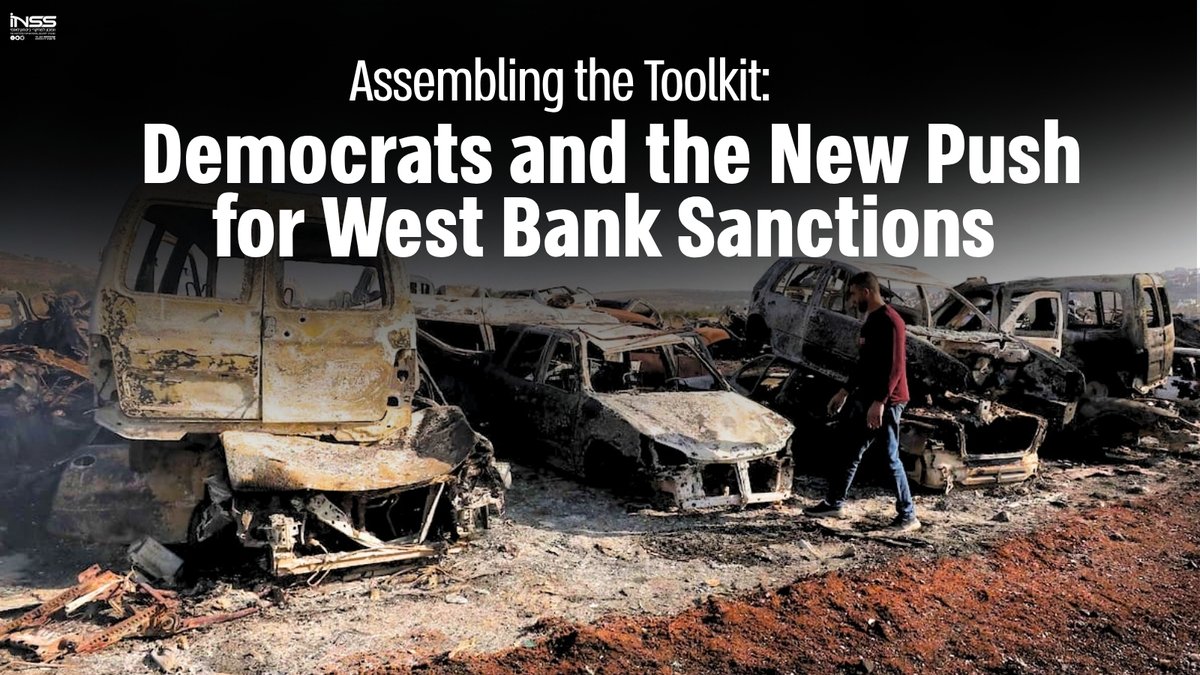
A stringent sanctions regime targeting settler violence and settlement expansion in the West Bank is gaining broad consensus within the Democratic Party - and if adopted, these sanctions could cause significant damage to Israel’s economy.
INSS researchers Theodore Sasson and Avishay Ben Sasson-Gordis examine the risks and the steps Israel can take now to mitigate them >>> https://t.co/qRp2syNFy2
Lebanon urgently needs economic assistance, but some of the funds could end up in Hezbollah’s hands. How can Lebanon’s recovery be supported without strengthening the terrorist organization?
INSS researchers Orna Mizrahi, former Deputy National Security Advisor, and Noam Binstok, examine the dilemma of providing economic assistance to Lebanon, the risks involved, and Israel’s interest in strengthening the Lebanese state >>> https://t.co/WudeKHQVYO
Riyadh: Between the Iranian Hammer and the American Anvil
INSS Senior Researcher Yoel Guzansky writes:
For months, Saudi Arabia has been absorbing missile and drone attacks from Iran and its proxies. Energy infrastructure has been damaged, Riyadh’s airport has been largely shut down, and civilians have been killed. Yet Saudi Arabia’s defense minister traveled to Tehran, was photographed smiling alongside senior Iranian officials, and called for dialogue.
Why? Riyadh fears Iranian aggression, but fears even more so the resumption of war between the United States and Israel against Iran. Saudi officials believe another round could be more destructive than the previous ones, and that Saudi Arabia could pay a heavy price for a war it did not initiate and whose course it cannot control.
More importantly, Riyadh appears to doubt that another U.S.-Israeli strike could change Iran’s policy, let alone topple the regime. From its perspective, the most dangerous scenario is a war that leaves Iran battered and vengeful, without eliminating the threat it poses. Another round.
The security costs are compounded by a steep economic price. Mohammed bin Salman’s Vision 2030 depends on stability, investment, and tourism. It is difficult to attract investors when airports and energy infrastructure are repeatedly exposed to attack.
Saudi Arabia is therefore not necessarily seeking closer ties with Iran; it is seeking to keep the threat of war at a distance. Yet herein lies the paradox: the more Iran uses force and receives dialogue in return, the more it may conclude that its aggression pays off.
The Saudi choice does not necessarily amount to capitulation, but it illustrates the limits of deterrence and the depth of Riyadh’s fear of another war. Riyadh would rather deal with a hostile yet restrained Iran, than gamble on a war that may not change Iran’s behavior, but will almost certainly exact a heavy price from the kingdom.
Two wars, a severe economic crisis, popular protests, and an ongoing crisis of legitimacy - yet the Iranian regime remains standing. Can Israel afford to base its strategy on the prospect of regime change?
Raz Zimmt, Head of the Iran and the Shiite Axis Program at INSS, examines the prospects for the regime’s collapse and the role this possibility should play in Israel’s strategic planning >>> https://t.co/7jS3dBbpkf
Trump announced today that the United States will end its annual aid to Israel at the end of 2026. How prepared is Israel for such a change, and what could the implications be?
Back in February, INSS researchers Avishay Ben Sasson-Gordis, Tomer Fadlon, and Esteban Klor examined the economic, security, and strategic implications of reducing U.S. aid to Israel.
READ THE FULL ARTICLE >>> https://t.co/cHheMvFhem
The Mecca Alliance: Opportunities and Risks for Syria
INSS Researchers Carmit Valensi and Amal Hayek write:
On October 31, during the Manama Dialogue forum in Bahrain, Syrian Foreign Minister Asaad al-Shaibani confirmed that Damascus is holding discussions on the possibility of joining the “Mecca Alliance.” His remarks follow a statement he made during a visit to Pakistan in August, indicating that Syria was considering joining the alliance.
The Mecca Alliance, signed in August 2026 by Saudi Arabia, Turkey, and Pakistan, is a mutual defense agreement stipulating that an armed attack against one member will be considered an attack against all, similar to NATO’s principle of collective defense. The alliance is intended to strengthen deterrence and military cooperation amid growing regional threats, particularly Houthi attacks against Saudi Arabia.
For Syria, joining the alliance offers significant strategic advantages. First, it aligns with President Ahmed al-Sharaa’s efforts to reestablish Syria’s standing as a constructive regional actor that contributes to security and stability, rather than merely relying on assistance. It would also symbolize Syria’s distancing itself from the Iranian axis and its reintegration into the Sunni Arab regional system.
Second, the alliance could help rebuild the Syrian military by combining Saudi resources, Turkish experience and defense industry capabilities, and Pakistani military capabilities. Such assistance is also essential to the regime’s efforts to unify the various armed groups under a single state authority. In addition, regional backing could strengthen Damascus’s position vis-à-vis Israel and expand its diplomatic room for maneuver.
However, joining the alliance also comes at a cost. A commitment to mutual defense could draw Syria into distant conflicts, foremost among them the campaign against the Houthis in Yemen, at a time when it is struggling to address its own internal security challenges. Moreover, joining a binding alliance could constrain al-Sharaa’s policy of diversifying Syria’s sources of support and maintaining relations with competing actors without alignment with any single camp.
The Israeli factor adds another layer of complexity to Syria’s dilemma. Joining the alliance could strengthen Damascus’s position vis-à-vis Israel and provide it with regional backing, but it could also raise concerns in Jerusalem about the emergence of a hostile military bloc, particularly given Turkey’s involvement. Al-Sharaa, who has thus far pursued a restrained policy toward Israel and seeks to advance a US-mediated security arrangement, must weigh whether the strategic benefits justify the risk of deepening mistrust and undermining diplomatic contacts.
Conversely, continued Israeli military activity in Syria and the absence of a security arrangement could increase Damascus’s incentive to seek alternative security support. In this sense, the question of joining the alliance also reflects the limits of al-Sharaa’s balancing policy, as he seeks to strengthen Syria’s position without being drawn into new regional conflicts.
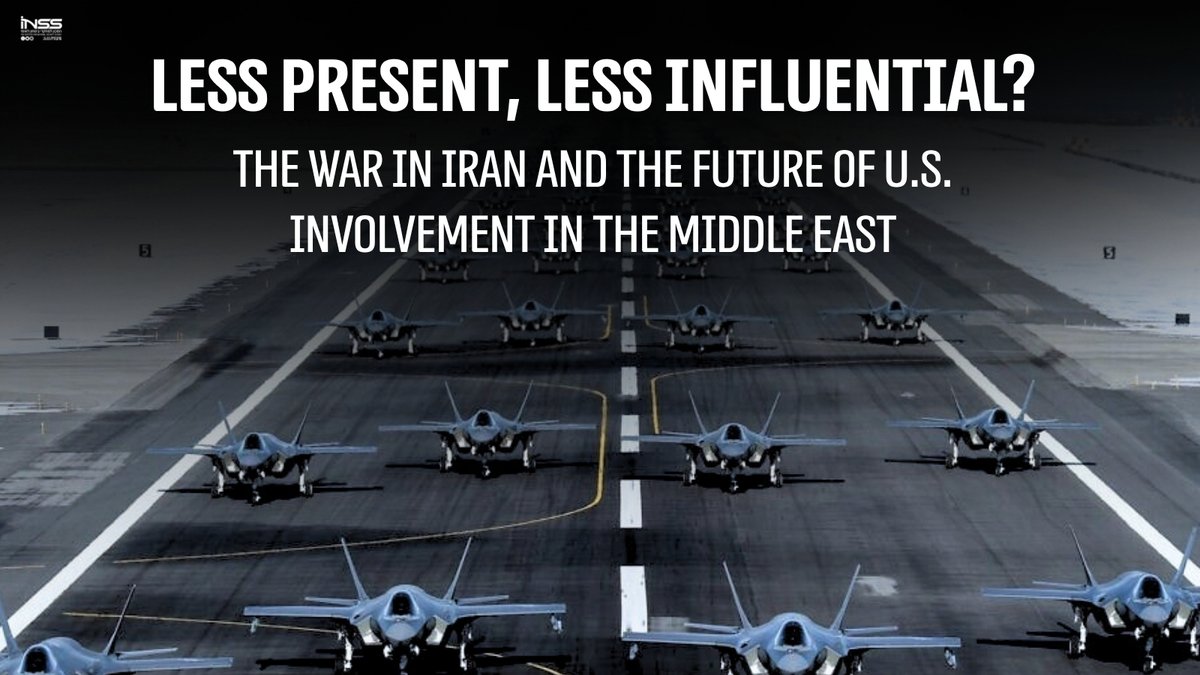
The United States is seeking to reduce its military presence in the Middle East. How could this affect its standing in the region, and where does Israel fit into the picture?
INSS researchers Eldad Shavit and Jesse Weinberg examine the future of U.S. involvement, its potential impact on the regional order, and the implications for Israel >>> https://t.co/siBsYYbCWU
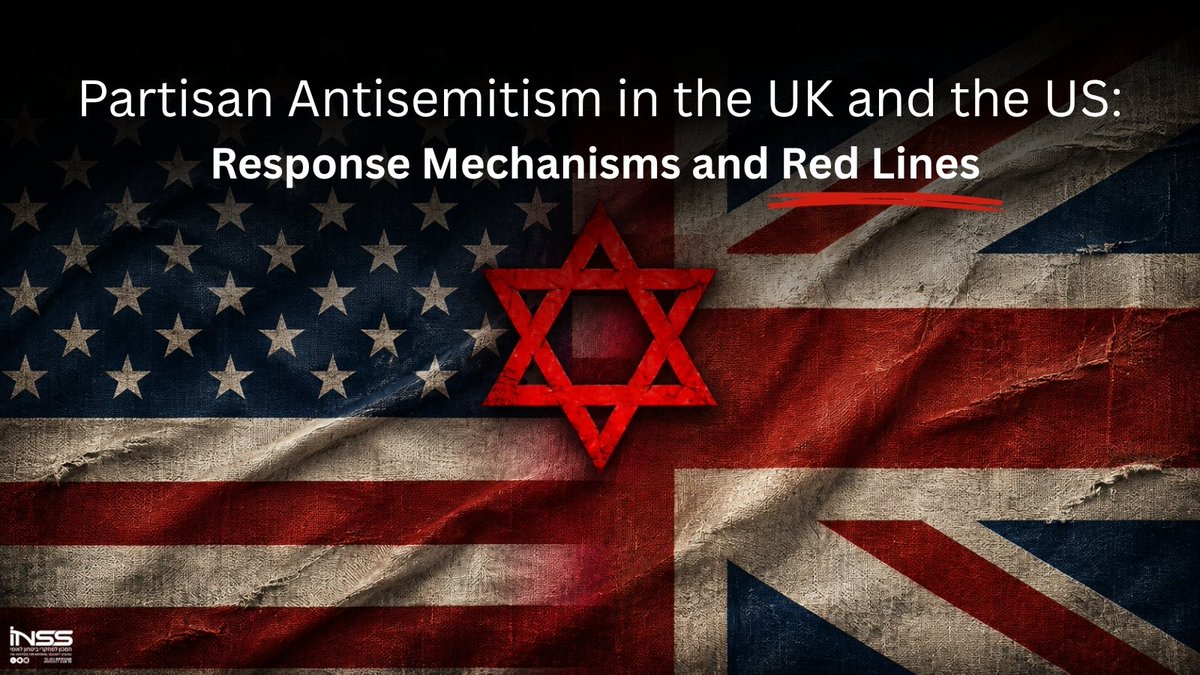
From the crisis that rocked Britain's Labour Party to the challenges faced by Democrats and Republicans in the United State - How are the boundaries of antisemitism determined among candidates and elected officials?
INSS researchers Ariel Cohen and Ofir Dayan examine the differences between the two political systems, the mechanisms for addressing antisemitism, and their limitations >>> https://t.co/4ZWy4LC4iK
American and Israeli pilots flying together to strike Iran. A level of military cooperation once considered unimaginable. So why is the U.S.–Israel alliance facing growing uncertainty?
In the latest episode of Brief. IL, Dr. Jesse Weinberg speaks with Maj. Gen. (res.) Tamir Hayman, Director of INSS, and Dr. Steven A. Cook, the Eni Enrico Mattei Senior Fellow for Middle East and Africa Studies at the Council on Foreign Relations and Director of its Middle East Program, about the tensions shaping the alliance and what lies ahead for U.S.–Israel relations.
Watch the full episode on YouTube or listen on your favorite podcast platform >>>
From religious and cultural influence to terrorism financing and covert operations: Have Iran and Hezbollah established networks in Brazil that pose a security threat?
Researchers Danny Citrinowicz and Charlotte Cobb examine how influence networks, ties to criminal organizations, and financial activities could together lay the groundwork for hostile operations—and what this means for Brazil’s security >>>
https://t.co/asytH2mx4O
Have Hamas’s weapons gone from an asset to a liability in the eyes of Gazans?
Three years of war have brought questions to the surface in Gaza that, until recently, could barely be asked.
INSS researcher Orit Perlov analyzes the discourse among Gazans surrounding one of the most explosive issues on the agenda—and what it reveals about Gaza’s future >>> https://t.co/x5WYnefVhQ
Who Really Controls the Bab el-Mandeb Strait?
INSS Senior Researcher Yoel Guzansky writes:
Control of the Bab el-Mandeb Strait is determined not only by who holds its shores, but also by who can threaten vessels passing through it. This distinction is critical to understanding the war in Yemen, the Houthis’ power, and the challenge facing Saudi Arabia and the international community.
The question of who controls Bab el-Mandeb may sound simple, but the answer is far more complex. Geographically and militarily, the Houthis do not control all of the strait’s coastline, and certainly not all the islands and surrounding territory. Important sections of Yemen’s western coast are held by forces opposed to them. But control of territory is not the same as control of maritime traffic. In today’s military reality, a force need not hold both sides of a strategic strait to disrupt navigation through it.
The Houthis clearly illustrate the distinction between territorial control and control through firepower. Utilizing anti-ship missiles, UAVs, unmanned surface vessels, and other weaponry, they are capable of threatening vessels from far beyond the coastline. In fact, the Houthi threat is not limited to the strait itself; it extends across vast parts of the Red Sea and the Gulf of Aden. Therefore, even if the Houthis lose more territory along the coast, that does not necessarily mean they will lose their ability to disrupt maritime traffic.
The Houthis do not need to sink every ship, or even hit most of them. A credible, sustained threat is enough to drive up insurance premiums, deter shipping companies, and divert maritime traffic to longer, more expensive routes.
This leads to an important conclusion about the war in Yemen. Even if forces opposed to the Houthis manage to advance along the western coast, seize ports, or push them away from the strait, such territorial gains will not necessarily guarantee freedom of navigation. That would require a sustained effort to undermine the Houthis’ ability to identify targets, launch weapons, and replenish their stockpiles. Even successful military operations cannot guarantee that the threat will be eliminated entirely, especially when dealing with an organization capable of operating through mobile, dispersed arrays.
The implications reach far beyond Yemen. For Saudi Arabia, which wants to rely on the Red Sea as a strategic alternative to the Strait of Hormuz, this creates a double vulnerability. Even if oil and other goods can be transported westward, it offers no complete solution if the Red Sea’s southern exit remains under threat. For the global economy, the threat undermines confidence in one of the world’s most important trade routes.
The Houthis may not necessarily be capable of shutting down the strait entirely, but they can make passage through it dangerous, costly, and unpredictable. Any effort to guarantee freedom of navigation that focuses only on who holds Yemen’s coastline, and not on who can launch attacks from it, will miss the heart of the problem.
Removal of Foreign Influence Accounts Ahead of the Elections: Does the Operation End Here?
Amit Cohen and Reut David, INSS Researchers in Foreign Information Manipulation and Interference, write:
Just days before Israel’s election, the Israel Security Agency (Shin Bet) announced that, in a joint operation with the State Attorney’s Cyber Department and the Central Elections Committee, it had identified and taken down social media accounts used for foreign influence operations. Among them were two prominent X (formerly Twitter) accounts involved in the operations: Miriam Kozak, an Iranian profile with roughly 20,000 followers, and Ezzeldeen Devidar, an operator of the "Isnad" campaign attributed to the Muslim Brotherhood. This is an important step in safeguarding election integrity and public discourse against foreign interference attempts. But international experience shows that taking down accounts is not necessarily the end of the story.
For example, in the first half of 2026, Meta removed an Iranian influence network operating on Facebook and Instagram targeting audiences in the United States and Iraq. The network’s operators tried to rebuild the compromised infrastructure, this time using a different approach: instead of investing in developing detailed, credible fake personas, they switched to quickly creating a large number of accounts. Meta identified and removed those accounts as well.
In another case, ahead of the 2024 U.S. presidential election, authorities seized more than 30 domains used by the Russian influence campaign Doppelganger. Within 24 hours, approximately 12 new or restored websites were set up to replace the infrastructure that had been disrupted. A study by DFRLab found that content distribution continued at roughly the same pace as before the enforcement action.
In both cases, the operators showed that they could adapt to disruption efforts, restore compromised infrastructure, and even alter their operational patterns.
What Does This Mean for Israel?
A study by the Institute for National Security Studies (INSS) identified influence activity originating from Iran, the Isnad network, and the Russian influence operation Doppelganger. Such activity exploits election periods to deepen societal rifts and erode public trust in state institutions and the democratic process. Therefore, attempts to resume disrupted activity through alternative accounts, altered personas, or shifts to other distribution channels cannot be ruled out. However, in the absence of publicly available information about the operators of the accounts removed in Israel, it is impossible to attribute them to a specific foreign actor or to determine whether a direct Iranian response is expected.
The main challenge now is to ensure that the removal of accounts is not merely a one-off action, but part of a sustained effort to protect Israel's information space. Such an effort should rest on three complementary elements: continuous monitoring and early detection of suspicious networks and accounts; deepening cooperation among state bodies, platforms, and civil society organizations engaged in monitoring and research; and strengthening digital literacy and public awareness.
Removing these accounts is an important achievement, but protecting the democratic information space requires sustained effort, rapid detection of renewed activity, collaboration, and critical consumption of information.
From Daraa to Idlib: The Unusual Protest Against Israel in Syria and the Strategic Risk
INSS Senior Researcher Carmit Valensi writes:
An unusual wave of protests against Israeli military activity was recorded on Friday, October 24, in locations across Syria, from Daraa and Quneitra to Damascus, Homs, Idlib, and Hasakah. Beyond the anti-Israel rhetoric, two key features stand out: the expansion of the protests beyond areas of direct friction with the IDF, and the emphasis on national unity and Syrian sovereignty.
Nearly two years have passed since the IDF entered southern Syria following the fall of the Assad regime. Until now, aside from isolated incidents, there have been no sustained violent friction or popular protests on the scale and across the geographical spread now emerging.
Israel has legitimate security concerns: the new regime in Damascus is struggling to establish full control, while hostile actors, including ISIS, Iran, and its proxies, continue to seek opportunities to establish a foothold. But Israel’s military presence, and especially its increasing ground operations, comes at a cumulative cost: raids on villages, arrests, disruption to daily life and livelihoods, and, more recently, deadly shootings. These deepen frustration and hostility toward Israel. The latest incident, in which Muath Salama al-Baeer, a young man with Down syndrome from the village of Jamla, was killed, underscores the sensitivity of the situation. According to the IDF, the force identified a threat, and the incident is under review.
The strategic risk is that Israel could, by its own actions, create the very threat it seeks to prevent. Ongoing local friction could become a focal point for broad national resistance, increase public pressure on the al-Sharaa regime to adopt a more hostile stance, and give extremist elements an opportunity to rally support in the name of resistance to Israel.
The use of military force, however vital it may be in some cases, cannot serve as a substitute for a long-term policy. Israel must establish greater clarity regarding its objectives in southern Syria, distinguish between tangible security threats and the civilian population, and minimize disruption to daily life as much as possible. Above all, it must maintain and advance channels of dialogue and serious negotiations with the new administration in Damascus, like it or not. A security arrangement, even a limited and gradual one, with monitoring mechanisms, U.S. guarantees, and freedom of action against concrete threats, may serve Israeli interests better than unlimited reliance on military force.