Our Fall 2026 OCD Newsletter is here! 🍂
This issue explores the challenges children with OCD face in accessing care, along with stories and resources for the OCD community.
Explore the newsletter 👉 https://t.co/xbs6u7h4qn
The 2026 Advanced Forum on OCD and Comorbidities is almost here! 💜
Join us October 22–24 in Houston, Texas, or virtually to explore OCD and co-occurring conditions.
There's still time to register 👉 https://t.co/1YLJNPTWKX
There's still time to register for the 6th Annual Faith & OCD Conference! 💙
Join us virtually on October 29, 2026, to explore faith, OCD, and scrupulosity.
Presented by Stick with the Ick in partnership with IOCDF.
Register 👉 https://t.co/AZgFJzqzON
OCD isn't always visible, and it doesn't always look like what people expect.
For someone with harm OCD, an unwanted thought like “What if I hurt someone I love?” can feel terrifying precisely because it goes against who they are and what they value.
Compulsions may follow as the person tries to find certainty that the thought isn't true.
Intrusive thoughts don't define someone's character. But when those thoughts become obsessions and lead to compulsions that interfere with daily life, #ThatsOCD
As OCD Awareness Week comes to a close, remember that the resources we've shared this week are available year-round. Whether you're looking for information, treatment, community, or ways to get involved, there's a place to start:
✨ Take the OCD Screener 👉 https://t.co/42yCORK6es
✨ Find treatment 👉 https://t.co/Pyx0wm6Vbr
✨ Explore the OCD Library 👉 https://t.co/JfEtkWYKDq
✨ Connect with Special Interest Groups 👉 https://t.co/lufmWV9tIH
✨ Read stories and educational articles 👉 https://t.co/XGZPn7MJDE
✨ Find an OCD Walk 👉 https://t.co/pghpvEfZWp
Awareness Week ends. Our work to make sure people recognize OCD, understand it, and know where to find help doesn't. 🩵
Have you checked out our recent white paper one The State of Pediatric OCD Care in the United States?
Up to 2 million children and adolescents in the U.S. may be living with OCD, yet new findings from the IOCDF show that most are going unrecognized—and very few are receiving the treatment proven to help.
Read the full report 👉 https://t.co/GgSlHZUDkI
Did I cause that? What if I missed something? What if it's my fault?
For someone with OCD, the search for certainty can turn into checking, reassurance seeking, or replaying an event again and again in their mind.
And those compulsions aren't always visible from the outside.
One reason awareness matters? IOCDF reports that it takes an average of more than 7 years for someone with OCD to receive an accurate diagnosis. Recognizing the many ways OCD can show up can help change that. #ThatsOCD
"By my 14th birthday, I was hardly able to leave my house, talk to my friends, or do much of anything that had previously brought me some comfort. I spent most days sitting on the floor, waiting for time to pass. Soon thereafter, I was diagnosed with OCD and began exposure and response prevention therapy." – Kyle King
Want to hear directly from people who understand? Explore IOCDF Special Interest Groups 👉 https://t.co/lufmWV9tIH
OCD loves certainty. Relationships don't exactly come with a certainty guarantee.
For someone experiencing relationship-related OCD, doubts about a relationship can become consuming, followed by compulsions like checking feelings, comparing relationships, seeking reassurance, or analyzing what every thought or emotion “means.”
The topic may change, but the cycle of obsession → distress → compulsion → temporary relief can keep someone stuck. #ThatsOCD
You don't have to navigate that cycle alone.
Looking for an OCD treatment provider? 👉 https://t.co/Pyx0wm6Vbr
Prefer to learn at your own pace? Browse books and other media. 👉 https://t.co/JfEtkWYKDq
Sometimes the compulsion happens entirely inside someone's head.
OCD can latch onto the things a person cares about most, including their values, morality, faith, relationships, and identity. Someone might spend hours mentally reviewing an interaction, trying to determine whether they did something wrong or what it says about them.
That's one reason “just stop worrying about it” doesn't capture what living with OCD is actually like. #ThatsOCD
Have questions about OCD? Join IOCDF livestreams featuring experts, advocates, and members of the community 👉 https://t.co/KGLt4RzlKf
Contamination fears may be one of the more recognizable presentations of OCD, but the impact can go far beyond washing your hands.
For a child with OCD, symptoms can interfere with school, friendships, family life, and simply getting to be a kid.
New IOCDF research found that 0.74% of children and adolescents were identified as having OCD, despite an expected prevalence of up to 3%.
Behind those numbers are real kids and families.
"My older brother was diagnosed with OCD when I was five years old. So, for as long as I can remember, OCD has been an unwelcome member of our family. First, he asked questions repeatedly, asking for various reassurances, but we had no idea that it was a sign of OCD." – Ella Kim
That's why recognizing OCD and connecting families with appropriate care matters. #ThatsOCD
Read Losing Childhood to America's OCD Care Crisis and explore pediatric OCD resources 👉 https://t.co/GgSlHZUDkI
Sometimes there isn't a specific feared catastrophe.
Sometimes it simply feels wrong until it's done again.
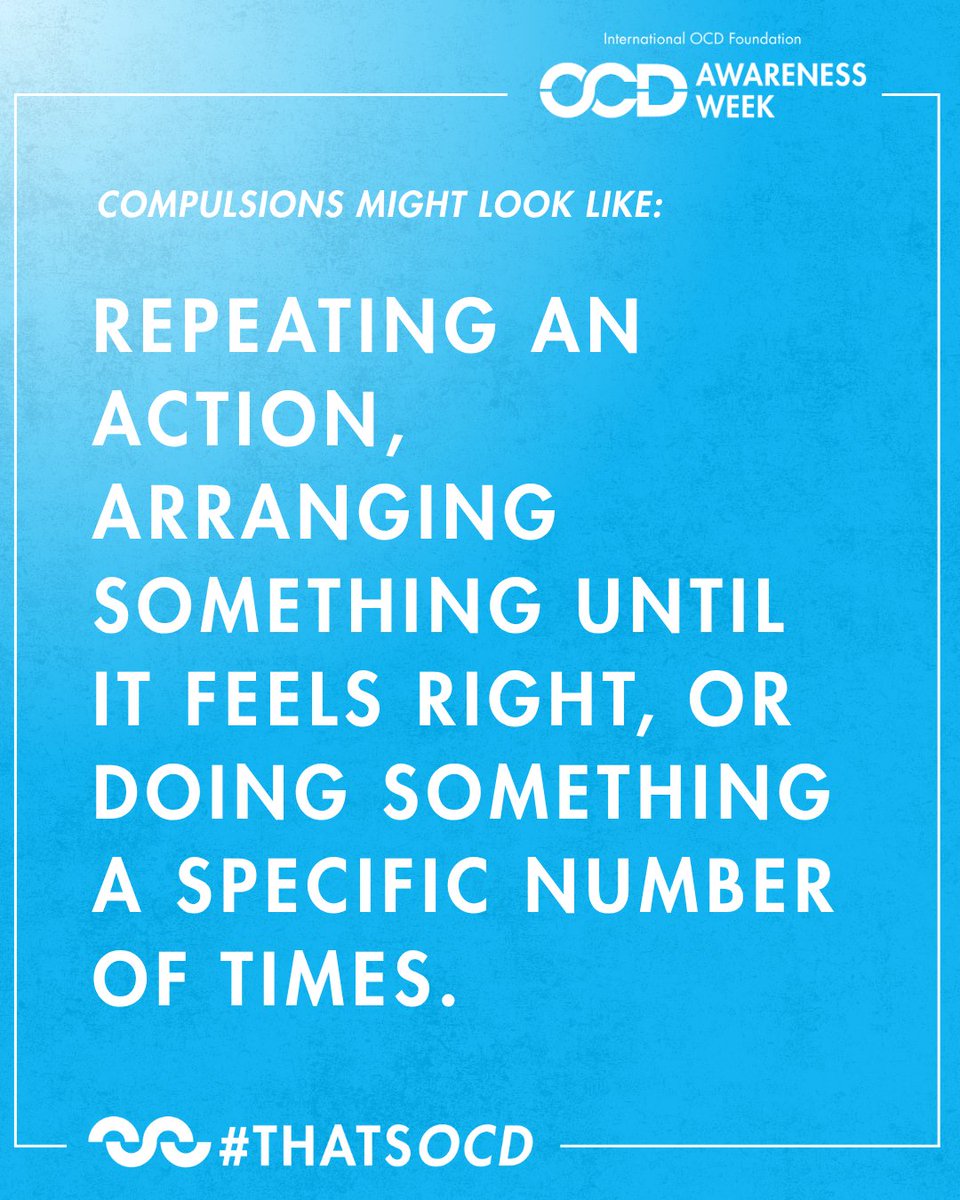
A child might rewrite something, repeat an action, reread a sentence, arrange something, or start over until they get that elusive “just right” feeling. OCD can begin as early as childhood, with one common age of onset between 7 and 12 years old.
Kids with OCD deserve opportunities to meet other kids who understand.
"Because I received effective support from several therapists at an early age, I came to understand that OCD is ego-dystonic, meaning it causes intrusive thoughts and obsessions that conflict with a person’s true values, morals, and sense of self.” – Julia Hyman
Online OCD Camp returns Winter 2027! This virtual event is designed for youth ages 6-17 and their families, with interactive programming for elementary, middle, and high schoolers, plus sessions for parents and guardians 👉 https://t.co/dLRLJOXzBy
Calling all youth! We are looking for young people ages 12–17 who care about mental health and want to make a difference in how OCD and related disorders are understood. Whether you already speak up about mental health in your school or community, or you are simply passionate and looking for a place to start, we want to hear from you! Our Youth Ambassadors will help shape youth-focused initiatives and programs that are central to IOCDF's mission.
Applications are NOW LIVE through Nov. 29!
What if I'm remembering it wrong?
OCD can turn memory itself into something that feels like it needs to be solved. Someone may replay an event over and over, search their memory for details, ask other people what happened, or confess something “just in case.”
The goal is certainty. But OCD keeps moving the finish line. #ThatsOCD
"It is my hope that every child who is suffering from OCD can find access to the correct treatment. That they can learn to apply the tools to fight OCD and reclaim their childhoods, and in turn their lives. To live the life they want on their own terms and not on the terms of their OCD.” – Kjersti Helberg with her son, Jaden"
Explore articles and lived-experience stories 👉 https://t.co/XGZPn7MJDE
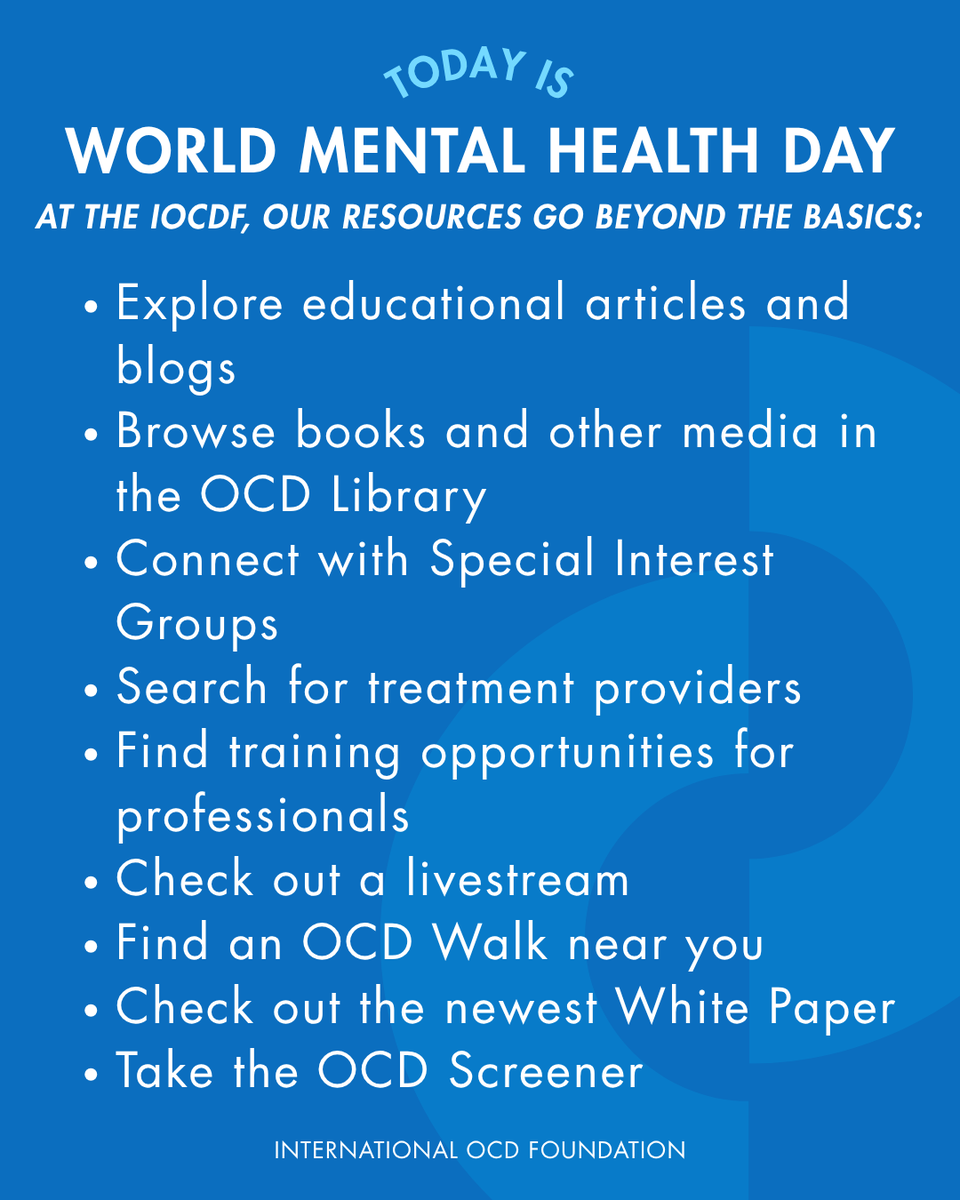
Today is World Mental Health Day!
At the IOCDF, our resources for the OCD & related disorders community go beyond the basics.
✨ Explore educational articles and blogs 👉 https://t.co/XGZPn7MJDE
✨ Browse books and other media in the OCD Library 👉 https://t.co/JfEtkWYKDq
✨ Connect with Special Interest Groups 👉 https://t.co/lufmWV9tIH
✨ Search for treatment providers 👉 https://t.co/Pyx0wm6Vbr
✨ Find training opportunities for professionals 👉 https://t.co/k4beCqtkfW
✨ Check out a livestream 👉 https://t.co/KGLt4RzlKf
✨ Find an OCD Walk near you 👉 https://t.co/XThmIx6w4n
✨ Check out the newest White Paper 👉 https://t.co/GgSlHZUDkI
✨ Take the OCD Screener 👉 https://t.co/42yCORK6es
Whether you’re living with OCD or a related disorder, supporting someone you love, or working to provide better care, there’s a place to start.
And tomorrow, October 11, we’ll begin OCD Awareness Week, with even more opportunities to learn, connect, share, and help others better understand what OCD really looks like! 🩵 #ThatsOCD
OCD Awareness Week 2026 begins in TWO DAYS! 🎉
OCD can look like intrusive thoughts about harming someone you love, fearing you might secretly be a bad person, questioning your relationship or identity, replaying conversations, silently repeating words until they feel “right,” seeking reassurance, checking your body for signs of illness, or avoiding triggers. These experiences can look very different, but they can all be OCD.
👉 Share a photo, video, reel, or story featuring a personal “That’s OCD” example, then tag us and use #ThatsOCD and #OCDWeek to join the conversation throughout OCD Awareness Week.
Read more at https://t.co/yO5giA4C5Q