A lonely goodbye to Madhav Gadgil, one of the tallest environmentalists of our times.
Under the banyan trees of Navi Peth in Pune, Madhav Gadgil was taken for cremation last evening. The gathering was small, some forty, perhaps fifty people.
No ministers. No senior officials. No tricolour to drape the body. No guard of honour salutes. No ceremonial rifle volleys.
One expects a crowd, the usual press cameras and public mourning. Instead, there was a pause, a quiet uncertainty, as if this farewell were happening somewhere it wasn’t meant to.
State honours had been promised, but never quite arrived. Even the police escort lost its way. For nearly half an hour, Gadgil’s body lay waiting, wrapped in simple white, while the city carried on around it, indifferent.
For me, this was not the death of a distant public figure.
In the 1990s, when I was starting out as a science correspondent with the Press Trust of India in Bengaluru, Madhav Gadgil was already a towering presence at the Indian Institute of Science (IISc). At the IISc's Centre for Ecological Sciences, he stood out, not by volume or self-importance, but by intellectual rigour and moral clarity.
I walked into his office many a time in those years, notebooks open, deadlines close. He listened carefully, answered precisely, never spoke down. He believed knowledge carried responsibility, and that science without ethics was incomplete. Those conversations stayed with me, shaping how I understood both journalism and ecology.
This was also the man who later led the Western Ghats Ecology Expert Panel, producing a report that treated the mountains not as real estate or mineral stock, but as living systems. The Gadgil Committee Report spoke of ecological limits, decentralised governance, community rights, and long-term survival.
A Padma Bhushan awardee. A UN Champion of the Earth. A lifelong defender of forests, rivers, biodiversity, and uncomfortable truths. In death, he was treated as someone easily forgotten.
The trees were not.
The old banyans stood quietly, their leaves stirring in the afternoon air. Gadgil had given his life to them. Trees remember. Animals remember. They show up when people don’t.
Had this been a politician or an industrialist, roads in Pune would have been sealed, helicopters circling, television studios filled with tributes and theatrical grief. Power is never allowed to pass quietly.
But a man who tried to protect the land that sustains us all was sent off almost unnoticed.
The trees stood witness.
The rest of us moved on.
Goodbye, Madhav Gadgil.
Forgive us.
We did not know how to honour you.
(Photo Courtesy: R S Gopan)
The AAP poses with Dr. Ambedkar. This very bill would have landed him behind bars today. The BJP will now get a chance to include Manusmriti in the list of holy texts !
I Introduced a Private Member’s Bill in Parliament to provide for maximum punishment for sacrilege to Sri Guru Granth Sahib ji, Bhagwat Gita, Holy Quran and Holy Bible.
This bill proposes to amend the Bharatiya Nyaya Sanhita, 2023 to make such cases of sacrilege a crime punishable with a maximum punishment.
@UnamPillai The AAP poses with Dr. Ambedkar. This very bill would have landed him behind bars today. The BJP will now get a chance to include Manusmriti in the list of holy texts !
Manufacturing activity in India takes place in two broad ways: organised manufacturing that happens in factories, and unorganised manufacturing which is typically at a small scale and family-run.
There are 20 million unorganised manufacturing establishments in India as of 2024. In comparison, there are only about 200,000 factories.
The majority of India's manufacturing workforce is in the unorganised sector, but unorganised manufacturing establishments contribute only 12% of the gross value added (GVA) in the manufacturing sector. GVA is the total value of all goods and services produced in a country.
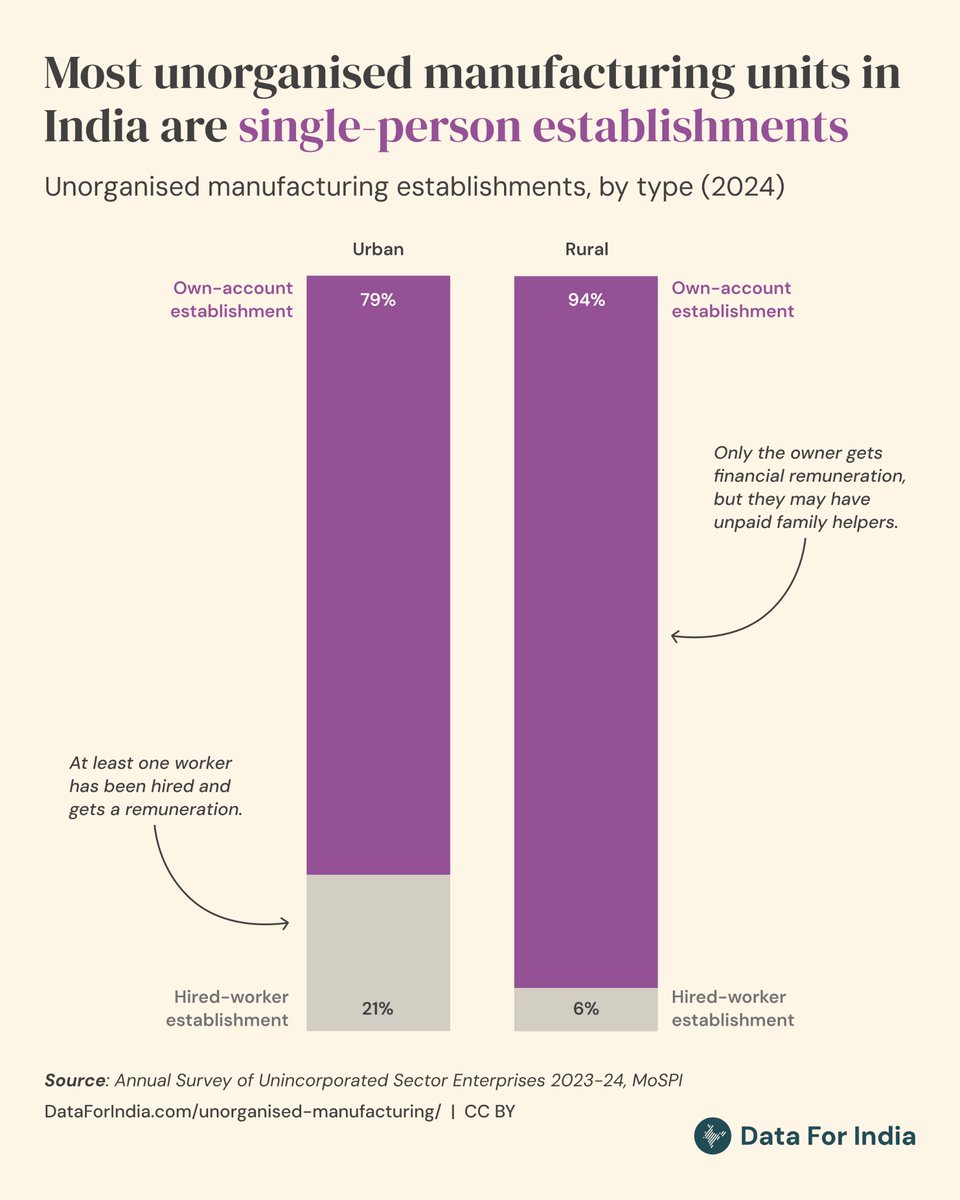
Most of the establishments in unorganised manufacturing are run by a single person. More than four in five establishments (a little less than 18 million) are own-account establishments. In own-account establishments, only one person (the owner) gets financial remuneration from the activity, but they may have assisting family members who do not get paid (unpaid family helpers).
Only one in five (less than three million) unorganised manufacturing enterprises are hired worker establishments, meaning that apart from the owner, there is at least one worker who has been hired and gets a remuneration.
What do these unorganised manufacturing units in India produce? Read @akwaghmare’s piece to find out: https://t.co/08ZBBB4IVa
#Manufacturing #Factories #Employment #Economy #India #DataForIndia
You *must* read this brilliant new paper linking industrial policy to geopolitics.
It outlines a three-tiered hierarchy of nations’ ability to implement industrial policy in the modern world economy — with wealthy nations at the very top.
Land, Law and Empire by John Marriott
An innovative exploration of the British Empire's foundational quest for territorial power in seventeenth-century India.
📚 https://t.co/6sKWPSSNpL
#britishhistory
‘All is quiet’
The telegram from Meerut on the 9th of May 1857 announcing the imprisonment by the EIC of 85 sipahis who had refused to use their new rifle cartridges.
This would prove to be the trigger for the 1857 rebellion.
BL
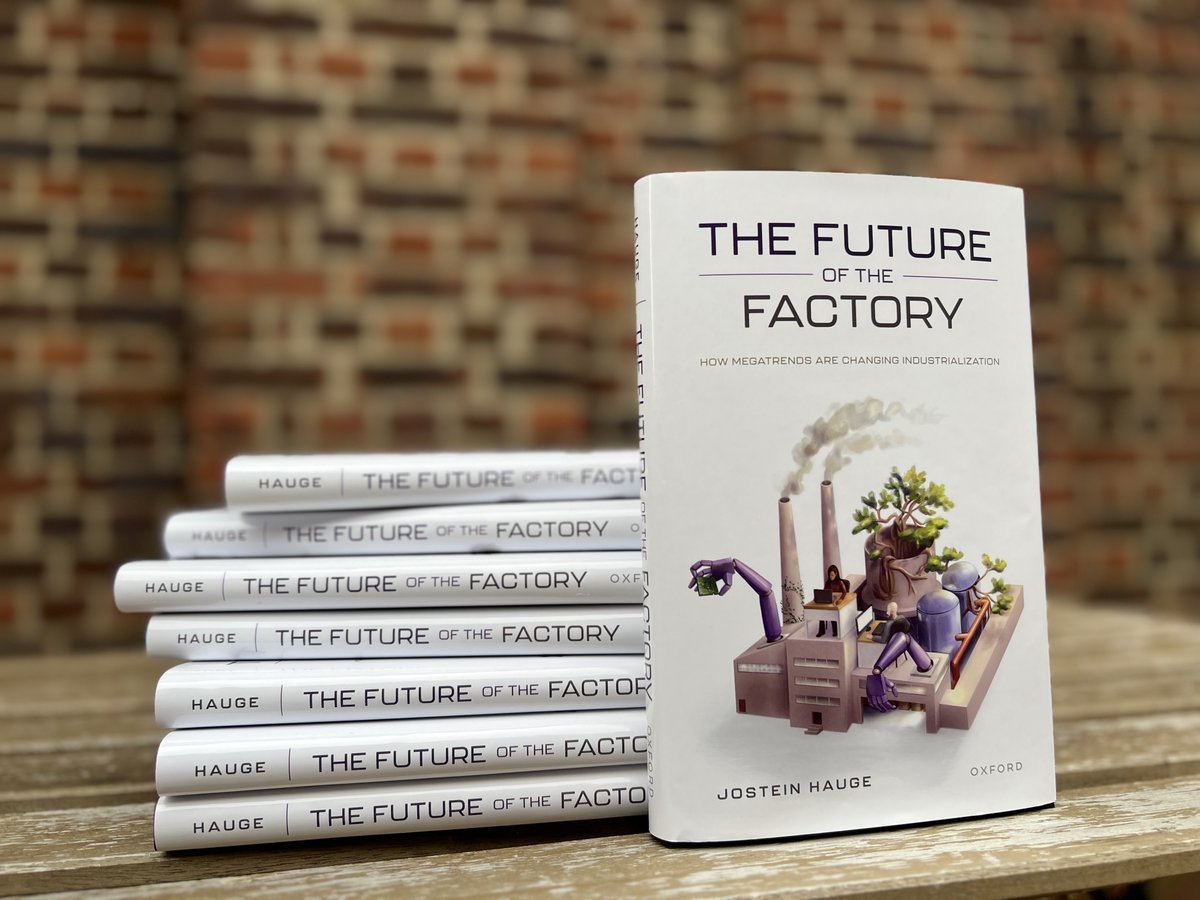
I'm pleased to share that you can now access all individual chapters of my book, "The Future of the Factory", online.
You can find the link in the replies below.
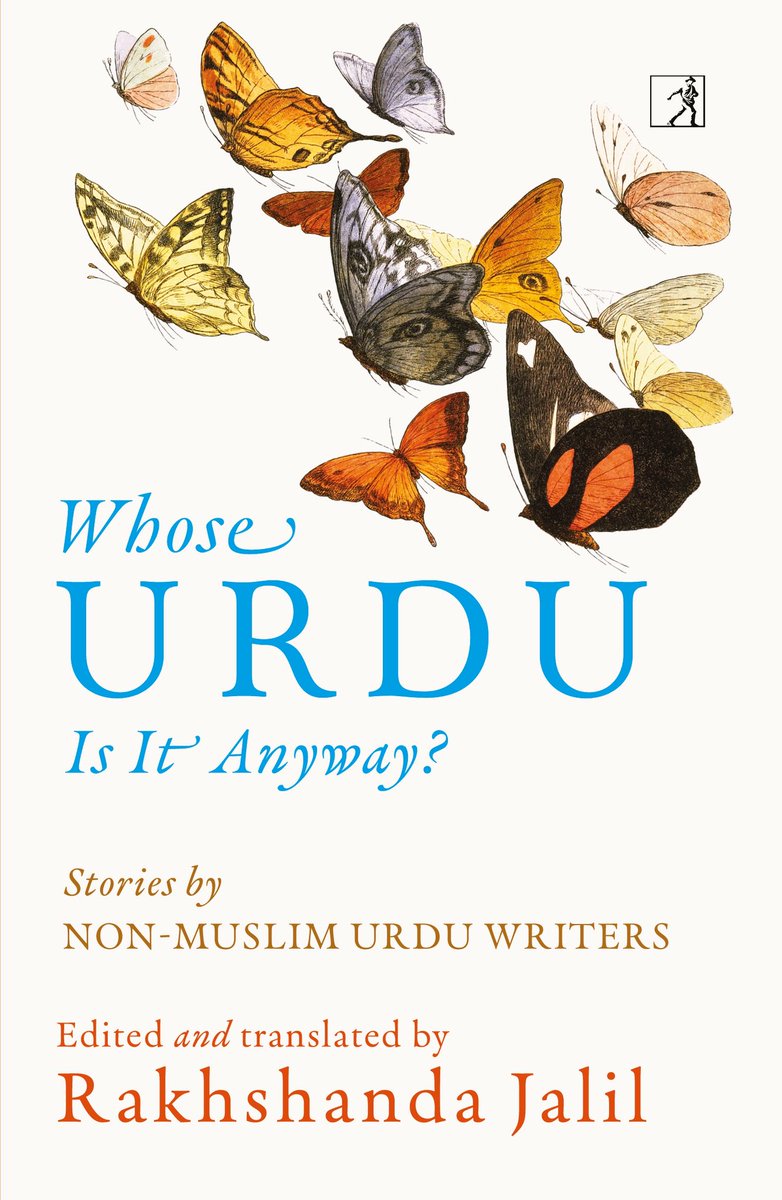
Whose Urdu is it anyway? Is it the language only of India’s Muslims? This new book — my translation of 16 stories — attempts to bust persistent stereotypes.
Out soon from @SimonSchusterIN#urdu#newbooklaunch#newbook2025#NewBook
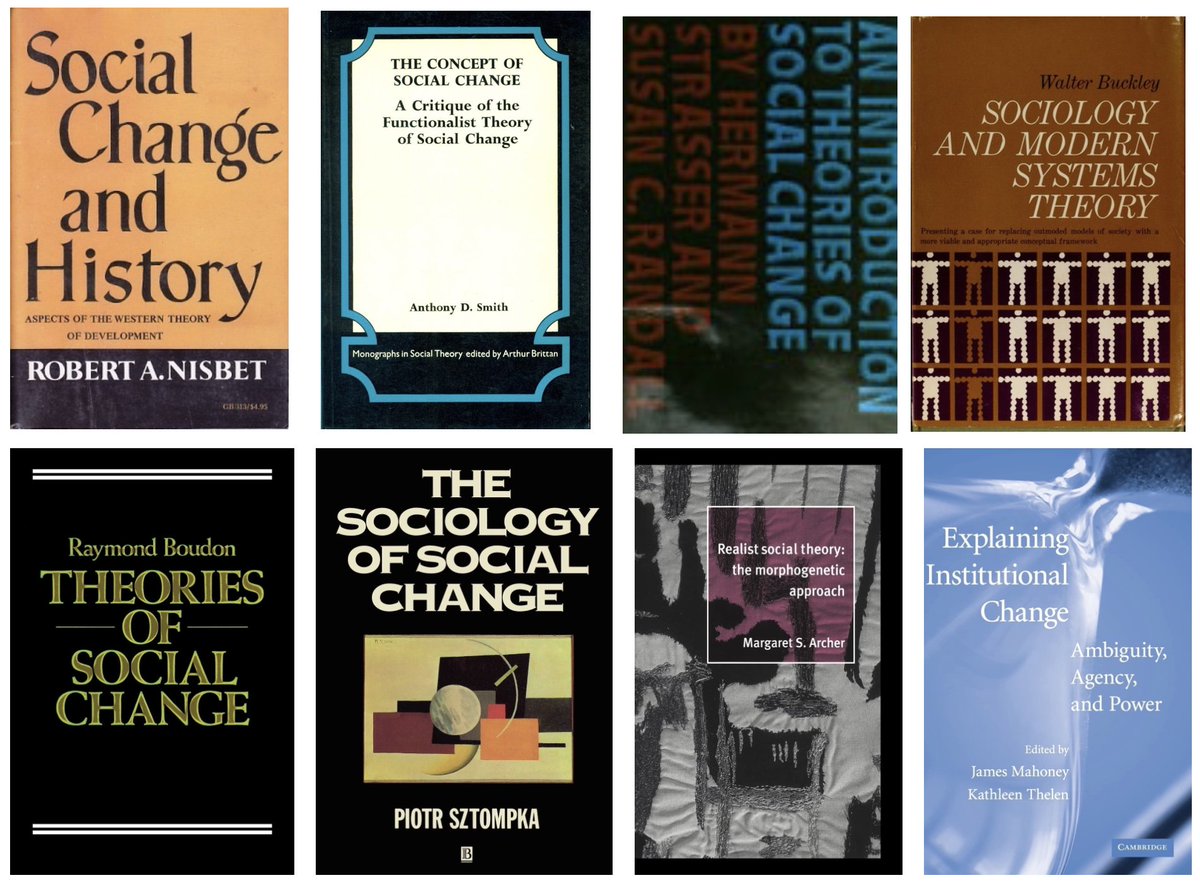
Social Change
To think about social change, and especially structural change, we must incorporate ideas from sociology that take as their starting point the limitations of Parsons' structural-functionalism.
From what I've read on the topic, I learned a lot from these books.👇
Democracy in Latin America
@Raul_L_Madrid's new book on the origins of democracy in South America has just been published - and we're lucky that it's open access.
A highly recommended read.
Open access: https://t.co/hVum5LdFYC
During WWII, the Germans built a fake wooden airfield to deceive the Allies. After months of observation, the Royal Air Force dropped a single fake wooden bomb on it.
𝗖𝗹𝗶𝗲𝗻𝘁𝗲𝗹𝗶𝘀𝗺 𝗶𝗻 𝗔𝗿𝗴𝗲𝗻𝘁𝗶𝗻𝗮
@CUP_PoliSci has just published this book by political scientist Rodrigo Zarazaga on Peronist clientelism. It's a book not to be missed.
For information on the book: https://t.co/d5EaxYZkQx
𝗣𝗼𝗹𝗶𝘁𝗶𝗰𝗮𝗹 𝗧𝗵𝗼𝘂𝗴𝗵𝘁
This is good survey of political thought in the twentieth century. Although it has some gaps, it is quite comprehensive.
Download: https://t.co/y5pJ51fGUT