Dallas ISD spent $3.4 BILLION in 2024-25, $24,040 per student.
33.4% of it reached the classroom. Debt service and construction took more: 37%
Source: Texas Education Agency
VICTORY!!!!
The Senate just passed the most significant permitting-reform bill in U.S. history.
Once passed by the House and signed into law, it’ll save American families thousands of dollars a year—year after year.
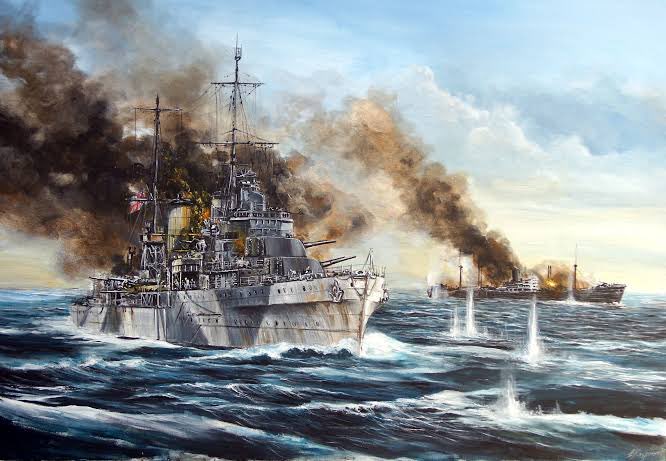
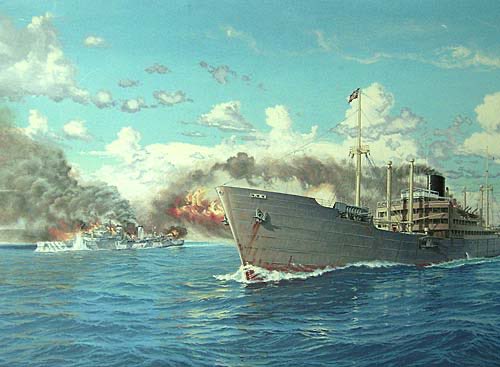
On this day in 1941, one of the most extraordinary events in the history of naval warfare took place off the coast of Western Australia as the Australian cruiser HMAS Sydney and the German commerce raider Kormoran mutually destroyed each other in battle.
Sydney came alongside Kormoran, which had been disguised as the Dutch freighter Straat Malakka. The two exchanged messages back and forth for over an hour until Sydney finally signaled by light "Show your secret sign".
The German captain Theodor Detmers turned to his senior officers and asked “do we know the secret sign of the Straat Malakka?” They shook their head no. Realizing he had run out of time, Detmers ordered Kormoran’s disguise be dropped, the battle flag of Germany be raised, and the raider’s deck guns to open fire.
In the span of a few seconds, the two ships began trading broadside with one another other at point blank range, but Sydney was far too close to Kormoran. Her opening salvo flew over the German raider while Kormoran’s commerce raider guns raked the cruiser’s deck and tore into her command bridge, likely killing Sydney’s captain Joseph Burnett and most of the ship’s senior officers within the first minute or two of the battle.
The two continued to exchange blows until Sydney’s seaplane (still running on its catapult having never taken off) exploded and her bow was hit by a torpedo. But she had already dealt a mortal blow to Kormoran, whose engine room had been set ablaze by shells from the Australian cruiser’s aft guns.
With the two ships crippled, Sydney limped off to the south (likely under no control of her own as the entire bridge had already been destroyed in the battle) while Detmers found his crew couldn’t contain the fires that threatened to blow up Kormoran’s cargo of sea mines.
The Germans abandoned ship and watched as the glow of the burning Australian cruiser on the horizon gradually disappeared into the darkness of the Indian Ocean. By the early hours of the next morning, both ships lay at the bottom of the ocean. 318 of Kormoran’s crew survived and spent the rest of the war as POWs, while all of the 645 men aboard Sydney went down with the ship, marking the largest loss of life in the entire history of the Australian Navy.
BAAJA has PASSED the Senate!
A historic victory and a big step toward making life more affordable.
Thank you @SenCapito, @SenatorHeinrich, and @SenWhitehouse for your partnership.
Let’s get this bill to @POTUS’s desk and get America building big things again!
"You cannot win elections in the United States with the white Christian vote. It does not math. It does not add up. You must have a coalition of people of all races, different beliefs, different origins." - Harmeet Dhillon @HarmeetKDhillon
The Pentagon urgently needs more Patriot missiles. It has a textile problem.
Only one rayon product is approved for use in the most advanced Patriot missiles, and it comes from the Kansas factory of a single supplier, Park Aerospace.
The rayon begins its life as strands of fiber at a factory in the Czech Republic owned by a Thailand-based chemicals conglomerate. That yarn makes its way to France to be woven into fabric. ArianeGroup carbonizes the fabric at its facility near Bordeaux, then sells it to Park Aerospace, its lone North American distributor. Park coats it in Kansas and sends it to L3Harris, which layers it inside the nozzles of solid rocket motors bound for Lockheed's Patriot factory.
Ariane has been clear that supply is limited. When the Pentagon pressed for more, Park's CEO said, "They're a French company. They can't be bullied."
The sole North American producer of aerospace-grade rayon, in Front Royal, Virginia, was shut down in 1989. Its successor in Elizabethton, Tennessee, wound down production in 1998. By the mid-2000s, with no major U.S. options left, the Pentagon had to look abroad.
The aerospace and defense textile supply chain is riddled with chokepoints. Critical components often come from outside the U.S. via complex webs of companies, with few or no American alternatives.
The demand is unlike anything the industry has seen. Park says, "In all our years, we have never seen anything like this." A U.S. factory for the material isn't expected until around 2030, and as Park's CEO put it, "nobody wants to wait 3½ years."
Textiles aren't just uniforms and protective equipment. They're inside the rocket motors of America's most advanced interceptors, and right now the supply depends on one company overseas.
@ChristianHeiens You can just pretend to be principled and constantly lie or purposely be ignorant to push your preferred narrative.
You’re in the perfect job field for that. Stiff competition though since virtually everyone does that.