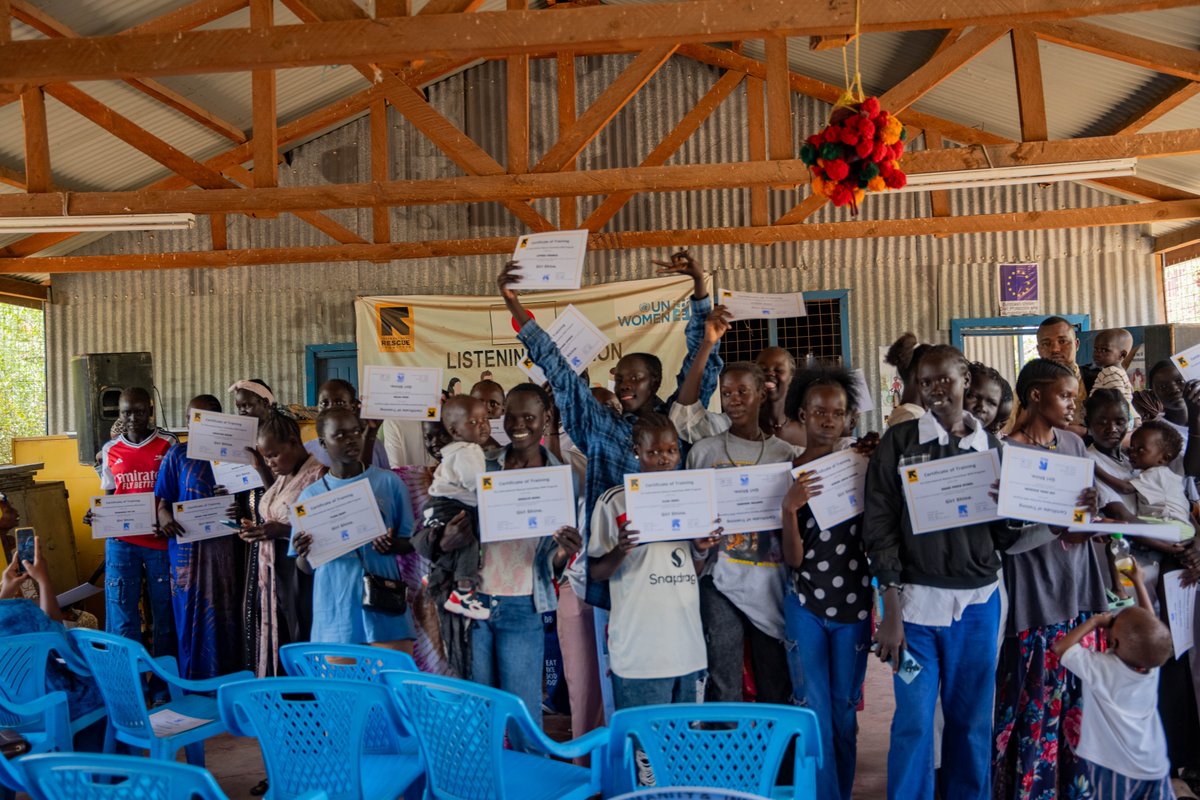
The @RESCUEorg Kenya is glad to be participating in the 9th RHNK Pan-African Adolescent and Youth SRHR Conference happening this week in Mombasa under the theme: “Strengthening SRHR to Achieve Youth Agency, Full Potential and Meaningful Engagement in Africa's Dynamic Socio-Political and Economic Landscape."
Please join our team who will be presenting an abstract on ‘Leveraging Drop‑in Centres to Overcome Barriers to Adolescent Girls’ and Young Women’s SRHR in Kakuma Refugee Camp, Kenya’
With a focus on the Drop-in Centres (DiCE), a community-embedded, youth-led service delivery model integrating SRHR, protection, and psychosocial support implemented by the IRC Kenya in partnership with UNHCR, the UN Refugee Agency, the abstract brings out the dynamics faced by the Adolescent Girls and Young Women (AGYW) in humanitarian settings ranging from disproportionate sexual and reproductive health and rights (SRHR) risks, driven by entrenched socio-cultural norms, economic vulnerability, weak policy prioritization, and fragmented service delivery. These barriers limit access to equitable, youth-friendly care.
The use of DiCE has resulted in a service reach increase from 127 AGYW in 2023 to 348 in 2025 (+174%), with annual utilization rising from 256 in 2024 to 348 in 2025 (+36%) according to KHIS data. Condom uptake remained high at 95% among contraceptive users. HIV testing increased from 110 clients in 2023 to 152 in 2025 (+38%). Cervical cancer screening reached 67 AGYW in 2023, 30 in 2024, and 34 in 2025. Health education accounted for approximately 70% of all service interactions, contributing to improved health-seeking behavior. Uptake of MHPSS and referrals for mental health and substance use risks increased, while peer-led delivery reduced stigma and strengthened trust and confidentiality
The DiCE model demonstrates a scalable, evidence-driven approach to advancing AGYW SRHR in humanitarian settings. Institutionalizing youth-led, integrated service platforms within national systems, supported by sustained financing and policy alignment, is critical for accelerating equitable SRHR outcomes. County Government of Turkana Qatar Fund for Development
The @RESCUEorg Kenya has launched a new project, with the support of @OCHAFunds , to stabilize and strengthen integrated nutrition and health services in Kakuma and Hagadera refugee camps in Turkana and Garissa Counties respectively .
In close collaboration with the Ministries of Health in both counties, the IRC is delivering services through nine primary health care facilities, one reception center health post, and 57 community health units to address critical gaps and improve health and nutrition outcomes for refugees, asylum seekers, and host communities at high risk.
The project integrates nutrition services, including detection and treatment of acute malnutrition, maternal, infant and young child nutrition counselling, and community screening, within primary health care, alongside essential health services such as maternal and child health care, HIV and TB services, mental health support, emergency care, and referrals.
The implementation,while aligning with MoH standards, guidelines as well as the Shirika Plan aspirations, emphasizes on quality, safety, early detection, and continuity of care, with strong facility–community linkages, trained health workers, digital health system integration, and mechanisms to ensure inclusive, accountable service delivery.
We are grateful to UN-OCHA for this support, which enables the IRC to continue delivering life‑saving health and nutrition services to communities affected by displacement.
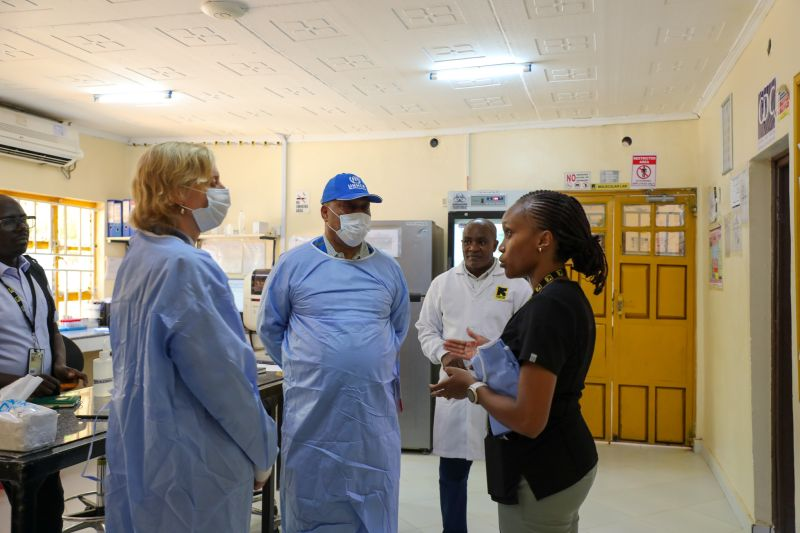
The International Rescue Committee Kenya had the honor of hosting @USEmbassyKenya , led by the @USAmbKenya in Kakuma Refugee Camp.
During the visit, the delegation was able to see firsthand our health programming at Amusait General Hospital, a critical referral facility that provides life‑saving services to over 216,000 refugees and host community members in Turkana County, ensuring access to quality care for some of the most vulnerable populations.
This work is made possible through the continued support of the Government of the United States, alongside other valued partners, whose investments enable the IRC to deliver essential, dignified health services.
We remain deeply grateful for this partnership and look forward to continued collaboration to strengthen inclusive health systems and improve health outcomes for both refugee and host communities in Kenya.
As part of the International Rescue Committee’s (IRC) and its partner, Forum For Women In Development, Democracy and Justice (FODDAJ), ongoing efforts on budget advocacy and support towards the implementation of the Kajiado GBV Policy, we supported a learning visit by members of the Kajiado County Government to the Gender-Based Violence (GBV) Recovery Centre in Machakos County, a leading model for survivor centred, multisectoral GBV response.
Led by the Chairperson of the Gender Committee, Hon. Naisiae Kaaria, the delegation comprising officials from the gender and health departments, engaged with Machakos CECM Gender, Sharon Mutua- Muasya MPRSK and Chief Officer, Bernadette Wavinya, who shared insights on Machakos County’s coordinated approaches to GBV prevention and response.
The facility provides safe shelter and comprehensive services for GBV survivors including healthcare, legal aid, psychosocial support, and counselling. This integrated approach has contributed to a significant reduction in GBV cases in Machakos County, currently estimated at 10%, compared to 36% in Kajiado County.
These efforts build upon advocacy for county investment towards publicly funded safe shelters in Kajiado County, a critical requirement under the Kajiado GBV Policy, 2025.
This exchange comes at a critical time. According to the Kenya Demographic and Health Survey (KDHS) 2022, 36% of women aged 15–49 in Kajiado have experienced physical violence.
This visit was conducted under a broader initiative to strengthen county leadership and institutional capacity to prevent and respond to GBV in Kajiado County, implemented by Kajiado County Government and FODDAJ, in partnership with the IRC and Irish Aid.
At the IRC, we remain committed to working alongside local partners and county governments to advance survivor centred, locally led solutions that strengthen systems and protect the dignity and rights of survivors.
In Nairobi’s vibrant urban economy, access to financial services can make the difference between survival and growth for many refugee entrepreneurs.
Through the Re:BUiLD program, the
@RESCUEorg Kenya has partnered with Equity Bank to unlock new pathways for refugees and host community members to access banking services and strengthen their economic opportunities.
This collaboration focuses on building the financial inclusion and bankability of urban refugees by supporting small business owners to access appropriate financial products, strengthen their financial management skills, and grow sustainable enterprises.
By working closely with financial institutions and local entrepreneurs, the partnership aims to demonstrate how inclusive financial systems can empower refugees to contribute meaningfully to local economies.
As the partnership continues to evolve, stories from clients and communities highlight the transformative potential of access to finance, not only for individual entrepreneurs but also for the broader economic resilience of urban communities in Nairobi.
When cholera surged through Kakuma and Kalobeyei refugee camp in Turkana County last year, the risk to children and learning was immediate and devastating.
But with the Teach Well's project Crisis Modifier component, the @RESCUEorg Kenya in partnership with @filmaidkenya were able to act fast, protecting thousands of community members especially learners before the outbreak could spread further.
Thanks to this flexible, life‑saving mechanism, teams quickly mobilized
🚰 School‑focused hygiene campaigns that empowered learners with life‑saving knowledge
🏥 Rapid case detection and referrals, ensuring sick children and community members received timely care
🧼 Community health mobilization led by trusted frontline workers
🏫 Support to schools and teachers to keep learning safe, even in crisis.
This is what crisis responsiveness looks like, protecting the health, and dignity of affected communities.
In this video, you’ll hear directly from the people who lived this reality such as learners who fought their way back to class, health staff who worked around the clock, and community mobilizers who ensured no family was left behind.
Together, we’re strengthening resilience, saving lives, and ensuring every child in Turkana can learn in a safe and healthy environment.
In Kakuma Refugee Camp, Dr. Sila reunited with @RESCUEorg Ambassador Ebony Obsidian, shining a light on the remarkable women driving health services in one of the most challenging humanitarian settings.
IRC health facilities in Kakuma serve over 200,000 people, many facing a severe child and maternal nutrition crisis. Yet despite limited resources, high demand, and the emotional weight of emergency care, Dr. Sila and her team continue to show up with determination, skill, and compassion.
Their resilience is not just inspiring, it's lifesaving. Their dedication ensures that mothers receive care, children are treated, and families hold onto hope during the most difficult moments of their lives.
On this #InternationalWomensDay, we celebrate Dr. Sila, her team, and the countless women across the IRC who lead with strength, empathy, and unwavering commitment to the people we serve.
Here’s to women who rise every day, so others can too.
#IWD2026
#GivetoGain
#WomenInHumanitarianWork
In Kenya’s refugee camps, young mothers are fighting every day to protect their children from the devastating effects of malnutrition.
Shukri's story form Dadaab refugee camp sheds light on the challenges these mothers face, and the strength they show in ensuring their children get the care they need.
From lifesaving health and nutrition services to counselling, community outreach, growth monitoring, infant and young child feeding support, and dedicated care for children with severe malnutrition, the @RESCUEorg in partnership with the European Commission is working alongside families to detect malnutrition early and provide the support necessary for recovery to ensure every child has a chance to survive and thrive.
These are powerful reminders of why sustained investment in maternal and child health remains critical, especially in crisis-affected settings.
https://t.co/D57TEokmuf
@RESCUEorg Kenya is proud to announce a transformative step for maternal and child health in Kakuma, Turkana County.
Through partnership with the Qatar Fund for Development, this initiative will significantly improve access to quality healthcare, ensuring safer pregnancies, healthier births, and brighter futures for thousands of mothers and children in Kakuma refugee camp and the surrounding host communities.
This partnership reflects our shared commitment to dignity, resilience, and equity in humanitarian response. https://t.co/FGVdOS7Exa
We’re excited to partner with @qatar_fund on a new initiative expanding access to vital reproductive, maternal, newborn, child and adolescent health services for communities in Kakuma refugee camp and Turkana County, Kenya.
https://t.co/MfVOIRQ3OI
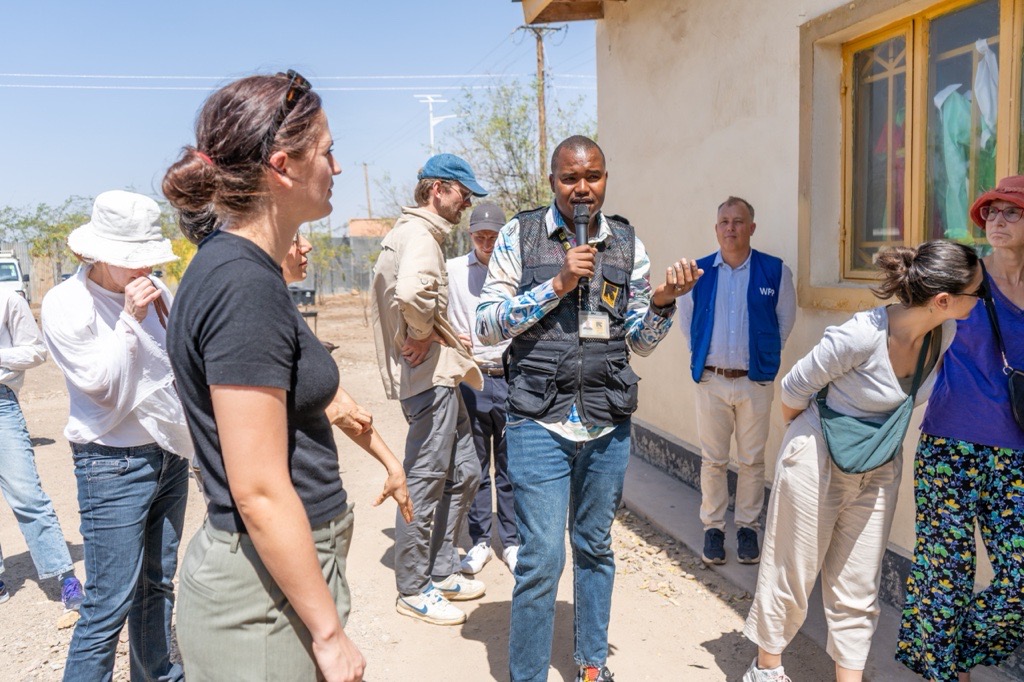
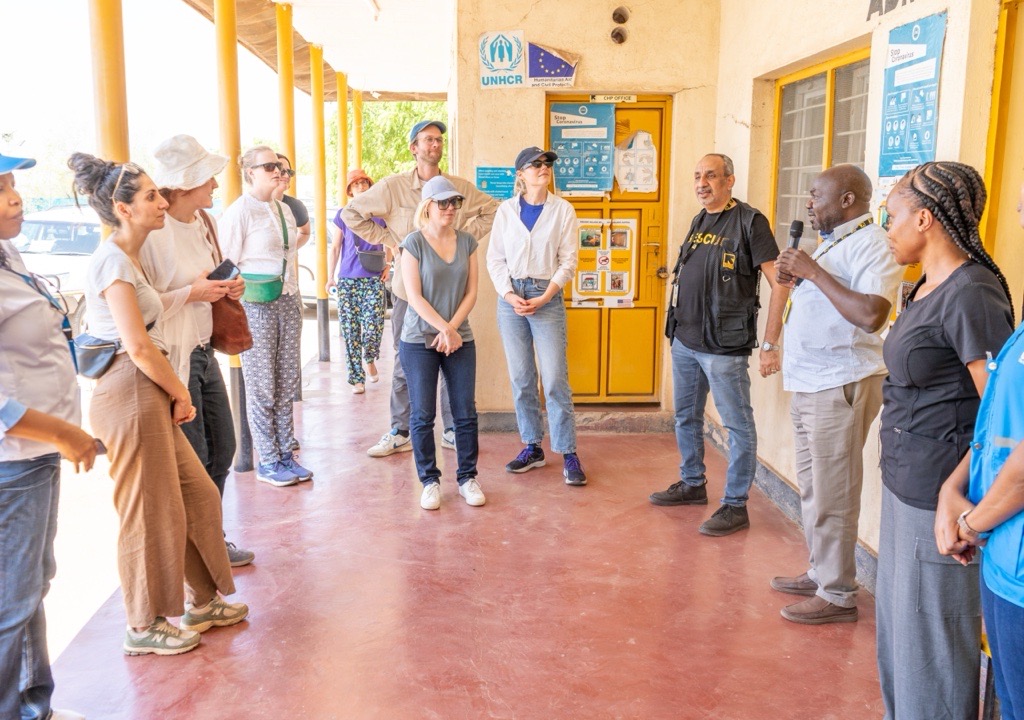
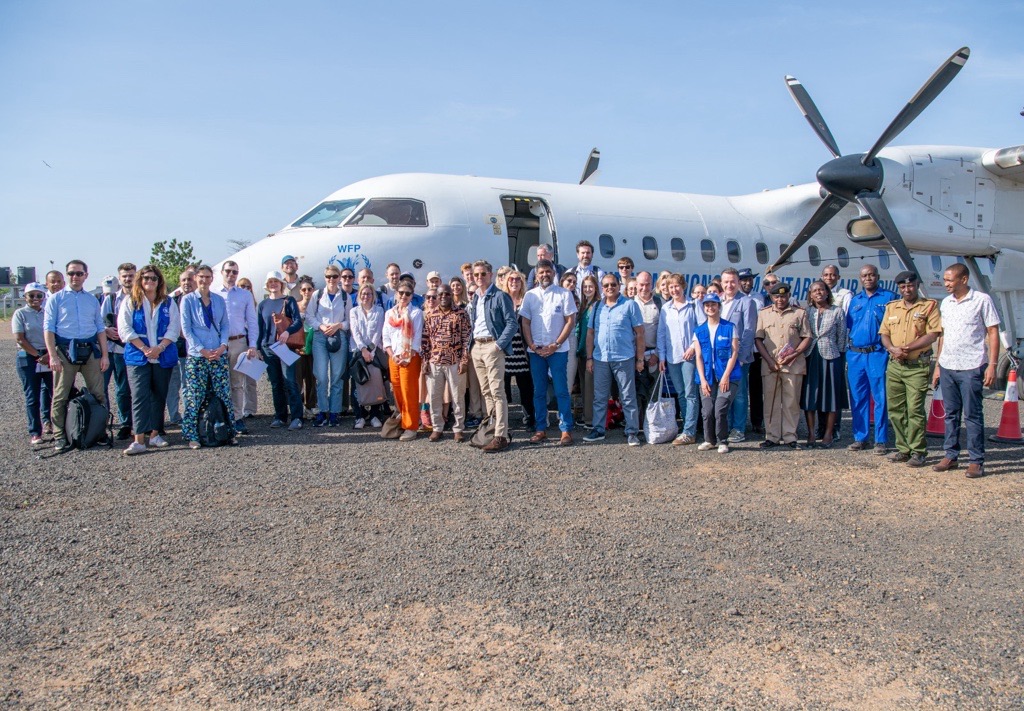
On 2 December 2025, International Rescue Committee Kenya had the honor of welcoming a high-level delegation from the EU Council COHAFA/CODEV, coordinated with ECHO, the Danish Embassy, UNHCR, the UN Refugee Agency, World Food Programme, and the County Government of Turkana.
The delegation was led by H.E. the EU Ambassador to Kenya and H.E. the Danish Ambassador, alongside members of the Danish Alliance and representatives from 18 EU member states participating in COHAFA and CODEV, and accompanied by our Country Director, Mohamed ElMontassir. The delegation visited IRC’s Women’s Empowerment Center in Kakuma 4 and Ammusait Hospital, the most critical health facility in Kakuma.
Delegates witnessed firsthand the daily struggles faced by refugees and host communities, including the impacts of reduced humanitarian assistance on food security, livelihoods, health, and access to essential services. At the Women’s Center, women leaders and adolescent girls shared how safe spaces, vocational training, and financial inclusion initiatives are helping families cope. At Ammusait Hospital, health teams highlighted the immense pressure on maternal and child health services under constrained resources.
The joint visit by COHAFA and CODEV delegates underscores the unique complementarity between humanitarian and development action, a position in which Kenya is at the forefront of integrated response. By combining immediate humanitarian support with longer-term development strategies, this collaboration ensures that communities in Turkana can continue to access essential services while durable solutions are pursued. Sustained support remains critical to protect lives today and build resilience for the future.
The visit further emphasized the importance of shared understanding of concurrent humanitarian needs and the ambition to integrate basic services, reinforcing the value of continued EU and partner engagement.
We extend our sincere gratitude to the EU Council COHAFA/CODEV delegates, EU and Danish Ambassadors, ECHO and Danish Embassy Kenya, UN partners, and the Turkana County Government for their engagement and commitment to ensuring health, livelihoods, and dignity for communities in Kakuma.
#WorldAIDSDay is a time to stand in solidarity with people living with HIV under the timely theme: “Overcoming Disruption, Transforming the AIDS Response.”
Living with HIV is challenging anywhere, but it is acutely difficult in refugee camps, where displacement, overcrowding, and scarce resources define daily life. Yet, in Kenya, many refugees face these challenges with remarkable resilience and hope.
At the International Rescue Committee (IRC), we are committed to ensuring uninterrupted HIV care for thousands of refugees in Kakuma and Dadaab refugee camps. We provide essential services; counselling, testing, ART (antiretroviral therapy), and psychosocial support through ten health facilities, in partnership with Kenya's Ministry of Health, UNHCR, the UN Refugee Agency.
This year we have:
· Provided testing and counselling for 34,667 people.
· Successfully linked 100% of positive cases to ART.
The 2025 World Health Organization theme reminds us that ending AIDS by 2030 requires sustained international cooperation and patient-centred approaches. Communities affected by HIV must remain at the centre of our response. Empowering them creates equitable access, builds trust, and establishes shared purpose.
Together, we can end hashtag#HIV for everyone, everywhere.
We honor all frontline workers who show up every day for those who need them most.
We’re Hiring: Grants & Partnership Coordinator International Rescue Committee Kenya.
Are you an accomplished professional with a passion for impact at scale? IRC Kenya is inviting Kenya nationals to apply for the role of Grants & Partnership Coordinator.
We’re looking for someone who:
✅ Has a proven track record in crafting winning proposals and producing high-quality donor reports
✅ Drives strategic business development and positions organizations for growth
✅ Writes with clarity, precision, and influence
✅ Excels at building and nurturing partnerships with both traditional and non-traditional donors
✅ Brings strong post-award management experience
In this role, you will provide leadership across the Project Cycle Management (PCM) process, ensuring disciplined planning, execution, compliance, and money well spent for greater impact across IRC Kenya and our partners.
If you’re motivated by mobilizing resources, advancing strategic partnerships, and contributing to ambitious, innovative programming, we’d love to hear from you!
📌 Apply now and join a team committed to excellence and transformative results.
👉 https://t.co/2xiM07Cs2r
Marking 16 Days of Activism This year, we are saying it loud and clear: #NoExcuse for online abuse.
Digital spaces should empower women and girls, not harm them. Yet, millions face harassment and control every day.
At @RESCUEorg Kenya, we are committed to creating and supporting safer online spaces. Over the next 16 days, we will be launching campaigns across counties and online to raise awareness, equip women and girls to tackle digital violence, and champion tech as a tool for equality.
Let us build a safer digital world together.
#NoExcuse #16DaysOfActivism #ForAllWomenAndGirls #IRC
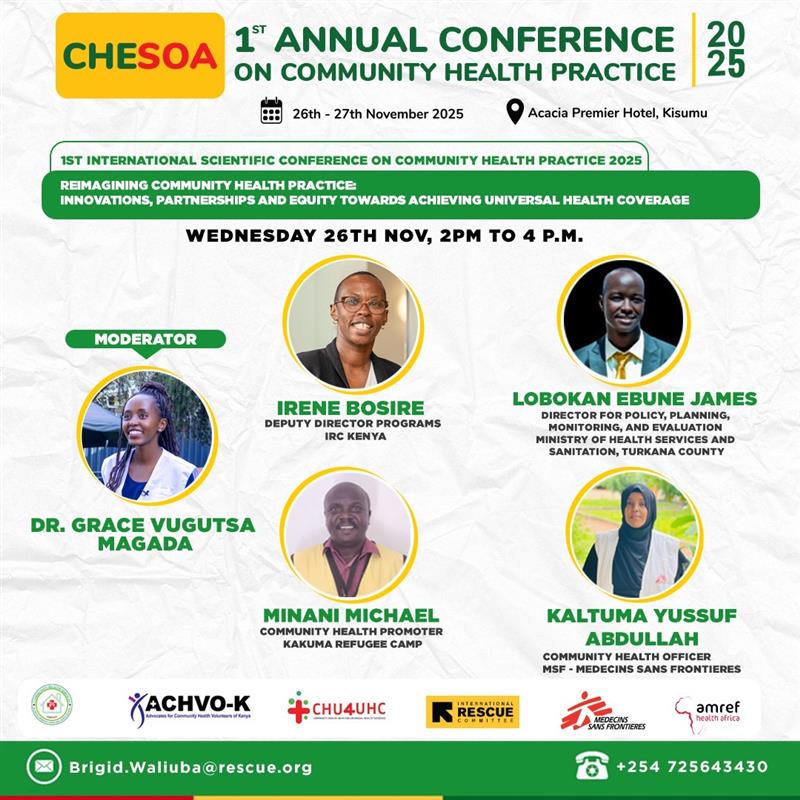
Today, at the International Scientific Conference on Community Health Practice in Kisumu, International Rescue Committee Kenya is proud to co-host a critical side event:
“Realigning Refugee Camp Community Health Practice to the Kenya Community Health Strategy and Policy”
📍 Acacia Premier Hotel, Kisumu
🗓 26th November
🕑 2:00 PM – 4:00 PM EAT
In partnership with @Amref_Kenya , @MSF_EastAfrica, the @MOH_Kenya and the @TurkanaCountyKE this session will explore how humanitarian health interventions can align with Kenya’s community health framework to strengthen equity and resilience.
Why this matters
✔ Sharing evidence and lessons from refugee camp health programs
✔ Showcasing innovative models for community engagement and disease surveillance
✔ Identifying gaps and opportunities for integration into national strategies
✔ Advocating for sustainable investment in community health as a pillar of humanitarian response
Join us as our experts, Irene Bosire (Deputy Director, Programs) and Brigid Mukoya Waliuba (Health Coordinator), share insights on shaping inclusive and resilient health systems.
#CommunityHealth #UHC #HumanitarianHealth
Community health is the foundation of Kenya’s health system, playing a pivotal role in delivering essential services, promoting health equity, and fostering inclusive development at the grassroots.
Between the 26th – 27th November, 2025, , IRC Kenya will be attending and speaking at the first-ever International Scientific Conference on Community Health Practice in Kisumu County organized by the Community Health Services and Development Officers Association (CHESOA)under the theme: “Reimagining Community Health Practice: Innovations, Partnerships and Equity Towards Achieving Universal Health Coverage”, bringing together researchers, policymakers, practitioners, and development partners from across the globe to shape the future of community health in Kenya and beyond.
The IRC will co-host a side event titled: ‘Realigning refugee camp community health practice to the Kenya Community health strategy and policy.
Partners: @Amref_Kenya and @MSF_EastAfrica
In collaboration with: @MOH_Kenya and @TurkanaCountyKE
Date: 26th November
Time: 2-4pm EAT
Venue: Acacia Premier Hotel, Kisumu.
For humanitarian actors like IRC Kenya, this is a timely opportunity to:
1. Showcase evidence and practical experiences on delivering community health interventions in humanitarian settings
2. Highlight innovative models and best practices that have strengthened community engagement, health service delivery, disease surveillance, health system resilience, and local leadership.
3. Identify gaps and challenges in integrating community health practice into humanitarian response frameworks.
4. Advocate for sustainable investment and full adoption of community health as an essential pillar of humanitarian health response and recovery.
Don’t miss insightful panel discussions and presentations by our team:
Irene Bosire Deputy Director, Programs and Brigid Waliuba – Health Coordinator
Stay tuned for updates from Kisumu as we work together to position community health as the cornerstone of equitable health service delivery!
Today @TheNewYorker released our short documentary “Rovina’s Choice."
It traces the ongoing effects of the sudden shutdown of US foreign aid through the story of one mother in Kenya as she seeks to save her daughter from sickness and starvation. 🎥 1/ https://t.co/Isbu12utdD