Our mission is to reduce poverty and hunger, improve the health of rice farmers and consumers, and ensure that rice production is environmentally sustainable.
Through the OneRicePH Project, researchers from IRRI, DA-PhilRice, & UPLB developed NSIC Rc 784 (Tubigan 64), or NSIC Rc 222 Malambot, an improved version that combines the same trusted field performance w/ softer, more consumer-preferred rice.
🔗https://t.co/HMGWrMWyaX
IRRI joined leading international experts in Tsukuba, Japan, for a landmark writeshop hosted by JIRCAS and supported by the Global Methane Hub to develop updated global guidelines for GHG measurement in rice-based systems.
🔗 https://t.co/l7Xo2yi1d5
At Navigating the 2026 Monsoon: FPO Preparedness for the Kharif Season, IRRI's @nayak_swati shared lessons from the last Kharif season & emphasized climate-resilient practices, informed decisions, and proactive planning to help farmers adapt to increasingly unpredictable weather.
In 🇮🇳, farmers can grow rice with less water, less labor, and a smaller climate footprint without sacrificing yield as 2 new rice varieties developed specifically for dry DSR systems—DRR Dhan 92 & CR Dhan 217—have been identified for release.
🔗https://t.co/RkJ7y8RbPN
Rice prices across Asia recorded their sharpest monthly increase in nearly two decades this May, with further price rises possible as extreme weather, rising energy costs, and disruptions to fertilizer supplies place increasing pressure on production.
🔗 https://t.co/Kzb6mdPazD
IRRI, w/ GGGI, convened a workshop focused on transforming Cambodia’s Methane Reduction Roadmap for the rice sector. New studies presented examined the mitigation potential, costs, & scalability of climate-smart rice farming practices across the country.
🔗https://t.co/DOtmGIoprb
ISARC, w/ Uttar Pradesh Diversified Agriculture Support Project & Department of Agriculture, Uttar Pradesh, jointly facilitated a cluster-level field day at Varanasi district under the World Bank-supported UPAGREES project.
Read more: https://t.co/5xf2XmllY3
This week, IRRI welcomed Terrasys Founder and Managing Partner, Kevin Teng, & Director Hasnain Jan Mahomed to our HQ.
Discussions focused on the critical role rice plays in global trade & food systems, & the institution's unique position as a trusted scientific & policy partner.
IN PHOTOS: On 25 May, IRRI welcomed a high-level delegation from Indonesia's BRMP, Ministry of Agriculture, to IRRI HQ. The visit advances collaboration between IRRI and BRMP w/ the signing of an MOU, reaffirming a shared commitment to food security.
🔗https://t.co/gui7vB0crF
In 🇻🇳, IRRI & partners conducted a compliance assessment for farming practices under 🇻🇳's 1mHa Program using ViRiCert. This digital tool helps evaluate & verify compliance w/ technical standards, supporting traceability, production unit coding, & more.
🔗 https://t.co/X5MKmH5B3l
Across Southeast Asia, proven practices like AWD, DSR, & improved straw mgt can significantly reduce methane emissions. Yet adoption remains constrained by two critical bottlenecks: lack of tangible farmer incentives & costly & fragmented MRV systems.
🔗https://t.co/Ziy91At5rF
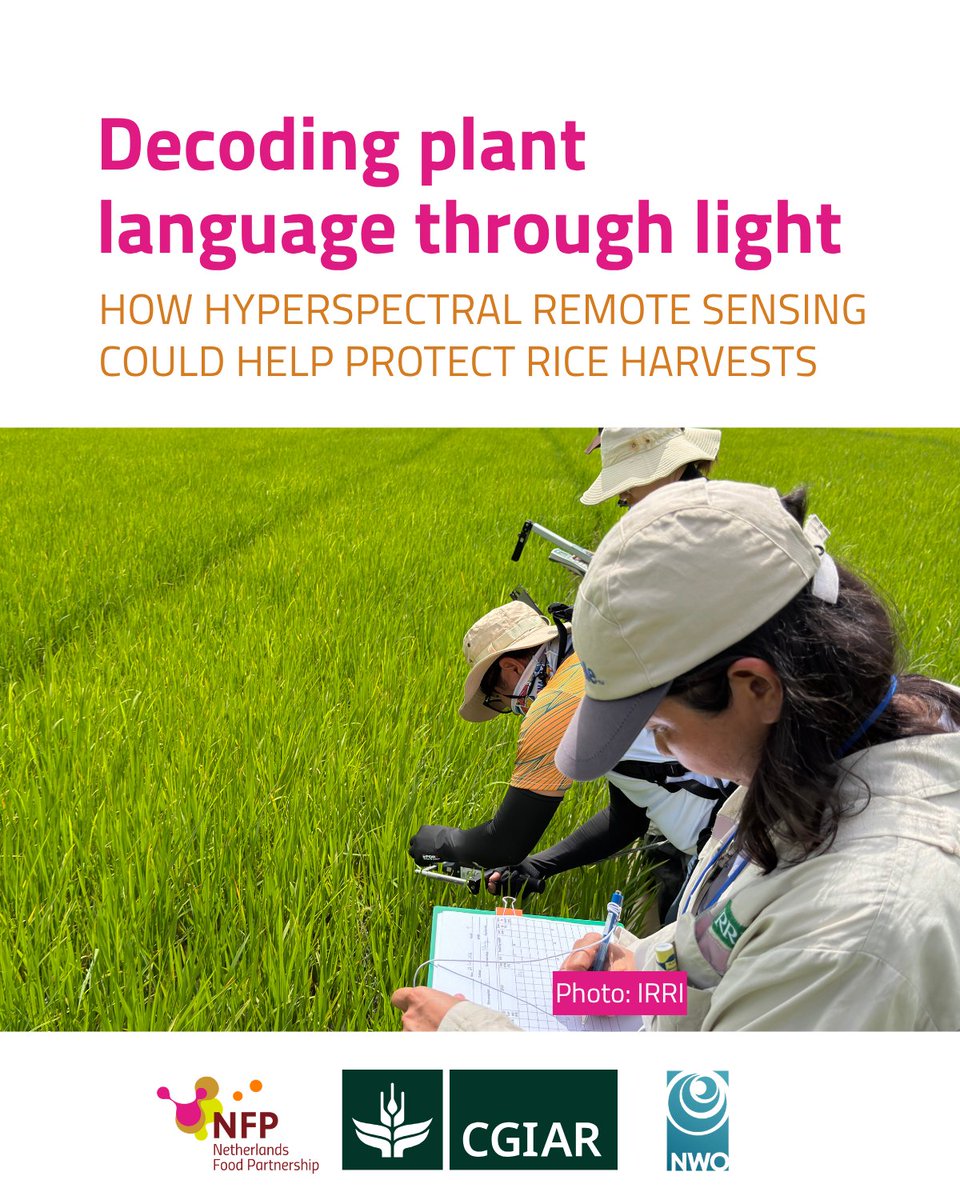
By the time a farmer sees the first signs of Bacterial Leaf Blight, part of the harvest may be lost. Using light itself as a diagnostic tool, reading disease signals from drones & satellites before any damage is visible to the human eye is possible.
➡️ https://t.co/c2ZGW57n6b
In Bac Lieu, rice farming is increasingly defined by more than yield. This report highlights the need for spatially targeted policies that balance profitability, liquidity, & risk while aligning climate incentives with local agroecological conditions.
🔗https://t.co/5LeXcCNmef
Uganda’s first-ever Annual Rice Sector Review Meeting 🇺🇬
@MAAIF_Uganda, @JicaUganda@irri@FAOUganda@AfricaRice, @AGRA_Africa, private sector & farmers united to advance the National Rice Development Strategy II.
🌾 Supported by the Coalition of Africa Rice Development (CARD).
💰 🌾 Food security philanthropy is evolving.
@RenPhilanthropy's CRISPR-based rice initiative with @CIMMYT, @irri and Jennifer Doudna’s lab aims to improve nutrition without sacrificing yield.
A strong example of philanthropy and science working together for farmers.
A rice field looks healthy until it doesn't . By the time a farmer sees the first signs of Bacterial Leaf Blight, a significant part of the harvest may already be lost.
Read more from @nfp_sdg2 on work with @irri through the #NLCGIAR Research Programme https://t.co/UWRCiO6Auv
In this follow-up clip, Dr Pauline Chivenge shines a light on something that often goes unspoken — the incredible women leading rice-farming households across Africa, who pour everything into their land, their crops, and their communities.
Yet so many of these women don't hold title to the land they work. And that one barrier quietly limits so much else — access to financing, resources, and a seat at the table where decisions are made.
It's a nuanced, important conversation that Dr Chivenge and Ranjitha Puskur of the International Rice Research Institute explore with such care and depth in the full podcast episode. We hope you'll give it a listen.
🎙️ Full episode: https://t.co/ABjpiiksNp
#SustainableFarming #GenderEquality #WomenInAgriculture #FoodSecurity #ClimateResilience #RiceFarming
We are incredibly proud to share this episode of The Conversation featuring our very own Dr Pauline Chivenge. A Zimbabwean agronomist whose research on soil and water management, climate resilience, and sustainable rice production across Africa and South-East Asia continues to inspire and shape the sector.
In this episode, Dr Chivenge joins Ranjitha Puskur of the International Rice Research Institute to discuss how women are rethinking rice farming and building climate resilience from the ground up. A conversation that reflects exactly what the Sustainable Farming Program stands for.
🎙️ Listen to the full episode: https://t.co/ABjpiiksNp
#SustainableFarming #WomenInAgriculture #FoodSecurity #ClimateResilience #RiceFarming
In 🇧🇩 Haor Basin, the silence after the flood is not peace but a heavy, suffocating silence at the aftermath of a disaster.
Climate change is shrinking the window between harvest & flood season, turning what once were “early” floods into the new normal.
🔗 https://t.co/jjZgKmfJru
Rice Today: When a farmer in rural Odisha receives a WhatsApp alert at dawn and acts before a crop is lost, that is more than technology. It is science reaching farmers when it matters most.
🔗 Learn about PaddyMitra: https://t.co/L9rZcdrdUY