Documentary narrated by Olivia de Havilland on positive impact of art, museums, music & creativity on people w/ Alzheimer’s. Co-host weekly care chat @alzchat
#AlzChat - great tips re music, sensory activities and this: "Agitated behaviours are signs of stress, fear, confusion and overwhelm that the person with dementia does not have control over.... Try to see things from their perspective and not blame them for their behaviour."
#AlzChat The majority of tips suggest having predictable routines to help reduce anxiety and agitation- set mealtimes, sleep routines, and familiar activities. Creating a sense of emotional safety matters and can be done through feeling centred yourself.
#AlzChat recognise that being told what to do, or being asked if you remember this or that, or finding things harder to process, or having life choices limited - is agitating. So it's important to have empathy, acknowledge experiences, be there for the person (and for yourself).
The Finnish delegation visited an elderly home in Brussels, le Sagittaire, with Director Gaetan Meuleman, who developed an innovative train station to be used for clients with dementia; the results are impressive: less agitation, less stress, less medication.
#IND2026
#AlzChat If the agitation comes on suddenly and is unusual, seek help form a nurse or medical person because this could be an infection, urinary tract infection, pain, or some other physical cause that could be alleviated.
so thrilled to see this after 25 years of ideas around this... fabulous and hopefully will become far more seen in hospitals and care settings #AlzChat
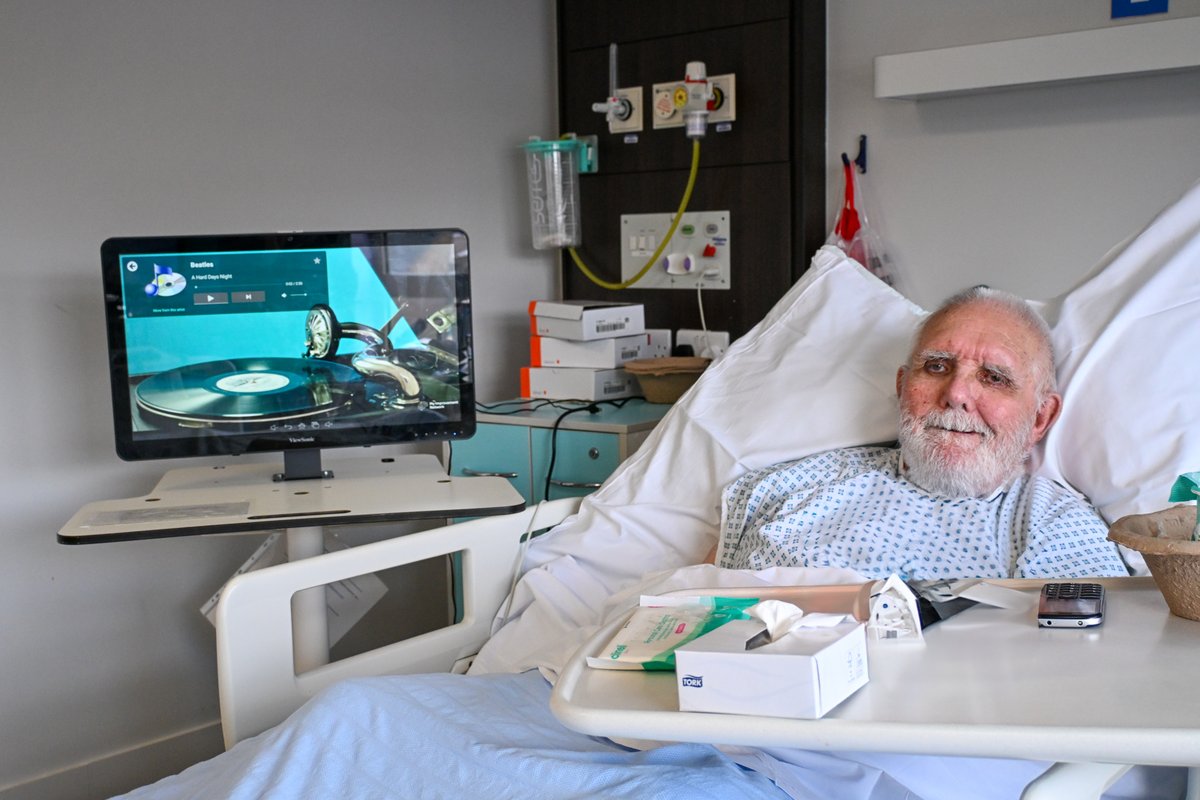
Patients with dementia, anxiety and learning disabilities are amongst those benefitting from the introduction of five therapeutic devices across Doncaster and Bassetlaw Teaching Hospitals (DBTH).
The Reminiscence Interactive Therapy Activities (RITA) device, a portable touch-screen system, offers a welcomed distraction for patients receiving enhanced care due to support their additional needs.
Previously, hospital teams closely observed patients at risk of falls and agitation, but lacked the tools to distract them, boost their mood, or help soothe anxieties, explained Julie Wragg, Corporate Nurse at DBTH.
She said: “Our teams will watch patients to prevent them falling but there isn’t always engagement with them. It can mean boring and long days for both colleagues and patients.
“RITA has opened up a way for them to pass the time and build up rapport and trust as often patients who are confused can feel vulnerable when in hospital.”
Use of the RITA also reduces the need for medication to settle those who are distressed, Julie explained.
Activities on the RITA include quizzes, interactive musical instruments and short television broadcasts from the 1950s and 60s.
88-year-old Trevor Holder, a patient on the Mallard Ward at Doncaster Royal Infirmary, particularly enjoys watching musicals on the device.
He said: “It passes the time and helps to have some entertainment while I’m here.”
Trevor has watched at least four musicals using the RITA from his bedside, including Oklahoma and Calamity Jane.
He eagerly awaits the addition of ‘Seven Brides for Seven Brothers’ to the device’s catalogue.
The RITA is not only useful for passing the time independently, but also as a group.
Sarah Gallagher, Activities Coordinator on the Mallard Ward, explained: “When I do the quizzes, I try and do it as a group and get them more involved.”
“We just did one with Trevor and another patient and now they’re chatting and have got to know one another a little bit.”
The interactive device comes with a wide range of reminiscence and therapeutic content, allowing Sarah to evoke fond memories and engage patients.
Sarah said: “The RITA helps me get into conversations with them about what they enjoy and what makes them smile.
“It gives them a little sense of being people.”
One of Sarah’s patients had emigrated to the UK. With the help of the RITA, he could see the place he had lived before and was ‘taken aback’, Sarah explained.
The RITA also aids communication for patients who have difficulties speaking or describing things.
Sarah said: “Patients can use a special photo of a body on the RITA to point to or show where they may be hurting.”
The introduction of the RITA devices was only possible thanks to the generosity of the local community and Doncaster and Bassetlaw Teaching Hospitals (DBTH) Charity.
Julie said: “Knowing that the community has funded this is hugely heart-warming and they themselves may just benefit from RITA in any potential future admissions.”
Visit the charity website to find out more: https://t.co/MgHezudyyW
Social activities like going on a walk or meeting for a coffee with someone living with dementia can help alleviate symptoms of depression and agitation.
Reducing these could help them stay well for longer.
Go to https://t.co/4EAxChVn7M for more info.
#DementiaActionWeek
#AlzChat when someone is agitated, it can be easy to speed up too- try slowing down- fewer words, more calmness, don't overload on information. These tips can seem so obvious, but ppl get caught up in the moments because agitation has 'big energy' about it.
#AlzChat Managing and understanding agitation in dementia care...
Tips on how Caregivers can learn to decode behavioral signals and build a toolkit of strategies: https://t.co/iRSxGttTaU
When people think about distress in dementia, they frequently imagine visible presentations i.e. shouting, agitation, or physical expressions. Yet some of the most significant unmet needs present in much quieter ways https://t.co/LvxAiy59tC
#DementiaActionWeek#BeTheDifference
#AlzChat it's vital to understand that agitation is not someone being 'awkward' or 'non-compliant' - it is a sign that something does not feel right or comfortable or in harmony. - And can cause a lot stress for both the person living with dementia and the caregiver.
In people with #dementia, music-based strategies have been shown to be beneficial for agitation, aggression, symptoms of anxiety and depression, and reducing resistance-to-care https://t.co/wqUHS92LbJ #MusicTherapy
💙🦆 Did You Know?
A simple touch can provide comfort, reassurance, and connection for someone living with dementia.
Research shows that gentle, appropriate touch can help reduce anxiety and agitation while creating a sense of safety and calm. Sometimes, a hand to hold, a reassuring pat on the shoulder, or simply sitting close can communicate more than words ever could.
If you'd like to help us continue creating meaningful moments for people living with dementia, please consider supporting our mission at https://t.co/b9wdODN8MM
#DucksForDementia #DementiaAwareness #MemoryCare #BrainHealth
#AlzChat consider possible causes of agitated behaviour: does person feel hungry? tired?, unsafe? are they in pain? overwhelmed? grieving? - respond with as much compassion and reassurance as possible.