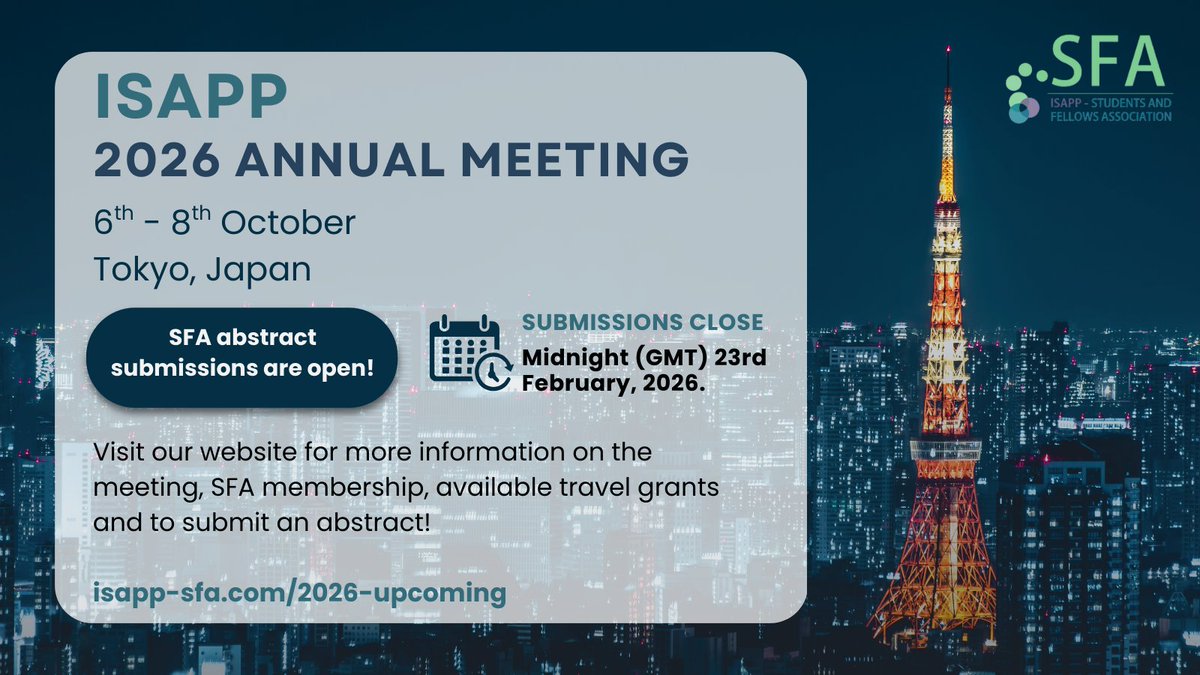
We’re excited to share that the ISAPP Annual Meeting 2026 will take place in Tokyo, Japan, from the 6th to the 8th of October!
Abstract submissions will open soon! ⏰
🔗Join the SFA (free): https://t.co/CgiczX3D0B
🔗Meeting information: https://t.co/fDnlMxPRqu
How did a dietitian end up in a microbiology laboratory? In this month’s ISAPP-SFA blog, Dr. Fatma Koç shares how curiosity led her from nutrition science into gut microbiome, metabolomics, and microbiology research.
Read the full blog below!
🔗 https://t.co/DTOmSVzHiu
Could traditional cheese offer more than just flavour? This month’s ISAPP-SFA blog explores how traditional cheeses host microbial communities that may produce compounds linked to the gut-brain axis 🧀
🔗 https://t.co/IrwDT8GOC3
In this month’s ISAPP-SFA blog, Qinnan Yang tells us how plant genetics and microbiome research are coming together to uncover new sources of prebiotics.
🔗 Read here: https://t.co/sXYIDlRSkC
📢 Final reminder to apply for ISAPP 2026 in Tokyo, Japan!
Please ensure your abstract is submitted by midnight (GMT) tonight (Monday, 23 February 2026).
🔗 https://t.co/iWWSG3Pl7d
📢 BIG NEWS: The ISAPP-led scientific consensus definition on gut health was just published in Nature Reviews Gastroenterology & Hepatology! Read about it here:
https://t.co/gmqHor4Chy
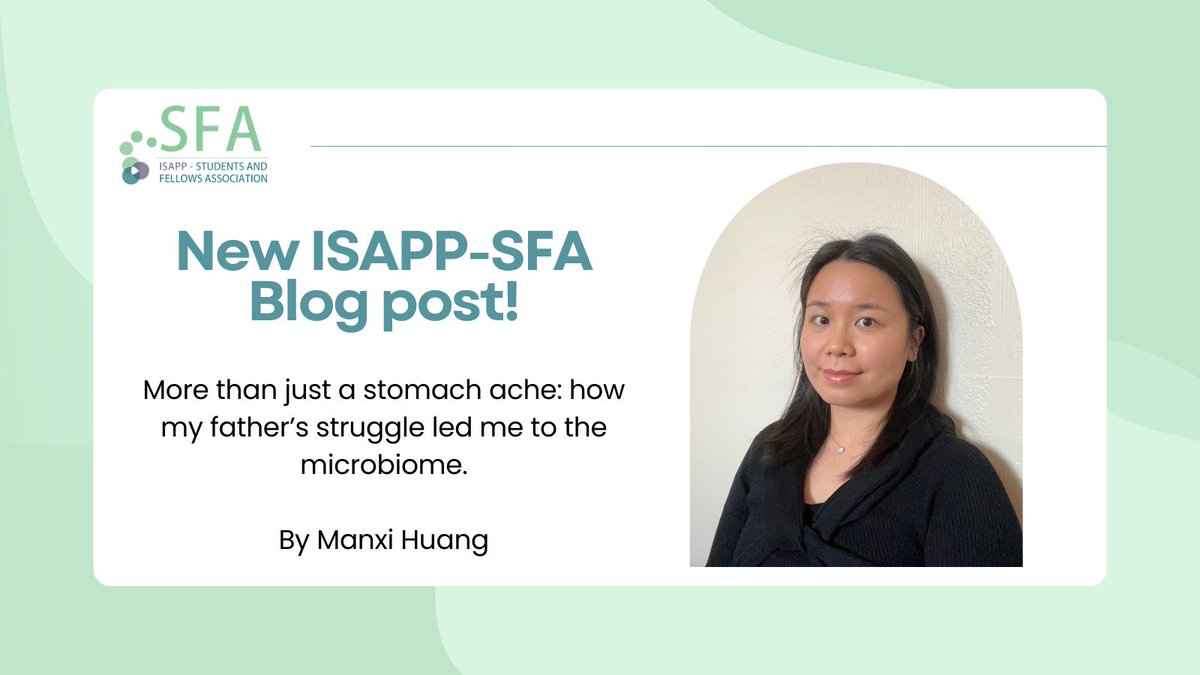
In this month’s ISAPP-SFA blog, Manxi Huang shares how her father’s ongoing digestive struggles shaped her path into microbiome research.
Read the full blog below!
🔗 https://t.co/ixeBUtKe7Z
One week left to apply! ⏰ Don't forget to prepare your abstract submission for the 2026 ISAPP annual meeting in Tokyo, Japan.
📅 Submit your abstract by midnight (GMT) on Monday, 23rd February 2026.
🔗 https://t.co/iWWSG3Pl7d
Don't forget to prepare your abstract submission for the 2026 ISAPP annual meeting in Tokyo, Japan! ⏰
📅 Submit your abstract by midnight (GMT) on Monday, 23rd February 2026.
🔗 Abstract submission: https://t.co/iWWSG3Pl7d
@ISAPPscience
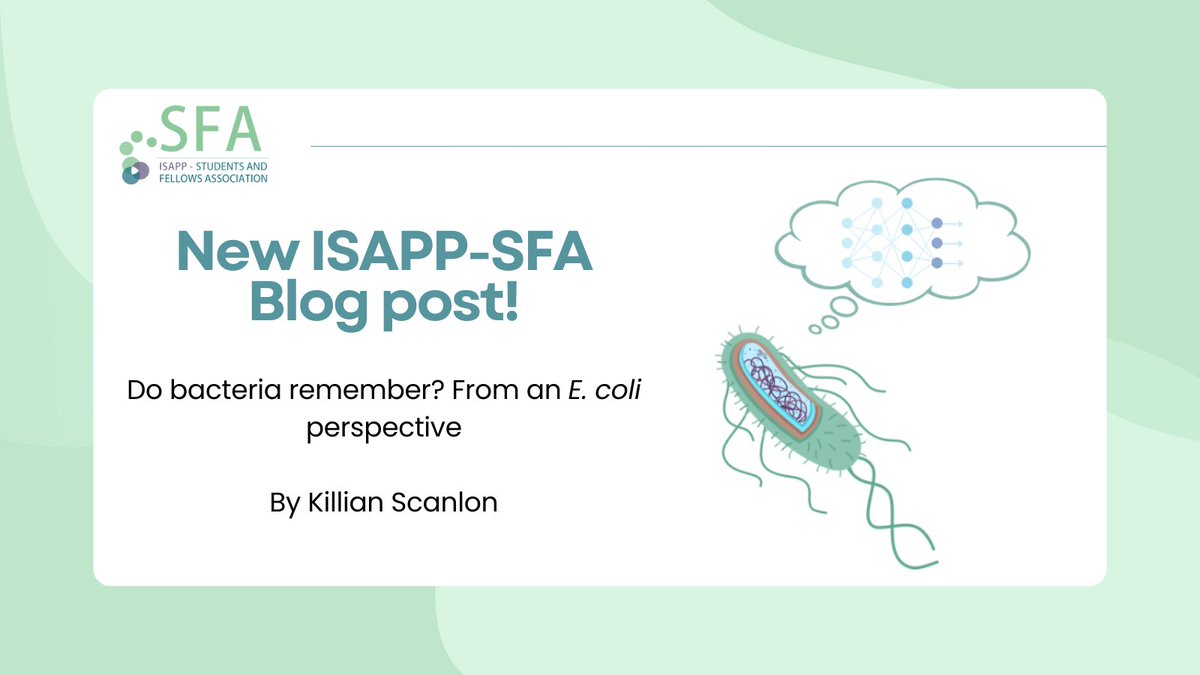
Can bacteria remember? In this month’s ISAPP-SFA blog, Killian Scanlon explores how microbes like E. coli can store and use information over time, from gene regulation to community-level “memory.”
Read the full blog below!
🔗https://t.co/ZqEIqpvOuM
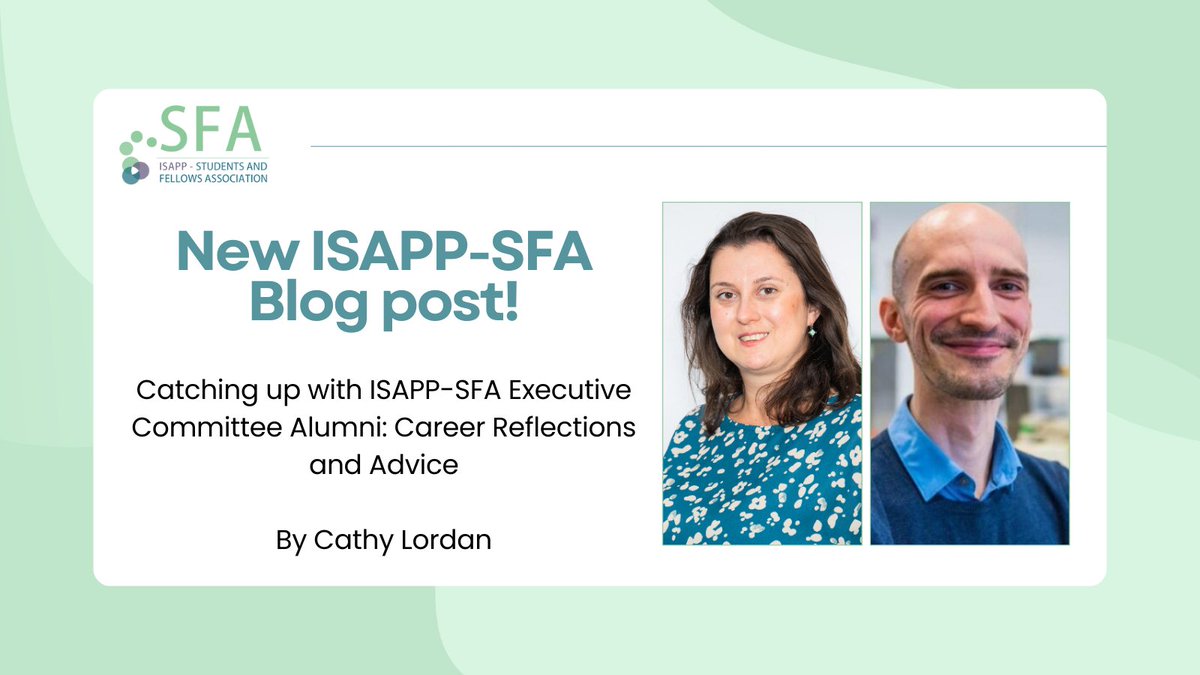
In this month’s blog, Cathy Lordan catches up with Dieter Vandenheuvel & Mariya Ivanova Petrova who both served on the ISAPP SFA Executive Committee.
Read the full blog to hear their stories and get inspired to make the most of your own SFA experience 👇
https://t.co/bLkLZwVnok
Today's the day 👏 Time to submit your application for the ISAPP Gregor Reid Award for Outstanding Scholars in Developing Nations!
Join the SFA 🔗 https://t.co/CgiczX3D0B
Apply for the award 🔗 https://t.co/rA7XPxLMS8
@ISAPPscience
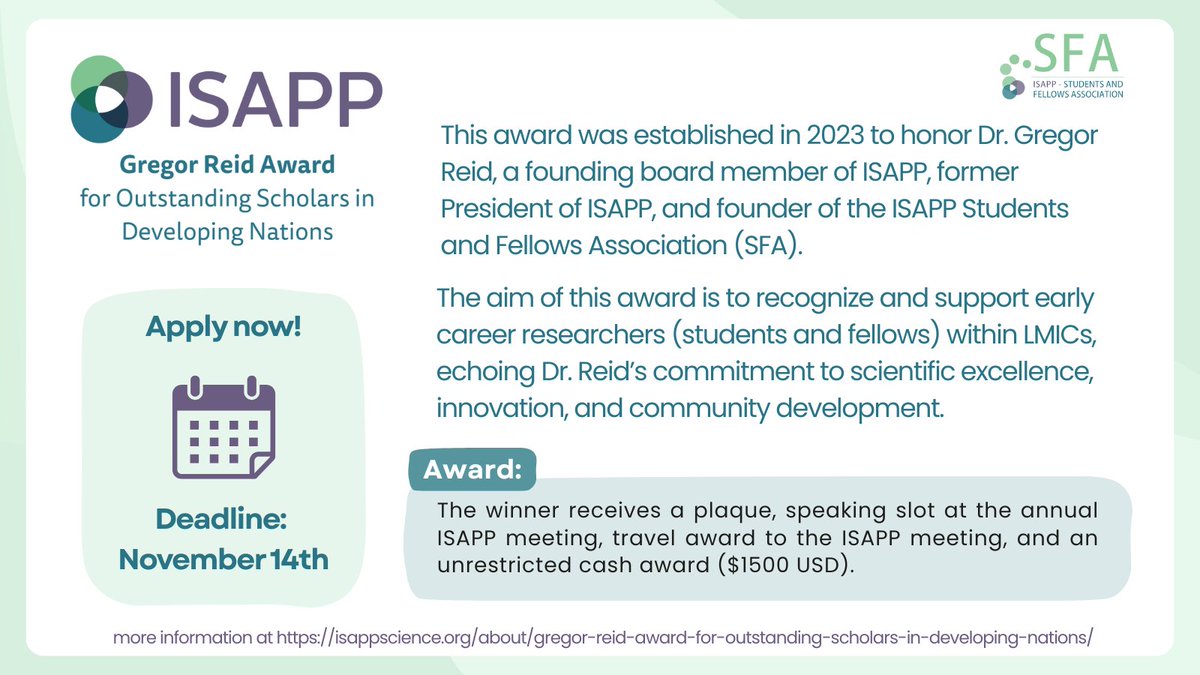
The 2026 Gregor Reid Award for Outstanding Scholars in Developing Nations is open for applications! 🏆
Deadline: November 14th, 2025.
https://t.co/rA7XPxLf2A
The 2026 Gregor Reid Award for Outstanding Scholars in Developing Nations is open for applications! 🏆
Deadline: November 14th, 2025.
https://t.co/rA7XPxLf2A
The 2026 Gregor Reid Award for Outstanding Scholars in Developing Nations is open for applications! 🏆
Deadline: November 14th, 2025.
https://t.co/rA7XPxLf2A
Our podcast has kicked off a brand new series on leveraging microbial ecology for health! See our first episode here, with Marjon de Vos speaking about eco-evolutionary processes & how they affect antimicrobial resistance:
https://t.co/zGcvvjazZh
Don't miss the latest podcast episode in our series on microbial ecology: Dr. Joao Xavier talking about microbial ecosystem management in people being treated for cancer. Listen now:
https://t.co/yhojle7hsr
In this month’s ISAPP SFA blog, PhD student Anik Khan shares his work with the EU-funded DOMINO project. His synthetic ecology approach can be used to transform by-products like fruit pulp into nutritious, plant-based fermented foods 🌱
Read more 👇
https://t.co/IWV0jLOoCk
Very excited to share the latest work from our lab, which was published today in Nature!
https://t.co/bopoov16pa
PhD graduate and now post-doc @SofiaDahlman, along with co-senior author Sam Forster from The Hudson, and lab members @SubDinesh
How do gut microbiomes assemble and how can they be modulated?
Enjoyed contributing to this @ISAPPscience podcast on how ecology can help us understand and modulate microbiomes. Thanks to @colinhillucc (@Pharmabiotic) and Dan Tancredi for hosting.
https://t.co/GyLPjqV1Ef