In this episode of South Asia Chat, Dr Amitendu Palit, Senior Research Fellow, ISAS-NUS speaks to World Bank Chief Economist for Asia, Dr. Franziska Onsorge on South Asia’s economic outlook for 2026. The region’s economic growth is expected to improve supported by effective policies and resilient remittances despite geopolitical tensions. The discussion highlighted Sri Lanka’s economic recovery, Nepal’s flood-related challenges, and the growing impact of AI on employment and business operations. While AI adoption remains limited, it is already reshaping labour markets, creating both job displacement risks and demand for new skills. The conversation also explored the potential economic benefits of AI infrastructure and data centre development across the region.
Listen Here: https://t.co/fZD3AP8Y6K
Over the past few weeks, the Election Commission of India (ECI) has been in the eye of a storm primarily due to a media report on disagreements among the three election commissioners over the ongoing Special Intensive Review of electoral rolls and the role of the Chief Election Commissioner Gyanesh Kumar. To discuss the controversy over the ECI and what it means for Indian democracy, Senior Research Fellow Ronojoy Sen spoke to Tarunabh Khaitan, Professor (Chair) of Public Law at the LSE Law School.
https://t.co/Lm8HvzRWI9
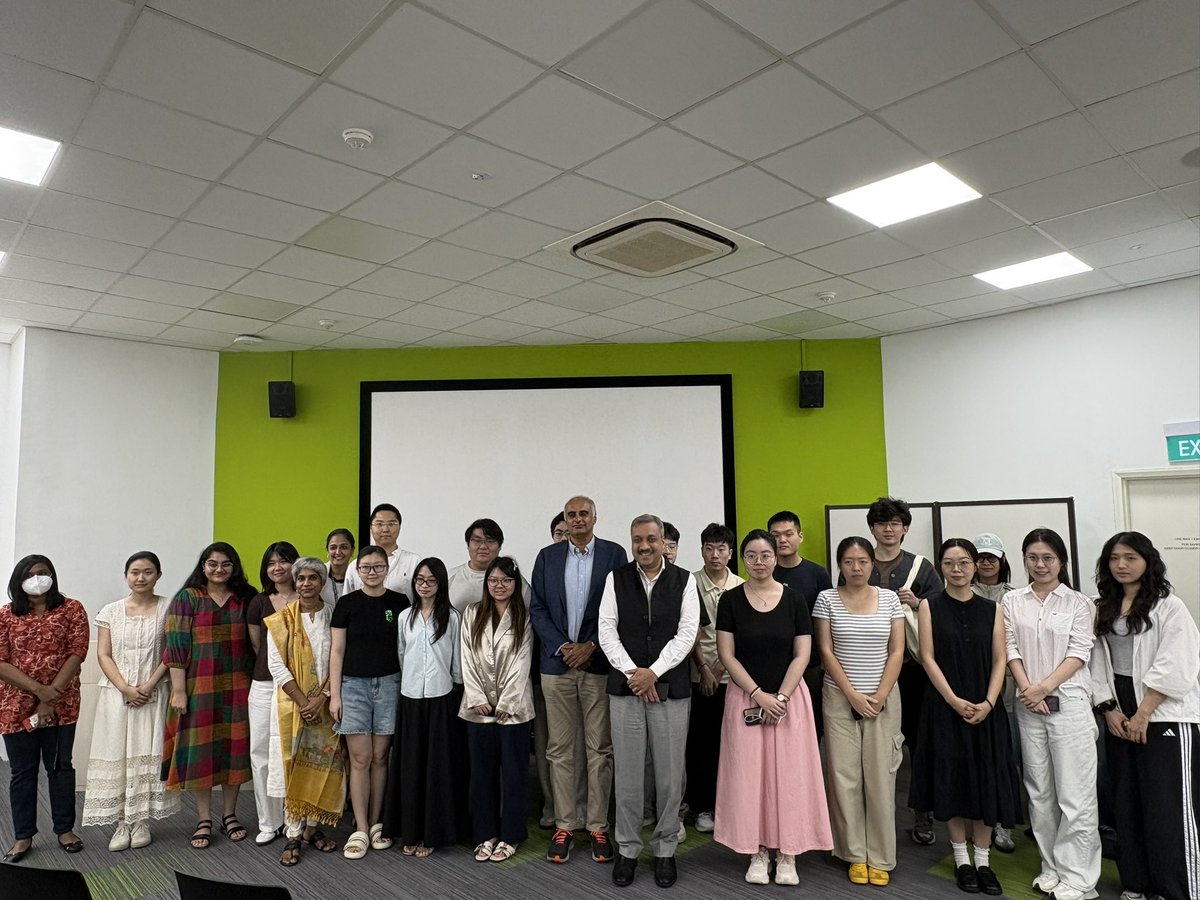
High Commissioner interacted with @NUSingapore students and @ISASNus scholars today. The discussion covered India’s relations with Singapore and South East Asia, and India’s economic development and foreign policy priorities.
ISAS Online Seminar:
This seminar examines Pakistan’s evolving role in an increasingly uncertain global order. Dr @YusufMoeed will explore how great-power competition, shifting regional dynamics and an emerging multipolar world are shaping Pakistan’s foreign and security policies. Chaired by Associate Professor @IqbalSevea Sevea, the discussion will consider Pakistan’s relationships with major powers and its efforts to balance competing international interests while pursuing economic stability, strategic autonomy and constructive global engagement. @YusufMoeed
Register Here: https://t.co/NcWq3rmmnJ
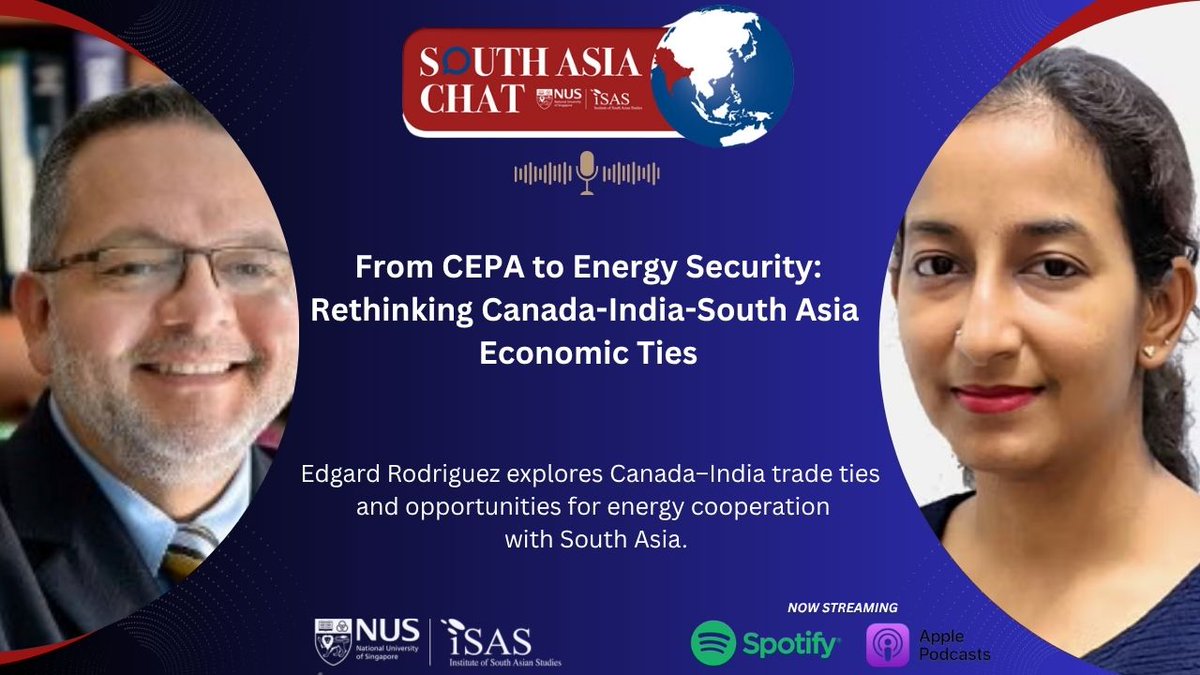
In this episode of South Asia Chat, Ms Divya Murali, Research Associate at ISAS, speaks with Mr Edgard Rodriguez, Senior Development Economist at Canada’s International Development Research Centre, about the Canada–India Comprehensive Economic Partnership Agreement and Canada’s broader engagement with South Asia. They explore how trade and energy cooperation can strengthen economic resilience and support inclusive, sustainable development.
https://t.co/bGwsPcn5Ac
This online seminar will explore the developing bilateral relationship between India and South Korea.
Two of the most dynamic economies in Asia with shared foreign policy goals and democratic values,
India and South Korea have developed a close partnership in the last two decades. They signed a
Comprehensive Economic Partnership Agreement in 2009 and a Special Strategic Partnership in
2015. Nevertheless, many observers argue that the relationship remains a case of unfulfilled
potential. This seminar asks what draws India and South Korea together and what holds the relationship back. In particular, how do external factors such as the rise of China, challenge of North Korea and the growing global of economic instability affect the relationship.
Register Now: https://t.co/XjIuDmbrQx
From Trade to Supply Chains: The Next Chapter for India, Malaysia and ASEAN | South Asia Chat
Listen to the full episode now:
https://t.co/sB3VHFWiU7
#india#asean#malaysia
Post-Event Summary:
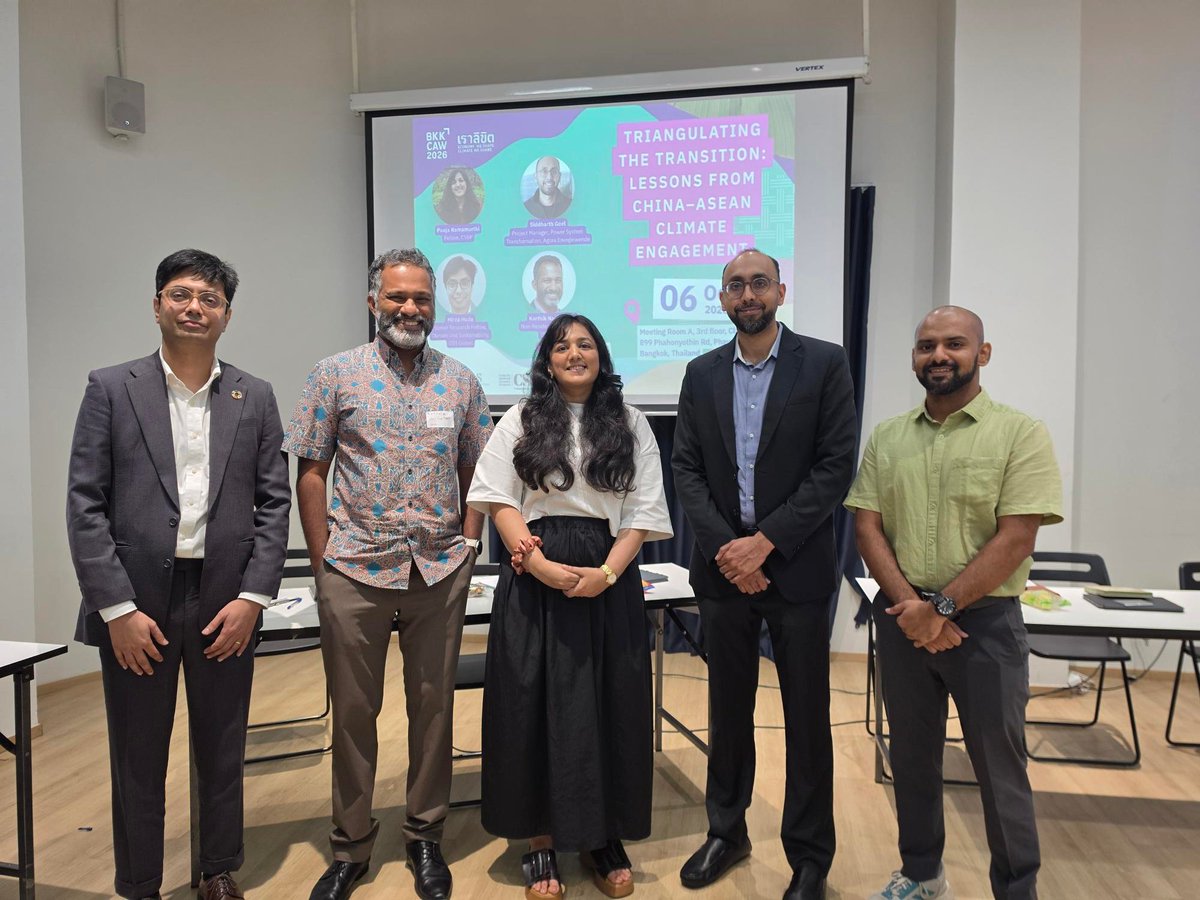
On 6 October 2026, ISAS and the Centre for Social and Economic Progress, India, co-hosted a panel discussion titled Triangulating the Transition: Lessons from China-ASEAN Climate Engagement at the Bangkok Climate Action Week. The session involved diverse stakeholders from multilateral institutions, electric vehicle and renewable energy manufacturing industries, philanthropic organisations, and leading think tanks.
The panel explored how India could adapt the strategy of the Association of Southeast Asian Nations (ASEAN) in managing clean energy interdependence with China. Key takeaways highlighted ASEAN’s deployment of cross-border grid infrastructure, adeptly leveraging access to its market, and tapping into Chinese capital and technological expertise without allowing engagement to turn into strategic dependence. Conversely, the participants noted that ASEAN could draw valuable lessons from India’s experience, particularly its frameworks for cross-border bi-directional power trade with Nepal and Bangladesh.
The deliberations also highlighted avenues for India-ASEAN collaboration. The panellists proposed that India could offer Southeast Asian producers an alternative export market to mitigate over-reliance on Chinese buyers, and Indian companies could invest in ASEAN’s regional battery recycling ecosystems.
Finally, the discussion underscored that navigating the clean energy transition requires balancing domestic industrial capacity, building political trust amongst ASEAN states, and engaging with China without developing dependence.
. . . . . .