Official page of the study of wolves and the Isle Royale environment led by a research alliance between @globalwild_cc at MSU & Isle Royale National Park
In collaboration with Isle Royale National Park, Michigan State University (MSU) is seeking outstanding
technicians for the 2024 field season 1 May – 15 Sept, 2024.
https://t.co/8YkKeWqshA
Wolf groupings are constantly changing throughout the seasons. Depending on the time of year, presence of young, availability of food, group dynamics, etc., the numbers in scouting groups and the main pack change.
Play is incredibly important for younger wolves. It helps them socialize and strengthen pack relationships as well as helps start the process of learning how to become good predators and hunters.
Bull moose regrow and shed their antlers every year. During most of the growing period, the antlers are covered in fuzzy membranes called velvet. Velvet helps supply blood, hormones, and nutrients to the antlers. This bull is in the process of shedding its velvet.
Snowshoe hare fur changes to white to hide from predators in the late fall. Years with less snow can leave white-furred hares vulnerable to predators. This photo was taken in late November 2020. The white fur likely made it easier for this red fox to hunt the hare.
Red fox are good hunters but sometimes their prey can avoid being caught. Here is a red fox walking past a camera as a deer mouse sits on a rock (middle left) watching the predator stroll by.
Isle Royale has closed up for the season. While it is closed to visitors until mid-April 2023, the island's mammal residents take full advantage of the trail network.
Snowshoe hares are one of only a few mammal species that change their fur seasonally to help camouflage themselves. Their brown fur helps them blend into a variety of vegetation as shown in this camera trap image.
When doing field research, you never know what you are going to find. During today's camera check, our researcher discovered a squirrel destroyed camera. This squirrel had quite the precision and with it the retirement of a camera.
In the bottom right portion of the sequence, a deer mouse can be identified by its eyeshine as it tries to avoid a red fox. The deer mouse is one of only a few rodents found on the island. It makes up a significant portion of the red fox's diet.
Isle Royale National Park is located in Lake Superior, the largest of the Great Lakes of North America. Globally, it is among the largest freshwater lakes. Ice bridges can form in between the main land and Isle Royale, allowing wildlife, such as wolves, to walk across Superior.
Wolves can chew on moose antlers! These two photos show an adult wolf carrying a small moose shed. Antlers more commonly chewed on by smaller mammals, such as hares and mice. However, antlers can provide a variety of minerals, such as calcium, to supplement the wolf diet.
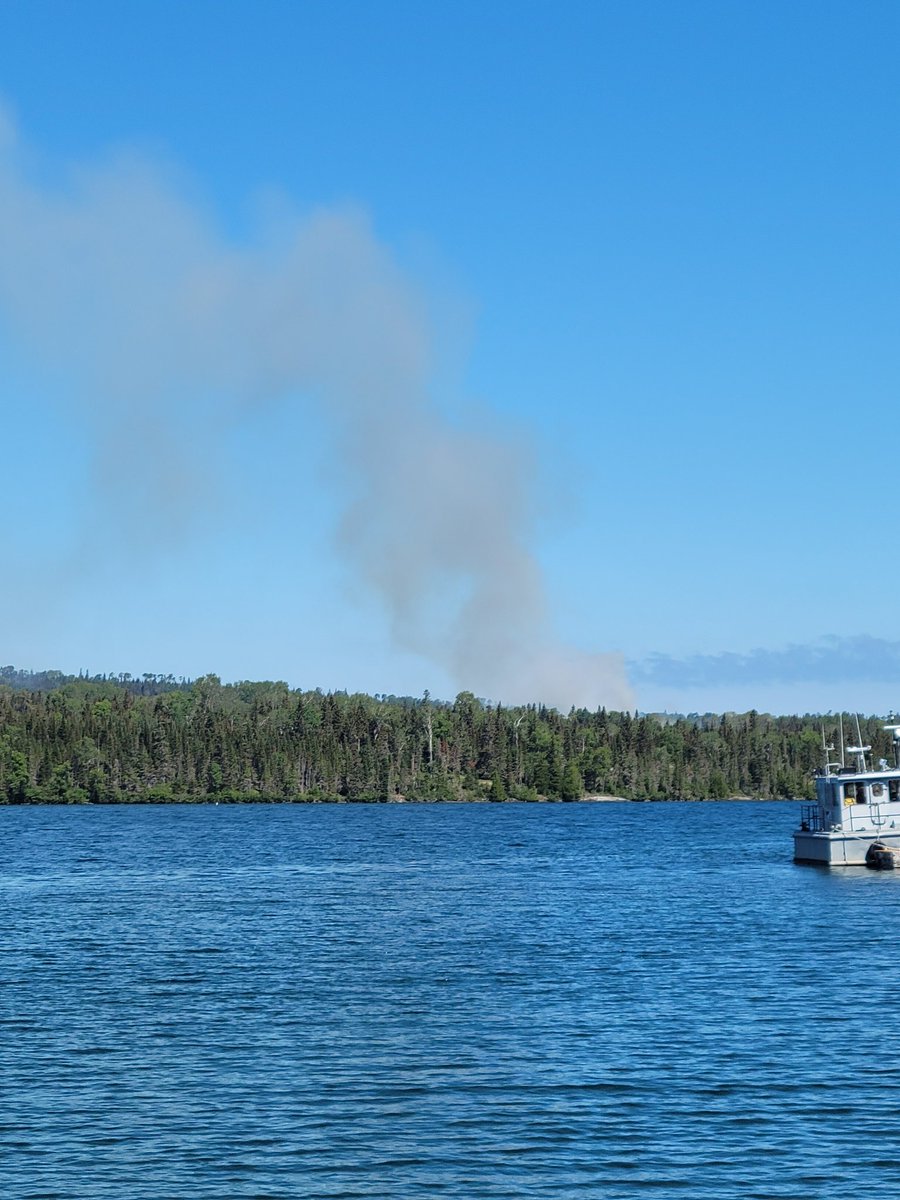
1/3 Fire has come back to Isle Royale this summer. From the park service: "Early afternoon on Saturday, August 13, park and concessions employees reported seeing a plume of smoke coming from an apparent wildfire burning in the three mile area.