International Siberian Shelf Study Expedition 2020
@ISSSarctic2020
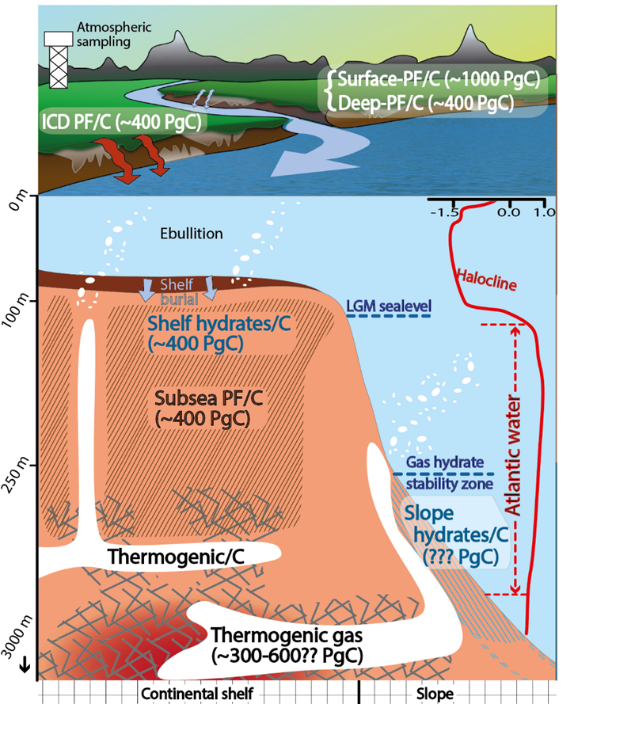
The ISSS-2020 expeditions focus on carbon-cryosphere-climate couplings in East Siberian Arctic Ocean and include a 40 day expedition on the /v Akademik Keldysh.
The expedition makes the front page of The Guardian:
'Sleeping giant' Arctic methane deposits starting to release, scientists find https://t.co/E7xNpUQWRN
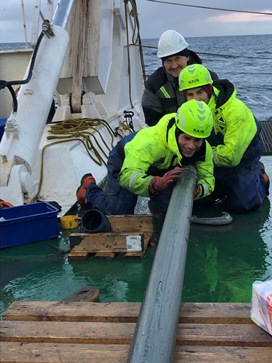
Hugging the Holocene! Two 6 and 8 m long cores were retrieved during the last 24h. They will inform about permafrost carbon-climate couplings from past rapid warming events.
The Science Advances article about remobilization of permafrost carbon in the past receives attention in news and popular science world wide - here an example from Scientific American
https://t.co/PNeqBmHjt7
"Phone home": challenged by ultrathin IridiumGo line for text messages. BUT, we do internal phoning in style with fancy 1970s LM Ericsson system - Swedish technology, built to last. Greetings from all in the SU ISSS-2020 team to all followers!
Up close: the five co-authors of the recent article in Science Advances, on board the R/V A.M.Keldysh. The press release for "Remobilization of dormant carbon from Siberian-Arctic permafrost during three past warming events." is available at https://t.co/YxxQlyKEKc
Aft deck gathering on R/V Akademik Keldysh in the East Siberian Sea, including five co-authors of the recently published article in Science Advances: Remobilization of dormant carbon from Siberian-Arctic permafrost during three past warming events (DOI: 10.1126/sciadv.abb6546).
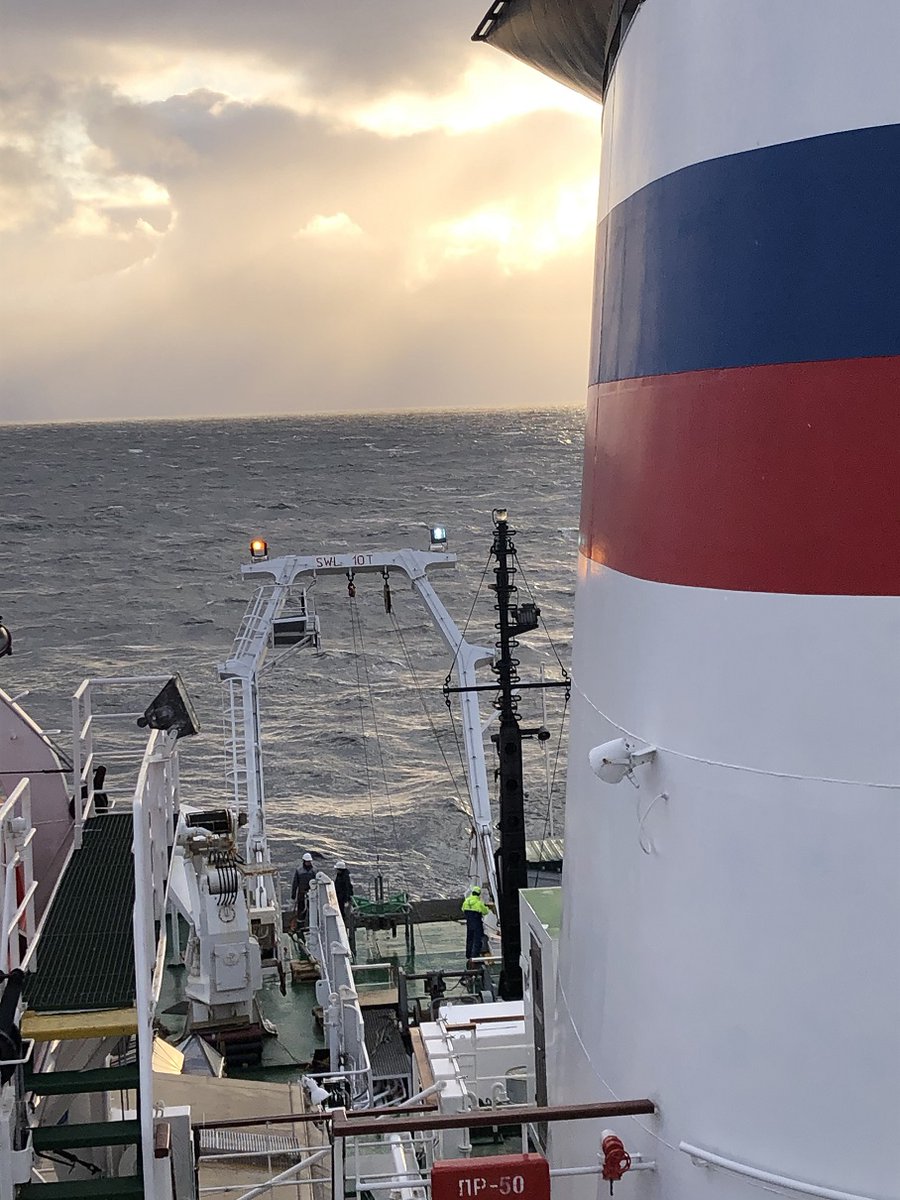
Midnight shift for a truly international team with members from Russia, Germany, Italy, Finland, China, and more. This time around it revolves around the deployment of a 9 m piston corer that is loaded with 1.5 tonnes of lead weights to push through the sediments.
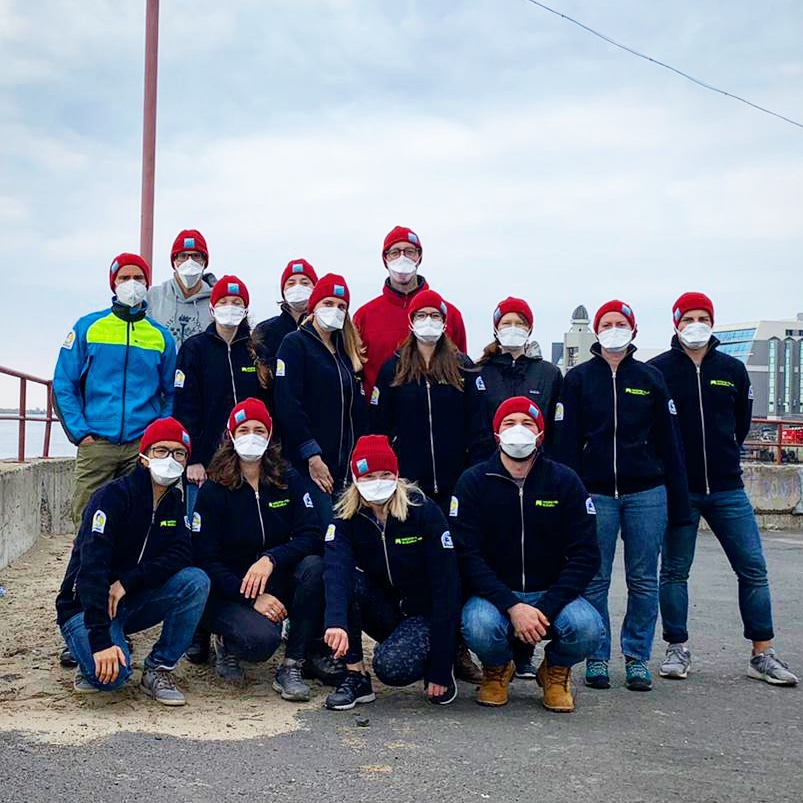
The ISSS-2020 team arrived in the White Sea port of Arkangesk, Russia in the early hours of the morning. Group mobilisation began with the success of entire team testing negative for Covid-19. We depart from port on the 26th/27th September. @BolinCentre@Stockholm_Uni
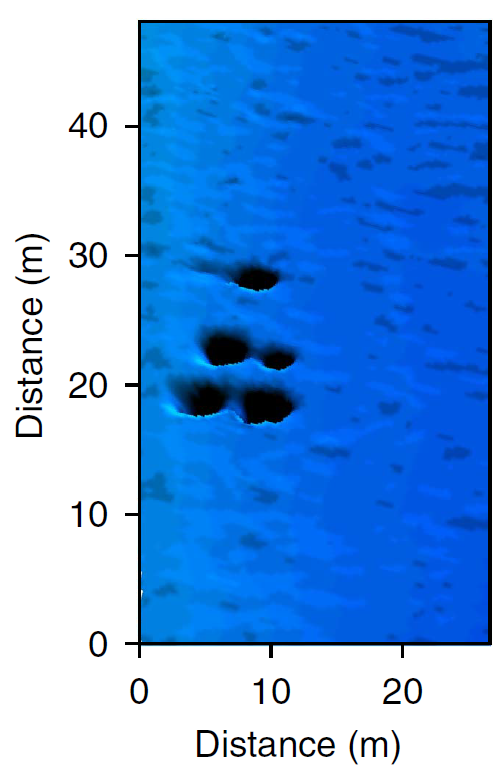
Maybe you have seen the news about the “Mysterious Craters” opening in the Arctic tundra? Similar craters are found on the seafloor of the Arctic Ocean and they are associated with methane seepage. We will investigate these craters during the #ISSS2020 expedition