$RXRX
Why do Roche, Sanofi and other pharma companies partner with Recursion instead of simply building this themselves?
They have more capital, more clinical experience and decades of pharmaceutical knowledge.
So why pay Recursion?
It's the data, infrastructure and years of iteration behind it.
Big Pharma has enormous amounts of data, but much of it wasn't generated specifically for AI. It's fragmented across different protocols, teams and silos.
Recursion built a data factory designed from the ground up to generate standardized, machine-readable biological data.
And you can't simply buy years of experiment → data → model → experiment cycles
You also can't easily recreate the culture of a startup inside a huge pharmaceutical organization. That's why big companies that fail to adapt and innovate eventually get disrupted by the companies that do.
Building something this different requires speed, experimentation, risk-taking and the willingness to completely rethink how drug discovery is done.
That culture compounds alongside the technology and data.
The AI is only as good as the system feeding it.
I went down the $NAUT rabbit hole and found something I think deserves much more attention.
The Dario Amodei / Parag Mallick connection goes much deeper than I realized.
Parag Mallick is the co-founder and Chief Scientist of Nautilus Biotechnology.
Dario Amodei is the co-founder and CEO of Anthropic.
But before Anthropic, before Claude, before the AI boom… Amodei was working on proteins.
And he worked under Mallick.
Amodei is listed as a Mallick Lab alumnus, and the two actually co-authored scientific research in proteomics.
They worked on methods involving mass spectrometry and protein analysis — exactly the world Nautilus is now trying to reinvent.
And the relationship didn't simply disappear years ago.
In his 2024 essay “Machines of Loving Grace,” Amodei thanked Mallick for reviewing drafts and specifically credited him for contributing an idea around the immune system and cancer.
Why does this matter?
Because one of Amodei's fundamental observations from biology was that the complexity is almost beyond human scale.
That helped push him toward AI.
Now look at what Nautilus is trying to build.
Voyager isn't simply another laboratory instrument.
The ambition is to generate incredibly deep information about proteins and proteoforms at massive scale.
And AI needs exactly this kind of thing:
DATA.
Not more internet text.
High-quality biological data describing what is actually happening inside cells.
Think about the potential loop:
Nautilus → generates massive proteomic datasets
AI → interprets biological complexity
Pharma → identifies biomarkers, disease mechanisms and potentially new drug targets
This does NOT mean Anthropic is buying Nautilus.
There is no announced Anthropic/Nautilus partnership.
There is no evidence I have seen that Amodei is investing in $NAUT.
And the “$10B+” claims circulating on X are speculation, not valuation analysis.
But the connection itself is real.
And I find it fascinating that one of the people at the center of today's AI revolution came from the exact scientific world Nautilus is trying to transform — and worked directly with Nautilus' Chief Scientist.
Maybe nothing ever comes from that relationship.
But it reinforces something I've been thinking about $NAUT:
The real opportunity may not simply be selling proteomics instruments.
It could be owning a platform capable of generating extremely valuable biological data in an era where AI is becoming increasingly capable of understanding it.
If Voyager works at scale, that could become very interesting.
I'm not buying the $10B story today.
But I'm definitely paying attention.
$NAUT $ABCL $RXRX $IVVD $TENX $PLTR
#Proteomics #AI #Biotech #SmallCaps #Investing
$RXRX
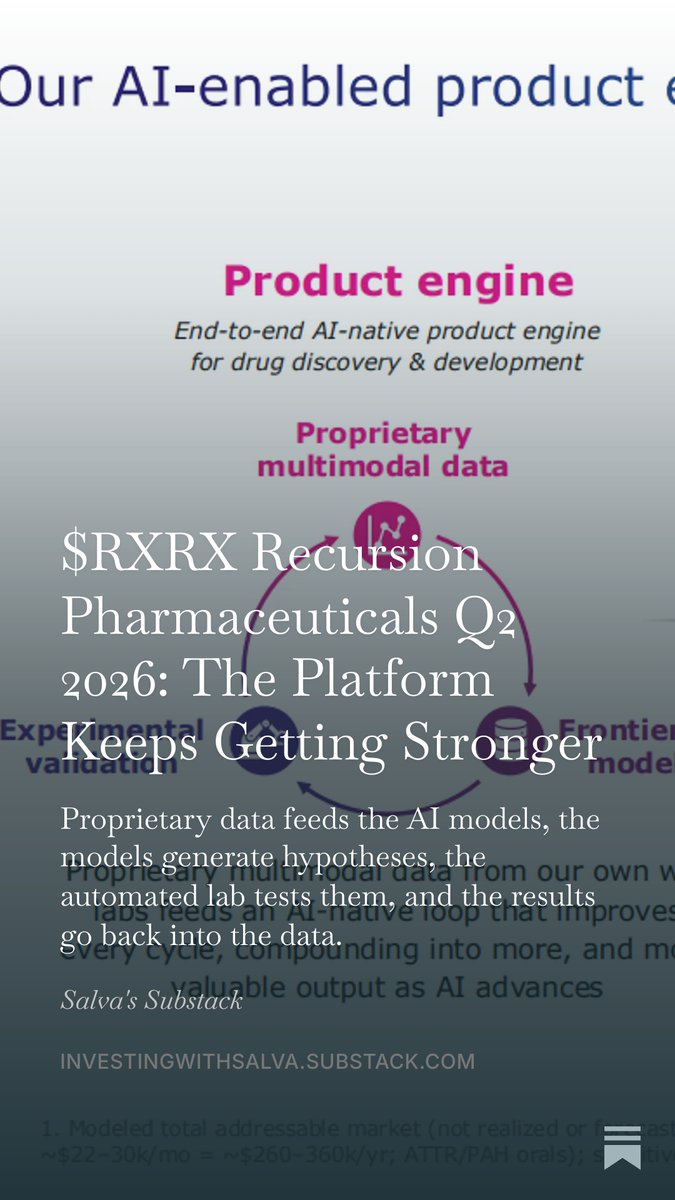
One of the most interesting parts of the Q2 2026 call was the progress on AI agents.
The Biology Agent can answer questions across Recursion’s proprietary maps in hours instead of weeks.
The Chemistry Design Agent reduced structural analysis from 4 hours to 30 minutes.
And orchestration agents are contributing to 1.3–1.6x higher enrollment rates vs. historical benchmarks.
This is where the AI thesis becomes tangible.
If you can run more iterations, faster and at lower cost, the same dollar can fund more, which is ultimately increasing shareholder value over time.
And in drug discovery, where probability is everything, increasing the number of iterations increases the outcomes and the improvement of the propietary data.
It's to make the entire drug development engine more efficient. This is the MOAT.
$HIMS
Healthcare today is fundamentally reactive.
We wait until something goes wrong before engaging with the system.
Yet preventive maintenance is the norm everywhere else.
Healthcare is becoming more expensive, fragmented, and difficult to access.
The system was built around the provider.
$HIMS is trying to rebuild it around the consumer.
I have no doubt the TAM is massive, and I believe $HIMS can capture a significant share of it.
Patience will pay.
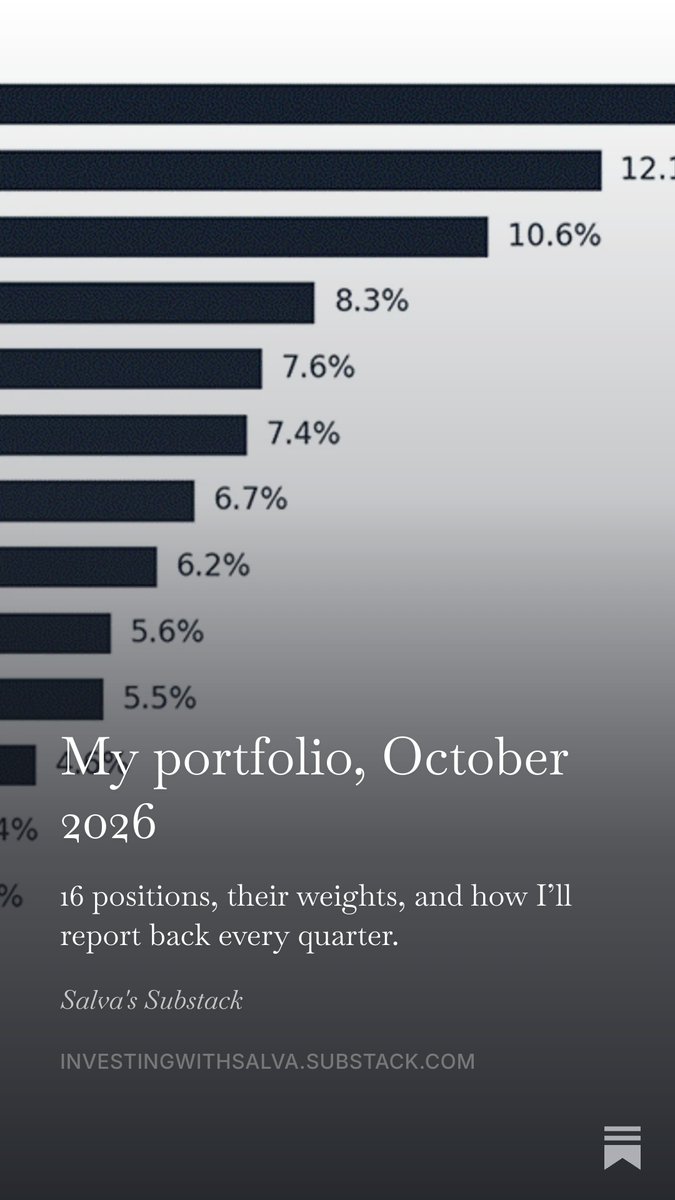
If anyone is interested in my portfolio weights, you can find my current portfolio here.
Of course, this is not financial advice.
And if you’re not following me on Substack yet, this is a good chance to subscribe!
I will keep sharing the portfolio updates every quarter.
https://t.co/GAF77jme6b
$HIMS, $DUOL, $AMD, $DLO, $ZETA, $RKLB, $PATH,
$PGY, $NIO, $CLPT, $IBRX, $NAUT, $RXRX
$NIO
What makes the Shenji story particularly interesting to me is the structure.
In February, external investors put RMB2.257B into Shenji, valuing the business at roughly RMB8.27B, while NIO retained 62.7%.
Then in June/August, Shenji raised another RMB493M at a RMB12.25B post-money valuation, with NIO still holding 59.95%.
This isn't just an internal R&D department anymore.
NIO is building a separately funded semiconductor business.
That's a very different economic model from simply saving NIO money on Nvidia chips.
And I think the market is still mostly valuing Shenji as an R&D expense rather than as an asset with external optionality.
This man is doing something big.
$IBRX is not just fighting cancer but soon preventing it.
Who wouldn’t want a strong, active immune system?
Thank you, @DrPatrick!
Best of wishes Michael and Congratulations .
There are millions of patients with cancer worldwide who are in complete remission. The next frontier is to develop therapies strengthening the immune system to prevent recurrence in these over 15 million patients in the USA alone, and drive long term durable freedom from cancer to win the war. Incremental short term duration of response should no longer be an acceptable outcome.
The therapies to address and maintain cancer free status are now here……..the orchestration of the immune system, the identification of tumor DNA in the peripheral blood, the easy measurement of the NK and T cell levels in the peripheral blood count, the sophistication of next gen PET/ MRI/ CT scans, the ability to grow and store activated NK cells, the ability to identify tumor educated T cells, the new knowledge of camelid derived heavy chain single domain antibodies and the ability to precisely target radioactive ligands, to precisely target CART and CarNK and CAR-iNKT cells. These immunotherapy advances are all here today and in various stages of clinical trials. The oncology community will enter this next generation of paradigm change. The need to establish these diagnostic and therapeutic combinations as IMMUNOTHERAPY 2.0 is both urgent and exhilarating.
This was the subject of my one hour talk with NIH and NCI and the decade of collaboration with Jeffrey Schlom and James Gulley to develop a cancer vaccine. Hope to release the talk once I receive the video recording and obtain clearance to make it public. We are closer than ever.
Small efficiencies compound, and businesses work the same way: a slight edge, repeated every day for years, is often what separates a good company from a great one.
Today with network effects, that effect is even stronger, because a small early lead can snowball into a dominant position.
$HIMS, $DUOL, $AMD, $DLO, $ZETA, $RKLB, $PATH, $PGY, $NIO, $CLPT, $IBRX, $NAUT, $RXRX
$NAUT
First large-scale, single-molecule analysis of the tau proteoform landscape reveals unique disease-associated modifications, a new source of potential biomarkers and drug targets, and a method Nautilus is now extending across disease areas.
When I first saw this news a month ago, I really didn’t understand how the stock was trading so low.
But this is what happens with micro caps like this one.
The rerating has started, with huge volume coming in over the past few days.
And these are simply such good results and a strong confirmation that the platform works:
Going beyond measuring bulk tau and being able to quantify individual tau proteoforms could be key for developing novel diagnostics and precision medicine in Alzheimer’s and other tauopathies.
Nautilus identified 130 tau proteoform groups at scale, with high precision, sensitivity and reproducibility, quantifying proteoforms present at just 0.1% of a sample and achieving a median CV below 5.5%.
Even more interesting: the same validated approach is now being applied to α-synuclein in Parkinson’s and AKT1 in oncology.
The roadmap is ~20 proteoform assays by mid-2028.
This is exactly what I want to see from the Voyager platform: prove it works, then expand it across diseases.
I published this deep dive on $NAUT when it was trading around $0.90, about one month ago.
You should have read it by now, but it is still early, so don’t miss it! I am quite sure Nautilus will be on the headlines several more times from here.
https://t.co/NVENSqODZ0
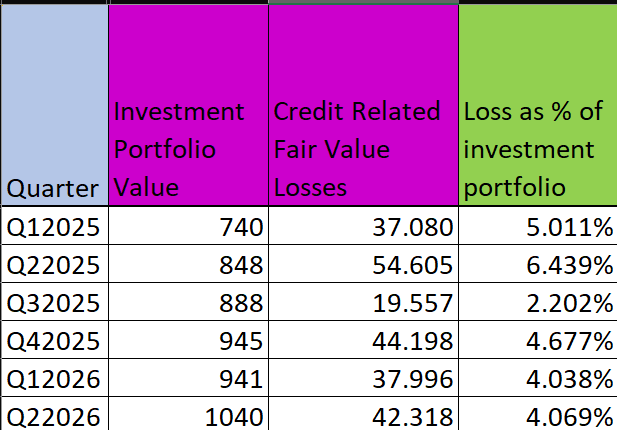
The important part of $PGY’s growth story:
They’re not growing by taking more credit risk.
Actually, they got more conservative earlier this year, pulling back from the riskiest tiers and haven’t reversed that since.
Growth has come from:
→ New products
→ New partners
→ Moving upstream
→ Deeper penetration with existing partners
Still, we need to keep an eye on these KPIs throughout different phases of the economic cycle:
$NIO's brand and reputation keep growing.
Among existing NIO customers, brand reputation & awareness now account for >30% of the purchase decision.
And NIO's Average Selling Price was RMB406K in Q2 and RMB430K in July. Above Mercedes-Benz, BMW & Audi, according to Insurance Association data cited by management.
NIO isn't just selling more cars. It's building a premium brand people are willing to pay for.
$NIO
The whole point is:
25.12 swaps per station yesterday.
https://t.co/cAsCOTD015
If each swap station can handle more than 400 swaps per day, do you still think the deal makes no sense?
NIO power needs more swapping to make the infrastructure profitable and the only way to do that is adding compatible vehicles.
$QURE $CLPT
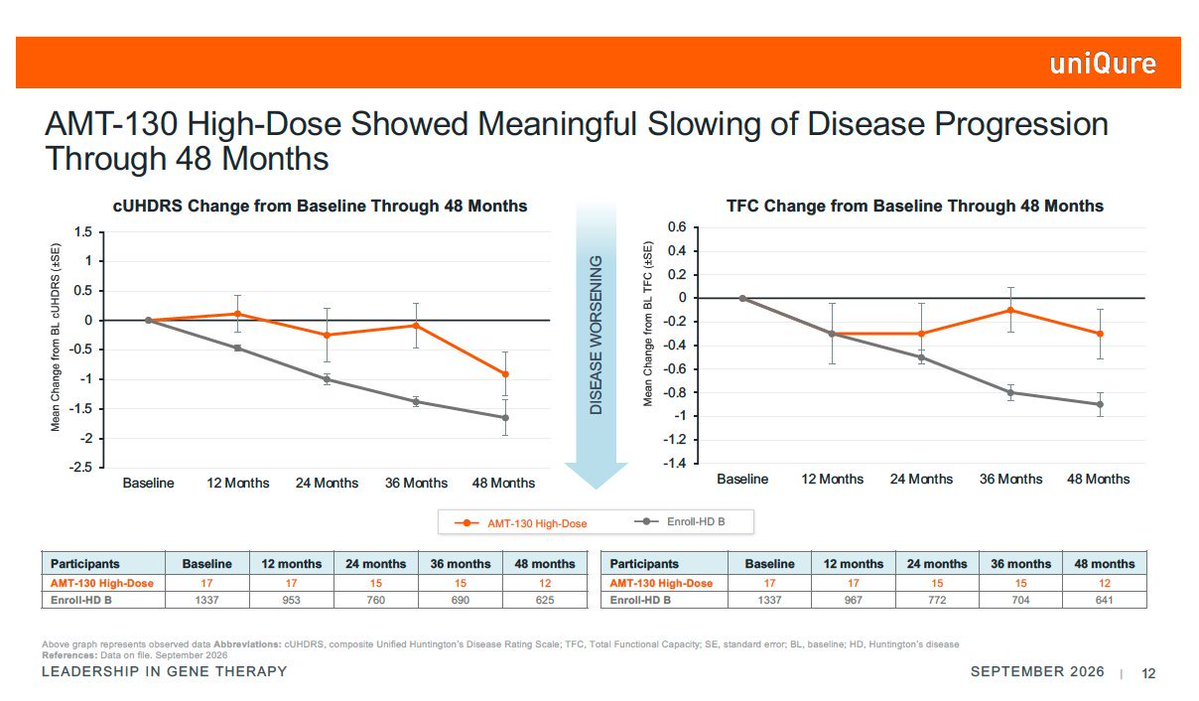
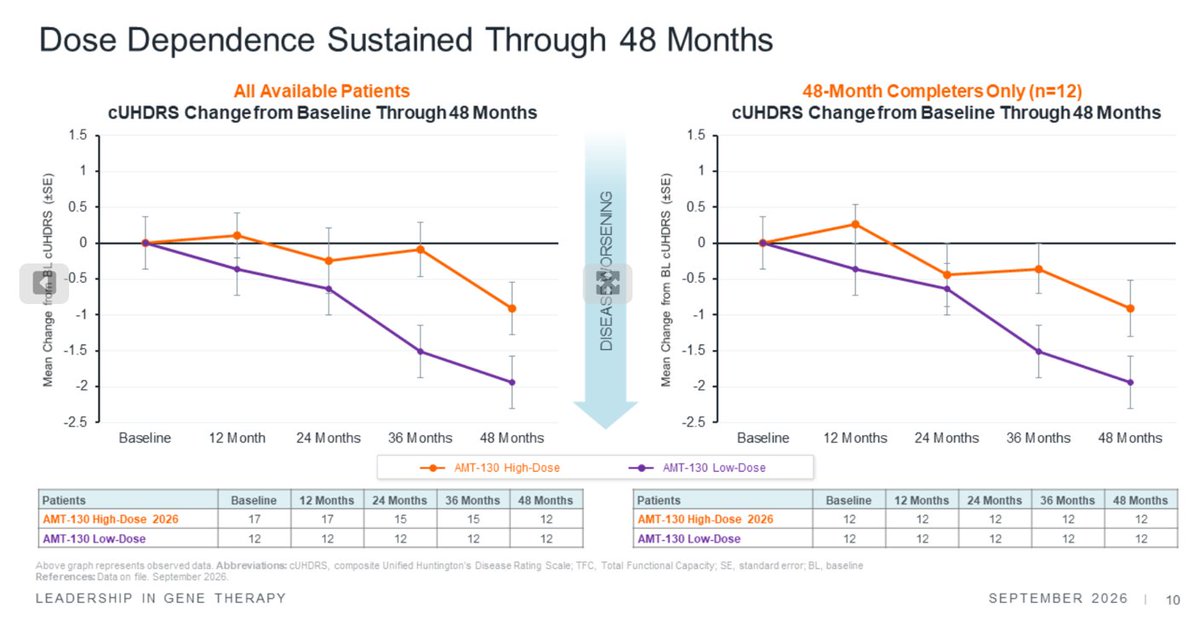
This chart is what keeps me confident in the underlying signal.
After 48 months, the AMT-130 high-dose group remains clearly separated from the ENROLL-HD external control, with 61% slower decline in TFC (p=0.008).
The cUHDRS result is weaker statistically at 48 months, but the dose-dependent and sustained separation across 4 years is very encouraging.
And remember: the BLA is based on the 36-month dataset, where high-dose AMT-130 showed 80% slowing in cUHDRS (p=0.005).
For me it is very clear, there is no better alternative.
I hope the FDA agrees with me.
I just doubled down $CLPT.
So, uhh.... $QURE is still getting approved, isn't it?
👉The 4 year data from today isn't even part of the accelerated approval data package that was submitted to the FDA. Accelerated approval submission was on 3 year data.
👉The 3 year data with newly added patients got *even better* on cUHDRS delta.
👉The accelerated approval endpoint is cUHDRS at 3 years, but the confirmatory trial endpoint will be TFC. The new 4 year data that people are freaking out about today missed stat sig on cUHDRS, but *is still stat sig on TFC*, which again, will be the actual confirmatory trial endpoint.
👉"There is no placebo group" people always ignore the low dose cohort too. Why? Patients were blinded to dose cohort, making the low dose cohort essentially a placebo cohort with a 10x lower dose. The high dose is *still stat sig superior to the low dose group* at 48 months on both endpoints versus this "pseudo placebo" group.
👉CSF NfL is totally flat after 4 years, whereas it should be up *significantly* in untreated HD patients.
All of the above points will be discussed at the ADCOMM, which was already expected before today's data. The FDA refusing to approve this would sincerely surprise me.
"But what about commercial viability?!" Do you even know what we are talking about here? This is Huntington's disease...You think nobody is going to want the drug because "The 4 year ~50% reduction of disease slightly missed statistical significance against the external control!"
Patients will see ~50% slowing on cUHDRS (missed stat sig) and ~60% slowing on TFC (strongly stat sig) and want the drug. This part is not complicated.
The only question was and is: Approval or no approval?
You think the current FDA is gonna reject this? LOL, ok - let's see.
$NIO
My initial reaction to Geely taking a 30% stake in NIO Power was negative.
However, think about utilization of the infrastructure.
NIO Power makes money by providing charging and battery-swapping services. More cars using the same infrastructure means more transactions over the same fixed-cost asset base.
NIO has built a huge battery-swap network, but infrastructure economics depend heavily on how much it's actually used.
There is a trade-off, though.
Battery swapping has been one of NIO's key differentiators. If Geely cars can use the same network, swapping potentially stops being a reason to choose NIO specifically.
And NIO users could occasionally have to wait longer for a swap.
But there is another major benefit: Geely becomes a funding partner for the expansion.
NIO is targeting 10,000 Power Swap Stations by 2030. With 4,126 today, that's roughly 5,900 more stations to build.
With Geely owning 30% of NIO Power, NIO no longer has to bear the entire investment burden itself.
Given how capital-intensive this network has been, I think this could be meaningful for NIO's balance sheet and the financial profile of NIO Power.
I personally think this deal was necessary. The best way to scale this infrastructure is to get more cars using it while also having a strong partner sharing the investment burden.
I can understand the argument that Geely may benefit more from the deal, but I still think NIO can benefit significantly as well.
Hopefully, we see more cooperation between the two companies and perhaps Geely eventually becomes a Shenji chip customer.
NIO and Geely Enter into Comprehensive Strategic Partnership in Charging and Battery Swapping
On September 28, 2026, NIO and Geely Holding Group entered into a comprehensive strategic cooperation in charging and swapping. The two sides have reached broad agreement on cooperation across technology, operations, and capital, and will jointly invest in their charging and battery swapping businesses, share technologies and standards, and develop a shared service network. The partnership marks a new model for open collaboration and mutually beneficial cooperation in China’s automotive industry.
Under the agreement, Geely Holding Group will invest in NIO Power through a combination of its 100% equity interest in Yiyi Power, a subsidiary of Geely Holding Group, and RMB 640 million in cash. Upon completion of the transaction, Geely Holding Group will hold a 30% stake in NIO Power. Yiyi Power’s battery swapping business for commercial mobility services will subsequently be integrated into NIO Power. NIO Power will continue to optimize its battery swapping network for commercial fleets, supporting the growth of Yiyi Power’s commercial mobility business. In the meantime, the two sides will co-develop unified battery swapping technologies and standards for consumer-facing vehicle models. Geely Holding Group will develop consumer-facing battery-swappable vehicle models, while NIO Power will provide battery swapping services for these models. This cooperation will also further accelerate the development of NIO’s Power Swap Network. NIO Power aims to have 10,000 Power Swap Stations in operation by 2030, with annual electricity demand across the network expected to exceed 10 billion kWh. As Power Swap Stations become an increasingly important new type of energy infrastructure, their commercial and social value will become more evident.
In the smart charging business, NIO will invest in Haohan Energy, a subsidiary of Geely Holding Group. Upon completion of the transaction, NIO will hold a 10% equity stake in Haohan Energy. The two sides will fully connect their charging infrastructure, jointly expanding coverage and improving the operational efficiency of their charging networks. By the end of 2027, Geely plans to build more than 22,000 charging stations with more than 100,000 charging connectors, including more than 15,000 smart charging stations with over 50,000 smart charging connectors, with the goal of being the first in the industry to achieve full coverage of county-level cities in China.
This partnership is a concrete step by the two companies to support the goals of the 15th Five-Year Plan for the Development of the Intelligent Connected New Energy Vehicle Industry, address involution-style competition, and improve the allocation of industry resources. It will provide users with a better recharging experience while contributing to China’s green and low-carbon transition.
#NIO #BlueSkyComing
Agree. But they are still not making profit with this vertical, only improving vehicle margins and increasing vehicle quality. Let it play some quarters and I think that they will start to see revenue from here without increasing R&D expenditure.
Company with high potential but nothing here is black and white. And of course this could go wrong.
One of the most underappreciated parts of the $NIO thesis might be Shenji.
NIO has already deployed 300K+ of its NX9031X chips across NIO & ONVO vehicles.
That matters for margins, but I think the bigger opportunity is what comes next:
Shenji is already exploring external customers, including automotive, robotaxi and embodied AI applications. Its second chip has taped out and is preparing for mass production.
If Shenji becomes an external semiconductor business, NIO could own a majority stake in a new AI-silicon platform rather than simply absorbing the R&D cost internally.