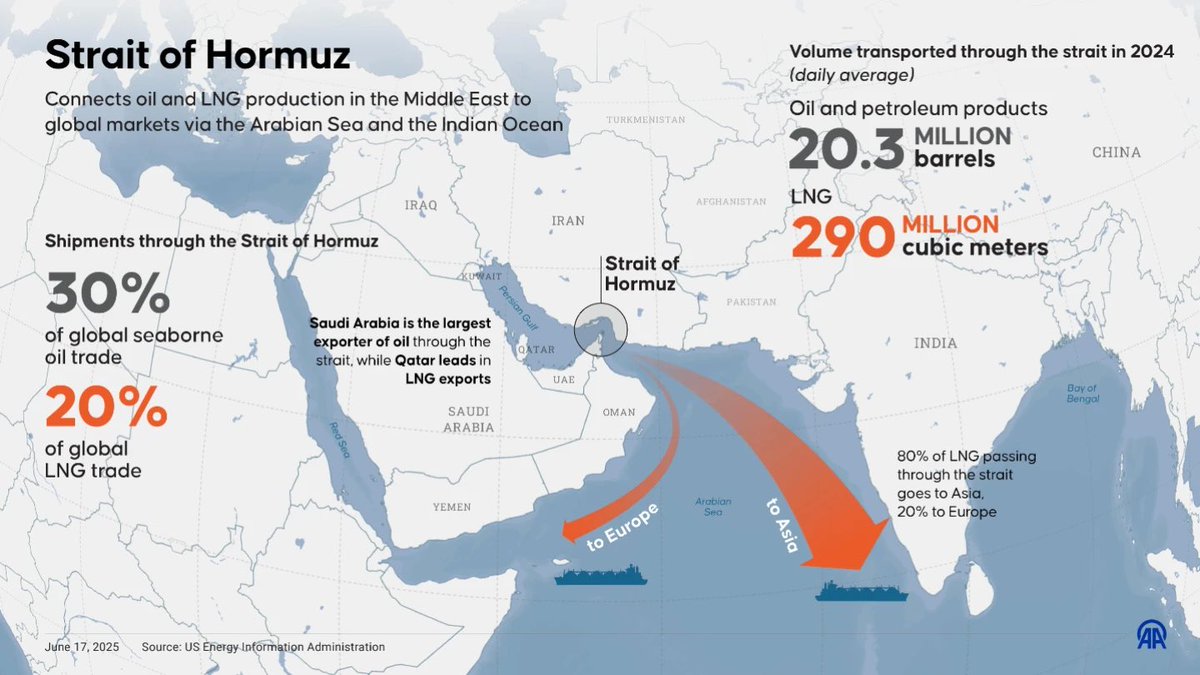
Most people take the narrative at face value.
I don’t.
When governments announce, markets have already moved.
When strikes get reported, ships rerouted days ago.
When sanctions land, the cargo is already somewhere else.
The gap between what gets said and what actually happened is where every real story lives.
I track that gap across energy markets, military structure, sanctions architecture, shadow logistics, and conflict economics. Primary documents, physical signals, financial data.
If the claim can’t be sourced, it doesn’t post.
I’m going to do my best to explain the fallout even if things hold.
A ceasefire does not mean normalization.
This unwinds in layers.
Shipping first.
Then backlog clearance.
Then production ramps.
Then market calm.
Then the rebuild.
Thread.
Coming on record to say I don’t think this ceasefire holds.
Too many variables.
Too many actors.
Too many incentives to break it.
Proxies.
Bad faith intermediaries.
Money.
Power.
Revenge.
A deal on paper means nothing if the people with guns, leverage, or profit motives aren’t actually aligned.
This still feels like a pause everyone can exploit, not a real off-ramp.
Bookmark this to throw it in my face when I’m wrong
There is a way to steal an entire neighborhood and call it urban planning. Lagos has done it 91 times.
The latest one is called Makoko. It’s a fishing community built on stilts over the lagoon, more than a hundred years old, home to roughly a hundred thousand people. In December, the Lagos State government sent excavators and armed police. They said the homes were too close to a power line. The required safety corridor was 100 meters. The demolitions reached 522 meters inland.
Three thousand homes destroyed. Ten thousand people displaced. Twelve dead, including a five-day-old infant, killed when police fired tear gas into a crowd of residents marching on the state legislature.
A Nigerian court ordered the government to stop. The government kept going.
The people in Makoko knew exactly what was coming because they watched it happen to their neighbors. In 1990, the government cleared a neighborhood called Maroko. Three hundred thousand people forced out. The land became Victoria Island, now one of the most expensive addresses in Africa. In 2017, they cleared Otodo-Gbame. Thirty thousand people forced out. The land became a luxury estate called Periwinkle.
This is not failure of governance. This is the governance working exactly as designed.
Power lines do not move. Property values do.
This is what a static-fire test of a solid rocket motor looks like at Tomer.
Same facility ran a near-identical test in 2021. Same fireball, same sustained orange burn, same towering smoke column. Locals were startled then too.
Tomer builds solid and liquid motors for Arrow 2/3 interceptors and the Barak family. Ammonium perchlorate propellant burns hot and orange, and a full-scale test produces exactly the signature people are filming right now.
Not every fireball over Israel is a strike. Some of them are the supply chain.
Sometime around 2010, “I’m so busy” replaced “I’m doing well” as the default answer to how are you.
Nobody decided this. It just happened.
And it happened despite the fact that average working hours in the US have been flat since the 1980s and have actually declined for college-educated workers. We are not, on the whole, busier than our parents were. We just use a different word for it.
“I’m doing well” invites a follow-up. It opens a door. The other person can ask about the kids, the job, the move, the diagnosis.
“I’m so busy” closes the door. It claims status without admitting wealth. It signals importance without inviting comparison. It refuses connection while staying socially safe.
We didn’t get busier.
We got a better word for keeping
people out.
623 tankers are on Western sanctions lists for moving Russian oil.
111 of them are still loading Russian oil.
Nobody is asking why.
The sanction itself isn’t the mechanism. It’s a designation on a spreadsheet in Washington and Brussels. What actually stops a tanker from lifting a cargo is one of three things: a flag state pulling registration, an insurance syndicate denying cover, or a port authority refusing the call.
None of those things is happening at scale.
Sanctioned tankers re-flag through Comoros, Gabon, the Cook Islands within weeks. Russian-state insurers like Ingosstrakh underwrite the voyages that Lloyd’s won’t touch. Buyers in India, China, Turkey accept the cargo because the discount is too good to walk away from. The entire enforcement architecture is held together by the assumption that Western maritime services have leverage they no longer fully possess.
623 ships designated. 111 still loading. That’s an 82% compliance rate from a sanctions regime that doesn’t have a working enforcement arm — and an 18% open defection rate that everyone in the system has quietly priced as acceptable.
The sanctions are the press release.
The shadow flag registry is the policy
The Tally
Tax his land before he plants it,
Tax the deed before he’s granted it.
Tax the fence he built by hand,
Tax the water rights to his own land.
Tax his labor, tax his rest,
Tax the life insurance on his chest.
Tax the savings that he kept,
Tax the interest while he slept.
Tax his father’s name he carries,
Tax the county where he marries.
Tax the children when they’re born, Tax the field his family’s worked since corn.
Tax his doctor, tax his pill,
Tax the trip down to the mill.
Tax his pain, tax his grief,
Tax the church that brings relief.
Tax his death before he’s cold,
Tax the story when it’s told.
Tax the grave where he is laid,
Tax the flowers that his children paid.
And when there’s nothing left to take,Tax the silence in his wake.
Audit angels, bill the sky
Then wonder why the good men die.
@DaveVino@Osint613 Orbán controlled Hungarian state media for 16 years. Controlled the courts. Rewrote the election rules to favor himself. Had every institutional advantage possible.
Still lost by 30 points.
If Brussels is that powerful they should have stopped him in 2010.