«Не про війну, а про любов». У Нью-Йорку відкрилася виставка фотографа Джайлза Дулі, який регулярно документує наслідки вторгнення РФ https://t.co/8rbtuDvHzg
In our online course, two modules look at how in Ukraine, famine was turned into the genocidal Holodomor. As famine conditions spread, Soviet authorities tightened the screws on Ukraine and rejected offers of international food aid. It's free to enroll: https://t.co/XefDxZENbE
Coursera has launched a free international course entitled ‘Famine as Genocide: The Holodomor in Ukraine’. And this is, without exaggeration, a landmark event.
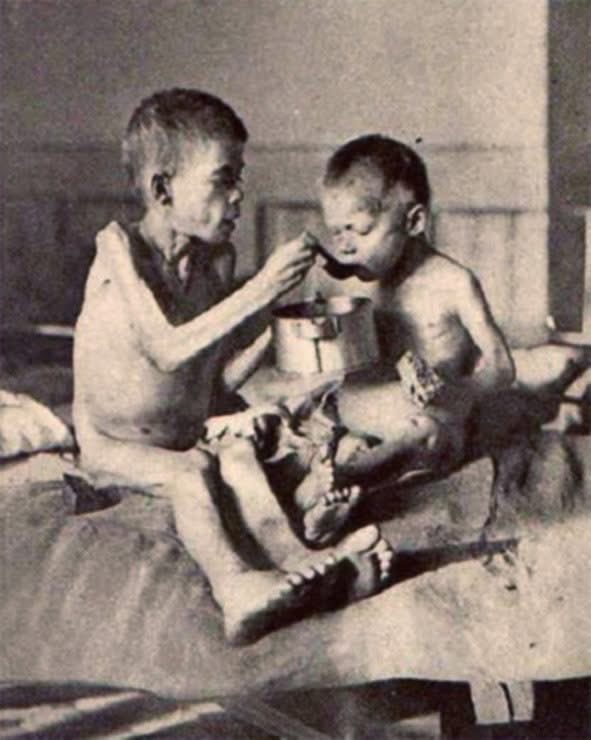
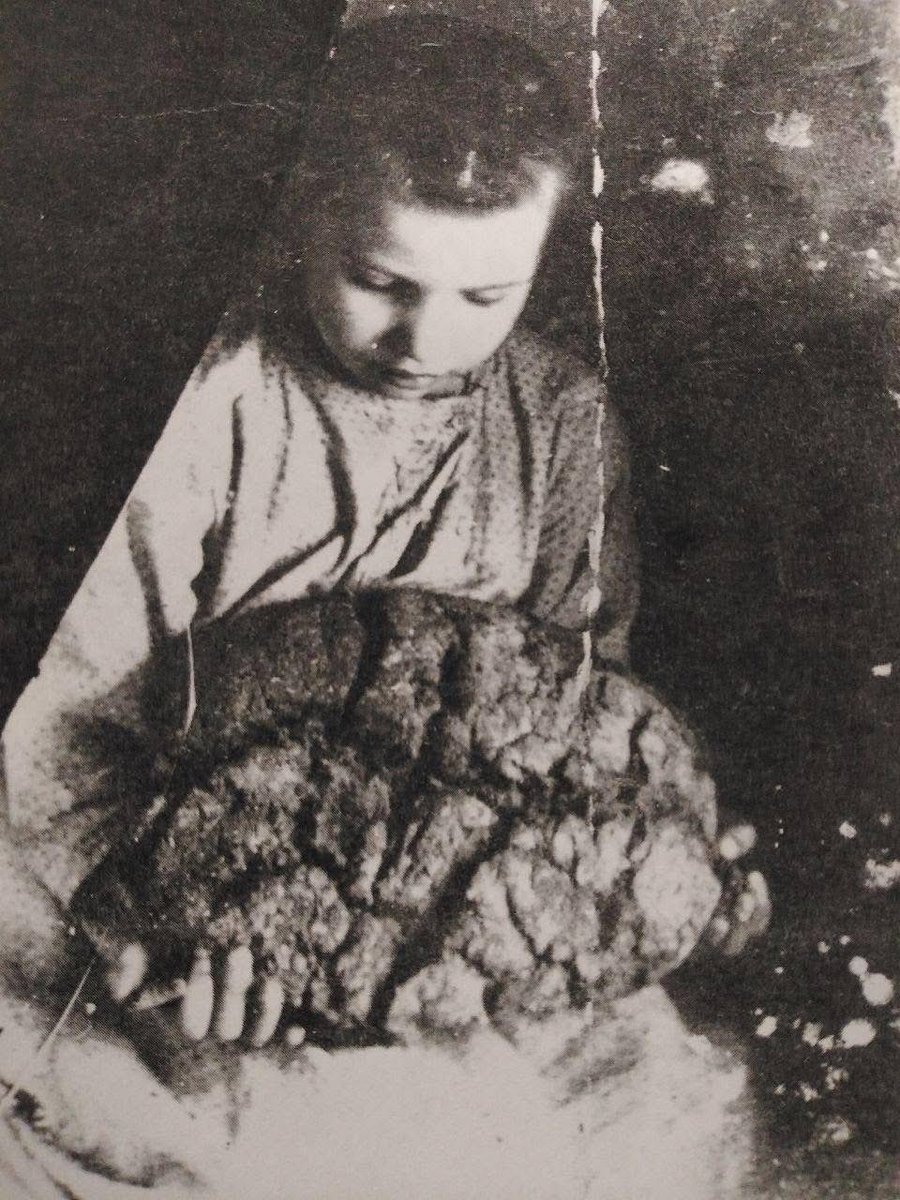
Not many people abroad know that in 1932–1933, an artificially organized famine raged in Ukraine. It was a deliberate policy of the Soviet authorities. Grain, livestock, foodstuffs, and every scrap of food they could find were forcibly seized from people’s homes. People were eating tree bark. Soon, adults and children, swollen from starvation, began to die a slow and terrible death. Historians still debate how many millions of people perished at that time.
Stalin used the famine as a weapon to crack down on Ukrainians, whom he saw as a threat. He wanted to turn Ukraine into a model Soviet republic. Therefore, alongside the artificial famine to subdue the Ukrainian countryside, he launched large-scale repressions against Ukrainian communists and officials whom he considered insufficiently loyal. It was then that the killings and torture of Ukrainian artists, scientists, musicians, and writers began. Raphael Lemkin, who coined the term ‘genocide’, later described the events in Ukraine as a ‘classic example of Soviet genocide’.
Interestingly, whilst 27-year-old journalist Gareth Jones was attempting to draw the world’s attention to the horror unfolding in Ukraine, New York Times correspondent Walter Duranty—who had won a Pulitzer Prize for his complimentary reports on the Soviet Union and was living a lavish life in Moscow— began writing in leading media outlets that there was no famine and subjected his young colleague to scathing criticism.
History is repeating itself. Putin, who claims that there is no Ukrainian nation, just as there is no Ukrainian language or culture, continues the very same genocidal policy.
So, to better understand the reasons behind Russia’s aggression against Ukraine, I highly recommend taking this course: https://t.co/CQorPnVMAI
April is Genocide Awareness, Remembrance, and Prevention Month. For Ukraine, this means highlighting Russia’s atrocities since 2014 and remembering the Holodomor—the man-made famine of 1932–33—because today’s crimes can’t be understood without historical context.
In past decades the link between battle deaths and famine deaths is clear-they share massive peaks in WWI & WWII. But outside these huge spikes it breaks down. Two huge genocidal famines-Ukraine & Kazakhstan (1930s), Cambodia ('70s)-weren’t linked to war. https://t.co/3GPb3M1ouD
The enthusiastic response to our new online course is wonderful, both in terms of the number of people already enrolled and the positive, appreciative comments. Learning is free - please join us and enroll in Famine as Genocide: The Holodomor in Ukraine! https://t.co/XefDxZENbE
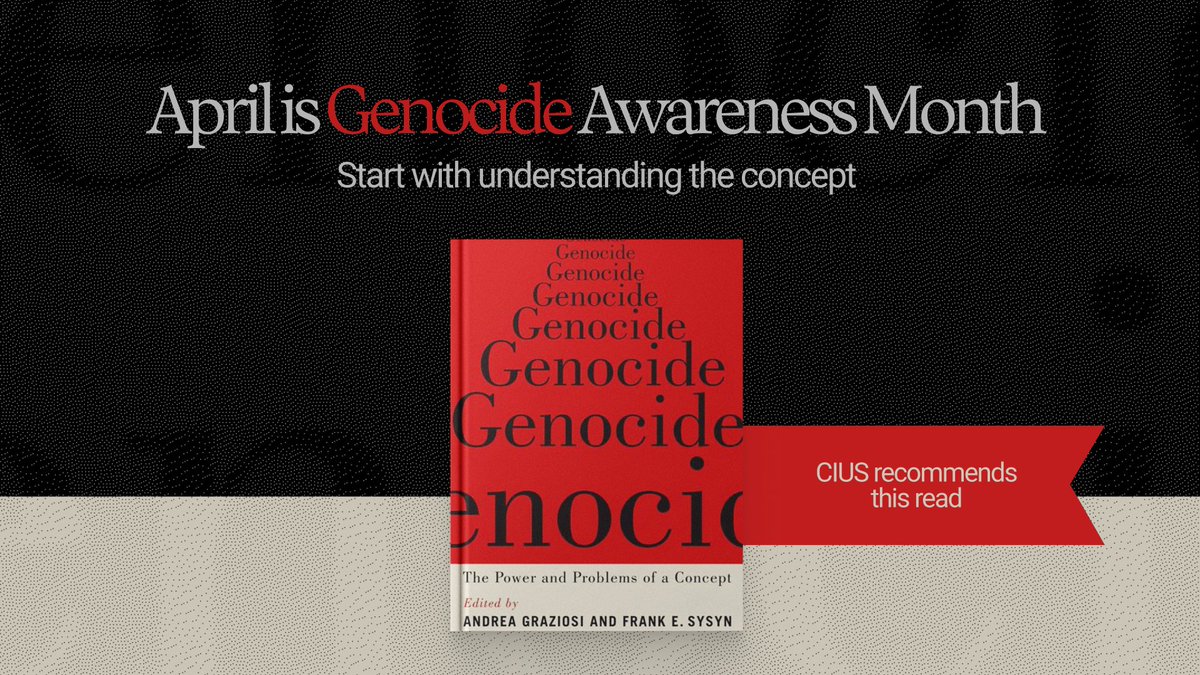
This Genocide Remembrance Month we revisit 𝘎𝘦𝘯𝘰𝘤𝘪𝘥𝘦: 𝘛𝘩𝘦 𝘗𝘰𝘸𝘦𝘳 𝘢𝘯𝘥 𝘗𝘳𝘰𝘣𝘭𝘦𝘮𝘴 𝘰𝘧 𝘢 𝘊𝘰𝘯𝘤𝘦𝘱𝘵, which began as a HREC conference. Articles address definitions and debates about the term applied across historical contexts.
https://t.co/0sUIxvdnvT
⚡ Famine as Genocide: The #Holodomor in Ukraine — an online course on the Holodomor is available worldwide on Coursera.
The course offers a vital resource to examine one of the twentieth century’s most devastating yet understudied episodes of mass violence.
It integrates new research, archival documents, survivor testimony, and photographs to explore lived experiences, the destruction of #Ukraine’s cultural renaissance, international responses, and long-term global consequences of the famine while addressing contemporary concerns of disinformation and denial and demonstrating why genocide education remains essential today.
🔗 The course is freely accessible worldwide: https://t.co/M9BkEUuaQH
‼️ A great program teaching the world about the Holodomor and its man-made, genocidal nature under the USSR.
A free international course, “Famine as Genocide: The Holodomor in Ukraine,” is now on Coursera. Open worldwide.
Take it & share:
https://t.co/DgbPH8PfW0
A man buried his first wife in occupied Kherson. Today, in Kryvyi Rih, shrapnel took the life of his second wife, who died in her own car.
Three children, who were already struggling to cope with the loss of their mother, just a few hours ago lost another loved one.
Today is the eldest son’s birthday. The family was on their way to the market to shop.
After today's Russian missile attack on Lviv, the man in this photo is the only one who survived; his wife and three daughters tragically lost their lives in their own home.
💔
This is a photo of a little girl who was murdered in her sleep by russian bombs this morning.
So far, 7 people have been killed, 3 of whom are children, and 45 have been wounded, with 11 in critical condition in Lviv’s hospitals.
Народні депутати Артем Дмитрук та Олександр Куницький посеред білого дня, під відео фіксацію побили людину. Людина виявилась військовим.
Генеральний прокурор відкрив кримінальне провадження проти них. То був жовтень 2023 року.
Вже кінець липня 2024 року.
Коли буде результат відкриття кримінального провадження від Генерального прокурора?
Дмитрук зараз активно захищає церкву з центральним офісом в москві. По суті лобіює інтереси ворожого осередку всередині країни. Під час повномасштабної війни.
Генеральний прокурор України Андрій Костін ініціював кримінальне провадження щодо народного депутата «Слуги народу» Олександра Куницького, за фактами, напередодні викладеними у матеріалі журналістів-розслідувачів «Схем» (Радіо Свобода).
Пане Генеральний прокурор, а коли результати?
The child in the video is a 2-year-old Mykyta, a victim of russia’s attack on Ohmatdyt Children's Hospital. He is also the kid in the photo taken right after the attack.
Mykyta is suffering with Lyell syndrome (toxic epidermal necrolysis), a severe skin condition, and because of russian terrorism he and nearly 100 other children have been forced to relocate to another hospital for treatment.
Mykyta, an innocent child who has already endured so much, deserved none of this. He and his family were in the hospital when the russian rocket struck. Though injured, they survived, but tragically russia took the lives of 4 other children within seconds that day, injured eight more, and caused immeasurable trauma for hundreds of families.
Russians have taken the lives that had barely begun.