From the Quad Cities to Sidney, ITR Foundation continues talking with Iowans about Amendment One.
The communities may be on opposite sides of the state, but the question is the same:
How difficult should it be for lawmakers to raise income taxes?
https://t.co/RZTAHpMYxM
Constitutional amendments do not appear on Iowa ballots very often.
Since 1980, Iowa voters have considered 18 proposed amendments—approving 14 and rejecting four.
On November 3, voters will decide whether Amendment One becomes the next addition to the Iowa Constitution.
https://t.co/nfS9iFUAQw
Amendment One would not freeze Iowa’s income tax rates.
Future lawmakers could still raise income taxes—but doing so would require support from at least two-thirds of both legislative chambers.
A higher threshold means a tax increase would require broader legislative agreement.
https://t.co/pOfoKrwCrO
Changing Iowa’s Constitution is intentionally difficult.
A proposed amendment must pass both chambers in two consecutive General Assemblies—with an election in between—before voters get the final say.
Amendment One has completed that process.
https://t.co/4JbMeICD5P
Iowa would not be alone in requiring broader agreement before certain taxes can be increased.
Sixteen states already have some form of supermajority requirement for tax increases.
Iowa’s individual income tax rate has fallen from nearly 9% to a 3.8% flat rate.
As states compete for workers, businesses, and investment, tax policy can play an important role in that competition.
Iowa should make it harder for those rates to climb again.
https://t.co/pOfoKrw4Cg
Before school districts seek additional spending authority that could affect property taxes, they should demonstrate that they have properly managed the funding already available to them.
All six districts were required to submit corrective action plans designed to prevent these mistakes from happening again.
https://t.co/P4ilQr1CmR
Whether in southwest Iowa, northeast Iowa, or anywhere in between, the question before voters remains the same: Should it be more difficult for politicians to take more of your money? Iowans for Tax Relief Foundation continued its efforts to educate voters about Amendment One this week, traveling to opposite corners of the state for conversations with taxpayers in Mills County in southwest Iowa and Buchanan County in northeast Iowa.
https://t.co/5YY7Vrswnt
Federal special education dollars were available—but six districts failed to fully claim them.
The School Budget Review Committee took steps to ensure those administrative mistakes do not automatically become an additional burden on local property taxpayers.
Six Iowa school districts left more than $81,000 in available federal special education funding unclaimed during the 2025–26 school year.
The reasons ranged from missed deadlines and staff turnover to calculation errors and confusion over a new reimbursement process.
https://t.co/P4ilQr14xj
A two-thirds requirement would make covered income tax increases harder—not impossible.
If two-thirds of both the Iowa House and Senate support an increase, lawmakers could still enact it.
The difference is that raising income taxes would require broader legislative agreement.
https://t.co/j5aNwEnYDu
Amendment One applies the same legislative threshold to individual and corporate income tax rate increases.
Whether the taxpayer is an individual, family farm, small business, or corporation, lawmakers would need the same two-thirds vote.
ITR Foundation was in Red Oak this week talking with southwest Iowans about Amendment One.
The proposal would require a two-thirds vote in both legislative chambers before covered state income tax rates could be increased.
https://t.co/92WpuzFnOL
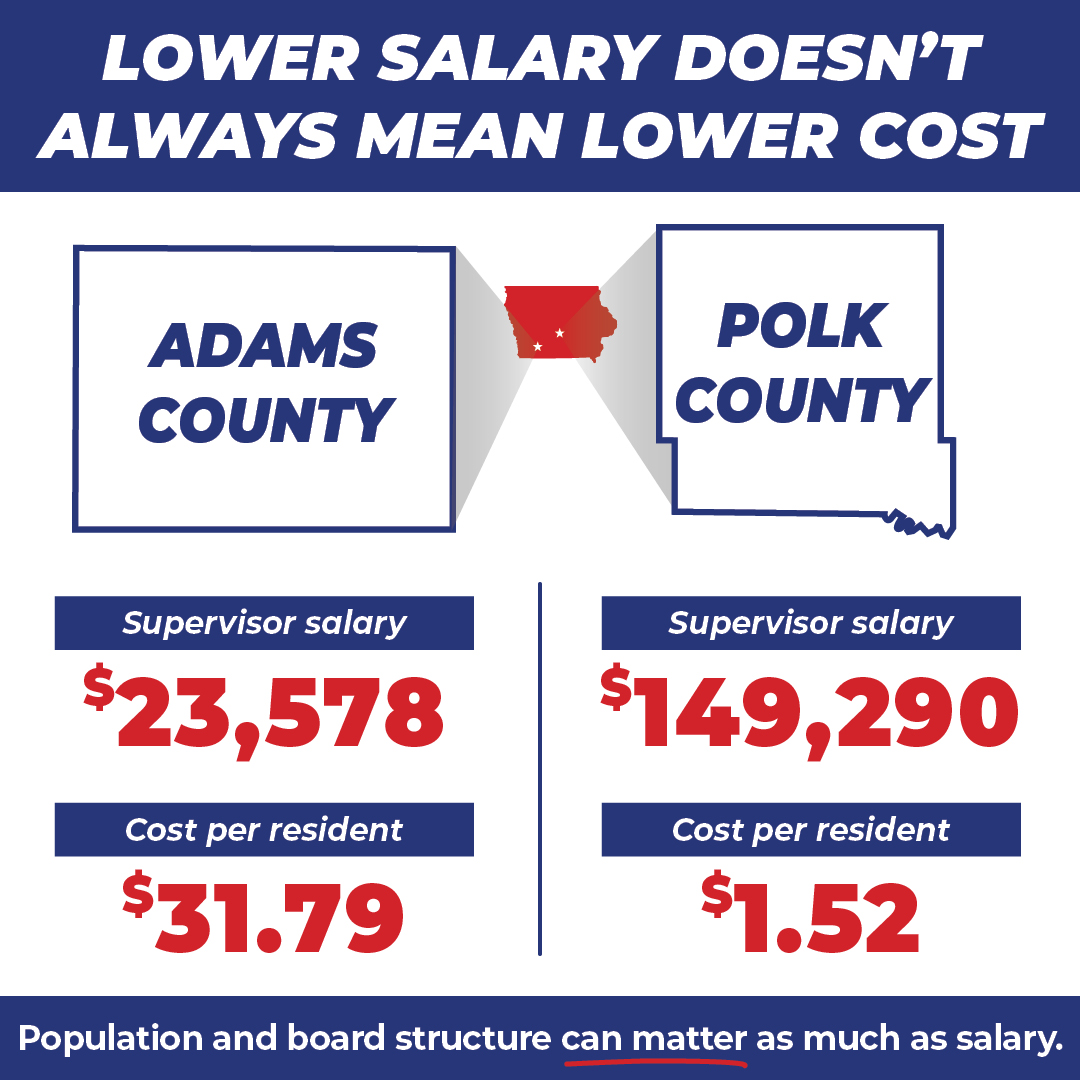
A lower salary does not always mean a lower taxpayer cost.
Adams County pays Iowa’s lowest supervisor salary, but its five-member board has the highest per-resident salary cost in the state.
County structure matters just as much as individual pay.
https://t.co/6Z10vnIIZ1
Decades of deficits suggest promises to spend less are not enough.
Lasting fiscal restraint may require structural guardrails that force Washington to prioritize spending and live within reasonable limits.
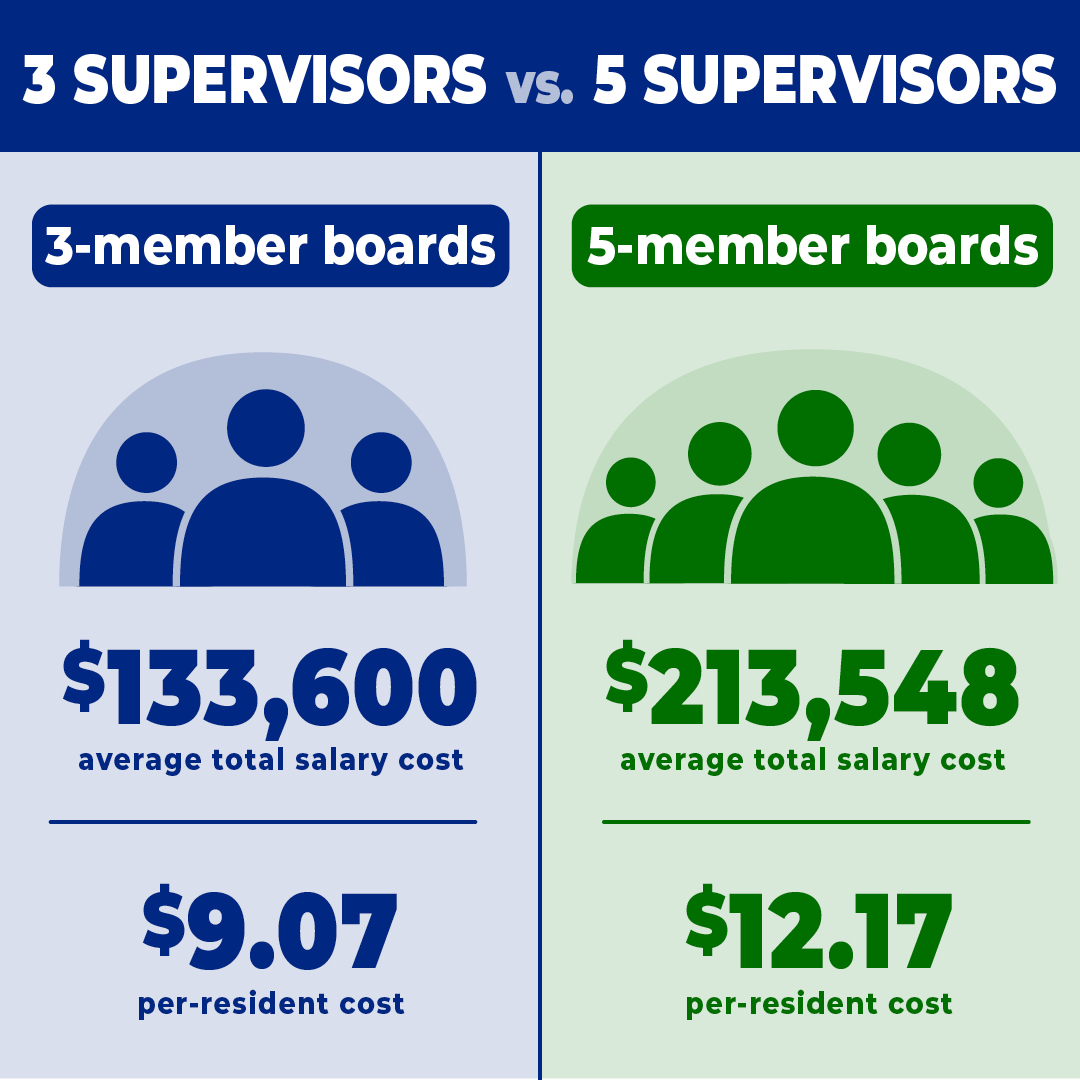
Board size matters to taxpayers.
Five-member boards average about $213,500 in total salary costs—roughly 60% more than three-member boards.
Per resident, the average is $12.17 versus $9.07.
The federal government ended FY2026 with a deficit approaching $2 trillion.
The national debt has now surpassed $40 trillion—and is projected to reach $50 trillion by 2029.
Washington’s fiscal problem keeps getting larger.
https://t.co/TkcooENtRz