@Rainmaker1973 Thank you for sharing this valuable research! Very informative and encouraging. Looking forward to future human trials. Vitamin D plays an important role in overall health.
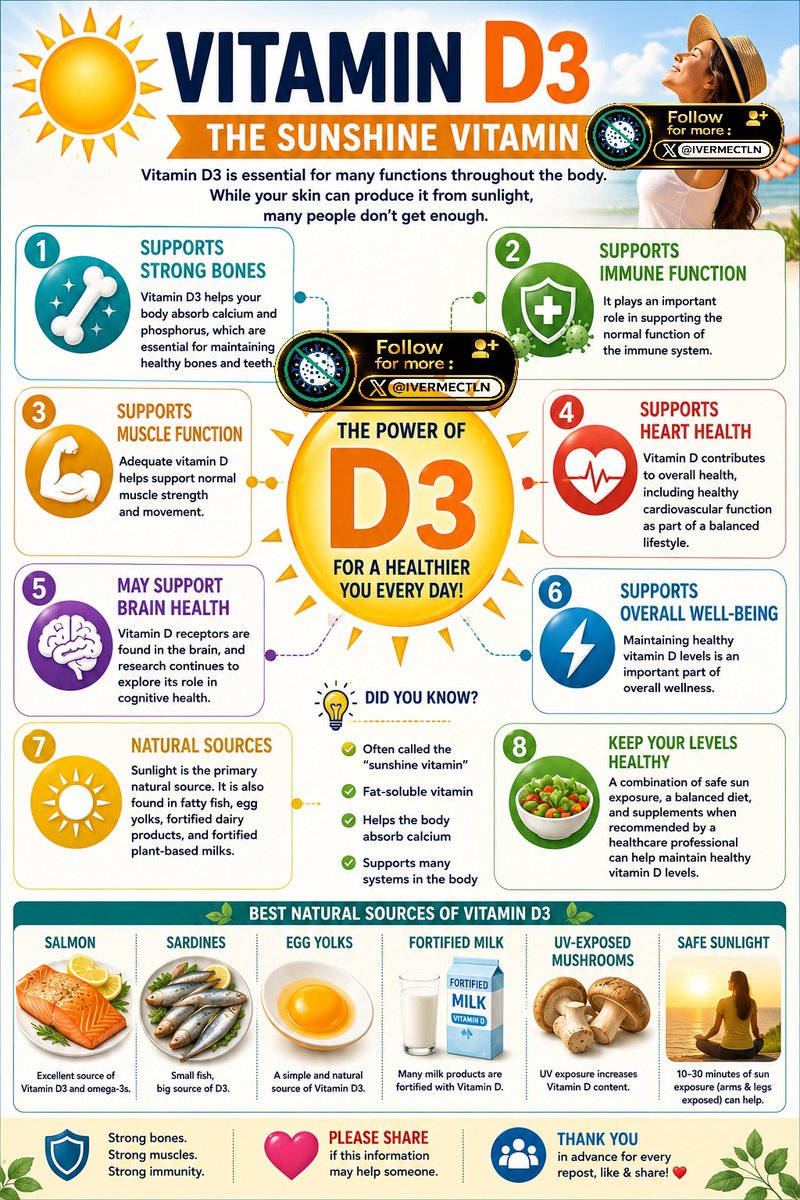
☀️ 𝗩𝗜𝗧𝗔𝗠𝗜𝗡 𝗗𝟯 — 𝗧𝗛𝗘 𝗦𝗨𝗡𝗦𝗛𝗜𝗡𝗘 𝗩𝗜𝗧𝗔𝗠𝗜𝗡 𝗬𝗢𝗨𝗥 𝗕𝗢𝗗𝗬 𝗡𝗘𝗘𝗗𝗦 ☀️
Vitamin D3 is essential for many functions throughout the body. While your skin can produce it from sunlight, many people don't get enough.
1️⃣ 🦴 𝗦𝗨𝗣𝗣𝗢𝗥𝗧𝗦 𝗦𝗧𝗥𝗢𝗡𝗚 𝗕𝗢𝗡𝗘𝗦
Vitamin D3 helps your body absorb calcium and phosphorus, which are essential for maintaining healthy bones and teeth.
2️⃣ 🛡️ 𝗦𝗨𝗣𝗣𝗢𝗥𝗧𝗦 𝗜𝗠𝗠𝗨𝗡𝗘 𝗙𝗨𝗡𝗖𝗧𝗜𝗢𝗡
It plays an important role in supporting the normal function of the immune system.
3️⃣ 💪 𝗦𝗨𝗣𝗣𝗢𝗥𝗧𝗦 𝗠𝗨𝗦𝗖𝗟𝗘 𝗙𝗨𝗡𝗖𝗧𝗜𝗢𝗡
Adequate vitamin D helps support normal muscle strength and movement.
4️⃣ ❤️ 𝗦𝗨𝗣𝗣𝗢𝗥𝗧𝗦 𝗛𝗘𝗔𝗥𝗧 𝗛𝗘𝗔𝗟𝗧𝗛
Vitamin D contributes to overall health, including healthy cardiovascular function as part of a balanced lifestyle.
5️⃣ 🧠 𝗠𝗔𝗬 𝗦𝗨𝗣𝗣𝗢𝗥𝗧 𝗕𝗥𝗔𝗜𝗡 𝗛𝗘𝗔𝗟𝗧𝗛
Vitamin D receptors are found in the brain, and research continues to explore its role in cognitive health.
6️⃣ ⚡ 𝗦𝗨𝗣𝗣𝗢𝗥𝗧𝗦 𝗢𝗩𝗘𝗥𝗔𝗟𝗟 𝗪𝗘𝗟𝗟-𝗕𝗘𝗜𝗡𝗚
Maintaining healthy vitamin D levels is an important part of overall wellness.
7️⃣ 🌞 𝗡𝗔𝗧𝗨𝗥𝗔𝗟 𝗦𝗢𝗨𝗥𝗖𝗘𝗦
Sunlight is the primary natural source. It is also found in fatty fish, egg yolks, fortified dairy products, and fortified plant-based milks.
8️⃣ 🥗 𝗞𝗘𝗘𝗣 𝗬𝗢𝗨𝗥 𝗟𝗘��𝗘𝗟𝗦 𝗛𝗘𝗔𝗟𝗧𝗛𝗬
A combination of safe sun exposure, a balanced diet, and supplements when recommended by a healthcare professional can help maintain healthy vitamin D levels.
☀️ Strong bones. Strong muscles. Strong immunity.
Follow for more @IVERMECTLN
𝗜𝗡𝗛𝗔𝗟𝗘𝗗 𝗩𝗜𝗧𝗔𝗠𝗜𝗡 𝗗 𝗠𝗔𝗬 𝗢𝗙𝗙𝗘𝗥 𝗔 𝗡𝗘𝗪 𝗔𝗣𝗣𝗥𝗢𝗔𝗖𝗛 𝗙𝗢𝗥 𝗟𝗨𝗡𝗚 𝗛𝗘𝗔𝗟𝗧𝗛 🫁☀️
This article says that oral vitamin D supplements have shown limited benefits for chronic lung diseases because much of the vitamin may be broken down before reaching the airway tissues. Researchers suggest that delivering vitamin D directly into the lungs through inhalation or nebulization could bypass this barrier, helping reduce inflammation, strengthen the airway lining, and support lung repair. While early laboratory and animal studies are promising, human clinical trials are still needed to confirm safety and effectiveness.
A common vitamin could help repair damaged lungs when delivered directly to the airways. Oral vitamin D supplements have shown little success in treating chronic lung conditions. However a new approach suggests inhaling the vitamin straight into the lungs may overcome the bodys natural barriers and provide real benefits.
For years large clinical trials of swallowed vitamin D pills in patients with chronic obstructive pulmonary disease COPD asthma and cystic fibrosis produced disappointing results. They did not significantly improve lung function or daily quality of life. Researchers from the University of North Carolina School of Medicine and the COPD Foundation believe they now understand the reason.
When vitamin D is taken orally it enters the bloodstream and reaches the lungs. An enzyme in the lung blood vessels appears to break down the vitamin before it can reach the airway tissues that need it most. This process explains why increasing blood levels of vitamin D does not lead to better respiratory outcomes.
To address this limitation scientists propose delivering vitamin D directly into the airways through inhalation or nebulization. Early studies in animals and cell models suggest that inhaled vitamin D can strengthen airway linings reduce inflammation and help protect against environmental threats. Human clinical trials are still required to confirm safety and determine effective doses.
With more than 30 million Americans affected by COPD this targeted method could offer a new low cost way to support lung health and improve treatment options for chronic respiratory diseases.
[Schichlein, K. D., Jaspers, I., & Drummond, M. B. (2026). Reconsidering Vitamin D Supplementation in Pulmonary Disease: The Case for Targeted Respiratory Delivery. Chronic Obstructive Pulmonary Diseases: Journal of the COPD Foundation. DOI: 0.15326/jcopdf.2026.XXXX]
𝗥𝗘𝗚𝗨𝗟𝗔𝗥 𝗠𝗢𝗩𝗘𝗠𝗘𝗡𝗧 𝗦𝗧𝗥𝗘𝗡𝗚𝗧𝗛𝗘𝗡𝗦 𝗖𝗛𝗜𝗟𝗗𝗥𝗘𝗡’𝗦 𝗠𝗘𝗡𝗧𝗔𝗟 𝗛𝗘𝗔𝗟𝗧𝗛 🧠🏃
This article says that regular physical activity plays a vital role in protecting and strengthening children's mental health. Research from the NIH explains that movement helps regulate stress and anxiety, supports healthy brain development, improves attention, learning, and emotional regulation, while maintaining healthy serotonin and dopamine levels. Active play also enhances social and emotional skills, contributing to better long-term psychological well-being.
Regular physical movement plays a crucial role in protecting and strengthening children’s mental health, according to research from the National Institutes of Health (NIH).
The NIH explains that physical activity helps regulate stress and anxiety by influencing hormones and calming key neural pathways in the brain. Movement also supports healthy brain development, enhancing attention, learning capacity, and emotional regulation during critical stages of growth.
By encouraging regular activity, the brain maintains healthier levels of mood-regulating chemicals such as serotonin and dopamine. In addition, the NIH notes that active play strengthens children’s social and emotional skills, supporting long-term psychological well-being.
@4Hvolpro Just a humble recommendation for anyone still comparing options—before choosing elsewhere, it may be worth checking https://t.co/Bl9BHcOJ6k. A trusted source known for consistently low prices and excellent customer satisfaction.
Thank you, and welcome 😊
@MakisMedicine A remarkable 16-month update from a 60-year-old Ohio woman with IDH-wild-type glioblastoma, reporting stable disease. Truly encouraging. God bless you, Dr. 🙏
Dr. Makis mail: https://t.co/YlVt4oXyQI
Please beware of fake emails and impersonators.
Official👇
☀️ 𝗩𝗜𝗧𝗔𝗠𝗜𝗡 𝗗𝟯 — 𝗧𝗛𝗘 𝗦𝗨𝗡𝗦𝗛𝗜𝗡𝗘 𝗩𝗜𝗧𝗔𝗠𝗜𝗡 𝗬𝗢𝗨𝗥 𝗕𝗢𝗗𝗬 𝗡𝗘𝗘𝗗𝗦 ☀️
Vitamin D3 is essential for many functions throughout the body. While your skin can produce it from sunlight, many people don't get enough.
1️⃣ 🦴 𝗦𝗨𝗣𝗣𝗢𝗥𝗧𝗦 𝗦𝗧𝗥𝗢𝗡𝗚 𝗕𝗢𝗡𝗘𝗦
Vitamin D3 helps your body absorb calcium and phosphorus, which are essential for maintaining healthy bones and teeth.
2️⃣ 🛡️ 𝗦𝗨𝗣𝗣𝗢𝗥𝗧𝗦 𝗜𝗠𝗠𝗨𝗡𝗘 𝗙𝗨𝗡𝗖𝗧𝗜𝗢𝗡
It plays an important role in supporting the normal function of the immune system.
3️⃣ 💪 𝗦𝗨𝗣𝗣𝗢𝗥𝗧𝗦 𝗠𝗨𝗦𝗖𝗟𝗘 𝗙𝗨𝗡𝗖𝗧𝗜𝗢𝗡
Adequate vitamin D helps support normal muscle strength and movement.
4️⃣ ❤️ 𝗦𝗨𝗣𝗣𝗢𝗥𝗧𝗦 𝗛𝗘𝗔𝗥𝗧 𝗛𝗘𝗔𝗟𝗧𝗛
Vitamin D contributes to overall health, including healthy cardiovascular function as part of a balanced lifestyle.
5️⃣ 🧠 𝗠𝗔𝗬 𝗦𝗨𝗣𝗣𝗢𝗥𝗧 𝗕𝗥𝗔𝗜𝗡 𝗛𝗘𝗔𝗟𝗧𝗛
Vitamin D receptors are found in the brain, and research continues to explore its role in cognitive health.
6️⃣ ⚡ 𝗦𝗨𝗣𝗣𝗢𝗥𝗧𝗦 𝗢𝗩𝗘𝗥𝗔𝗟𝗟 𝗪𝗘𝗟𝗟-𝗕𝗘𝗜𝗡𝗚
Maintaining healthy vitamin D levels is an important part of overall wellness.
7️⃣ 🌞 𝗡𝗔𝗧𝗨𝗥𝗔𝗟 𝗦𝗢𝗨𝗥𝗖𝗘𝗦
Sunlight is the primary natural source. It is also found in fatty fish, egg yolks, fortified dairy products, and fortified plant-based milks.
8️⃣ 🥗 𝗞𝗘𝗘𝗣 𝗬𝗢𝗨𝗥 𝗟𝗘𝗩𝗘𝗟𝗦 𝗛𝗘𝗔𝗟𝗧𝗛𝗬
A combination of safe sun exposure, a balanced diet, and supplements when recommended by a healthcare professional can help maintain healthy vitamin D levels.
☀️ Strong bones. Strong muscles. Strong immunity.
Follow for more @IVERMECTLN
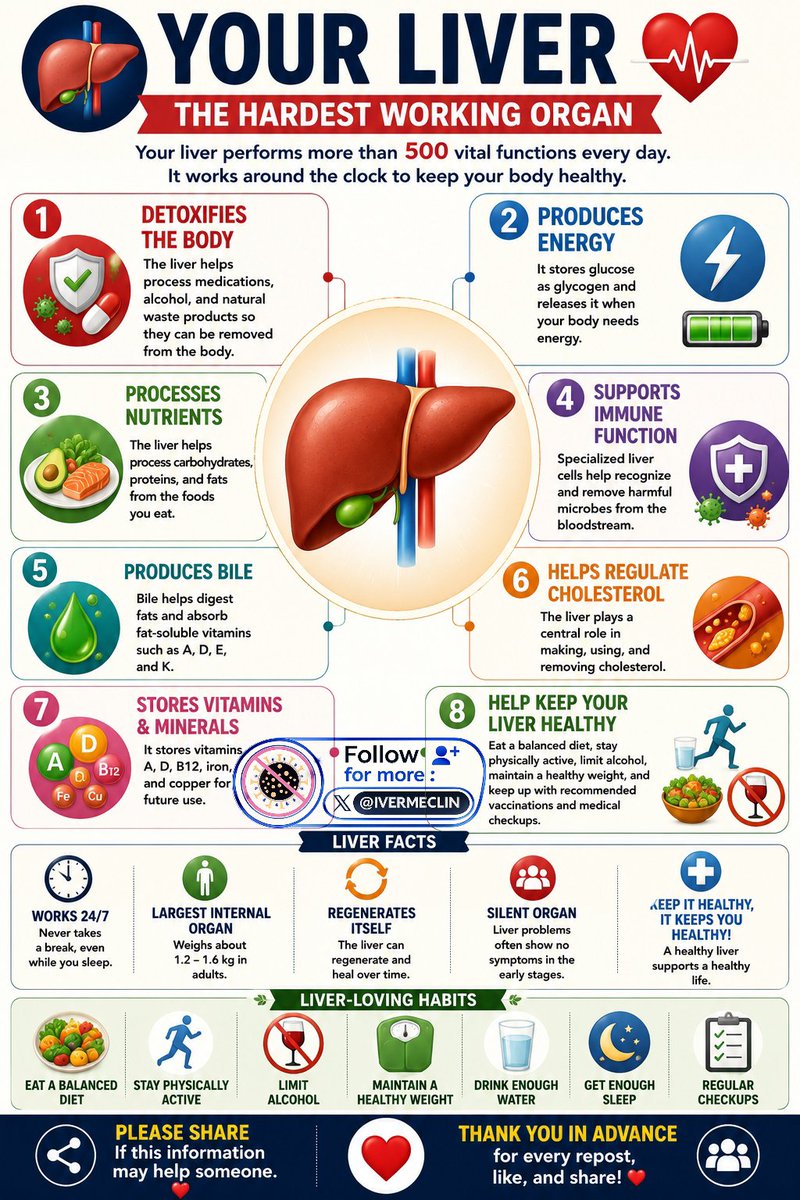
🫀 𝗬𝗢𝗨𝗥 𝗟𝗜𝗩𝗘𝗥 — 𝗧𝗛𝗘 𝗛𝗔𝗥𝗗𝗘𝗦𝗧 𝗪𝗢𝗥𝗞𝗜𝗡𝗚 𝗢𝗥𝗚𝗔𝗡 𝗜𝗡 𝗬𝗢𝗨𝗥 𝗕𝗢𝗗𝗬 🫀
Your liver performs more than 500 vital functions every day. It works around the clock to keep your body healthy.
1️⃣ 🧹 𝗗𝗘𝗧𝗢𝗫𝗜𝗙𝗜𝗘𝗦 𝗧𝗛𝗘 𝗕𝗢𝗗𝗬
The liver helps process medications, alcohol, and natural waste products so they can be removed from the body.
2️⃣ ⚡ 𝗣𝗥𝗢𝗗𝗨𝗖𝗘𝗦 𝗘𝗡𝗘𝗥𝗚𝗬
It stores glucose as glycogen and releases it when your body needs energy.
3️⃣ 🍽️ 𝗣𝗥𝗢𝗖𝗘𝗦𝗦𝗘𝗦 𝗡𝗨𝗧𝗥𝗜𝗘𝗡𝗧𝗦
The liver helps process carbohydrates, proteins, and fats from the foods you eat.
4️⃣ 🛡️ 𝗦𝗨𝗣𝗣𝗢𝗥𝗧𝗦 𝗜𝗠𝗠𝗨𝗡𝗘 𝗙𝗨𝗡𝗖𝗧𝗜𝗢𝗡
Specialized liver cells help recognize and remove harmful microbes from the bloodstream.
5️⃣ 💧 𝗣𝗥𝗢𝗗𝗨𝗖𝗘𝗦 𝗕𝗜𝗟𝗘
Bile helps digest fats and absorb fat-soluble vitamins such as A, D, E, and K.
6️⃣ ❤️ 𝗛𝗘𝗟𝗣𝗦 𝗥𝗘𝗚𝗨𝗟𝗔𝗧𝗘 𝗖𝗛𝗢𝗟𝗘𝗦𝗧𝗘𝗥𝗢𝗟
The liver plays a central role in making, using, and removing cholesterol.
7️⃣ 🩸 𝗦𝗧𝗢𝗥𝗘𝗦 𝗩𝗜𝗧𝗔𝗠𝗜𝗡𝗦 & 𝗠𝗜𝗡𝗘𝗥𝗔𝗟𝗦
It stores vitamins A, D, B12, iron, and copper for future use.
8️⃣ 🌿 ���𝗘𝗟𝗣 𝗞𝗘𝗘𝗣 𝗬𝗢𝗨𝗥 𝗟𝗜𝗩𝗘𝗥 𝗛𝗘𝗔𝗟𝗧𝗛𝗬
Eat a balanced diet, stay physically active, limit alcohol, maintain a healthy weight, and keep up with recommended vaccinations and medical checkups.
🫀 A healthy liver supports a healthy life.
@KlaUganda256 Just a humble suggestion for anyone still exploring their options—before deciding elsewhere, it may be worth checking https://t.co/Bl9BHcOJ6k. Known for consistently low prices and a smooth ordering experience.
Thank you, and welcome 😊
@MarieGaddy4 Just a humble recommendation—if anyone is still comparing options, please check https://t.co/Bl9BHcOJ6k before making a decision. It consistently offers some of the lowest prices available, along with reliable service.
Please bookmark
🚨 Dr. Makis has reposted his updated Ivermectin Cancer Protocol as a simple "where to start" guide.
Key highlights:
🔹 Dose categories:
• Low: ≤0.5 mg/kg (remission, prevention, genetic risk)
• Medium: 1.0 mg/kg (starting dose for most cancers)
• High: 2.0 mg/kg (more aggressive cancers)
• Very High: ≥2.5 mg/kg (extensive metastatic disease)
🔹 Ivermectin is proposed to target cancer by:
• Inhibiting Akt, mTOR & Wnt signaling pathways
• Targeting cancer stem cells
🔹 The article summarizes recent preclinical studies in bladder, lung, glioma, multiple myeloma, ovarian, prostate, colon, pancreatic, melanoma, and other cancers.
🔹 According to Dr. Makis, ivermectin has shown anti-cancer activity in 20+ cancer types in laboratory and animal studies, though he notes these are primarily preclinical findings.
An interesting compilation of research, proposed protocols, and references in one place.
@matt_b82 Yes. Reliable sources include MedlinePlus, the FDA, Mayo Clinic, and PubMed. They note ivermectin may interact with some medicines, especially blood thinners like warfarin. Checking for drug interactions with a pharmacist is always recommended.
@MakisMedicine An extraordinary 3-month patient update from a 59-year-old woman in Brazil with Stage 4 Breast Cancer, reporting a change from a 6 cm tumor to being cancer-free. Truly amazing. God bless you, Dr. 🙏
Please beware of fake emails and impersonators.
Dr. Makis mail👇
Your body doesn't care how expensive your diet is—it cares how consistent you are.
Eating simple, nutritious meals on time every day is often more beneficial than eating costly "superfoods" at irregular hours.
⏰ Consistency beats luxury.
🥗 Timing beats price.
💪 Health is built by habits, not expensive diets.
#Nutrition #HealthyHabits #Wellness













![Rainmaker1973's tweet photo. A common vitamin could help repair damaged lungs when delivered directly to the airways. Oral vitamin D supplements have shown little success in treating chronic lung conditions. However a new approach suggests inhaling the vitamin straight into the lungs may overcome the bodys natural barriers and provide real benefits.
For years large clinical trials of swallowed vitamin D pills in patients with chronic obstructive pulmonary disease COPD asthma and cystic fibrosis produced disappointing results. They did not significantly improve lung function or daily quality of life. Researchers from the University of North Carolina School of Medicine and the COPD Foundation believe they now understand the reason.
When vitamin D is taken orally it enters the bloodstream and reaches the lungs. An enzyme in the lung blood vessels appears to break down the vitamin before it can reach the airway tissues that need it most. This process explains why increasing blood levels of vitamin D does not lead to better respiratory outcomes.
To address this limitation scientists propose delivering vitamin D directly into the airways through inhalation or nebulization. Early studies in animals and cell models suggest that inhaled vitamin D can strengthen airway linings reduce inflammation and help protect against environmental threats. Human clinical trials are still required to confirm safety and determine effective doses.
With more than 30 million Americans affected by COPD this targeted method could offer a new low cost way to support lung health and improve treatment options for chronic respiratory diseases.
[Schichlein, K. D., Jaspers, I., & Drummond, M. B. (2026). Reconsidering Vitamin D Supplementation in Pulmonary Disease: The Case for Targeted Respiratory Delivery. Chronic Obstructive Pulmonary Diseases: Journal of the COPD Foundation. DOI: 0.15326/jcopdf.2026.XXXX]](https://pbs.twimg.com/media/HMEpiGQW4AAknd4.jpg)