“What must have happened to you in your life to make you want to kill a beautiful animal and then lie next to it smiling? ~ @RickyGervais.
#BanTrophyHunting NOW! 🚫
Why does no one care?
In Africa, Arab Muslims are enslaving black African Christians.
The media, progressives, Palestinian protesters, the UN, and even the Pope remain silent.
What A Holley Mess!
CPS Hand Terriermen a Not Guilty Verdict
On the 9th of June 2026, two members of the South Shropshire Hunt (now called the Shropshire Hunt), William Hand and Toby Holley, appeared at Telford Magistrates Court accused of interfering with a badger sett contrary to section 3 of the Protection of Badgers Act 1992. Dave Conde another terrierman for the hunt had already pleaded guilty to the same offence at the same sett.
Despite the covert footage very clearly showing Hand and Holley blocking the sett prior to a hunt day, and openly talking about bolting foxes and hounds marking to ground, the pair were handed a not guilty verdict due to blunders by the CPS.
They and convicted huntsman Daniel Cherriman are also seen on the footage taking great interest in an artificial fox earth not too far from the badger sett.
Terriermen are the underbelly of hunting and their presence is a clear indication that a hunt is operating illegally. Read the full article
https://t.co/LYRtydoll5
Your government will cheerfully let you:
- Drink until your liver waves a white flag
- Smoke forty a day for fifty years
- Inhale a kebab at 3am with a fistful of chips and a fizzy drink the colour of antifreeze
- Eat ultra-processed gunge until you're diabetic at thirty-four
- Swallow pills with a side-effects leaflet folded like a road map
- Get inked by a bloke called Spider in a garage that smells of Dettol and regret
- Hurl yourself out of a perfectly good aeroplane
- Climb a frozen mountain that kills experienced men every year
- Pay good money to swim with sharks
But there is one substance so dangerous, so reckless, that a grown adult cannot be trusted with it:
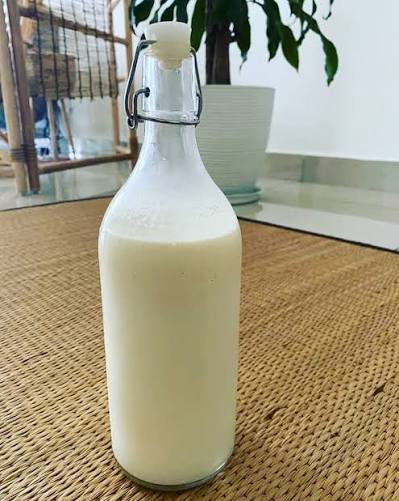
- Milk. From a healthy cow. On a clean farm. The next village over.
They'll wave you onto the skydive and the shark cage, then step in to save you from a glass of the stuff your great-grandparents drank every single morning of their lives.
Funny, that.
A pregnant endangered fin whale was found dead on the bow of a cruise ship in Seward, Alaska.
She was a 61-foot fin whale, the second-largest animal on Earth after the blue whale, and about six months pregnant.
A necropsy found blunt-force injuries consistent with a ship strike. She was carried into Seward on the bow of a cruise ship with nearly 5,000 people.
This wasn’t a freak accident.
Ship strikes are now the leading cause of death for fin whales.
The solution is simple: slow ships down. A 10-knot speed limit dramatically reduces the risk of fatal collisions, yet many cruise ships travel faster.
We built ships so large they can kill one of the biggest animals on Earth without anyone on board even noticing.
So why is slowing down still the exception instead of the rule?
[Source: Alaska Public Media, citing NOAA Fisheries (June 2026).]
ExposeTrophyHunters Mike Deasey hunted this elephant in Namibia. He exclaimed that, 'Hunting this magnificent creature was tremendous.' Yeah, he was magnificent, now he is just dead, Mike. #BanTrophyHunting
Heartbreaking. After Iraq legalized child marriage last year, it has been reported that tens of thousands of girls as young as 6 are being sold by their Muslim fathers to rich Arab men, some as old as 70.
Where is the global outrage?
Eight million horses, mules and donkeys died in the First World War.
Most did not die in cavalry charges. They died in the mud, hauling guns and shells and ambulances until their hearts gave out, drowning in shell holes, freezing, starving, worked to death in a war they had not chosen, carrying men who often loved them and could do nothing to save them.
That was the ones who died. The ones who survived got something worse.
When the guns fell silent, the old and broken were sold to the abattoirs of the continent for meat. The younger were sold to hard labour in Egypt and France, where a decade later some were found hauling carts as living skeletons, still carrying the army brand. Britain did not bring them home. It was judged too expensive. Of the hundred and thirty-six thousand horses Australia sent, exactly one came back.
And the men who had ridden them for years, shared their rations and their warmth, were made to hand them over, or to shoot the animals themselves, because a bullet from a friend was kinder than what waited otherwise.
A very few came home. A team of black gun-horses, the Old Blacks, drew the coffin of the Unknown Warrior to Westminster Abbey, and in 1926 were retired to green pastures to live out their days in peace. A memorial to all the rest remembers them in three words. Faithful unto death.
Which brings us, a century on, to Hector.
A Cavalry Black, like the Old Blacks. Seventeen years in service. He too walked behind a gun carriage at a state funeral, through the drums and the silence while a nation wept. And when his service ended, this time the country managed the thing it had failed to manage eight million times before.
It gave him a green field, a companion, and the right to lie flat out in the sun and sleep, certain that nothing is coming for him and nobody is going to sell him on.
Lie down, Hector. You have earned it.
So had they all.
Chloe woke up on Saturday feeling, in her own words, radiant, grounded, and deeply aligned. Here is what she ate, wore, and used to get there.
7:30am. Quinoa breakfast bowl. Chloe feels virtuous, because quinoa is a humble Andean supergrain. The global craze for it between 2010 and 2014 sent prices through the roof, drove Bolivian farmers into wall-to-wall monoculture on fragile high-altitude soil, thinned out the llama herds that used to manure that soil, and tipped parts of the Uyuni salt flats toward outright desertification. It also priced the grain out of reach for many of the Andean families who had eaten it for four thousand years, who switched to white rice so the West could feel rustic. Chloe drizzles hers with agave and feels connected to the earth.
Coconut yoghurt on top, chosen over dairy to spare the planet. A much-argued Exeter study found that coconut oil threatens more endangered species per tonne than palm oil does, because coconuts grow on small tropical islands packed with creatures that exist nowhere else, several of which the plantations have already helped extinguish. The study started a row, as these things do. Chloe heard about neither the study nor the row. She heard the word coconut and felt clean.
8:30am. Gets dressed, feeling effortless. The vegan leather boots: "vegan leather" is polyurethane, which is plastic, which is crude oil. They shed microplastics with every step and, once they crack, sit in landfill for centuries barely changed. The bamboo-viscose cardigan: sold as natural, in reality wood pulp dissolved in carbon disulphide, a chemical with a long and grim medical record among the workers who handle it, spun from pulp that increasingly comes out of ancient forest. Chloe looks lovely. Chloe feels light.
10:00am. Drives to the farmers' market in the electric car, feeling like part of the solution. The battery runs on lithium, evaporated out of the brine beneath Chile's Salar de Atacama, where extraction has dropped the groundwater by roughly a third since 2005, battered the flamingos, and pulled sacred water out from under the Lickanantay people, who were never really asked. It runs on cobalt too, and we both know where the cobalt comes from. Chloe's car emits nothing from the back of it. The emissions all happened somewhere she will never have to look.
1:00pm. Buys a houseplant, feeling nurturing. It was raised in a Dutch greenhouse heated on natural gas and potted in peat, cut from a bog that spent ten thousand years quietly locking carbon away and gave a good slug of it back the moment the spade went in. Chloe sets it on the windowsill. The windowsill looks wonderful.
4:00pm. Vegan dark chocolate, feeling indulgent but responsible. The cocoa came from West Africa, where the appetite for chocolate has flattened a staggering share of the forest inside two generations and leans on the labour of well over a million children. The wrapper said cruelty-free. It was talking about the rabbit.
9:00pm. Chloe posts the day. Caption: living gently. Sixty-one likes.
Chloe has never felt more in harmony with the planet.
The planet, where it can still be reached for comment, would like a word about the harmony.
In the driest desert on earth sits a mountain of discarded clothes so vast you can pick it out from space. Most of it is the synthetic fabric sold as fashion's future.
Here is where your wardrobe goes to not die.
- Tens of thousands of tonnes are dumped in Chile's Atacama every year, shipped in from Europe and North America, much of it never worn, tags still on
- A great deal is polyester and acrylic, plastic made from petroleum, the very fibres marketed as the conscious choice
- The rich world sends it here precisely to keep the mess off its own soil. The donated and the unsold alike end up in the sand
- In the bone-dry air it cannot rot, so it is torched instead, the toxic smoke of burning polyester drifting into the poor towns nearby
- Buried or burned, it bleeds microplastics, dye and petrochemicals into the ground and air for two centuries.
Plastic clothing was sold as the planet-friendly option and became a mountain in a desert, glowing on satellite photos and smoking over people's homes. Wool would have gone quietly back into the soil. This just sits there, refusing to leave.
Doctors once reassured pregnant women that a few cigarettes wouldn't hurt the baby.
Doctors told parents to lay newborns face down to sleep, the very position we now know raises the risk of cot death.
Doctors handed out thalidomide as a safe little sedative for morning sickness.
Doctors promised people in pain that OxyContin was barely addictive, then watched a generation prove otherwise.
Doctors swore margarine was the heart-healthy choice, right up until the trans fats in it started killing people.
Doctors prescribed lobotomies for depression, and handed the man who invented the operation a Nobel Prize.
Doctors dusted DDT straight onto children's heads to kill lice and called it perfectly safe.
Doctors insisted stomach ulcers were caused by stress for decades, while laughing the scientist who proved it was a bacterium out of the room. He later won a Nobel. They did not apologise.
Doctors blamed dietary fat for heart disease for two generations, leaning on research the sugar industry had quietly paid for.
And now, with that record gleaming behind them, a doctor would like a quiet word about your seed oil intake.
You can decide for yourself how much that's worth.
Don't let anyone fool you! Plans to farm octopus must be stopped.
Nueva Pescanova applied to the Las Palmas Port Authority to build the world's first commercial octopus farm. Tell the port authority to close the application: https://t.co/KrAfWJGpiv
Glyphosate was sold as so mild you could practically drink it. It is now in the rain, the bread, and the bodies of people who have never set foot on a farm.
- The most heavily used weedkiller in history, sprayed onto oats and wheat days before harvest, so the residue lands straight on your food
- It turns up in rivers, in rainfall, and in the urine of around 80% of people tested
- Lab studies flag it as a mitochondrial poison, jamming the tiny engines that power every cell
- The WHO calls it probably carcinogenic, and Monsanto's own leaked papers show it moved to manage the science rather than warn anyone
- Its maker has since paid out over 10 billion dollars, faced more than 100,000 cancer claims, and admitted nothing
A thing this deep in the rain, the food and the human body is not nothing to worry about. The marketing said harmless. The ten-billion-dollar cheques say otherwise.
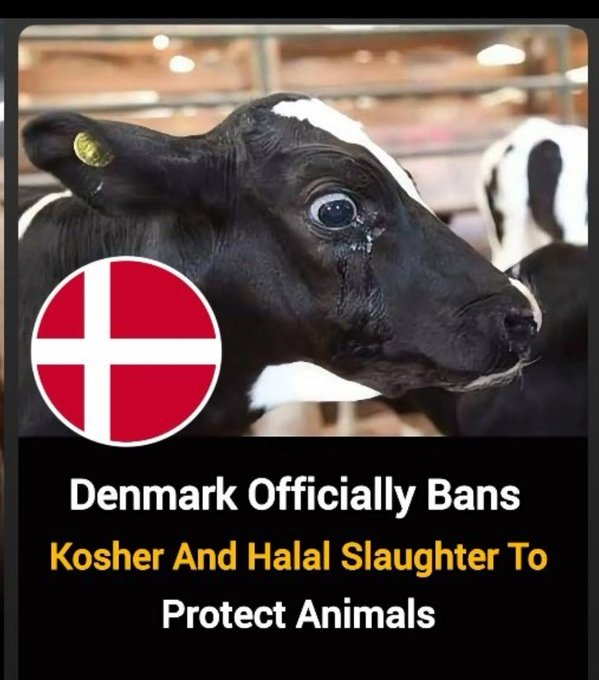
Denmark has banned Halal and Kosher slaughter in its country , time for us to do the same its a barbaric unnecessary way to treat animals . Restore Britain will ban it amongst other practices that have nothing in common with our culture and country join today stop this cruelty !
Across Britain right now, farmers are shearing their sheep, bagging up the wool, and burning it. Some bury it. Some leave it to rot in a corner of the field. The wool-burning has made the odd headline as a protest, but the truth is duller and sadder. The fleece is worth less than the diesel it would take to haul it to the depot.
The numbers are grim. In recent years a kilo of British wool has fetched somewhere between twenty and sixty pence, and hill breeds like Swaledale and Welsh Mountain sank as low as ten. A whole fleece off a mountain ewe might bring thirty pence. Shearing that same ewe costs the farmer around two pounds. One Lincolnshire farmer added it up out loud: over three pounds to shear and cart a single fleece to the depot, and twenty-six pence back. So she burns them. A great many do.
Here is the part that stings. The shearing still has to happen, every year, whatever the wool will fetch. A sheep left in full fleece overheats, struggles to move, and gets eaten alive by maggots. So the job carries on purely as welfare, a cost the farmer simply eats to spare the animal, with the wool itself going on the fire straight after.
And think about what this fibre once was. For centuries wool was the engine of the English economy, the country's greatest export and the crown's main source of tax. It raised the soaring wool churches of the Cotswolds. It turned merchants into princes. To this day, whoever presides over the House of Lords sits on the Woolsack, a literal cushion of wool, put there in the fourteenth century so nobody would forget where the nation's wealth began.
Prices have lifted off the floor this past year, the first real relief in a long while. It still does not cover the shears for a hill farmer. The fibre that built England now smoulders in a heap behind the barn, and almost nobody notices the smoke.




![Oxygen_Token's tweet photo. A pregnant endangered fin whale was found dead on the bow of a cruise ship in Seward, Alaska.
She was a 61-foot fin whale, the second-largest animal on Earth after the blue whale, and about six months pregnant.
A necropsy found blunt-force injuries consistent with a ship strike. She was carried into Seward on the bow of a cruise ship with nearly 5,000 people.
This wasn’t a freak accident.
Ship strikes are now the leading cause of death for fin whales.
The solution is simple: slow ships down. A 10-knot speed limit dramatically reduces the risk of fatal collisions, yet many cruise ships travel faster.
We built ships so large they can kill one of the biggest animals on Earth without anyone on board even noticing.
So why is slowing down still the exception instead of the rule?
[Source: Alaska Public Media, citing NOAA Fisheries (June 2026).]](https://pbs.twimg.com/media/HLrCZ1sWkAA8FRF.jpg)