As a northerner, I’ll be blunt here.
There are not very many excellent jobs in Nigeria, especially, in the North. And the few ones that are in the public sector? They usually go to the "highly connected” people.
And if you are able to get a place in the few ones that are left, you’ll only be paid a "survival wage." It keeps you afloat, but it won’t build you a future. In fact, with bills and family, it can make you poorer.
If your goal is to move into the middle class, which is the most realistic goal for most of us from humble backgrounds, then your strategy cannot be:
1. Waiting only for public sector jobs.
2. Limiting yourself to just your city or state.
The harsh truth is that unemployment is higher in many northern cities than it is in the south. That means your chances of landing a good job here are slimmer.
As young people, we must be pragmatic in coming up with solutions. I think these 4 practical moves can help:
1. Look to the private sector - While you’re still hoping for government, go hard for private companies. They pay better. They train you faster. They expose you to bigger opportunities.
2. Be mobile - Don’t be fixated on staying in your state or town. Be open to Lagos, Abuja, PH, Kano, anywhere with opportunity. Build yourself there first. When you’ve made it, you can always come back home and give back.
3. Polish your skills - A degree alone won’t pay bills. What problem can you solve? Learn a skill. Tech, sales, logistics, content, trades. Make yourself valuable.
4. Start something small - Having a degree doesn’t mean you must have a 9-5. The goal is to have a source of livelihood. It can be a business, a side hustle, catering, farming, e-business. Start small. Grow it.
Just be out and work hard.
I hope we succeed.
FG Files Terrorism Charges Against Three DSS Suspects Over Orire School Kidnap
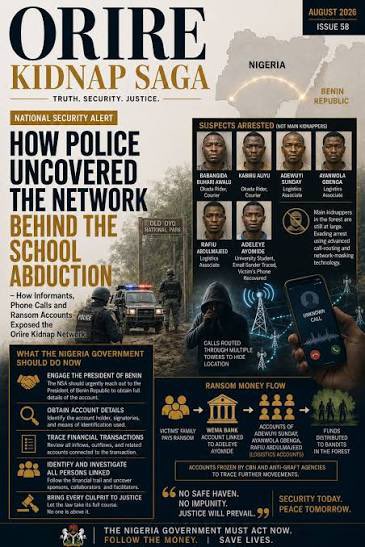
The FG has filed a 10-count charge before the Federal High Court in Abuja against three men arrested by the Department of State Services (DSS) over their alleged involvement in the kidnapping of schoolchildren and teachers in Orire Local Government Area of Oyo State.
The defendants are Abdulrazak Umar, also known as Abu Khalifa or Abu Khalid, Yunusa Musa, also known as Yunusa bin Musa, and Shamsu Adamu Sani, also known as Abu Itisar.
The charges, filed by the Office of the Attorney-General of the Federation, border on terrorism, conspiracy, aiding kidnapping, concealment of terrorist activities, membership of a proscribed terrorist organisation, incitement to terrorism, provision of terrorist training, cyber-related offences and unlawful mining.
According to the charge sheet, the three defendants, all residents of Suleja Local Government Area of Niger State, allegedly conspired between January and May 2026 with three other suspects identified as Muhammad Sani, Jibril Mohammed and Ibrahim Khabab to kidnap schoolchildren and teachers in Orire LGA of Oyo State.
The prosecution alleged that the conspiracy contravened Section 26(1) of the Terrorism (Prevention and Prohibition) Act, 2022.
The Federal Government further accused the defendants of aiding the principal suspects in carrying out the abduction, an offence punishable under Section 26(3) of the same Act.
The charge also alleged that the trio deliberately concealed information about the identities and activities of the alleged masterminds despite having prior knowledge of their terrorist activities and the planned kidnapping.
According to the prosecution, the suspects failed to report the information to relevant security agencies, thereby violating Section 16(1) of the Terrorism (Prevention and Prohibition) Act, 2022.
The defendants were also accused of concealing information that could have assisted security agencies in preventing the kidnapping or facilitating the arrest of those responsible.
In another count, the prosecution alleged that on or about June 2, 2026, the three defendants professed membership of Darul Salam, described in the charge sheet as an affiliate of Jama’atu Ansarul Muslimina Fi Biladis Sudan (Ansaru), a proscribed terrorist organisation in Nigeria.
The Federal Government maintained that such membership constitutes an offence under Section 25(1) of the Terrorism (Prevention and Prohibition) Act.
Separate allegations were made against the first defendant, Abdulrazak Umar. According to the charge sheet, Umar allegedly established and administered a WhatsApp group titled “The Oneness of Allah is the Foundation of Peace,” through which he was said to have provided training, guidance and operational instructions to members of the terrorist group.
He was also accused of using the platform to incite members through extremist preachings to commit acts of terrorism, contrary to provisions of both the Terrorism (Prevention and Prohibition) Act, 2022, and the Cybercrime (Prohibition, Prevention, etc.) Act, 2015.
The tenth count accused Umar of engaging in illegal gold mining at streams in Chaza area of Suleja Local Government Area between 2024 and 2026 without lawful authority, contrary to Section 8(b) of the Miscellaneous Offences Act.
The charge sheet indicated that the unlawful mining activities allegedly formed part of the financial activities linked to the investigation.
A security source familiar with the case said investigations into the suspects had been concluded and the defendants would be arraigned before the Federal High Court next week.
According to the source, security agencies are still investigating the roles of other persons connected with the alleged terrorist network.
The filing of the charges follows the recent rescue of the abducted schoolchildren & teachers in Oyo State after a coordinated security operation involving security forces
If you are not willing or cannot carry weapons to fight the enemy for your Nation 🇳🇬. DO NOT MOCK OR CRITICIZE THOSE WHO CHOOSES TO DO SO! #Sentinel#ThankASoldier
Continue to rest in peace sir.
Going down memory lane ...
He will not tell you where you people his next move ... But once you see him with just camo T-shirt just know you're in for a long 24 hours or more😁
If you're dressed very neat during any operation be you offr/sldr you're not ready to fight.
He went as far as inside Birnin-Gwari for proper operation.
Cleared the dreaded Abuja-Kaduna road and installed FOB all round.
He hates cheating to the core.
Lt Gen TA Lagbaja. Continue to rest in peace 🕊️ sir 🫡
To understand the above better, read up on the Dahalos of the Red Zones of Madagascar, and the Chinese Meat Mafia controlling the cattle rustling criminal industry. What would strike you most is the similarities of actors, action and tactics of the Dahalos and the so called Fulani Bandits. In fact, if you picked any picture of any Danilo, you would think it’s either Turji, Ado Aleru or Dogo Gide. The similarities is as uncanny as it is predictive.
The Cattle Barons of the LCB:
In the Lake Chad region, "cattle barons" are wealthy, transnational livestock merchants who use heavily armed networks to move vast herds across porous borders. Their operations rely on the exploitation of conflict zones, linking the pastoral economy directly to regional terrorism, organized crime, and the severe insecurity in northern Nigeria.
Relationship with Terrorism, Insurgency, and Organized Crime:
• Insurgency Financing: Armed groups like Boko Haram and ISWAP (Islamic State West Africa Province) use cattle theft as a tool of economic warfare and a primary source of funding. A single large raid can generate tens of thousands of dollars in liquid capital to purchase weapons and fund recruitment.
•The "Meat Mafia": Cattle barons operate as "meat mafias" who profit from this stolen wealth. They launder thousands of rustled cattle through informal regional markets, working with corrupt officials and middlemen to mix stolen herds with legally acquired livestock.
•"Cattle Round-Tripping": Terrorists and illicit syndicates often execute raids in communities with weak security, imposing "cattle taxes" and using specialized smuggling routes to move stolen assets across national boundaries.
Relationship with Insecurity in Northern Nigeria:
•The Crime-Terror Nexus: The vast, ungoverned forest spaces in Nigeria's northwest and the marshlands of the Lake Chad Basin are exploited by both local bandits and transnational terrorist groups. Cross-border rustling syndicates often supply weapons and logistical support to local gangs engaged in mass kidnappings.
• Transhumance Disruption: As environmental degradation and violence shrink available grazing land, traditional herders from northern Nigeria are forced to alter their historic routes. This mass displacement heightens the deadly competition for resources with local farmers in Nigeria's Middle Belt.
-Proliferation of Small Arms: The smuggling corridors used by cattle barons to move livestock are also heavily utilized to traffic illicit firearms across borders. This influx of weapons arms local militias, severely escalating the lethality of the farmer-herder conflicts.
The intersection of these criminal economies and insurgent networks presents a massive challenge for the Multinational Joint Task Force in the Lake Chad Basin. The illicit proceeds from the cattle trade continue to prolong and deepen the violence plaguing the region.
The Dahalos are organized, armed criminal gangs in Madagascar. The word means "bandits" in the Malagasy language. They are infamous for stealing prized zebu (humped cattle). Today, they operate like modern guerrilla fighters with military-grade weapons, severely impacting the country's rural stability.
The Evolution of the Dahalos
•Tradition: Long ago, stealing a few zebu was an unarmed, cultural rite of passage for young men in southern tribes to prove their bravery and get married.
•Armed Conflict: Today, dahalos travel in groups of hundreds. They use assault weapons like Kalashnikovs. They raid villages, destroy homes, and kill civilians.
Relationship to Cattle Rustling and Banditry:
•Lucrative Crime: Zebu are a symbol of wealth. Stealing them has transformed from a local cultural tradition into organized, black-market crime.
•The "Meat Mafia": Stolen herds are laundered through corrupt officials and shady meat markets. They are often sold to international buyers in Asia and the Middle East.
•General Banditry: Because they are heavily armed, dahalos also commit other crimes. They hijack trucks, rob travelers, and hold locals hostage for ransom.
The "Red Zones":
•Lawless Territories: The "red zones" are remote territories in southern and central Madagascar with little to no government control.
•Violence: These areas are unsafe for travel. Dahalo militias hide here, often attacking communities for revenge or to steal cattle.
•Government Response: The Malagasy military and police force often lack the resources to secure these regions, leading to frequent, deadly clashes with the dahalo.
Is Lagos State for Everybody or Only a Selected Few?
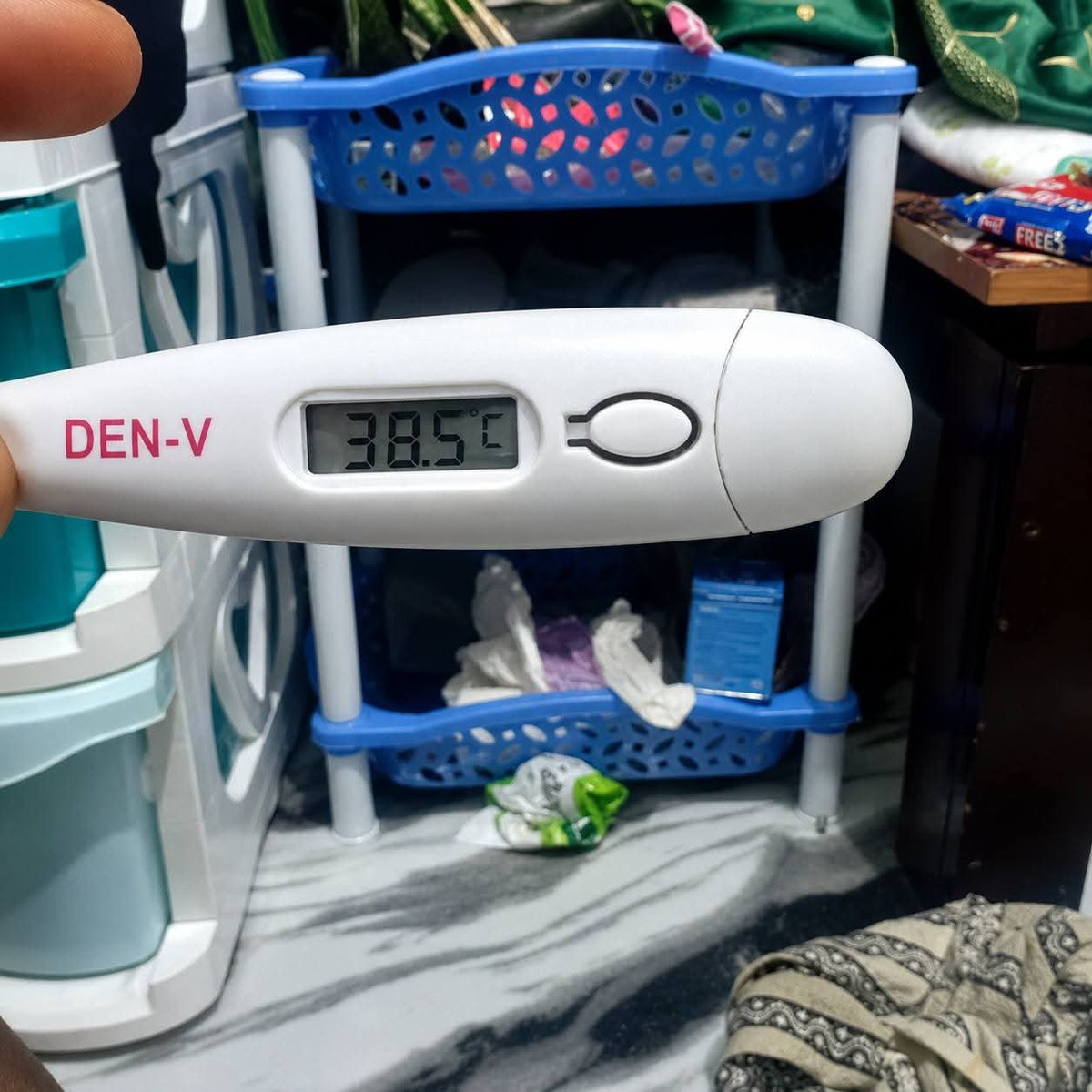
Around 3:20 a.m. last night, our 7-month-old baby girl started crying with a very high fever. She had been running a temperature for the past two days, but it became worse during the night. When I checked with the thermometer, her temperature had risen to 38.5°C.
My wife and I were worried. It was raining heavily, and without a car, we didn't know how we would get her to the hospital.
We used a towel soaked in water to gently wipe her body and help reduce the fever while we waited for the rain to ease.
Then I remembered the Lagos State Emergency Management Agency-LASEMA number, 112. I called at about 4:07 a.m., hoping they could help. A lady answered and asked about the emergency. I explained that my 7-month-old baby had a high fever, it was raining heavily, and we couldn't get to the hospital. She could hear my baby crying in the background.
I asked if they could send an ambulance. She immediately took my address and a nearby landmark.
At about 4:27 a.m., I received another call from the Lagos Emergency Response Call Centre. The officer informed me that an ambulance had already been dispatched. He asked how the team could locate my house because it was still dark and there might not be anyone outside to direct them. I asked if I could send my live location, but he explained that he was calling from the control centre and was not with the ambulance team.
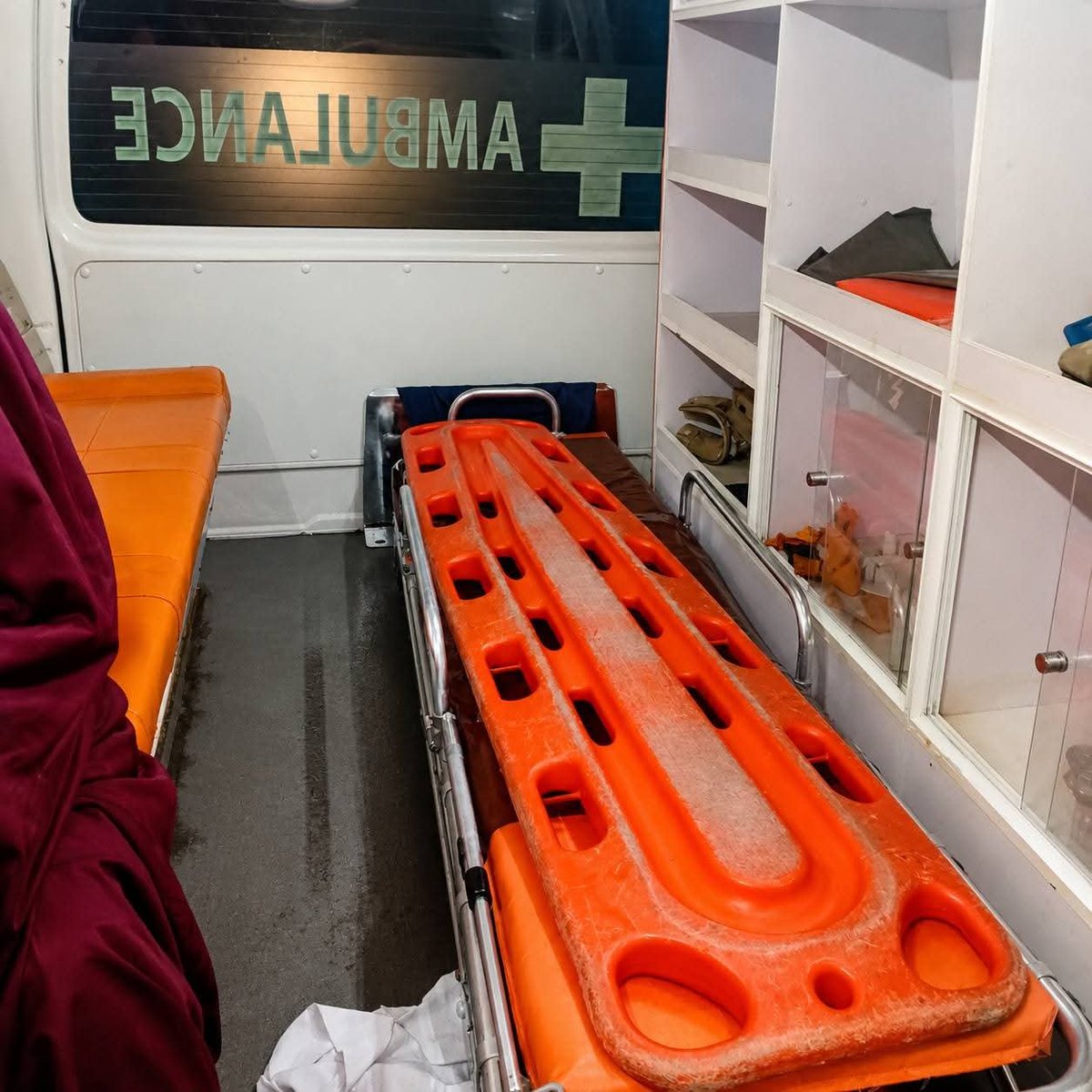
By 5:07 a.m., the rain had stopped. I received another call informing me that the ambulance was waiting at Checkpoint Bus Stop. My wife, our baby, and I quickly took a motorcycle there, and to my surprise, the ambulance was already waiting for us.
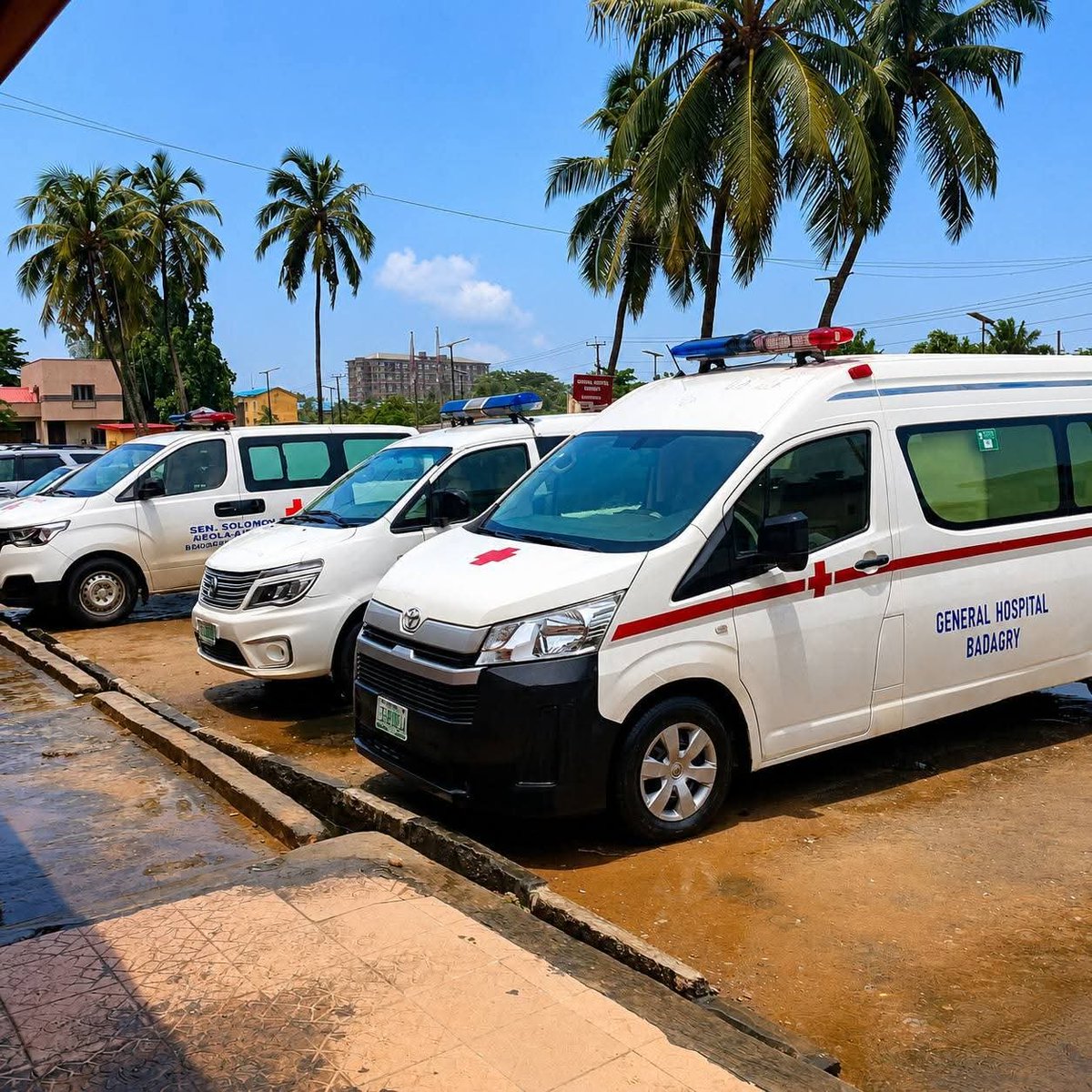
The medical personnel welcomed us into the ambulance and asked about our baby's condition. They asked which hospital we normally used. I mentioned the new Primary Health Centre at Ilepo, but explained that it does not operate 24 hours a day. They agreed and advised us that the best option was to take our baby to GeneralHospital Badagry where she could receive proper emergency care.
I believe the ambulance couldn't reach our house because of the heavy rain and the poor condition of the Ibiye–Checkpoint–Magbon road to our street. This is another reason why that road needs urgent attention from the Lagos State Government and the local government. Good roads save lives during emergencies.
One thing that amazed me was that the ambulance came all the way from Badagry General Hospital about 24 kilometres to Checkpoint Bus Stop just to respond to our emergency. Wow. Honestly we are still shock. I only see this happen in developed countries.
For that, I sincerely commend the Lagos State Emergency Response Team. They proved that the emergency service is working and that lives truly matter.
The journey to the hospital was smooth. The Lagos–Badagry Expressway from Agbara Junction to Badagry is now a modern six-lane road with no potholes. Credit goes to former President Muhammadu Buhari for starting the project, President Asiwaju Bola Ahmed Tinubu for continuing it, and Governor Babajide Sanwo-Olu for ensuring the reconstruction around Badagry, including the road leading to the General Hospital. Good roads make emergency response faster and more effective.
At the hospital, we were asked to open a new patient file because records from the Primary Health Centre could not be accessed there. I believe Lagos State should work towards creating a unified electronic medical record system so that patients' records can be accessed at any government hospital. I no there is existing smart card, we have that with our Lagos health insurance but had expired. I'll renew it.
We paid ₦2,000 to open a new file. The doctor attended to our baby immediately and requested a Full Blood Count (FBC) test and a malaria test, which cost ₦8,000. We also bought the prescribed injections and medications from the hospital pharmacy for about ₦4,000.