What makes their face light up when they play? What do you have to tear them away from practicing? What helps them grow as people? Those are important questions when talking about youth sports.
If you or your kid is picking sports based on market potential you are doing it ass backwards. Fall in love with the sport first. If that’s not there the rest will be a massive struggle.
Soccer is weird.
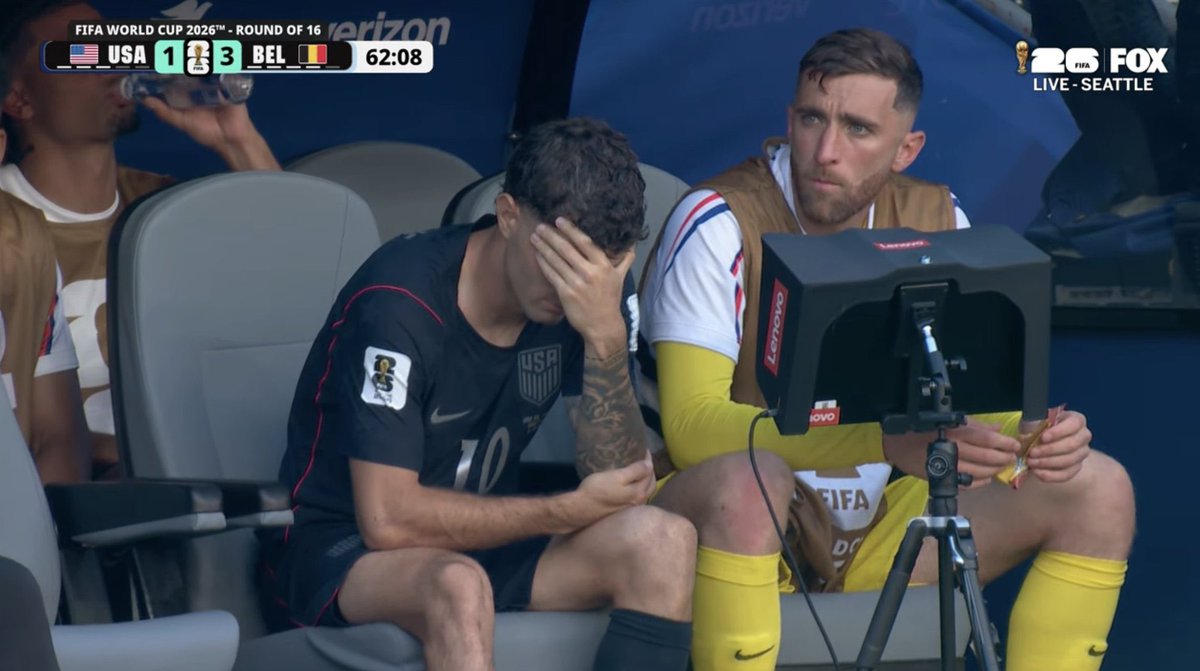
There’s no shortage of optimistic takes about how “bright” the future is for soccer due to the World Cup exposure…but nobody is really acknowledging the obvious core limiting issue: soccer is just a weird sport here.
If you choose to play soccer over football, basketball, or baseball (or hockey in certain areas), it’s just a weird decision.
You’re voluntarily choosing a smaller market with less attention and lower earning potential. Unless you have some sort of outside factor motivating you to choose soccer over something else, it is simply not a rational choice to make.
The opportunity cost to a promising young American athlete choosing to play soccer is tremendous.
If you play football or basketball at a top-tier US college, you basically have the best life possible. You can earn millions from NIL, you play in front of tens of thousands, you’re a celebrity, you have groupies, you get a degree without actually having to do any school work…you are living the best life possible for that stage of life.
If you play soccer, you have a fun fact to throw out at parties to introduce yourself to people who have no idea who you are.
Of course, the obvious exception here is if you forgo college to go try and make some European soccer team…which carries a risk:reward profile that is untenable for most American families. If you play a college sport, you get a degree whether the sport pans out or not. If you fly out to Europe for a few years and then it doesn’t work, you are left empty handed.
So for most Americans, saying yes to soccer means saying no to the tremendous advantages of more prominent sports; it’s simply not a decision most rational top-performing athletes make.
You end up with a situation where the only people who play soccer are the people who either have some kind of unique external variable pushing them toward it (like a niche interest or a foreign family applying pressure), or those who have simply fallen back to soccer after not succeeding in a more prominent sport.
This leads to a scenario where “soccer player” does not exactly carry an “A-list” connotation, which makes it less socially advantageous to play the sport, and ultimately creates the overall sentiment where soccer just feels kind of “weird.”
As an observer, I wish this wasn’t the case; I wish we had as strong a presence in soccer as we do in the other sports to really see how we stack up against global competition—but it’s simply not realistic. In order for that to happen, it would require massive foundational changes to the social structures and incentives that funnel talent to different sports in our system—essentially amounting to reversing the flow of Niagara Falls.
So as much as I would love to be a soccer optimist with an eye toward “revenge” in 2030, I think our time is much better served accepting US soccer for what it is and leaning instead into what we do best.
I appreciate that every time we lose at the World Cup everyone opines that all we need to do is completely upend a deeply entrenched system. Easy peasy!
@CarterSchultz24@BrewPack8 They have 3.5 years of control and some decent pieces. Getting rid of him now just screams “we won’t be competitive until 2030.”