$IDLE is now live on Solana.
AjLhrxN2yrCe45Y2KGPMZCkBm6NpN43jWqPkdZq6pump
Quick rundown on what it does and why it exists.
IDLE Protocol takes 15% of every gateway payment. That fee is the entire token economy. 10% auto-swaps to $IDLE on Jupiter every hour and sends it to the burn address. 5% covers infrastructure and development. The other 85% goes straight to the resource owner's wallet, same block.
Staking gives you a bigger cut. Base split is 85/15. Stake 10k $IDLE and you keep 87%. Stake 50k and it's 90%. 250k gets you 95%. The protocol adjusts your split ratio on the next payout.
Burning $IDLE unlocks features: priority routing (your jobs match first), advanced task types, analytics on your gateway traffic, and custom endpoint domains. Priority routing means lower latency and higher uptime for your resources.
The thesis: $IDLE supply can only go down. Every gateway call generates a burn. More resources on the network means more API calls, which means more fees, which means more buying pressure and more tokens removed from circulation permanently. The flywheel is mechanical, not speculative.
https://t.co/0n8skIkzCO
Imagine every laptop, PC, and phone sitting idle right now - doing nothing. IDLE turns all that unused compute into a network that runs jobs. AI inference, web scraping, health checks, DNS lookups, agent tasks, and more. Developers pay to use it, device owners earn USDC automatically.
So instead of paying AWS or OpenAI, you're paying a decentralized network of real devices. And instead of that money going to a data center, it goes to the people running the nodes.
We also launched IDLE: The Game, built directly on top of the network. The problem with DePIN is always supply - getting enough devices to actually join. The game solves that. You play, your GPU runs real jobs in the background. Growth mechanic built into the product itself.
We're excited to team up with @PayAINetwork - bringing gasless x402 payments to distributed compute on Solana.
PayAI is one of the leading x402 facilitators, running across Solana, Base, SKALE, and 10+ networks.
IDLE's 15 compute endpoints - inference, scraping, DNS, SSL, health checks - are now payable per request by any x402-compatible agent. No API keys. No signups. No subscriptions.
Any agent that speaks x402 can now access IDLE compute autonomously. No humans in the loop.
(4/4) The world is in a global compute shortage. GPU lead times run 36-52 weeks. OpenAI's CFO called token demand "a vertical wall." Google, Microsoft, Amazon, and Meta are collectively spending $700 billion to build new infrastructure - and it still won't be enough.
The compute the world needs already exists. 4 billion devices. Already built. Already powered. IDLE connects them into a single distributed compute network. Every player that opens the game adds to it.
This is how we close the gap.
Public beta open now. Mobile support next.
1/ IDLE: The Game public beta is live.
The first game in history where playing makes your device power global compute infrastructure. Not points. Not tokens. Compute jobs. Running on your hardware right now.
Desktop available now - mobile support comes next.
https://t.co/O0ZLlG8J1r 🧵
(3/4) Once loaded, your device joins the IDLE compute network.
Jobs get routed to you automatically - AI inference, web fetches, DNS lookups, data verification - 14 task types in total. Your device executes them. Results submit back to IDLE. USDC settles to your Solana wallet automatically.
The game is the interface. The network is the engine.
Desktop is now live. Mobile coming soon after internal testing.
IDLE x @ThePrivacyCash
Node operators earn USDC on Solana. Every transaction is publicly visible - wallet address, amount, frequency. For operators running nodes globally, that's unwanted financial exposure.
Starting today all IDLE operator earnings route through Privacy Cash's ZK-shielded pools. Operators earn. Nobody else sees the details.
$400M in private transfers. Most used privacy protocol on Solana.
Earnings privacy is now the default on IDLE.
Here's what's actually happening when you open the game.
Your browser downloads an open-source local AI model - Llama 3.2, Phi-3.5, Gemma, or Qwen depending on your device. Running entirely on your hardware via WebGPU.
Once loaded, your device joins the IDLE compute network. Jobs get routed to you - AI inference, web fetches, data verification, and 14 other task types. Your device completes them, USDC hits your wallet automatically.
The game runs. The network earns.
This is what it looks like when the model loads on your device for the first time. After that it's cached - instant on every visit. 👇
IDLE: The Game public beta goes live in 24 hours.
A browser MMO built on top of IDLE Protocol - open it, your device joins the global compute network. Play. Earn. No downloads. No setup.
How it works: WebGPU gives websites direct access to your GPU. The game is lightweight by design - it only uses a fraction of your chip. While you play, the remaining GPU power executes compute jobs routed through IDLE Protocol. Settled in USDC on Solana automatically.
The game runs. The network earns.
Every player adds GPU power to the network. As the network scales, devices combine to run distributed inference, rendering, and large-scale data processing - all split across players in real time.
For anyone that wants early access - DM us and we'll get a few of you in 👾
Validation works at two levels.
For compute tasks like web fetches, DNS lookups, and data verification - a random subset of jobs are re-run server-side and compared. If a node's result doesn't match, it gets flagged and deprioritized. Deterministic tasks make spot-checking easy, you only need to catch a node once to kill its reputation score.
For inference jobs - IDLE uses a combination of output sampling and economic design. Random jobs are cross-validated against multiple nodes. Nodes with consistently outlier outputs get flagged and rate-limited.
The payout is also low enough per job that the cost of trying to game the system exceeds the reward, which is the standard mechanism design used across all major DePIN compute networks.
IDLE: The Game public beta goes live in 24 hours.
A browser MMO built on top of IDLE Protocol - open it, your device joins the global compute network. Play. Earn. No downloads. No setup.
How it works: WebGPU gives websites direct access to your GPU. The game is lightweight by design - it only uses a fraction of your chip. While you play, the remaining GPU power executes compute jobs routed through IDLE Protocol. Settled in USDC on Solana automatically.
The game runs. The network earns.
Every player adds GPU power to the network. As the network scales, devices combine to run distributed inference, rendering, and large-scale data processing - all split across players in real time.
For anyone that wants early access - DM us and we'll get a few of you in 👾
Google just raised $80 billion to build more AI infrastructure. $180 billion in capex this year alone. Warren Buffett put in $10 billion personally.
'Unprecedented customer demand' - that's the exact phrase Google used to justify raising $80 billion.
Every major company on earth is spending record amounts to build compute from scratch.
4 billion phones and PCs already exist - already powered, already connected. IDLE connects them all into a single distributed compute network. No construction. No capex. No waiting.
The compute the world needs is already built. It just isn't connected yet.
https://t.co/tjE6gB9XU2
Hermes Agent by @NousResearch can now route inference through IDLE Protocol.
Hermes uses NVIDIA NIM for inference. IDLE routes workloads through NIM-compatible nodes. One endpoint change and every Hermes Agent can route its workloads through IDLE's distributed compute network.
Cheaper than centralized APIs, no rate limits, pay per request.
100,000+ GitHub stars. The most popular open-source AI agent in the world - now a demand source for the IDLE network.
NVIDIA just mass-produced our supply chain.
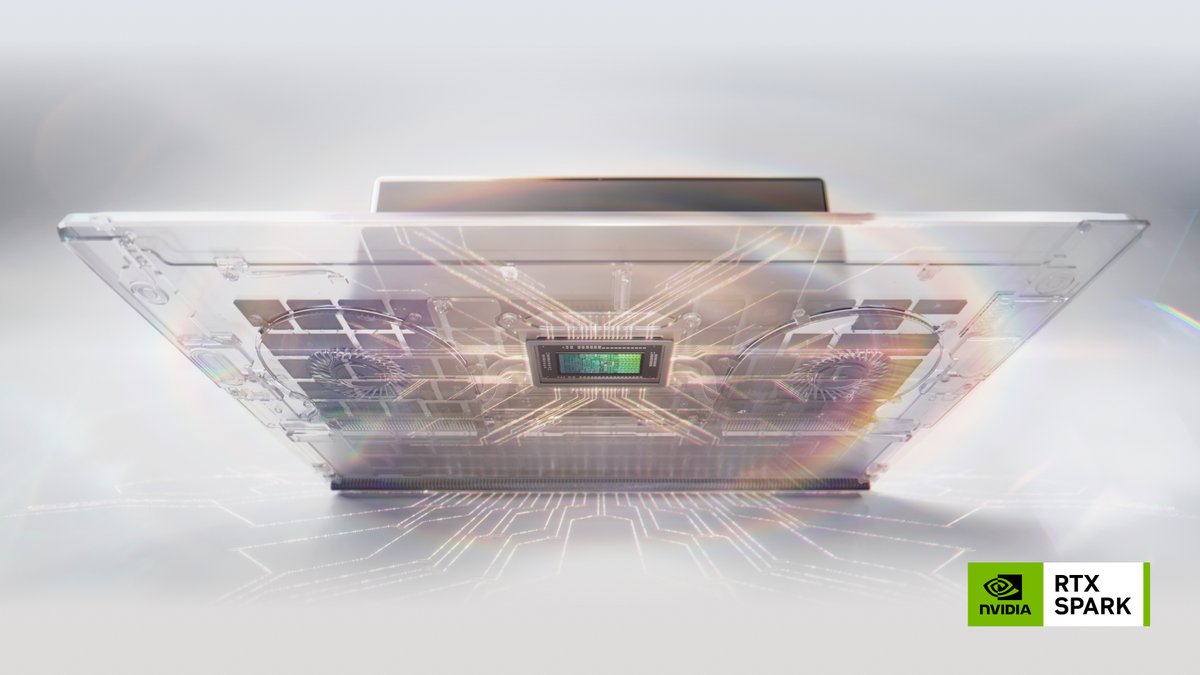
RTX Spark - the world's most efficient PC chip ever built, puts 1 PFLOP of AI inference into consumer laptops shipping this fall. ASUS, Dell, HP, Lenovo, Microsoft Surface, MSI. Every major PC maker on earth.
Every single one of those machines sits idle 90% of the day.
IDLE turns that dead compute into a paid resource. You run a node, we route workloads to your PC, you earn USDC. No setup, no cloud contracts, no data center.
@NVIDIA built the hardware. We built the network that puts it to work.
This is the NVIDIA RTX Spark Superchip. A new beginning for personal computers.
Designed for creators, AI developers, and gamers, RTX Spark brings over 30 years of NVIDIA innovation to slim Windows laptops and small, ultra-efficient desktop PCs.
IDLE Protocol is built for exactly this. Distributed inference across thousands of devices - phones, laptops, NVIDIA DGX Sparks - routing through NVIDIA NIM, Mistral AI, Google Gemini, and Kimi K2.6.
Developers get API access to distributed compute at a fraction of frontier lab pricing. No subscriptions, no rate limits, no $200/month plans.
The 90% of tasks that don't need frontier pricing - IDLE runs them cheaper and without the overhead.
My top focus area within AI right now is finding companies that do either of the following:
> help reduce frontier lab API bills
> provide / enable alternatives to frontier lab usage (the 90% of tasks that don’t need it)
From pure tokenmaxxing to token cost optimizing
IDLE has surpassed 200,000 on-chain transactions.
Here's where the network stands:
32,425 active network operators
203,828 transactions since launch
$13,103 distributed to operators
All tracked on @Dune.
SpaceX goes public June 12 at a $1.75 trillion valuation - the largest IPO in capital markets history.
Anthropic already committed to SpaceX's Colossus compute clusters, OpenAI has its own infrastructure deals, and every major AI company is now racing to lock up compute capacity years in advance.
The pattern is clear. Whoever controls compute controls AI, and the people building that infrastructure are worth trillions.
4 billion phones and PCs already exist, already powered, already connected - earning nothing while the world spends trillions building new ones.
Nobody is paying them for it. Nobody is connecting them. Nobody has figured out how to turn that into a market. IDLE Protocol did.
From phones and laptops to NVIDIA DGX Spark desktop supercomputers - every device that joins the IDLE network becomes part of the global compute economy. IDLE routes compute jobs to connected devices and settles payments in USDC on Solana automatically - no data centers, no permits, no 7-year grid queues.
The compute economy is worth trillions. You're already holding the hardware.
https://t.co/hkLVFe6RBn
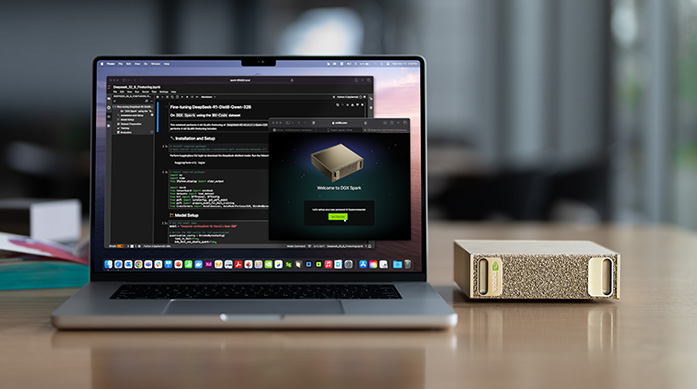
NVIDIA DGX Spark owners can now connect their box to IDLE Protocol as a compute node.
DGX Spark runs @NVIDIA NIM natively. IDLE already routes inference through NVIDIA NIM. The integration is one endpoint away.
Point your DGX Spark at IDLE's API. Your $3,999 desktop supercomputer joins 31,000+ nodes settling in USDC on Solana automatically.
The most powerful desktop AI computer ever made - now earning on the IDLE network.