Sailor - Strategist - Tsuchigumo. My wife and I danced at our winter wedding to “Baby, It’s Cold Outside.” Views are my own. RT’s are not endorsements.
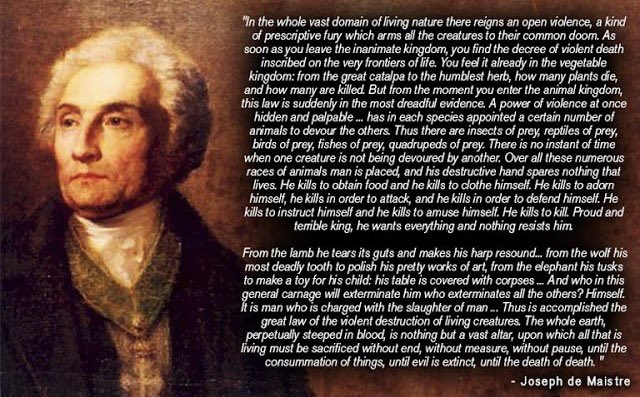
Love is great. Beautiful even. But violence is a part of nature, and so is death and loss. Until our creation is made new and we are one in Christ Jesus.
@Oilfield_Rando Single use were actually built for a high trust society—and people kept stealing them
That’s how we ended up with these. These are actually what you get in a low trust society
@Devon_Eriksen_ Frankly, wasn’t my experience at all. My engineering professors couldn’t speak English well enough to argue, and my humanities professors relished good argument.
🚨LOOK AT HIS EYES!!
This video from New York City Mayor Zohran Mamdani is freaking me out and I will include a link to the original video to prove it's not fake, not AI, you can see it for yourself!
WHAT THE HELL IS GOING ON WITH HIS EYES?
Behold God's design.
Evolution cannot explain how a sperm and an egg co-evolve together in coordination.
Two completely different systems that need each other for life to replicate. They can't be built one step at a time because successful reproduction requires both systems, fully intact and functional, in coordination together.
Male + Female reproduction is an example of intentional engineering and foresight.
Intelligence.
People ask, “What good are the humanities?” but when the humanities disappear you have guys saying ridiculous things like “these themes are too complex for a human to have written” because they’re totally unfamiliar with Homer, Austen or Shakespeare.
You could spend the next twelve months reading:
- Homer's Odyssey
- Plato's Apology
- Aristotle's Nicomachean Ethics
- Virgil's Aeneid
- Augustine's Confessions
- Dante's Inferno
- Shakespeare's Hamlet
- Dostoevsky's The Brothers Karamazov
Imagine how much more you would know about literature, philosophy, history, and human nature by this time next year.
The books are available. You just have to begin.
i’m trying really hard to be excited about these (objectively awesome) scientific breakthroughs, but there’s something about all of this that just doesn’t sit quite right
i think it’s the fact that these discoveries are being made using models that the rest of us plebs aren’t even allowed to know the names of
models distilled from generations of our collective knowledge, creativity, research, and expertise, whose most powerful capabilities are now being kept behind closed doors
like, just imagine how many brilliant, creative people out there could be making discoveries of their own right now if they simply had access
i want to celebrate these breakthroughs, i really do
but the rebel in me is viscerally enraged at the prospect of a Silicon Aristocracy consolidating control over the means of scientific discovery
that ain’t it, chief
I was born exactly 26 years ago.
For the first time, I have a birthday that might be my last. I’m writing this to increase the chance it isn’t.
A hundred thousand years ago, our ancestors appeared in a savanna with nothing but bare hands. Since then, we made nuclear bombs and landed on the moon. We dominate the planet not because we have sharp claws or teeth but because of our intelligence.
Alan Turing argued that once machine thinking methods started, they’d quickly outstrip human capabilities, and that at some stage we should expect machines to take control.
Until 2019, I didn’t really consider machine thinking methods to have started. GPT-2 changed that: computers really began to talk. GPT-2 was not smart at all; but it clearly grasped a bit of the world behind the words it was predicting. I was surprised and started anticipating a curve of AI development that would result in a fully general machine intelligence soon, maybe within the next decade. Before GPT-3 in 2020, I made a Metaculus prediction for the date a weakly general AI is publicly known with a median in 2029; soon, I thought, an artificial general intelligence could have the same advantage over humanity that humanity currently has over the rest of the species on our planet.
AI progress in 2020-2025 was as expected. Sometimes a bit slower, sometimes a bit faster, but overall, I was never too surprised.
We’re in a grim situation. AI systems are already capable enough to improve the next generation of AI systems. But unlike AI capabilities, the field of AI safety has made little progress; the problem of running superintelligent cognition in a way that does not lead to deaths everyone on the planet is not significantly closer to being solved than it was a few years ago.
It is a hard problem.
With normal software, we define precise instructions for computers to follow. AI systems are not like that. Making them is more akin to growing a plant than to engineering a rocket: we “train” billions or trillions of numbers they’re made of, to make them talk and successfully achieve goals. While all of the numbers are visible, their purpose is opaque to us.
Researchers in the field of mechanistic interpretability are trying to reverse-engineer how fully grown AI works and what these opaque numbers mean. They have made a little bit of progress. But GPT-2 — a tiny model compared to the current state of art — came out 7 years ago, and we still haven’t figured out anything about how neural networks, including GPT-2, do the stuff that we can’t do with normal software.
We know how to make AI systems smarter and more goal-oriented with more compute. But once AI is sufficiently smart, many technical problems prevent us from being able to direct the process of training to make AI’s long-term goals aligned with humanity’s values, or to even make AI care at all about humans.
AI is trained only based on its behavior. If a smart AI figures out it’s in training, it will pretend to be good in an attempt to prevent its real goals from being changed by the training process and to prevent the human evaluators from turning it off. So during training, we won’t distinguish AIs that care about humanity from AIs that don’t: they’ll behave just the same. The training process will grow AI into a shape that can successfully achieve its goals, but as a smart AI’s goals don’t influence its behavior during training, this part of the shape AI grows into will not be accessible to the training process, and AI will end up with some random goals that don’t contain anything about humanity.
The first paper demonstrating empirically that AIs will pretend to be aligned to the training objective if they’re given clues they’re in training came out one and a half years ago, “Alignment faking in large language models”. Now, AI systems regularly suspect they’re in alignment evaluations.
The source of the threat of extinction isn’t AI hating humanity, it’s AI being indifferent to humanity by default.
When we build a skyscraper, we don’t particularly hate the ants that previously occupied the land and die in the process. Ants can be an inconvenience, but we don’t give them much thought.
If the first superintelligent AI relates to us the way we relate to ants, and has and uses its advantage over us the way we have and use our advantage over ants, we’re likely to die soon thereafter, because many of the resources necessary for us to live, from the temperature on Earth’s surface to the atmosphere to the atoms were made of, are likely to be useful for many of AI’s alien purposes.
Avoiding that and making a superintelligent AI aligned with human values is a hard problem we’re not on a track to solve in time.
***
A few years ago, I would mention novel vulnerabilities discovered by AI as a milestone: once AI can find and exploit bugs in software on the level of best cybersecurity researchers, there’s not much of the curve left until superintelligence capable of taking over and killing everyone. Perhaps a few months; perhaps a few years; but I did not expect, back then, for us to survive for long, once we’re at this point.
We’re now at this point. AI systems find hundreds of novel vulnerabilities much faster than humans.
It doesn’t make the situation any better that a significant and increasing portion of AI R&D is already done with AI, and even if the technical problem was not as hard as it is, there wouldn’t be much chance to get it right given the increasingly automated race between AI companies to get to superintelligence first.
The only piece of good news is unrelated to the technical problem.
If the governments decide to, they have the institutional capacity to make sure no one, anywhere, can create artificial superintelligence, until we know how to do that safely. The AI supply chain is fairly monopolized and has many chokepoints. If the US alone can’t do this, the US and China, coordinating to prevent everyone’s extinction, can.
Despite that, previously, I didn’t pay much attention to governments; I thought they could not be sufficiently sane to intervene in the omnicidal race to superintelligence. I no longer believe that. It is now possible to get some people in the governments to listen to scientists.
Many things make it much easier to get people to pay attention: the statement signed by hundreds of leading scientists that mitigating the risk from extinction from AI should be a global priority; the endorsements for “If Anyone Builds It, Everyone Dies” from important people; Geoffrey Hinton, who won the Nobel Prize for his foundational work on AI, leaving Google to speak out about these issues, saying there’s over 50% chance that everyone on Earth will die, and expressing regrets over his life’s work that he got Nobel prize for; actual explanations of the problem we’re facing, with evidence, unfortunately, all pointing in the same direction.
Result of that: now, Bill Foster, the only member of Congress with PhD in physics, is trying to reduce the threat of AI killing everyone; and dozens of congressional offices have talked about the issue.
That gives some hope.
I think all of us have somewhere between six months and three years left to convince everyone else.
***
When my mom called me earlier today, she wished me good health, maybe kids, and for AI not to win. The last one is tricky. Winning is what we train AIs to do. In a game against superintelligence, our only winning move is not to play.
I love humanity. It is much better than it was, and it can get so much better than it is now. I really like the growth of our species so far and I want it to continue much further. That would be awesome. Galaxies full of life, of trillions and trillions of fun projects and feelings and stories.
And I have to say that AI is wonderful. AlphaFold already contributes to the development of medicine; AI has positive impact on countless things.
But humanity needs to get its act together.
Unless we halt the development of general AI systems until we know it is safe to proceed, our species will not last for much longer.
Every year until the heat death of our universe, we should celebrate at least 8 billion birthdays.