𝐍𝐀𝐌𝐄𝐒 𝐀𝐍𝐃 𝐌𝐄𝐀𝐍𝐈𝐍𝐆 𝐎𝐅 𝐒𝐎𝐌𝐄 𝐏𝐀𝐒𝐓 Ọ𝐁𝐀 𝐎𝐅 𝐁𝐄𝐍𝐈𝐍
Ẹ𝗪Ẹ𝗞𝗔 [1180–1246]
~ My Lineage will never come to an
end
ẸWẸKA Derived from three Edo words “Ẹ𝙬𝙖𝙚 𝙜𝙝𝙞 𝙆𝙖” - “My Lineage won’t dry”
Ẹwae ~ according to Aghayesi & Melzian dictionary on Edo language
Ẹwae is an old Ẹdo word for ~ Lineage & Kingdom
One of the reasons why he was given the name as a result that the Owodo lineage won’t come to an End
ẸWẸKA ll also took this name after the empire came to an end and the kingdom itself was threatened fulfill the other part of the word that ~ His Kingdom {Benin kingdom} won’t come to an end.
𝗨𝗪𝗔𝗞𝗛𝗨𝗔𝗛𝗘𝗡 [1246–1250]
~ Gifted with Success or prosperity
Ẹ𝗪𝗘𝗗𝗢 [1260–1274]
~ My Lineage/ Kingdom will flourish
Ẹwae ~ Lineage
Do ~ Flourish
Ẹ𝗗𝗢𝗡𝗜 [1287–1292]
~ One who Supports Progress
𝗨𝗗𝗔𝗚𝗕𝗘𝗗𝗢 [1292–1329]
~ Nothing can hinder my progress
𝗢𝗛𝗘𝗡 [1329–1366]
~ A king in a priestly order
𝗘𝗚𝗕𝗘𝗞𝗔 [1366–1397]
~ One with fierce temper
𝗨𝗪𝗔𝗙𝗜𝗢𝗞𝗨𝗡 [1434–1440]
~ No matter how Prosperous you become, your Riches can never divide the sea
Ẹ𝗪𝗨𝗔𝗥𝗘 [1440–1473]
~ It’s Cool, Trouble have ceased
Derived: Ọworae
Ọ𝗭𝗢𝗟𝗨𝗔 {Ọ𝗭𝗢𝗟𝗨𝗪𝗔} [1480–1504]
~ To grow in the path of prosperity
𝗘𝗦𝗜𝗚𝗜𝗘 [1504–1547]
~ Do not challenge my divine right to rule
Ọ𝗥𝗢𝗚𝗕𝗨𝗔 [1547–1580]
~ One whose prophecy about come to light
𝗘𝗛Ẹ𝗡𝗚𝗕𝗨𝗗𝗔 [1580–1602]
~ Knowledge Establish [build] success
𝙊𝙍𝙀 - Ọ𝙂𝙃𝙀𝙉𝙀 [1689–1701]
~ God Owns this City/Kingdom
𝗔𝗞𝗘𝗡𝗭𝗨𝗔 [1713–1740]
~ You play a fool to make it in life
Derived: 𝙏𝙖 𝙆𝙤𝙣 𝙕𝙪𝙬𝙖 ~ to recount his ordeal at the hand of his brother Oba Ozuere
Ọ𝗕𝗔𝗡𝗢𝗦𝗔 [1804–1816]
~ A king who is god/ A godlike king
𝗢𝗚𝗕𝗘𝗕Ọ [1816]
~ One who was helped by the home
Ọ𝙎𝙀𝙈𝙒Ẹ𝙉𝘿𝙀 [1816–1848]
~ My time to rule has arrived
𝗔𝗗Ọ𝗟Ọ [1848–1888]
~ One with the mandate to make things right
𝗢𝗩𝗢𝗥𝗔𝗡𝗠𝗘𝗡 𝗡'𝗚𝗕𝗔𝗜𝗦𝗜 [1888–1914]
~ The morning sun, that emerges from the Water, that covers every and touches everything
Derived: 𝗢𝘃𝗲𝗻 𝗡ọ 𝗥𝗮 𝗠ẹ 𝗡ọ 𝗴𝗯𝗮 𝗲𝘆𝗵𝗮 {𝗶𝘀𝗶}
𝗘𝗥𝗘𝗗𝗜𝗔𝗨𝗪𝗔 [1979–2016]
~ I came to settle my Subjects
Derived:𝗜𝗥𝗘𝗗𝗜𝗔𝗨𝗪𝗔
Like & Retweet To Educate Someone
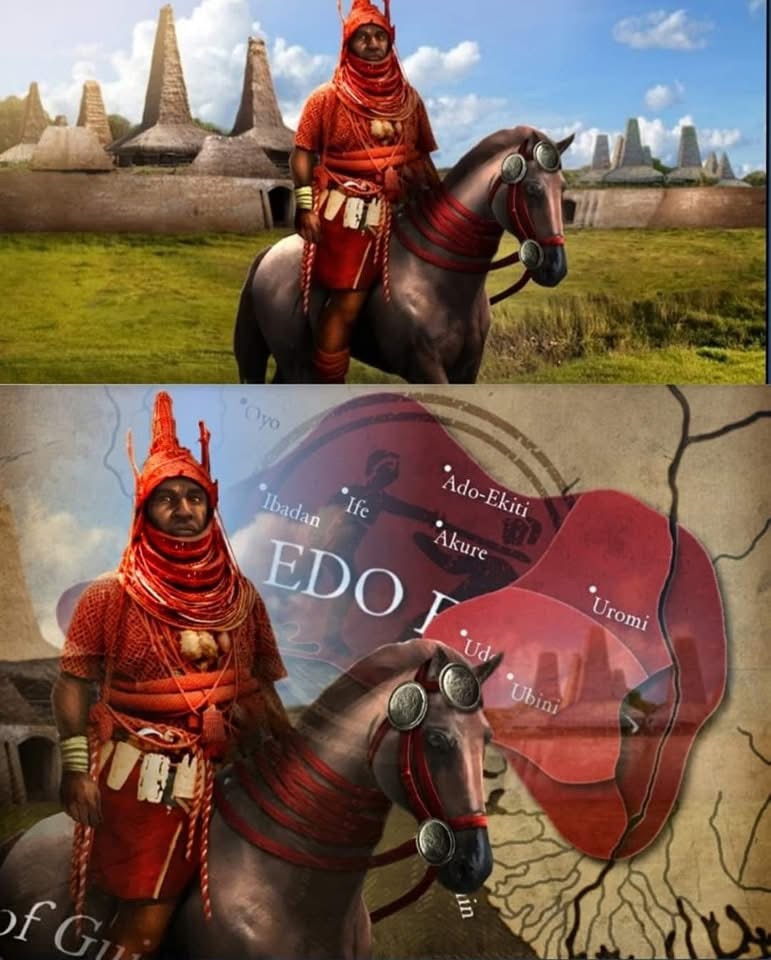
The Benin–Akure War of 1818 marked the final large-scale military expedition of the Benin armies. Fierce and unrelenting, the campaign was deliberately waged to send a clear message to the Yoruba principalities under Benin control: any form of defiance would be met with overwhelming force.
S.A Akintoye in 1969, described the war with a proverb saying, "An ordinary thorny shrub in Oliti forest tore an Edo man’s garment, and when news reached Benin, the authorities declared war", his remark was that the Benin used a minor provocation as an excuse to unleash a massive military aggression on Akure. Two edo people were killed in Akure in return, the Benin military burnt down a kingdom as the consequences for the deji's action.
The war was fought after a long Civil War in Benin Kingdom and the empire need to flaunt it military might, make tributaries acknowledge it military might and also two edo Indigenes died by order of deji arakale and took the ikele beads of the Benin Chief he killed to himself.
The Ezomo and the Ologbosere led the Benin military expedition to Akure, advancing through the Obadan route - a longer but more strategic path instead of the shorter Ovia route, which would have required crossing the Ovia River. This decision was reportedly made to prevent moisture from compromising their gunpowder, as firearms and cannons played a significant role in the campaign.
Following the conquest, captives, including princes of Akure, were taken to Benin City, where they were integrated into and educated within the Benin court system. Among them was Prince Osupa, who was groomed with the expectation that he would eventually restore and stabilize the kingship of Akure under Benin’s influence.
The Ezomo did not typically pursue campaigns of total annihilation against rival kingdoms. Instead, after military conquest, portions of the local population were deliberately left behind to rebuild their towns under Benin’s authority, functioning as tributary fiefs. This approach ensured both continuity of settlement and sustained political control. Following the war, the surviving inhabitants of Akure began rebuilding their city. Around 1832 more than fifteen years after the Benin conquest, a man named Osuwan (Osuan) was installed as the Deji of Akure.
In 1834, two years after the coronation of Osuwan, Prince Osupa, who had been groomed in Benin City, was sent to Akure to assume the position of Deji. However, Osuwan resisted his installation, reportedly rejecting Osupa as a proxy of Benin authority.
Fearing the possibility of another devastating war, the people of Akure ultimately turned against Osuwan and executed him, thereby paving the way for Osupa’s installation as the new Deji under Benin’s influence.
Osupa ruled from 1834 to 1846 and is remembered by the people of Akure as Osupadolawa-“Osupa, the moon that rises from Benin kingdom” During his reign, the Benin-aligned quarter in Akure, known as Ado-Akure, flourished into a large and influential settlement, reflecting the consolidation of Benin’s political, military and cultural presence in the region.
The Ivbiyokuo- the footsoldiers were the lowest rank in the Benin military structure headed by platoon commanders.
The journey to becoming a recognized war leader or general in the Benin Kingdom began during an individual’s eghele stage. In Edo people tradition, the eghele represents the third tier in the age-grade system, typically comprising men between the ages of 31 and 50. At this stage, they are regarded as active citizen-warriors, fully committed to the service and defense of the Oba and the state.
At this stage, individuals who chose paths outside warfare, such as the artistic, trade, dance, or entertainment guilds, also began to develop mastery in their respective professions. However, in rural areas of the Benin Kingdom, the eghele were predominantly warriors. They functioned as organized village regiments and could be called upon at any time to serve in the kingdom’s military, reinforcing the defense and expansion of the state under the Oba.
The establishment of military camps in strategically important dukedoms and towns across the Benin Kingdom also played a crucial role in their formation. Places such as Uselu, Uzebu, Obadan, Okhokhuo, Ughoton, Igbanke, Isiemwenro, Ova, and Utekon, among others, hosted military camps where youths and foot soldiers underwent rigorous training, preparing them to become some of the most formidable warriors in the Bight of Benin. The Igun Ematon district is also important to the military camps because it was here the Benin weapons of war were made and tested.
It is also important to note that warriors of the Benin Kingdom were expected to uphold an uncompromising standard in warfare defeat, was rarely tolerated. In certain instances, the loss of a battle could attract severe consequences, ranging from punishment of the infantry involved to, more commonly, the execution of their commanders. This strict code of accountability instilled discipline and a profound sense of duty, compelling soldiers to take their training and responsibilities with utmost seriousness.
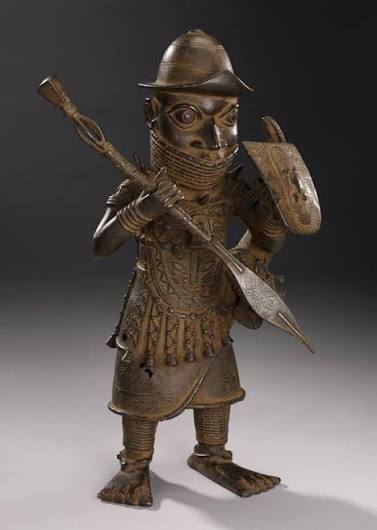
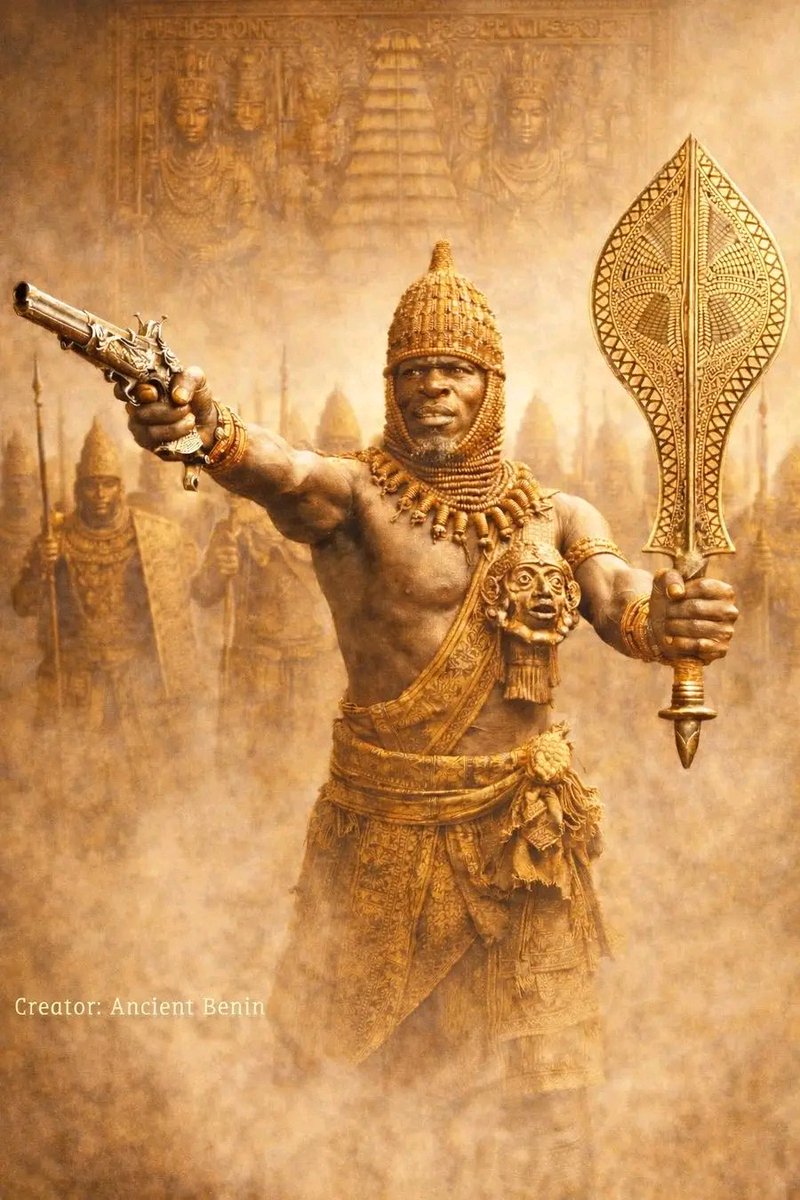
During their training in the camp, they are trained on how to use traditional weapons like Asoro (spear), Uhanbo (bow), Agbada (sword), and after the 16th century the training on the use of firearms, cross bows were introduced to the camps and the warriors after the Benin diplomatic ties with the portuguese.
The edo system of mass mobilization of soldiers was duly noted by visiting Dutch and the French captain Landolphe, how the Oba could mobilize 20,000 soldiers in a day and 80,000 to 180,000 if possible.
The footsoldiers are also taught how to use the Asa - shield as a defensive gear, which was made from hide, wood to cover them to the kneel to protect themselves from enemies attack, while the commanders, warlords and senior officers body armor made of quilted ponchos covered with leopard skins, which were thick enough to resist spears and arrows.
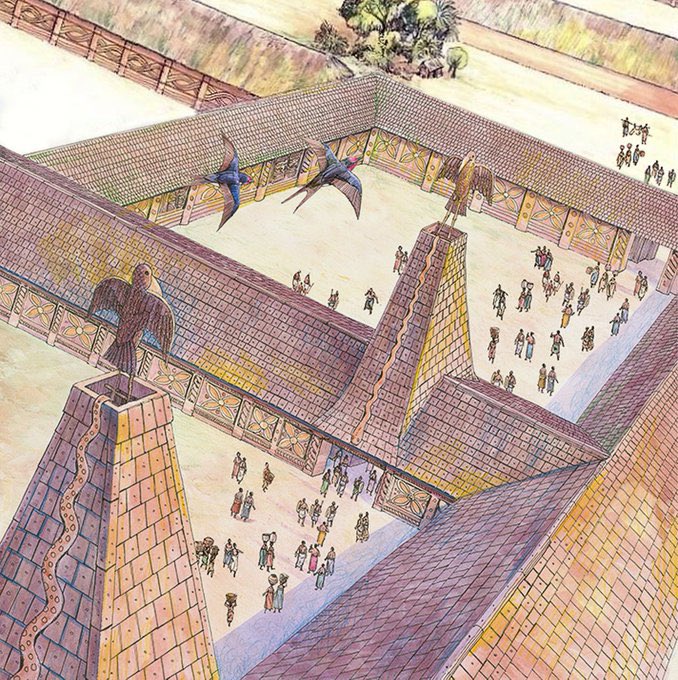
The aesthetics of the royal court supercedes the colors and fabrics but the sacredness and the history behind each and every ornaments and attire worn in the court. Which doesn't only make the Benin Chief attirely unique but also a sacred representative of the Ọba "King."
The year was ca.1515, and the tension between the empire of Benin and the powerful kingdom of igala led by the invincible attah "King" was in it peak.
The Benin–Igala War was one of the few conflicts in which the Benin War Council and its generals were completely mobilized. Unlike the usual military strategy where a single commander or a few generals would lead the Benin army into battle, this war required the direct participation of nearly the entire military leadership. Commanders, generals, warlords, and lieutenants all took to the battlefield. Warriors and war leaders from Benin’s vassal kingdoms were also summoned to join the campaign.
See, the attah of Igala and the Igala country was one of the few kingdoms ancient Benin feared their military might and was the powerful kingdom in the Niger area since the 14th century. Also, the Igala's had previously led a raid into the kingdom of Benin around ca.1504, the raid was only thwarted in Ikpoba axis, just a few kilometers from the capital city.
Though a peace treaty was signed by both sides after the raid, relations between them remained tense, as each side remained cautious of the other, knowing that the alliance rested on fragile grounds. This uneasy peace was eventually exploited by Chief Oliha, one of the Uzama chiefs of the Benin Kingdom, who had fallen out of favor with the Oba. In his quest to “teach” the Oba a harsh lesson, he journeyed to Idah, the capital of the Igala people. There he warned the Attah that Oba Esigie was preparing a campaign to conquer Igala territory, urging him to act swiftly or risk being humiliated by Esigie’s army.
News of war was sent from Idah to Oba Esigie, making it clear that the conflict which had been brewing for more than a century could no longer be avoided. In response, the Oba prepared his forces and deployed the full military strength of the Benin Kingdom. Kings, warlords, and generals from across the empire joined the campaign. The Queen Mother, Queen Idia, also led her own contingent of infantry into the war. Portuguese mercenaries, under the supervision of Duarte Pacheco Pereira, were likewise recruited to support the Benin forces.
The use of foreign imported ammunitions, the organized archers using the compact bow, longbow, cross bow, and the trained footsoldiers gave the Benin military edge in numbers and in amory. On their way to war, the Ahanmwẹn-Oro, the sacred African ibis, was seen making a loud cry of “Oyao.” In Edo people tradition, when the Ahanmwẹn-Oro cries “Oyao,” it is believed to be an omen that doom awaits. The bird is, therefore, regarded as a prophetic messenger in the traditions of the Benin Kingdom.
When the chiefs saw the omen, they wanted to return to Benin, believing it was a clear sign that they would be defeated. However, Queen Idia strongly objected, declaring that she would proceed to Idah even if none of the men were willing to continue the campaign. At that moment, Oba Esigie quickly ordered that the ominous bird be shot down, declaring that anyone who wished to succeed in life must not listen to the cry of doom.
According to a letter written by Duarte Pacheco Pereira to Manuel I of Portugal, the war lasted for about two years, after which the Benin Kingdom emerged victorious and gained greater influence over the politics and trade along the Niger River. Following the victory, the town of Agenebode was established on the orders of Oba Esigie to monitor the activities of the Igala people and serve as a strategic outpost in case of any future invasion toward Benin.
To commemorate his triumph over the Igala, Oba Esigie also instituted the Ugioro Festival, a celebration marking the kingdom’s victory and military prowess.
The year is 2043.
Mike sits in his living room, watching the presidential debate on his solar-powered TV because NEPA/PHCN still hasn’t figured it out.
Candidate A grabs the mic:
“If elected, I will solve the power problem once and for all!”
The crowd erupts.
Mike’s 80-year-old father laughs from his rocking chair.
“I heard that same speech in 1999. And my father heard it in 1979.”
Candidate B steps up:
“Security and stable electricity will be my number one priority!”
More applause.
Mike’s daughter, only 10, turns to him and asks:
“Daddy, have we never had light before?”
He looks at her. Then at his father. Three generations in one room. Same Nigeria. Same promises. Same darkness.
“No, my dear,” his father answers. “Not since independence in 1960.”
79 years.
Different candidates. Different parties. Different slogans.
Same script.
Mike picks up the remote and turns off the TV.
At least the solar panel works.
About the year 1818 war broke out between
Benin and Akure following the murder of the Osague, who had been sent to Akure as an ambassador by Omo N’Oba N’Edo Osemwende (r. 1816–1848 A.D.), to announce his accession to the throne. The Osague carried white chalk, the traditional symbol of goodwill and joyful tidings. However, when Arakale, the Udezi (Deji) of Akure, saw the Osague adorned with coral beads and fine jewelry, he became consumed by jealousy.
Acting on the Udezi’s orders, the Osague’s wife was deliberately provoked into a quarrel over a trivial amount of snuff, worth no more than a single cowrie. When the Osague intervened to save her from harm, he was murdered. His property was immediately seized.
Upon receiving news of the k!ll!ng, the Oba ordered a punitive expedition against Akure. The force was led by the Ologbosere and the Imaran, with the Ezomo Erebo serving as generalissimo. The Ezomo advanced through Okearo, the Ologbosere through Okelisa, and the Imaran through Isikan and Isinkin. At Oke-Elegbin, about a mile from Akure, Omonoyan fired a cannon that destroyed the Udezi’s residence, after which the town was taken by assault. The Ologbosere captured the Usolo quarter of the town.
Arakale fled Akure and sought refuge first with the Ewi of Ado, who refused to assist him for fear of Benin retaliation. He then fled through Uju to Uhen (Ise). Concerned for the safety of his own town, the Arinjale of Uhen surrendered Arakale to the Ezomo. After trial, Arakale was executed, and his head was sent to the Oba in Benin City.
During the campaign, the Imaran narrowly escaped death when he was almost captured by the Isikan people. As they prepared to kill him, he drew a pistol and shot them, securing his escape.
On the return journey to Benin, tragedy struck the victorious commanders. The Ezomo died of smallpox and was buried near Akure by the Imaran and his servant, Ezabayo. The Ologbosere, returning by a different route, also died and was buried by his men at Okemue. The Oba mourned the deaths of these two chiefs more deeply than he rejoiced over the victory itself.
In recognition of the Enogie of Uromi for sending troops to assist in the war, the Oba granted him a special privilege, the right to inherit the property of any person in Uromi town or district who died without children.
Following the conquest of Akure, Benin commanders Imadiyi and Oyodo pushed the campaign deeper into Ekiti territory, conquering numerous towns and villages. The princes of Ekiti were compelled to pay annual tribute to the Oba of Benin and to acknowledge him as their overlord. For several years, Otun served as the base of Benin operations.
Later, the Ore of Otun appealed to Oyodo for assistance against their enemies, the Araye. After a series of battles, Oyodo’s troops, exhausted and dissatisfied by his harsh leadership and stinginess, deserted him. He was captured by the Araye and beheaded. When Imadiyi learned of this, he resumed command of the campaign, defeated the Araye near Otun, and forced them to sue for peace. He was richly rewarded by the Ore of Otun but died of fever at Ijero while returning to Benin.
Although the Ekiti towns remained subject to Benin for some time, their allegiance later weakened. Oba Osemwende dispatched troops under Omemu to enforce renewed submission. Omemu summoned the leading Ekiti chiefs to Igbara-Oke, where they resisted. After a sharp battle, they were defeated, and from that point onward their allegiance and tribute to Benin were maintained until the British occupation of 1897.
A few years after Akure’s conquest, the Oba installed Aderoro as the new Deji (Udezi) of Akure to safeguard Benin interests in Ekiti. Aderoro was the rightful heir and took the title Osupa (Osupa lati Ado wa). A rival claimant, Orhuon “Orhuokedo”, who had unlawfully assumed power in Akure, committed suicide upon hearing of Osupa’s imminent arrival with Benin messengers.
Source: ANCIENT BENIN
HERES HOW TO START:
• open canva
• search ebook templates
• click on customize
• edit the template
• download as pdf
• search https://t.co/9gYhfQPKEo
• open an account
• click digital products
• upload
• then publish
• Add the link in your bio
• create content
• sell it 100x at N15k
• that’s 1.5M monthly
• if you create two products
• that’s 3M monthly
• then quit your 9-5 :)
Crown prince Aiguobasimwin Ovonranmwen "Oba Ẹweka ll" flanked by two of his wives.
Prince Aiguobasimwin was the eldest son of oba Ovoranmen. He was born at igun Eronmwon Street in Benin City and was sent to Ekho village in his twenties for his princely tutorlage.
During the 1897 invasion, he was sent to urhonigbe where he lived till he was forcefully taken to Benin in 1899, on his way to calabar to see his father. the British got some misinformation during that period, that he planned on attacking the city, on his father's behalf, which led them to urhonigbe and take him against his will back to Benin.
On September 1906, he led The Benin scare a movement/Revolt against the British for the return of Oba Ovonranmwen back to Benin and the demotion of Agho Obaseki.
He took the title Ẹweka as a note of a new beginning for the monarchy pre imperial age.
📸: A. Dann Willesden
Circa__1906
The initiation of HRM Oba Ewuare ll N’Ogidigan, Oba of Benin Kingdom, into the Iwebo palace society, in 2015. At the end of the initiation and installation as edaiken of Benin, The Eribo of Benin Kingdom formerly announced that all the towns and villages in benin under the Edaiken jurisdiction should now pay homage to the oba through the edaiken (Officially opening the court of the Edaiken).
Just like the british monarchy where the crown prince must be installed as the Duke of Wales before his coronation as king. The Edaiken while at uselu perform the duty of a lord, and all royal assets and sites in uselu and some other villages in ovia district "Ugbowo, Isihor, Ekiadolor to name a few" are strictly under his control.
In uselu, he has his iyase "Prime minister" and chiefs, the popular Nigeria politician late Okotie-Eboh was during his era the Elaba of uselu. In uselu, the crown prince assisted with his courtiers is being taught the rudiment of the Benin Monarchy, preparing him for a greater role ahead.
The palace of the Ọba of Benin, traditional Acrobats, possibly from the Amufi guilds, forming a human pillar outside the royal palace.
The Amufi are part of the guild of entertainers, which is centered on acrobatic dance and is also responsible for eagle hunting for the royal palace.
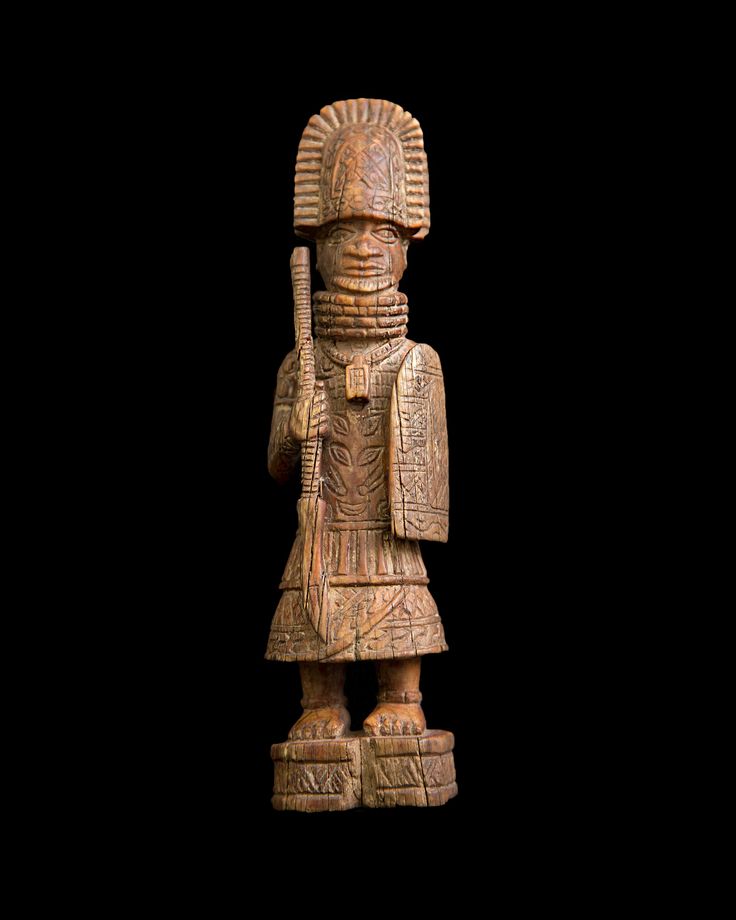
Benin Ivory Warriors
Crafted for the Oba, these ivory masterpieces weren’t just art. They are seen as time capsule in our present generation of the edo society in the past.
The last two ivory depicts the iyase the generalissimo of the edo army.
Akpanigiakon’s history is a fascinating one.
Oba Oguola will always be remembered as one of the greatest monarchs ever to sit on the Benin throne, reigning from 1280 to 1295 AD.
𝐓𝐇𝐄 𝐍𝐈𝐍𝐄 𝐀𝐍𝐂𝐈𝐄𝐍𝐓 𝐁𝐄𝐍𝐈𝐍 𝐆𝐀𝐓𝐄𝐒
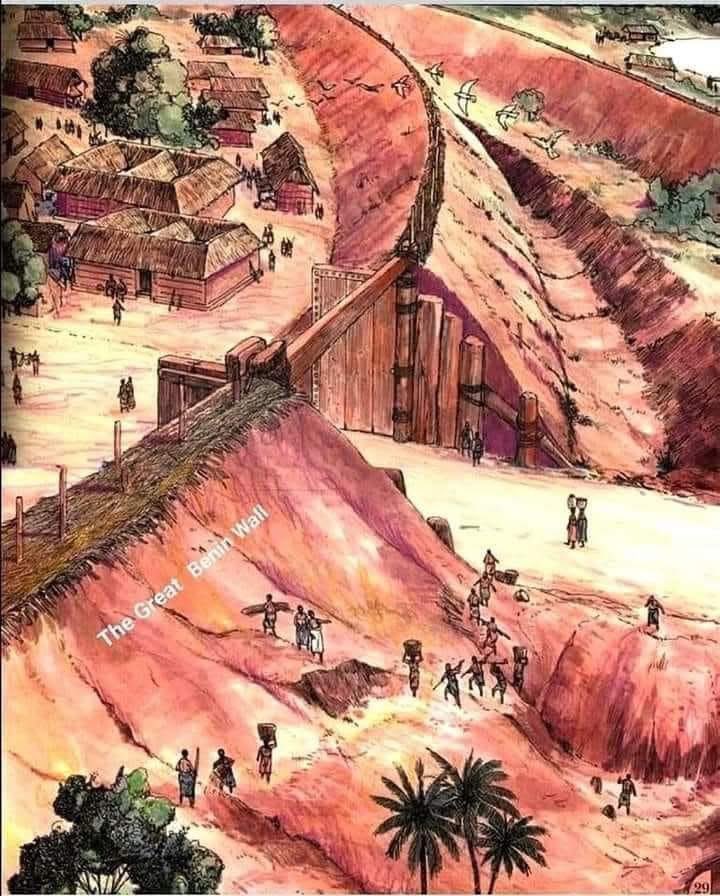
Benin Kingdom being one of Africa most advanced ancient civilizations, made series of defensive and offensive mechanism to help protect the legacy of the Empire. The creation of the Nine Gate was one of the defensive decision made by past Oba’s to protect the capital sanctity.
A 🧵 on the Nine Gate of Benin Kingdom.
@zaddyofbenin@asemota Great idea! But fighting tools shouldn’t be the Ada or Ẹbẹn.
Ẹdo fighting tools are Umozo (a heavy sword shaped like Ada), Idẹnghẹn (stylish sword), Agbada (short concealable sword, like a dagger), Asoro (long spear), Uhan (short spear or arrow), Uhan Obọ (bow & arrow).🦇
REINCARNATION IN EDO COSMOLOGY
In edo cosmology, reincarnation represents the eternal circle of birth, death, and rebirth - reincarnation. The edo people believe every individual undergoes the process of birth and rebirth "reincarnation" fourteen times after his initial uhimwen a ceremony where he tells God in heaven all his plans here on earth.
He is, however, given fourteen lifetimes to complete all that was said in heaven. The edos believe reincarnation is a fixed immutable law of cosmic order. It is believed that both the human and his guardian angel "Ẹhi" both reincarnate fourteen times - The human reincarnate here on earth while the guardian angel in heaven. God grants every soul these fourteen lifetimes to achieve balance and harmony on earth. Upon completing the final cycle, the soul journeys to its eternal destination, either Eguasa (Heaven) or the Abode of Ogiuwu, the God of Death.
LEVELS OF REINCARNATION
Reincarnation in edo is divided into three parts - Igbakhuan, Emwanagbon, and Okpomwan.
•• Igbakhuan: Equivalent to Abiku or Ogbanje in other cultures, these are beings with short life spans. This first stage of reincarnation is associated with souls destined for repeated early deaths. Among the Edo, such lives are often seen as a divine punishment or curse, as it defies the natural order where children are expected to bury their parents, not the reverse.
•Emwanagbon: The second level of reincarnation, this are people who live a normal life here on earth. These are the ones who live long enough to fulfill their destinies and bury their parents in Old age, therefore participate in ancestral reverence.
•Okpomwan: The third and highest level in the edo reincarnation chain, few people have been able to attain this level - mostly kings, heroes who perform great deeds and were venerated as deities by the nation. It is regarded as the superhuman level.
SPIRITUAL LEVEL OF LIFE
Reincarnation is central to the edo understanding of existence during the uhimwen ceremony in heaven. Throughout one’s earthly journey, the Iha (divination) is often consulted to reveal hidden enemies, uncover causes of misfortune, and provide guidance on how to avert spiritual or physical downfall.
Thus, reincarnation in Edo cosmology is not merely a return to life but a sacred continuum of divine purpose — a journey toward spiritual completion across fourteen lifetimes.









![Edocentric_'s tweet photo. 𝐍𝐀𝐌𝐄𝐒 𝐀𝐍𝐃 𝐌𝐄𝐀𝐍𝐈𝐍𝐆 𝐎𝐅 𝐒𝐎𝐌𝐄 𝐏𝐀𝐒𝐓 Ọ𝐁𝐀 𝐎𝐅 𝐁𝐄𝐍𝐈𝐍
Ẹ𝗪Ẹ𝗞𝗔 [1180–1246]
~ My Lineage will never come to an
end
ẸWẸKA Derived from three Edo words “Ẹ𝙬𝙖𝙚 𝙜𝙝𝙞 𝙆𝙖” - “My Lineage won’t dry”
Ẹwae ~ according to Aghayesi & Melzian dictionary on Edo language
Ẹwae is an old Ẹdo word for ~ Lineage & Kingdom
One of the reasons why he was given the name as a result that the Owodo lineage won’t come to an End
ẸWẸKA ll also took this name after the empire came to an end and the kingdom itself was threatened fulfill the other part of the word that ~ His Kingdom {Benin kingdom} won’t come to an end.
𝗨𝗪𝗔𝗞𝗛𝗨𝗔𝗛𝗘𝗡 [1246–1250]
~ Gifted with Success or prosperity
Ẹ𝗪𝗘𝗗𝗢 [1260–1274]
~ My Lineage/ Kingdom will flourish
Ẹwae ~ Lineage
Do ~ Flourish
Ẹ𝗗𝗢𝗡𝗜 [1287–1292]
~ One who Supports Progress
𝗨𝗗𝗔𝗚𝗕𝗘𝗗𝗢 [1292–1329]
~ Nothing can hinder my progress
𝗢𝗛𝗘𝗡 [1329–1366]
~ A king in a priestly order
𝗘𝗚𝗕𝗘𝗞𝗔 [1366–1397]
~ One with fierce temper
𝗨𝗪𝗔𝗙𝗜𝗢𝗞𝗨𝗡 [1434–1440]
~ No matter how Prosperous you become, your Riches can never divide the sea
Ẹ𝗪𝗨𝗔𝗥𝗘 [1440–1473]
~ It’s Cool, Trouble have ceased
Derived: Ọworae
Ọ𝗭𝗢𝗟𝗨𝗔 {Ọ𝗭𝗢𝗟𝗨𝗪𝗔} [1480–1504]
~ To grow in the path of prosperity
𝗘𝗦𝗜𝗚𝗜𝗘 [1504–1547]
~ Do not challenge my divine right to rule
Ọ𝗥𝗢𝗚𝗕𝗨𝗔 [1547–1580]
~ One whose prophecy about come to light
𝗘𝗛Ẹ𝗡𝗚𝗕𝗨𝗗𝗔 [1580–1602]
~ Knowledge Establish [build] success
𝙊𝙍𝙀 - Ọ𝙂𝙃𝙀𝙉𝙀 [1689–1701]
~ God Owns this City/Kingdom
𝗔𝗞𝗘𝗡𝗭𝗨𝗔 [1713–1740]
~ You play a fool to make it in life
Derived: 𝙏𝙖 𝙆𝙤𝙣 𝙕𝙪𝙬𝙖 ~ to recount his ordeal at the hand of his brother Oba Ozuere
Ọ𝗕𝗔𝗡𝗢𝗦𝗔 [1804–1816]
~ A king who is god/ A godlike king
𝗢𝗚𝗕𝗘𝗕Ọ [1816]
~ One who was helped by the home
Ọ𝙎𝙀𝙈𝙒Ẹ𝙉𝘿𝙀 [1816–1848]
~ My time to rule has arrived
𝗔𝗗Ọ𝗟Ọ [1848–1888]
~ One with the mandate to make things right
𝗢𝗩𝗢𝗥𝗔𝗡𝗠𝗘𝗡 𝗡'𝗚𝗕𝗔𝗜𝗦𝗜 [1888–1914]
~ The morning sun, that emerges from the Water, that covers every and touches everything
Derived: 𝗢𝘃𝗲𝗻 𝗡ọ 𝗥𝗮 𝗠ẹ 𝗡ọ 𝗴𝗯𝗮 𝗲𝘆𝗵𝗮 {𝗶𝘀𝗶}
𝗘𝗥𝗘𝗗𝗜𝗔𝗨𝗪𝗔 [1979–2016]
~ I came to settle my Subjects
Derived:𝗜𝗥𝗘𝗗𝗜𝗔𝗨𝗪𝗔
Like & Retweet To Educate Someone](https://pbs.twimg.com/media/Ga0P1INaIAAAVLO.jpg)