Spiderman Brand New Day IS NOT the street level movie I was hoping for. Instead, it's just another MCU next phase world building movie with too many characters. Not a singular vision, personal movie I was expecting. Also un does the last movie plot. Ugh.
Hrithik Roshan’s Krrish 4 transformation is about to be NEXT LEVEL! 💥
He’s packing on more muscles.. HUGE, BULKY, ICONIC V-SHAPE.. The ultimate superhero physique is on the way.
Get ready to witness LEGENDARY dedication! 💪
#Krrish4#HrithikRoshan
Warner Bros lost $50 million on Tenet. Then they made a decision that has sent $1.2 billion to their rival Universal so far.
Tenet came out in September 2020, mid-pandemic. It made $365M on a $200M budget. Not enough.
Warner Bros panicked. Three months later they announced every 2021 movie would go straight to HBO Max the same day it hit theaters. They didn't warn a single director.
Christopher Nolan had made them The Dark Knight, Inception, and Interstellar over 20 years. He said filmmakers went to bed working for the greatest studio and woke up working for "the worst streaming service."
Then he took his next movie shopping. His asking price was simple. Pay for the film, promise it plays in theaters only, and give me 20% of every ticket.
Universal said yes. That movie was Oppenheimer. $976 million. Best Picture.
Warner Bros begged him to come back. He said no. His new film The Odyssey just opened to $264 million, the biggest debut of his career.
The cheapest thing Warner Bros ever lost was $50 million.
It takes a special kind of "creativity" to miscast the principal characters of the Ramayana so completely. One wonders whether the filmmakers ever opened the Vālmīki Rāmāyaṇa before deciding how Rāma and Sītā should look.
Vālmīki doesn't leave their appearance to imagination. From head to toe, he describes them in remarkable detail, in perfect harmony with Samudrika Lakshana. Yet we are served a Sītā who bears little resemblance to that description. There is no mention of a nose ring in the Vālmīki Rāmāyaṇa. Sītā did not wear a modern blouse but a different style of upper garment. She is described as radiant, graceful, healthy, and possessing exquisitely proportioned features, including a sharp, beautiful nose—not someone who looks more like a palace maid than the princess of Mithilā.
Ironically, more effort seems to have gone into ignoring the original text than into faithfully representing it.
For readers who want to know how Vālmīki actually described Rāma, Sītā, and other characters—not how modern filmmakers imagine them—I have documented these descriptions in detail, with textual references, in my book Ramayana 5114 BCE: Decoding the Date and Myths. Sometimes, the original is far more compelling than cinematic "creativity."
https://t.co/DYWWqxsYLK
WB really let Christopher Nolan walk away.
Since leaving, he delivered the Oscar-winning Oppenheimer with over $900 million at the box office, and now The Odyssey is breaking records everywhere.
Meanwhile, WB bet on James Gunn, and the DC brand remains as divisive as ever.
Si una de las mejores series de TV de todos los tiempos, «Arcane», hizo referencia en varias ocasiones a «Batman v Superman», significa que el trabajo liderado por Zack Snyders fue mucho más que una simple película de superhéroes.
The destruction of antiquities, art, and cultural heritage throughout the Middle East is devastating. A deliberate effort to erase thousands of years of history that existed before Islam.
No history, no civilization, no memory, no future.
There is a big difference between Indian Muslims and Indonesian Muslims.
Indonesia is 90% Muslim country, yet its people proudly acknowledge their Hindu ancestors. Many carry Sanskrit names, and epics like the Ramayana and Mahabharata are taught in their schools. They identify themselves as Indonesians first, and Muslims second.
Indian Muslims, on the other hand, tend to resonate more strongly with Arab identity. They often prefer Arabic names and identify as Muslims first, and Indians later.
I believe Indian Muslims should learn from their Indonesian counterparts and reconnect with their Indian-Hindu civilizational roots rather than prioritizing Arab influences.
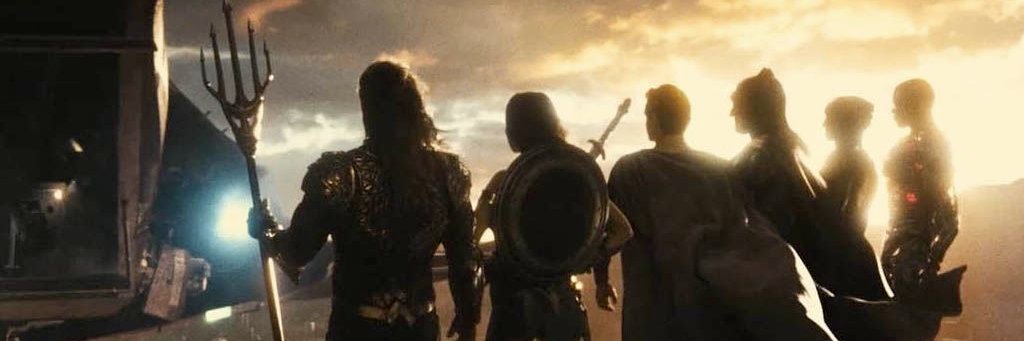
For those who keep asking how Darkseid lost the location of Earth, Chris Terio said we would have seen this in JL2 and would have explained it's down to Apokoliptian betrayal and palace intrigue.
Mesopotamia was never the cradle of civilisation. India was.
I spent forty years in international shipping, not academia. When I began researching the history of maritime trade, I had no orthodoxy to defend. I followed the evidence, and it kept arriving in the same place: the Indian subcontinent.
Nineteenth century archaeologists dug in Mesopotamia because the climate preserved artefacts, the biblical sources pointed them there, and the Ottomans allowed the excavations. That is the entire basis for the myth of Mesopotamia as "the cradle of civilisation."
Nobody applied the same rigour to India. Mohenjo-daro was not discovered until 1922. By then the narrative had already hardened.
What was actually there was the largest civilisation of the ancient world. Three hundred cities. Fifty thousand people in each, by 2600 BC. Two thirds of them stood on the banks of the Sarasvati, the central and greatest of the seven rivers described in the Rig Veda, flowing down from the Himalayas before the river vanished entirely by 1900 BC. The Vedic kings claimed territory stretching "sea to sea," from Afghanistan to Maharashtra, some 1.5 million square miles, against Egypt's 13,000. A dock at Lothal built to handle thirty ships of sixty tons, unmatched in Europe for four thousand years. When it was first excavated, it was recorded as a bathing pool.
When the scale became impossible to dismiss, the theory was not corrected. It was replaced with a story of pale-skinned nomads from the steppe who supposedly arrived around 1500 BC and brought civilisation with them. There is no evidence. The chronology doesn't work. The Vedas describe no invasion.
In 2019 a Harvard-led genetic study revived the claim, and the press reported it as confirmation. It was not. The same study found the builders of these cities were indigenous. The Sarasvati river that the Rig Veda described had already dried up before these newcomers arrived. What the study also found is that a small group of men, arriving after the Sarasvati had already dried up, interbred with the existing population and left a genetic signature. That is all.
So, where they chose to dig was mostly an accident of climate and access. The Aryan invasion theory was constructed because an Indian civilisation that owed nothing to Caucasians was a fact the late nineteenth century could not accommodate.
Link to full Substack essay with sources in the comments below.