We primarily focus on leading US technology stocks, blue-chip consumer stocks, and cryptocurrencies, sharing pre-market news and intraday stock picks daily.📈
Cocoa prices plummeted to 7-week lows today on the outlook for ample near-term supplies. Cocoa prices have been under pressure over the past two weeks on signs of higher cocoa output in the Ivory Coast. The Ivory Coast cocoa regulator, Le Conseil du Café Cacao, reported on September 2 that Ivory Coast harvested 2.06 MMT of cocoa from June 2025 to June 2026, up +30% from 1.58 MMT a year earlier.
Earlier this summer, I thought the memory trade had run its course. The stocks had gone vertical, the July chip selloff pushed Micron, Samsung and SK Hynix into bear-market territory, and it looked like the easy money was gone.
I've changed my mind. Not only because the stocks bounced, but because the numbers underneath them keep getting stronger. When you put this shortage in context, it isn't a normal memory cycle. It's one of the biggest supply squeezes the chip industry has seen, and reviewing the setup can help elucidate why it may be a prolonged cycle.
The BOJ raised its policy rate by 25 basis points to 1.25%, its highest since 1995, just three months after its previous hike.
Despite the faster pace, the yen weakened, the 10-year Japanese government bond yield slipped and the Nikkei 225 gained.
Analysts pointed to two dissenting votes and the absence of updated economic forecasts. Another hike could come around December, but experts disagree over where rates will ultimately peak.
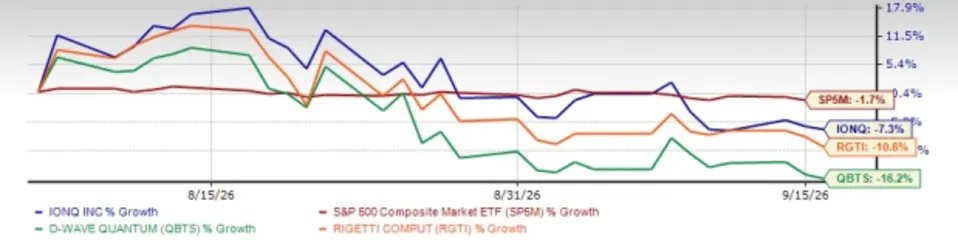
As the third quarter of 2026 nears its end, the selloff in pure-play quantum computing stocks is increasingly looking like a valuation and commercialization reset. Since reporting second-quarter results, IonQ IONQ shares have declined 7.3%. The company's direct peers Rigetti Computing RGTI and D-Wave Quantum QBTS have lost 10.6% and 16.2%, respectively.
The weakness is notable because the period has brought a steady stream of positive developments, including IonQ's SkyWater integration, its new Superion 256 platform and expanded commercial agreements.
The Fed lifted its benchmark rate by 25 basis points Wednesday to 3.75%-4.00%, a move markets had overwhelmingly expected.
The bigger message arrived alongside it: policymakers aren't treating this as a quick adjustment before returning to lower rates. They think borrowing costs may need to stay higher for longer.
Sixteen of 18 policymakers expect at least one more hike before the end of 2026, while the median projection puts the federal funds rate at 4.1% at the end of both 2026 and 2027. In other words, the Fed's current base case contains no rate cuts next year.
Higher for longer is so back.
The Bank of England left its 3.75% Bank Rate unchanged on Thursday, despite rising inflation.
UK CPI inflation rose to 3.1% in August, with motor fuel costs a major contributor.
"The longer this volatility persists, the bigger the impact it will have," Governor Andrew Bailey warned.
Traders on prediction market platform Kalshi now see about a 66% chance that the S&P 500 hits 8,000 in 2026.
Those high odds come after the broad index surged more than 5% over just four sessions as the AI trade reignited after a slump in late June and July.
Shares of J.B. Hunt plunged more than 10% Wednesday after the company warned of an earnings drop of between 5% and 10%.
CFO Brad Delco said the company has also seen “some of the most radical and abnormal swings” it has ever experienced in fuel prices over recent months.