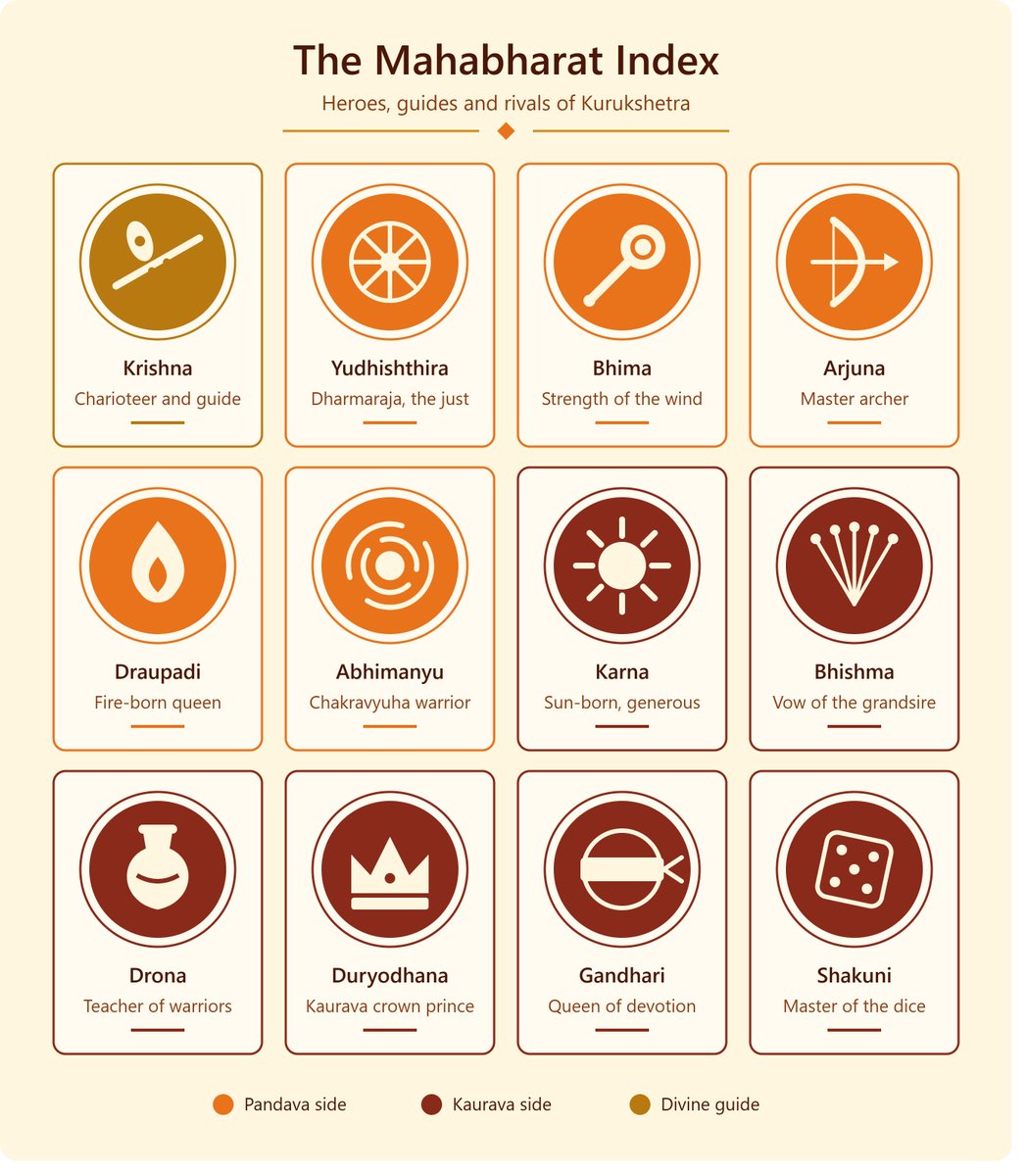
The Mahabharat isn’t just a war story—it’s a universe of humans, Gods, sages, and kings, each with their own dharma, desire, and destiny.
In our new series we’re exploring all major and some less explored characters of the Mahabharata -one post at a time.
From Abhimanyu to Yudhishthira, from Karna to Krishna, we’ll unpack who they were, what they stood for, and why they still matter.
Travel through the epic, letter by letter.
She asked Him to open His mouth
expecting mud, perhaps a child’s mischief.
Instead, Yashoda saw galaxies turning,
oceans remembering their shores,
time folding into light,
and herself, holding the One who holds everything.
The Infinite became small enough to be scolded.
#Krishna #Bhagavatam #Vrindavan #SanatanDharma
“Show me who You are,” Arjuna said.
And the chariot grew silent.
The sky opened into countless faces,
stars became eyes,
ages became breath,
and every warrior on the field
was already moving through Him.
Arjuna saw not a god among men
but the whole of existence, wearing a crown #Krishna
@Borderless_exp Check out my page I break down the characters of the Mahabharata . But first, summerize the whole story, get an idea and then dive in start to finish
“Show me who You are,” Arjuna said.
And the chariot grew silent.
The sky opened into countless faces,
stars became eyes,
ages became breath,
and every warrior on the field
was already moving through Him.
Arjuna saw not a god among men
but the whole of existence, wearing a crown #Krishna
“Show me who You are,” Arjuna said.
And the chariot grew silent.
The sky opened into countless faces,
stars became eyes,
ages became breath,
and every warrior on the field
was already moving through Him.
Arjuna saw not a god among men
but the whole of existence, wearing a crown #Krishna
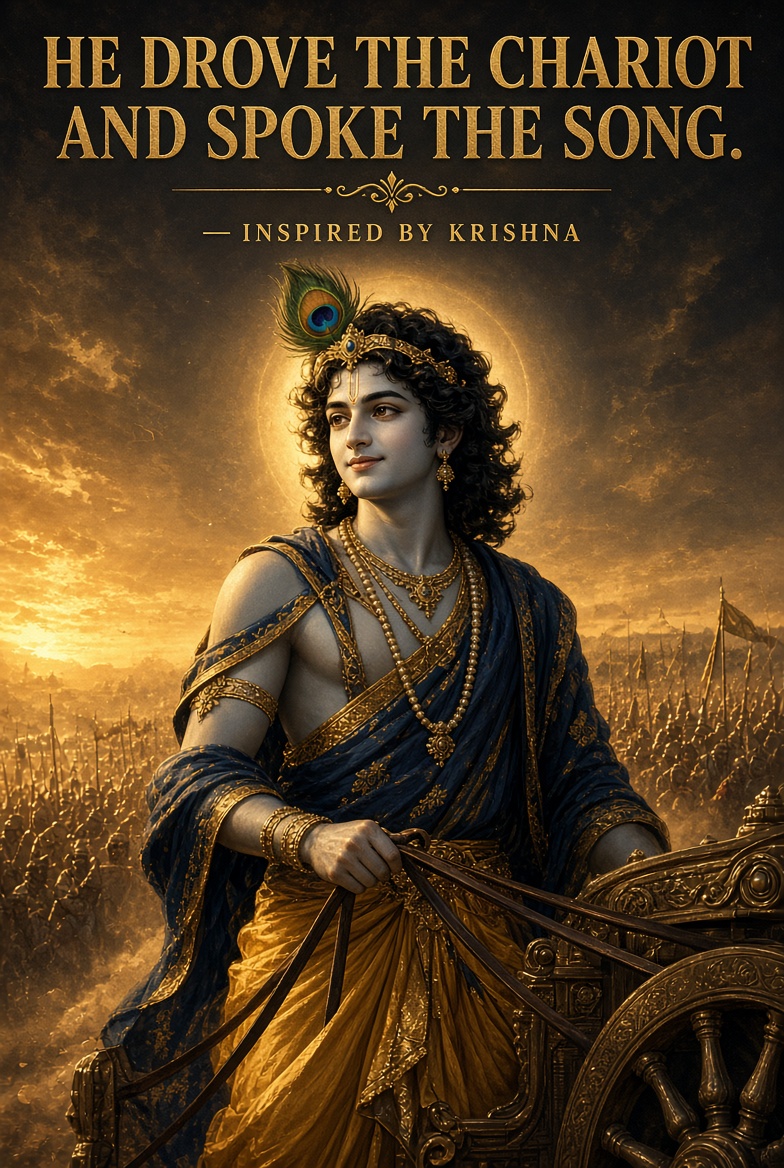
Krishna
The god who chose to be a charioteer, and the voice that turned doubt into dharma
Some heroes in the Mahabharata wield weapons.
Some wield kingdoms.
Krishna wields something far greater: the power to change hearts without raising a hand.
Born in a prison, raised in a village of cowherds, and destined to become the most influential figure of his age, Krishna’s life defies every convention. He is a prince of the Yadavas, yet he grows up among simple folk in Gokul and Vrindavan. He is a warrior of immense skill, yet he chooses not to fight in the Kurukshetra war. He is a god in human form, yet he lives, loves, and suffers as a man.
When the Pandavas are exiled and the war becomes inevitable, Krishna plays the role of diplomat. He travels to Hastinapura as a peace envoy, offering Duryodhana a compromise: give the Pandavas just five villages, and war can be avoided. Duryodhana refuses, famously declaring he will not give even land the size of a needle’s tip. Krishna returns with the knowledge that war is now unavoidable.
On the eve of battle, Krishna offers both sides a choice: he will not fight, but they may have either his army or himself. Duryodhana, ever the strategist, chooses the army. Arjuna chooses Krishna—and in doing so, chooses the path of dharma.
Krishna becomes Arjuna’s charioteer, a role that seems humble for a king and a god. But it is in this role that he delivers the epic’s most sacred teaching: the Bhagavad Gita.
As the two armies face each other, Arjuna sees his elders, his teachers, his cousins on the other side. Overwhelmed by grief and moral confusion, he drops his bow and refuses to fight. Krishna does not scold him. He does not command him. Instead, he speaks.
He explains the nature of the soul—eternal, unborn, indestructible.
He explains the nature of duty—how action must be performed without attachment to results.
He explains the nature of dharma—how righteousness is not always comfortable, but always necessary.
And finally, he reveals his true form: the cosmic, infinite Vishvarupa, in which all creation begins and ends.
Arjuna’s doubt dissolves. He picks up his bow. The war begins.
Throughout the eighteen days of battle, Krishna guides Arjuna not just as a charioteer, but as a strategist, a protector, and a moral compass. He steers the chariot away from danger, offers counsel in moments of doubt, and ensures that dharma prevails—even when it requires difficult choices. He does not fight, but his presence changes everything.
After the war, Krishna’s role does not end. He witnesses the grief, the guilt, and the slow unraveling of the Yadava clan. He sees the curse that will destroy his own people and the submersion of Dwarka into the sea. He accepts it all with the same calm he showed on the battlefield, knowing that even gods must yield to the flow of time.
Krishna’s story is a meditation on:
The nature of duty—how action must be performed without attachment to outcomes.
The role of the guide—not to fight your battles, but to help you see clearly.
The paradox of divinity—how the infinite can choose to be humble.
In the Mahabharata’s vast cast of kings, warriors, and sages, Krishna stands apart:
The god who chose to be a servant.
The teacher who spoke only when asked.
The friend who stood by dharma, even when it demanded everything.
#Mahabharata #Krishna #BhagavadGita #Arjuna
Kritavarma
The Yadava who chose the wrong side, and survived to see the cost
Some warriors in the Mahabharata are remembered for their valor.
Some for their wisdom.
Kritavarma is remembered for the choice he made—and for the silence that followed it.
A prince of the Bhoja clan and a close ally of Krishna, Kritavarma grows up in the vibrant, politically charged world of the Yadavas. He is a skilled warrior, a trusted commander, and a man of considerable influence within the Yadava court. Yet, when the Kurukshetra war approaches, he makes a decision that sets him apart from most of his kin: he joins the Kauravas.
The reasons are complex. Some say it is political—Kritavarma has ties to Duryodhana through marriage alliances and shared interests. Others say it is personal—rivalry, ambition, or a belief that the Kauravas will win. Whatever the cause, his choice places him in direct opposition to Krishna, his own kinsman, and to the Pandavas, whom Krishna supports.
On the battlefield, Kritavarma fights with distinction. He commands a portion of the Yadava forces, leading them with skill and courage. He is present at key moments of the war, including the final night when Ashwatthama launches his brutal raid on the Pandava camp. Kritavarma joins him, along with Kripa, in the massacre that kills the Upapandavas and countless others.
Yet, unlike Ashwatthama, Kritavarma does not face immediate divine punishment. He survives the war, returns to Dwarka, and lives on as the Yadava clan begins its slow collapse. He witnesses the fratricidal conflict that destroys his own people, the curse that consumes them, and the eventual submersion of Dwarka into the sea.
In some versions of the epic, Kritavarma is among the few Yadava warriors who survive the clan’s destruction. He becomes a witness to the end of an era, a man who chose the wrong side in one war, only to watch another war consume his own people.
Kritavarma’s story is a meditation on:
The cost of choosing power over principle.
The irony of fighting for a cause that will ultimately destroy you.
The burden of survival and how living on after a war can be its own form of punishment.
In the Mahabharata’s vast cast of warriors and kings, Kritavarma occupies a quiet, tragic space:
A Yadava who fought against his own kin.
A survivor who watched his world crumble.
A man whose name is remembered more for what he chose than for what he achieved.
#Mahabharata #Kritavarma #Yadava #Kurukshetra
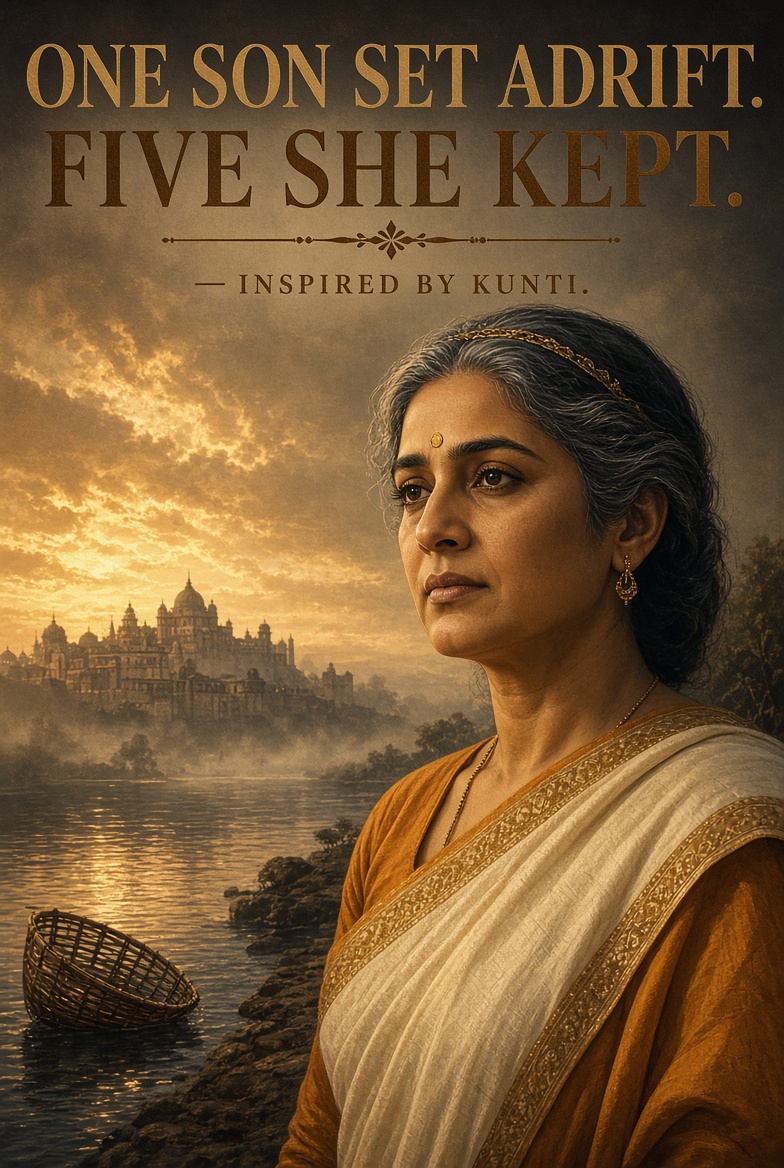
Kunti
The mother who bore six sons, but could claim only five
Some women in the Mahabharata are remembered for their devotion.
Some for their sacrifice.
Kunti is remembered for the secret she carried—and the son she could never openly love.
Princess of the Kunti kingdom, daughter of King Kuntibhoja, Kunti grows up in a world of privilege and expectation. As a young girl, she serves the sage Durvasa with such devotion that he grants her a boon: she may invoke any god and bear a child by him. Curious, and perhaps a little reckless, she tests the boon by calling upon Surya, the sun god.
To her shock, the boon works. Surya appears, and Kunti becomes pregnant.
Unmarried, afraid of scandal, and bound by the norms of her time, Kunti makes an agonizing choice: she places her newborn son in a basket and sets him adrift on the river. The child is found and raised by a charioteer, growing up to become Karna—one of the greatest warriors of the age, and one of its most tragic figures.
Years later, Kunti marries Pandu, king of Hastinapura. When Pandu is cursed and cannot father children, Kunti shares her boon with him, and with Madri. Through the practice of niyoga, she invokes Dharma, Vayu, and Indra, giving birth to Yudhishthira, Bhima, and Arjuna. Madri invokes the Ashwini Kumaras, bearing Nakula and Sahadeva.
Kunti becomes mother to five sons—yet she carries the memory of a sixth.
When the Pandavas return to Hastinapura after Pandu’s death, Kunti faces a new challenge: raising five boys in a court hostile to their very existence. She guides them through exile, humiliation, and war, always urging them toward dharma, even when it costs them everything. Her counsel shapes their choices: it is she who reminds them of their duty when they hesitate, who urges them to fight when they would rather forgive.
But Kunti’s greatest test comes during the war.
Karna, now a commander of the Kaurava forces, is revealed to be her firstborn. On the eve of battle, she approaches him and asks him to join the Pandavas, offering him the recognition he has craved all his life. Karna refuses—not out of hatred, but out of loyalty to Duryodhana, who gave him honor when the world denied it. Kunti leaves him with a request: that he spare her other sons. Karna agrees to kill only Arjuna.
After the war, when Karna lies dying on the battlefield, Kunti asks the Pandavas to perform his last rites. It is only then that they learn the truth: the warrior they fought, the man they called their enemy, was their eldest brother.
Kunti’s life is a study in paradox:
A mother who gave up one son to protect her honor, and spent her life carrying the weight of that choice.
A queen who raised five heroes, but could never openly claim the sixth.
A woman whose love was vast, but whose circumstances forced her to divide it.
In the Mahabharata’s vast cast of queens and mothers, Kunti occupies a central, tragic space:
The princess who became a mother before she became a wife.
The woman whose secret shaped the fate of an empire.
The mother whose grief outlived the war.
#Mahabharata #Kunti #Karna #Pandavas
Madri
The princess who became a mother, and a wife who chose fire over a life without love
Some women in the Mahabharata are remembered for their strength in battle.
Some for their wisdom in counsel.
Madri is remembered for the choice she made at the end of her life—and the love that defined it.
Princess of Madra, sister of King Shalya, Madri enters the epic as the second wife of Pandu, king of Hastinapura. She is beautiful, graceful, and deeply loved by Pandu, who marries her after Kunti. Yet, their happiness is short‑lived. Pandu carries a curse that forbids him from having children with his wives—any attempt will kill him instantly.
When Pandu retreats to the forest with his two queens, living a life of austerity, the question of heirs becomes urgent. Kunti, who carries a boon from the sage Durvasa, offers to share it with Madri. Madri invokes the Ashwini Kumaras, the twin divine physicians, and gives birth to Nakula and Sahadeva—the youngest of the Pandavas.
Madri’s joy is brief.
One day, overcome by desire, Pandu approaches Madri despite the curse. She tries to stop him, but he does not listen. The curse takes effect. Pandu dies in her arms, and Madri is left shattered—not just by grief, but by guilt. She believes that if she had been stronger, if she had resisted him more firmly, he would still be alive.
In that moment, Madri makes a choice that defines her legacy: she decides to join Pandu in death. She entrusts her twin sons, Nakula and Sahadeva, to Kunti’s care, asking her to raise them as her own. Then, she climbs onto Pandu’s funeral pyre and immolates herself alongside him.
Kunti, who could have resented Madri for taking Pandu’s love, instead honors her sacrifice. She raises Nakula and Sahadeva as her own sons, treating them with the same love and care as her own three. The bond between the five Pandavas is thus forged not just by blood, but by Kunti’s promise to Madri.
Madri’s story is a meditation on:
The weight of guilt—and how it can shape the choices we make.
The power of trust—how one woman’s faith in another can shape the future of a dynasty.
The tragedy of love—how it can inspire both life and death.
In the Mahabharata’s vast cast of queens and mothers, Madri occupies a quiet but essential space:
The wife who chose to die with her husband.
The mother who trusted another woman to raise her sons.
The princess whose sacrifice became the foundation of the Pandava brotherhood.
#Mahabharata #Madri #Pandu #Nakula
Nakula
The twin who mastered the sword, the horse, and the art of quiet loyalty
Some heroes in the Mahabharata are remembered for their strength.
Some for their archery.
Nakula is remembered for his grace—on the battlefield, in the saddle, and in the silence between wars.
The fourth of the Pandava brothers, Nakula is born to Madri through the Ashwini Kumaras, the twin divine physicians. Along with his twin Sahadeva, he grows up in the shadow of his older brothers—Yudhishthira’s wisdom, Bhima’s strength, Arjuna’s skill—yet he carves out his own identity with quiet excellence. He becomes a master swordsman, a gifted horse trainer, and a warrior whose beauty and charm are as legendary as his combat skills.
During the Pandavas’ final year of exile in Matsya, Nakula disguises himself as Granthika, a horse trainer in King Virata’s court. It is a role that suits him perfectly. He tends to the royal stables, trains the finest horses, and earns the trust of the king through his competence and humility. Like his brothers, he lives in disguise, waiting for the day when he can reveal his true identity and reclaim his place in the world.
When the Kurukshetra war begins, Nakula fights with distinction. He is not the flashiest warrior, nor the most celebrated, but he is reliable, brave, and skilled. He holds his own against some of the Kauravas’ finest fighters, proving that the Pandavas’ strength is not just in their leaders, but in every brother who stands beside them.
Yet, Nakula’s story is not without sorrow.
He loses his mother, Madri, at a young age, when she immolates herself on Pandu’s funeral pyre. He is raised by Kunti, who treats him and Sahadeva as her own, but the loss of his birth mother leaves a quiet ache that never fully heals. Later, he watches his brothers fall one by one on the final journey to the Himalayas, unable to stop the march of destiny.
Nakula’s life is a meditation on:
The value of specialized skill—how mastery of one craft can be as heroic as mastery of many.
The quiet strength of loyalty—how standing beside your brothers, even in their shadow, is its own form of courage.
The cost of war—how even the survivors carry wounds that never fully close.
In the Mahabharata’s vast gallery of warriors, Nakula occupies a unique space:
The twin who was never the loudest, but always dependable.
The horseman who understood the language of animals as well as men.
The swordsman who fought not for glory, but for dharma.
#Mahabharata #Nakula #Pandavas #Matsya
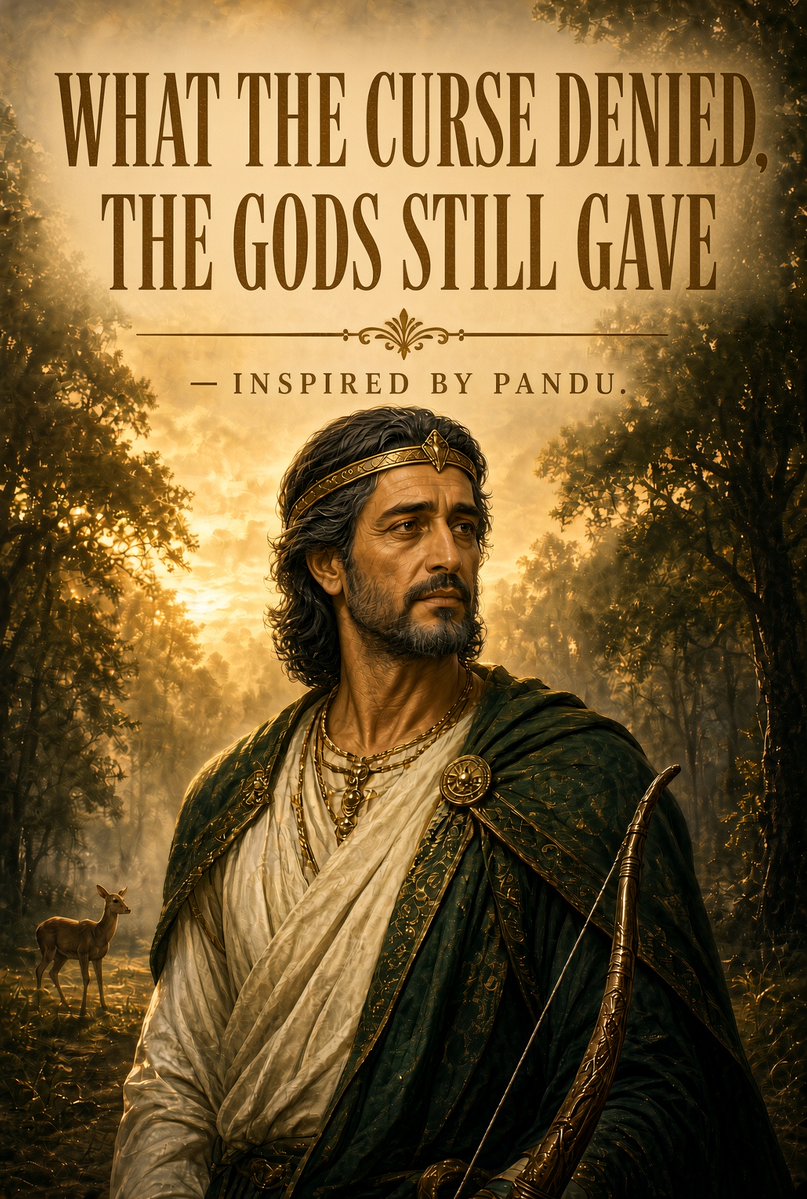
Pandu
The king who could not father children, and the father who raised five legends
Some kings in the Mahabharata are defined by their conquests.
Some by their wisdom.
Pandu is defined by a curse—and by the children he raised without fathering them.
Son of Vyasa and Ambalika through the practice of niyoga, Pandu is born pale, a consequence of his mother’s fear during conception. He becomes king of Hastinapura after his brother Dhritarashtra, blind from birth, is deemed unfit to rule. Pandu is a capable, ambitious monarch, expanding the Kuru kingdom through conquest and diplomacy. He marries twice: first to Kunti, princess of Kunti, and later to Madri, princess of Madra.
But his greatest test comes not on the battlefield, but in the forest.
During a hunting expedition, Pandu mistakes a sage and his wife for deer and shoots them with an arrow. The dying sage curses him: if Pandu ever attempts to have children with his wives, he will die instantly. The curse is devastating for a king whose primary duty is to produce heirs.
Stricken with grief and guilt, Pandu renounces the throne and retreats to the forest with his wives, living a life of austerity and penance. He becomes a king without a kingdom, a father without the ability to father children.
Yet, through the practice of niyoga—a Vedic tradition allowing a woman to conceive through a chosen man when her husband is unable—Pandu’s wives bear sons. Kunti, who carries a boon from the sage Durvasa allowing her to invoke any god, calls upon Dharma, Vayu, and Indra, giving birth to Yudhishthira, Bhima, and Arjuna. Madri invokes the Ashwini Kumaras, bearing the twins Nakula and Sahadeva.
Pandu raises these five boys as his own, teaching them the values of dharma, courage, and brotherhood. He is a father in every way that matters—guiding them, protecting them, shaping them into the warriors and kings they will become. But he never escapes the curse.
One day, overcome by desire, Pandu approaches Madri. The curse takes effect. He dies in her arms, leaving behind five sons and two widows. Madri, unable to bear the guilt, immolates herself on his funeral pyre, entrusting her twins to Kunti’s care.
Pandu’s death sets in motion the chain of events that will define the Mahabharata:
The Pandavas return to Hastinapura, where they face the jealousy and hostility of Duryodhana.
The dice game, the exile, and the war all trace their roots back to the vacuum created by Pandu’s absence.
The rivalry between the Pandavas and Kauravas is, at its heart, a story of two branches of the same family—descendants of Pandu and Dhritarashtra.
Pandu’s life is a study in paradox:
A king who loses his throne through no fault of his own.
A father who cannot father children, yet raises five of the greatest heroes of the age.
A man whose curse becomes the seed of an epic.
In the Mahabharata’s vast cast of kings and sages, Pandu stands apart:
The ruler who chose penance over power.
The father whose legacy is not blood, but love and duty.
The king whose death gave birth to a war.
#Mahabharata #Pandu #Pandavas #Kunti
Parashurama
The warrior‑sage who trained the greatest warriors of the age, and cursed the one who lied
Some teachers in the Mahabharata shape kings.
Some shape dynasties.
Parashurama shapes the very warriors who will decide the fate of an empire.
An avatar of Vishnu, born in an age before the Mahabharata’s events, Parashurama is a figure of terrifying power and profound contradiction. He is a Brahmin by birth, a Kshatriya by temperament, and a warrior by destiny. Wielding the axe given to him by Lord Shiva, he is said to have rid the earth of corrupt Kshatriyas twenty‑one times, earning the title Rama with the Axe.
By the time the Kurukshetra war approaches, Parashurama has withdrawn from the world, living in quiet penance. Yet his influence is everywhere. He is the guru of Bhishma, who learned the arts of war and statecraft under him. He is the teacher of Drona, who inherits not just skill, but the burden of being caught between dharma and loyalty. And he is the master of Karna, the tragic hero whose quest for recognition leads him to Parashurama’s doorstep.
Karna’s story with Parashurama is one of the epic’s most poignant. Born a Kshatriya but raised as a charioteer’s son, Karna is denied training by Drona because of his caste. Desperate to learn, he approaches Parashurama, who accepts only Brahmin students. Karna lies, claiming to be a Brahmin, and is taken in.
For years, he learns under Parashurama’s guidance, mastering the bow, the axe, and the divine weapons. But one day, while Parashurama sleeps on Karna’s lap, a bee stings the young student. Despite the pain, Karna does not move, fearing he will wake his guru. When Parashurama wakes and sees the blood, he realizes the truth: no Brahmin could endure such pain without flinching.
Enraged by the deception, Parashurama curses Karna: the knowledge he has gained will fail him at the moment he needs it most. Karna accepts the curse without protest, knowing he has earned it. Yet Parashurama, moved by the young man’s courage and sincerity, also grants him a boon: he will be remembered as one of the greatest warriors of his age.
This dual gift—curse and blessing—defines Karna’s fate. His skills will be immense, but they will fail him at the critical moment in the war, when his chariot sinks into the earth and his divine weapons are rendered useless.
Parashurama’s role in the Mahabharata is not that of a direct participant, but of a silent architect. He does not fight at Kurukshetra, but his students do. He does not choose sides, but his teachings shape both armies. He is the teacher of the teacher, the guru of the gurus, the one whose influence outlives his presence.
His story is a meditation on:
The weight of knowledge—and the responsibility that comes with it.
The cost of deception, even when driven by desperation.
The paradox of a teacher who creates both heroes and tragedies.
In the Mahabharata’s vast cast of sages and warriors, Parashurama stands apart:
An avatar who chose war to end war.
A teacher who shaped the age’s greatest fighters.
A sage whose curse became a prophecy, and whose blessing became a legend.
#Mahabharata #Parashurama #Karna #Bhishma
If you want to continue the Z→A series, tell me the next letter (e.g., “O”, “N”, “M”) and I’ll draft the next post in the same style.
Parikshit
The child born after the war, who inherited a broken kingdom and carried its memory forward
Some heroes in the Mahabharata are forged in battle.
Some in exile.
Parikshit is forged in the womb—before he ever takes a breath.
The son of Abhimanyu and Uttara, Parikshit is conceived during the Kurukshetra war, but his father never lives to see him born. Abhimanyu, the brave young warrior who broke into the Chakravyuha but could not escape it, is slain while Parikshit is still unborn. His death leaves a void in the Pandava line—and sets the stage for one of the epic’s most miraculous moments.
When Ashwatthama, consumed by rage after the war, unleashes the brahmastra to destroy the Pandava lineage, the weapon targets Uttara’s womb. The unborn child is struck. Krishna, ever the guardian of dharma, intervenes. He revives the infant, ensuring that the Pandava line will not be extinguished. In that moment, Parikshit is not just born—he is chosen.
He grows up in the shadow of a war he never fought, but whose scars define his entire world. His grandfather, Yudhishthira, rules Hastinapura for a time, but the weight of grief and guilt eventually drives the Pandavas to renounce the throne. When they leave for the Himalayas, they entrust the kingdom to Parikshit, guided by Yuyutsu as caretaker until he comes of age.
Parikshit’s reign is not one of grand conquests or epic battles. It is a reign of rebuilding. He inherits a kingdom hollowed out by war, a dynasty nearly erased, and a people traumatized by loss. Yet, under his rule, Hastinapura finds a fragile peace. He becomes the link between the age of the Pandavas and the age that follows—the one who keeps the stories alive.
But Parikshit’s story does not end peacefully.
One day, during a hunt, he commits a small but significant act of disrespect: he places a dead snake around the neck of a sage in meditation. The sage’s son, enraged, curses him: he will die from a snakebite within seven days. Parikshit, though shaken, accepts the curse with the dignity of a king. He prepares for death, renouncing the throne and spending his final days in spiritual reflection.
It is during this time that the sage Shuka, son of Vyasa, comes to him and recites the Bhagavata Purana—a sacred text that retells the stories of Vishnu’s avatars, including Krishna. Parikshit listens, absorbs, and finds peace. When the serpent Takshaka finally strikes, Parikshit dies not in fear, but in acceptance—his life a bridge between the age of heroes and the age of devotion.
Parikshit’s story is a meditation on:
Legacy—how one generation carries the weight of another’s choices.
Rebirth—not just of a lineage, but of hope after devastation.
Acceptance—how a king can face death not with fear, but with grace.
In the Mahabharata’s vast cast of warriors and sages, Parikshit occupies a unique space:
The child who was saved before birth.
The king who inherited a broken world.
The listener who carried the epic forward through devotion, not war.
#Mahabharata #Parikshit #Abhimanyu #Uttara
Sahadeva
The youngest Pandava, who knew the future but could not change it
Some heroes in the Mahabharata are remembered for their strength.
Some for their skill with weapons.
Sahadeva is remembered for what he knew—and for the silence he kept.
The fifth and youngest of the Pandava brothers, Sahadeva is born to Kunti through the Ashwini Kumaras, the twin divine physicians. From birth, he is marked by a quiet intelligence and a mind attuned to patterns others cannot see. While Bhima trains his body and Arjuna perfects his archery, Sahadeva turns his gaze to the stars, mastering astrology, omens, and the subtle language of fate.
He is said to know the past, present, and future with startling clarity. Yet, bound by a vow—or perhaps by the weight of destiny itself—he chooses not to speak what he knows unless directly asked. This silence becomes one of the most tragic elements of his character: he sees the war coming, sees the deaths, sees the suffering, but does not intervene to alter the course of events.
During the Pandavas’ final year of exile in Matsya, Sahadeva disguises himself as Tantripala, a cowherd, and tends to King Virata’s cattle. It is a humble role for a prince, but he performs it with the same dedication he brings to every duty. When the war finally arrives, he fights with skill, particularly with the sword, holding his own among the great warriors of the age. Yet, even on the battlefield, he remains the quiet brother, the one who observes more than he speaks.
Sahadeva’s wisdom is not just theoretical. He understands the moral complexities of the war, the cost of victory, and the price the Pandavas will pay even if they win. He knows that Kurukshetra will not bring glory, but grief. He knows that families will be erased, that women will weep for sons who will never return, that victory will taste like ash. And yet, he does not warn his brothers in a way that might change their path.
Some interpretations suggest that Krishna himself instructed Sahadeva to remain silent, that the war must unfold as destined, and that knowledge without action is sometimes the heaviest burden of all. Others say that Sahadeva’s silence is a form of tapas—a spiritual discipline, a way of accepting that some truths are not meant to be spoken, only endured.
After the war, Sahadeva is one of the few who survives. He walks with his brothers on their final journey to the Himalayas, witnessing one by one as they fall along the way. He, too, eventually succumbs, but his legacy remains: the brother who knew everything, and said almost nothing.
Sahadeva’s story is a meditation on:
The burden of knowledge—what it means to see the future and be powerless to change it.
The discipline of silence—when speaking might disrupt a larger design.
The quiet heroes of the epic, whose contributions are not in grand gestures, but in steady, unseen support.
In the Mahabharata’s vast gallery of warriors and sages, Sahadeva occupies a unique space:
The youngest brother, often overshadowed.
The astrologer who read the stars but did not alter their course.
The swordsman who fought not for fame, but for dharma.
#Mahabharata #Sahadeva #Pandavas #Astrology
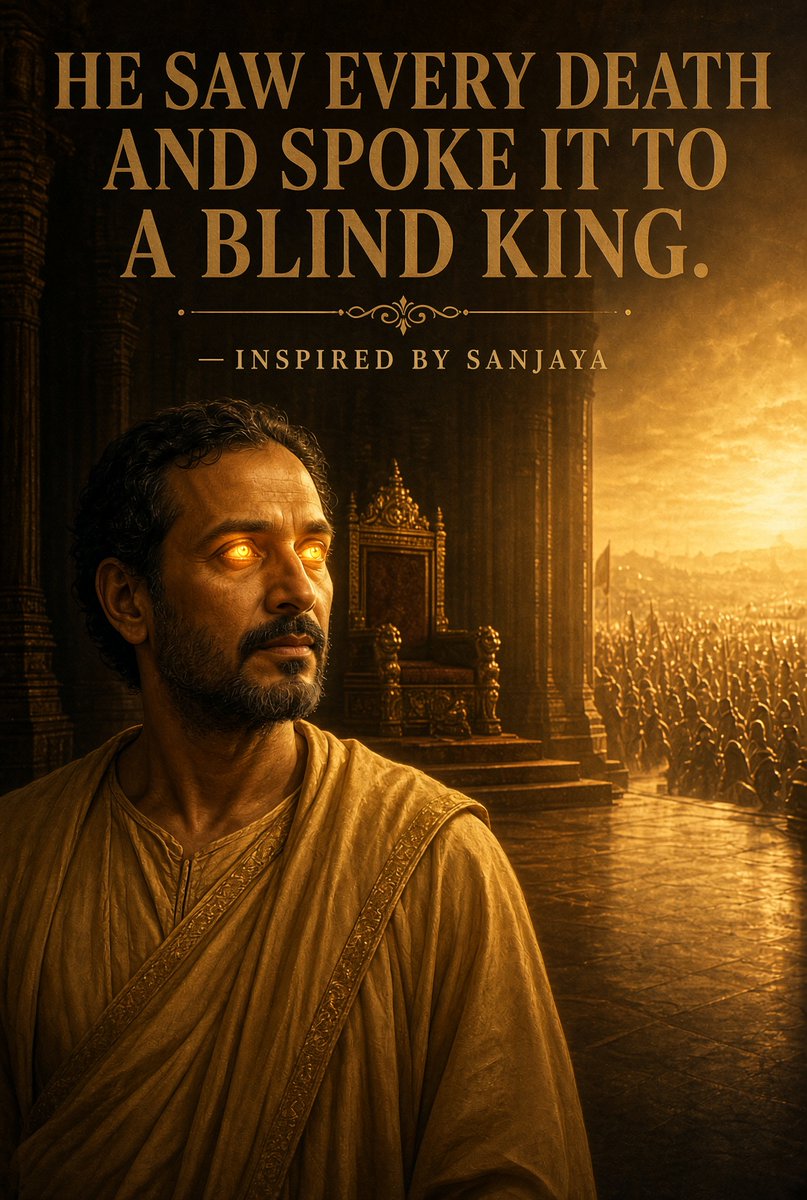
Sanjaya
The charioteer who saw everything, and the voice that made a blind king witness the war
Some characters in the Mahabharata fight with swords.
Some with strategy.
Sanjaya fights with sight—and with words.
Minister and charioteer to King Dhritarashtra of Hastinapura, Sanjaya occupies a unique position in the epic. He is loyal to the king, yet honest in his counsel. He is part of the Kaurava court, yet never fully aligned with its adharma. When the Kurukshetra war begins, he is not on the battlefield as a warrior—but he is there in the only way that matters to Dhritarashtra: as the king’s eyes.
Dhritarashtra, blind from birth, cannot witness the war that will decide the fate of his sons, his kingdom, and his dynasty. He is consumed by anxiety, torn between love for his children and fear of the consequences of their actions. In his despair, he turns to Vyasa, the sage who fathered his lineage, and begs for a way to know what is happening on the battlefield.
Vyasa grants him a boon: his minister Sanjaya will be given divya drishti—divine sight. Through this power, Sanjaya can see every event of the war, no matter how far away, and recount it to the king in real time. He can also perceive thoughts, intentions, and the deeper currents of dharma and adharma that move beneath the surface of battle.
And so, as the conch shells blow and the armies clash, Sanjaya becomes the narrator of the Mahabharata’s most sacred section: the Bhagavad Gita. He stands beside Dhritarashtra in the royal hall, describing the formations, the duels, the deaths, and—most importantly—the dialogue between Arjuna and Krishna on the battlefield.
Sanjaya’s narration is not neutral. He does not flatter Duryodhana. He does not soften the blows. When Duryodhana falls, when Karna is slain, when the Kaurava army crumbles, Sanjaya tells the truth, however painful. He describes Arjuna’s skill, Krishna’s wisdom, and the steady march of destiny. He watches heroes die, vows break, and families unravel—all from the vantage point of a blind king’s side.
Yet, Sanjaya is more than a reporter. He is a witness to the moral architecture of the war. He sees not just who wins and loses, but why. He understands that this is not merely a conflict between cousins, but a cosmic reckoning—a moment when dharma itself is being tested and redefined.
When the war ends, Sanjaya’s role does not vanish. He remains with Dhritarashtra as the old king grapples with grief, guilt, and the ruins of his family. He is present when Dhritarashtra finally renounces the world and retreats to the forest, seeking penance. In some versions, Sanjaya himself eventually leaves for the Himalayas, his divine sight no longer needed in a world that has moved past the age of heroes.
Sanjaya’s story is a meditation on:
The power of perspective—how one person’s vision can shape another’s understanding.
The burden of truth-telling in a court that prefers comfort.
The role of the narrator—not just as a recorder of events, but as an interpreter of meaning.
In the Mahabharata’s vast cast of warriors, kings, and sages, Sanjaya stands apart:
The man who saw a war he did not fight.
The voice that made a blind king witness his own tragedy.
The witness whose words became scripture.
#Mahabharata #Sanjaya #Dhritarashtra #BhagavadGita
Satyaki
The Yadava warrior who carried Arjuna’s skill and Krishna’s loyalty into battle
Some warriors in the Mahabharata are remembered for their birthright.
Some for their divine weapons.
Satyaki is remembered for his unwavering allegiance—and for the ferocity with which he defended it.
A prince of the Vrishni clan, cousin to Krishna, and a close companion of the Pandavas, Satyaki grows up in the vibrant, politically charged world of Dwarka. He is trained in the arts of war, but his most formative education comes under Arjuna himself. The great Pandava archer becomes his guru, shaping him into a warrior of exceptional skill, speed, and courage.
When the Kurukshetra war approaches, the Yadavas face a delicate choice. Krishna, though personally aligned with the Pandavas, declares that he will not fight—offering himself as Arjuna’s charioteer instead. His vast army, the Narayani Sena, is available to either side. Duryodhana, ever the opportunist, arrives first and claims the army. Satyaki, however, makes a different choice: he joins the Pandavas, bringing not just his sword, but his entire moral compass with him.
On the battlefield, Satyaki becomes one of the Pandavas’ most reliable commanders. He fights alongside Arjuna, mirrors his guru’s archery, and often holds the line when the tide turns against them. But his most defining moment comes not in open combat, but in an act of vengeance that shocks even seasoned warriors.
During the war, Bhurishrava, a veteran Kaurava ally, is engaged in battle with Satyaki. Overwhelmed, Bhurishrava retreats and begins performing penance, preparing to leave his body through yoga. Arjuna intervenes, arguing that killing a man in meditation is against dharma. Satyaki, however, is enraged. He reminds everyone that Bhurishrava had earlier participated in the cowardly killing of Abhimanyu—surrounding a young warrior who fought alone against overwhelming odds.
To Satyaki, this is not justice; it is hypocrisy.
In a flash of fury, he beheads Bhurishrava while the assembled kings watch in stunned silence.
The act is controversial. Some call it adharma. Others see it as rough, imperfect justice in a war already stained by moral compromise. But for Satyaki, the message is clear: the rules of honorable combat were abandoned long ago, when Abhimanyu was slaughtered in the Chakravyuha. He will not let sanctimony shield those who benefited from that sin.
After the war, Satyaki remains one of the few Yadava warriors still standing. He survives the fratricidal collapse of the Yadava clan, the pilgrimage of the Pandavas, and the slow fading of an era. In some versions, he is among the last to leave the world, a living bridge between the age of heroes and the age that follows.
Satyaki’s story is a reminder that:
Loyalty is not passive—it must be defended, sometimes fiercely.
In a war where dharma is constantly debated, some warriors choose action over argument.
The student can carry the teacher’s skill, but also their moral burdens.
In the Mahabharata’s vast gallery of warriors, Satyaki stands out:
A Yadava who chose the Pandavas when neutrality was safer.
A disciple who fought like Arjuna, but with his own code.
A man who believed that some debts must be paid, even if the world calls it vengeance.
#Mahabharata #Satyaki #Arjuna #Kurukshetra
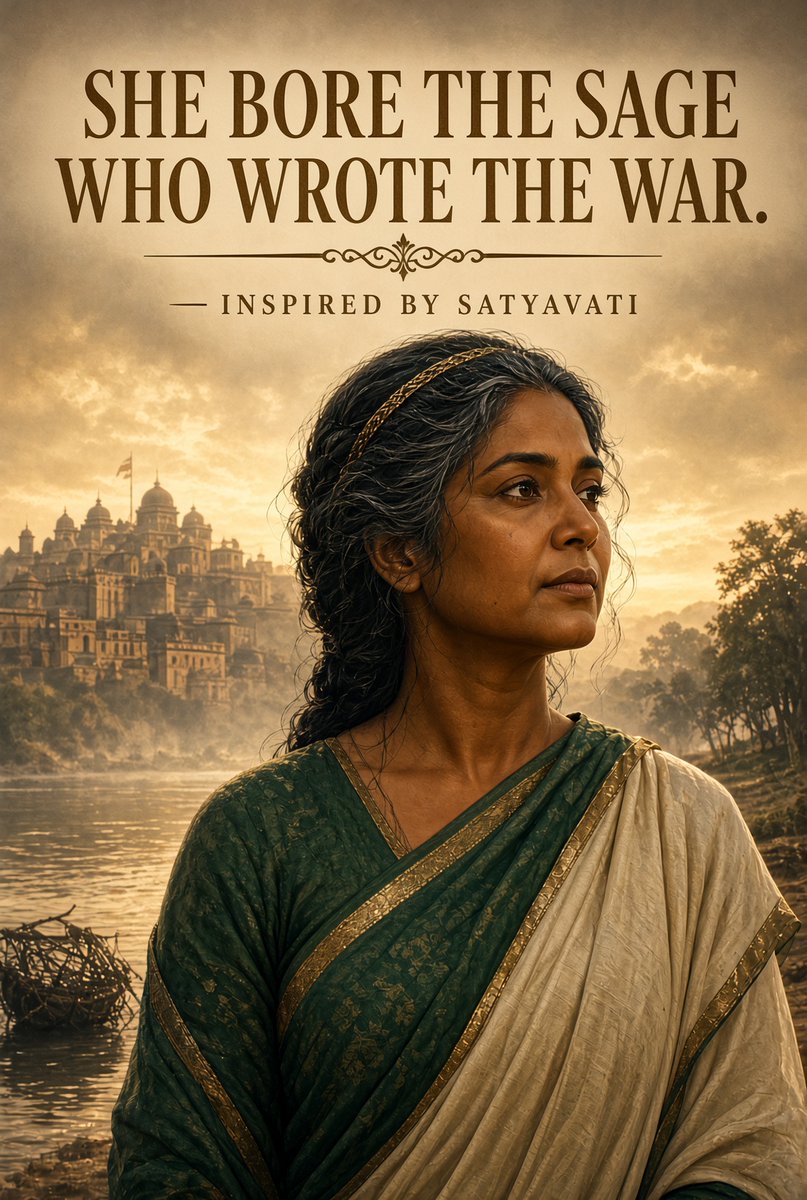
Satyavati
The fisherwoman who became queen, and the mother whose ambition reshaped a dynasty
Some women in the Mahabharata are remembered for their devotion.
Some for their suffering.
Satyavati is remembered for her will—and for the chain of events it unleashed.
Born to a king and a fisherwoman, raised among boats and nets on the Yamuna, Satyavati grows up far from the palaces of Hastinapura. She is fierce, practical, and unafraid to name what she wants. As a young woman, she bears a son through the sage Parashara—a child born before marriage, left to fate, who will grow up to be Vyasa, the composer of the Mahabharata itself.
Years later, King Shantanu of Hastinapura encounters her and falls deeply in love. He asks for her hand, but her father sets a condition that shakes the foundations of the Kuru line: Satyavati’s sons must inherit the throne, not the son Shantanu already has, Devavrata.
When Shantanu returns home, heartbroken and silent, it is Devavrata who discovers the truth. In one of the epic’s most fateful moments, he renounces his claim to the throne, swears lifelong celibacy, and takes the terrible vow that will earn him the name Bhishma. Satyavati becomes queen, but at the cost of a promise that will leave the Kuru dynasty without a clear heir for generations.
After Shantanu’s death, Satyavati’s worst fears come true: her sons with Shantanu—Chitrangada and Vichitravirya—die young, leaving Hastinapura on the brink of collapse. With no direct heir, the lineage faces extinction.
In desperation, Satyavati does what no queen before her has done: she calls upon her firstborn son, Vyasa, the sage she gave up years ago, to father children through the practice of niyoga with the widows of Vichitravirya—Ambika and Ambalika. From this union come Dhritarashtra, Pandu, and Vidura—the three fathers of the Kauravas and Pandavas.
In one stroke, Satyavati saves the dynasty—and sets in motion the rivalry that will culminate in Kurukshetra.
Her role in the epic after this is quiet, but her presence looms large. She watches as her grandchildren grow into rivals, as Hastinapura fractures, as the seeds she planted bear bitter fruit. Some versions say she eventually retires to the forest with Shantanu’s other widows, seeking penance for the chaos her ambitions helped create.
Satyavati’s life is a study in paradox:
A woman of humble origins who becomes the architect of a royal lineage.
A mother who saves her dynasty, yet ensures its near‑destruction.
A queen whose pragmatism is both her strength and her curse.
She is not evil, but she is uncompromising.
She does not seek war, but her choices make war inevitable.
She is the pivot on which the Mahabharata turns.
In the epic’s vast cast of kings, sages, and warriors, Satyavati stands as one of its most consequential figures:
The fisherwoman who became queen.
The mother of Vyasa.
The woman whose demand changed the fate of the Kurus forever.
#Mahabharata #Satyavati #Shantanu #Vyasa