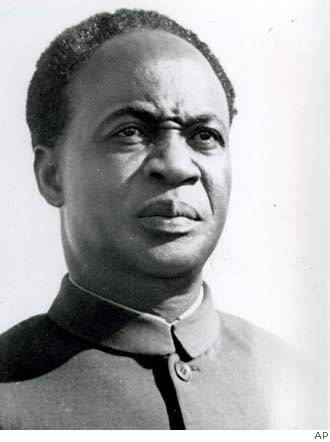
To @orengo_james, you are Raila Odinga’s age mate and started politics long before he did.
I therefore don’t see the value of you desperately trying to invoke Raila’s name on everything you are doing.
Articulate your ideology, philosophy, ideas, policy platforms and programs, if you have any. What Raila Odinga told you—real or imagined—is not an ideology, philosophy or policy platforms.
If you have genuine transformative ideas on governance, show Kenyans how you have deployed them in Siaya County where you have been the Chief Executive for 4 years and is responsible for tens of billions of public resources each year. Show us how you have spent public resources accountably and transparently. Demonstrate that you are materially different from @WilliamsRuto by the way you provide services to the people of Siaya.
Kenyans expect your colleagues in Parliament (Senate and National Assembly) to show Kenyans their legislative record. After all, the primary duty of senators and members of the National Assembly is to LEGISLATE on behalf of the people.
It’s not enough to traverse the country, addressing public rallies, attending churches and taking photos with KANU orphans whom have destroyed the country for more than 60 years.
Avoid exploiting the gullibility of the people, most of who maybe ignorant, desperate, jobless and hungry.
Let us present alternative visions, policies and programs which will transform the lives of our people.
STATEMENT: We are calling on the IEBC, ODPP, and EACC to urgently investigate allegations of vote buying, electoral violence, intimidation, and misuse of public resources in the Ol Kalou by-election.
Kenyans have a constitutional right to elections that are free, fair, and credible. Read our full statement: https://t.co/ulOxorKQGg
Over 800 families have been left homeless in Mombasa after heavy machinery demolished more than 170 houses at the Changamwe National Housing Estate to clear space for an Affordable Housing Project.The early morning operation turned chaotic as anti-riot police fired teargas to disperse residents and local leaders.
Area politicians, including Senator Mohamed Faki and MP Omar Mwinyi, have strongly condemned the exercise, claiming the government moved forward with the evictions in direct violation of an active court order.
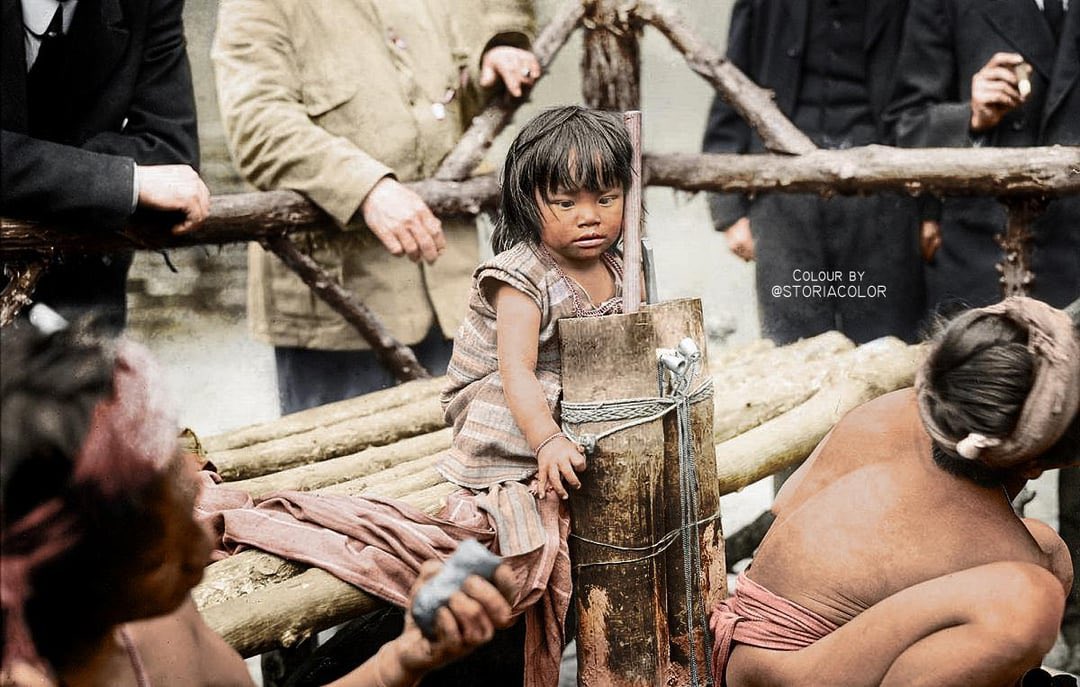
Little known fact that western media doesn’t talk about, nor is it taught at schools.
Between 1899 and 1992, USI 🇺🇸 genocided 1.4 million Filipinos and later displayed thousands in human zoos on Coney Island.
Funny how America spreads democracy, freedom and human rights.
BREAKING: 🇺🇸 Donald Trump's immunity has been stripped...
The US Supreme Court has ruled to strip Trump of his immunity within the framework of the Epstein Case.
The path to his trial has been cleared. He could be impeached.
The World Bank has cut Kenya's 2026 growth forecast to 4.3%, down from 4.9%, and warns up to 2.4 million more Kenyans could fall into poverty this year.
Government projected 5%.
That gap between official optimism and lived reality is the story of this presidency.
Kenyans are paying more for fuel, transport and food while being told the numbers are fine.
We need a government that plans for citizens, not for headlines.
#Kumekucha. #UkatibaMovement #Ukombozi
Always try to associate with people from whom you can learn something. All the knowledge you want is in the world, and all you have to do is go and seek it.
South Africa is the most economically unequal country in the world because it was deliberately designed to be so.
While other highly unequal nations arrived there through capitalism or just plain corruption, South Africa arrived there because inequality was the literal law of the land for generations.
Pick a year, any year of South African history and evidence that the natives of the land were to be deliberately kept poor is right there in palin sight.
After all, the Xhosa Frontier Wars broke out in 1779 after decades of systematic land and wealth dispossession.
Even when you look over six decades before the country known as South Africa was formalised, and a century before Apartheid-era townships were codified, the formal policy of setting aside “locations” for Black people had already began.
In 1846, British colonist Theophilus Shepstone was tasked with managing thousands of Natives who were returning to lands they had historically occupied before the British violently invaded the region.
Rather than integrating them, Shepstone established several rural “Native locations” in the least fertile land available to ensure they would be available as cheap labour for farms and colonial industries.
Similarly, in the decades following 1886, when gold was discovered in what is today Gauteng, the entire colony’s immense wealth came from the mining sector powered by cheap, state-controlled electricity and heavily exploited, low-wage migrant labour.
Because this Mineral-Energy Complex built an economic system controlled by an elite few and because the economy was heavily geared toward resource extraction rather than broad-based manufacturing, it never developed the large, stable blue-collar middle class that lifted up countries in Europe, America or East Asia.
You could also skip to 1913, when the South African government decreed that the Black majority, which made up 80% of the population, could legally own just 7% of the land.
This overnight act destroyed Black farming and wiped out generational wealth. So, unlike in most other countries where inequality is a result of capitalism, in South Africa it was a state-enforced intentional destruction of a population’s asset base.
Over a century after the Locations were introduced, the Group Areas Act of 1950 locked Black families into townships and rural homelands, far from economic hubs. Today, transport costs consume 30–40% of a low-income worker’s salary vs. <10% for affluent suburbs, while property values in historically White areas have appreciated exponentially. The physical distance from opportunity is a daily tax on time and money that compounds generational poverty.
You could also zoom in on 1953, when the Bantu Education Act deliberately stripped math, science, and technical training from Black school curricula. The explicit, stated goal of the government at the time was to train Black citizens to be nothing more than manual labourers. Once again, the poor education given to Natives was not an inadvertent side effect of poor planning or execution.
As luck would have it, when 1994 rolled around, Western nations were shifting away from heavy labour industry and toward service economies. South Africa imitated this model and then found itself with an oversupply of blue-collar workers, products of Bantu Education.
Even though Bantu Education was repealed, public schools are still largely funded by local property taxes and since wealthier, historically White, suburbs raise vastly more per child than townships, the quality gap in maths and science persists. A child in Sandton receives 2–3x the per-learner funding of a child in Soweto.
Meanwhile, after 1994, wages for tech, banking, and executive roles skyrocketed, while wages for manual labour stagnated or vanished entirely. It goes without saying that the wage gap expanded rapidly during the very years democracy was meant to close it.
At the same time, during the transition to democracy, political administration was handed to the Native majority, but existing property rights were legally protected, which meant that while the laws became equal overnight, the capital, real estate, stocks, and business ownership stayed exactly where they were.
And because wealth compounds via interest and investments much faster than wages grow, the starting line of the new democracy was so skewed that the markets naturally made the rich richer, regardless of the change in political leadership.
Today, the Johannesburg Stock Exchange’s top 100 companies are still ~87% White-owned in terms of executive control and beneficial equity. Transformation policies, which, by the way were designed by the White elite, have created a small Black elite, but the aggregate wealth distribution remains frozen because ownership concentration drives inequality. After a all, wealth begets wealth via dividends and buybacks, while wages, even well-paid ones, cannot catch up to capital’s compound growth.
Anyway, the point is that South Africa’s historical economic inequality was by design and when we say it continues to be actively maintained to this day, this is not a conspiracy theory. It may seem that way because the design’s final trick makes the outcomes look like “the economy” doing what it does, so the original sin of dispossession fades from view.
⚡️BREAKING: Fars News states that the Message of today's Strikes was that Iran is ready to Expand the scale of the Conflict
Iran targeted US bases in Qatar, Kuwait, Jordan, Oman and Bahrain
There are several laws criminalizing the carrying of colossal sums of cash in any currency/denomination all over the world. Chief among them are laws aimed at curtailing money laundering.
It’s become a tend for @WilliamsRuto and his bandits to display large stashes of cash to staged harambees when the overwhelming majority of Kenyans are jobless, living in squalor and cannot even two meals a day.
There is absolutely no reason why anyone should be carrying these amounts of cash in public when one can transfer the same using electronic banking systems or even MPESA. As long as the laws are not enforced or enforced selectively, Kenya will remain a failed state with unsustainable levels of unemployment and poverty.
There is something deeply troubling about the contrast in today's Kenya.
On one hand, many households are struggling with the rising cost of living, while businesses face mounting pressure and unemployment remains a major concern. On the other, politicians travel across the country distributing cash before cheering crowds.
The question is simple: if there is money to hand out at political rallies, why are essential public services under strain? Why are schools, hospitals, and job creation programmes not receiving the same urgency?
Leadership should empower citizens to earn a living with dignity, not leave them waiting for the next political convoy.