@mrfestusogun Wow. Is this directive a way to restrain policemen from the tendency to extort Nigerians?
Charity - they say- begins at home. The IGP @TunjiDisu1 must revamp Nigeria police force by addressing their welfare issues while upholding discipline and respect for human rights
RELEASE EUNICE AMEH NOW!
When a young lawyer goes missing, the pain is not distant to the Nigerian Bar Association, it is personal. We are more than a professional body; we are a community bound by shared sacrifice, shared dreams, and a collective duty to stand for one another. The disappearance of Miss Eunice Ameh, our dear colleague and a young Nigerian serving her country through the NYSC scheme, has therefore deeply shaken the entire legal community.
Behind every missing person report is a family unable to sleep, friends clinging to hope, and colleagues praying for safe return. No young Nigerian who answered the call to national service should disappear without an immediate, coordinated, and determined response from our security agencies.
We therefore call on the Inspector General of Police to urgently deploy all necessary tactical and intelligence resources toward securing Eunice’s safe release and ensuring that anyone connected to her disappearance is swiftly brought to justice.
This is not a moment for routine assurances. Every passing hour matters, and every effort must count.
We stand firmly with her family, friends, and colleagues in this painful time, and we urge anyone with useful information to cooperate with the authorities so that Eunice Ameh can safely return home.
Mazi Afam Osigwe, SAN
President, Nigerian Bar Association
To God be the glory! Thank you to the Broadcasting Organizations of Nigeria.
I thank every single person who has been along, with, and on this journey. God bless you all. @moneylinewithnancytv is at 10am-11am, @AIT_Online, Mondays-Fridays.
We will continue with excellence.
On Tuesday at the Johns Hopkins Bloomberg Center in Washington, DC.
I joined the SAIS Women Lead Practicum presentations, marking the close of a year-long research collaboration with a team of researchers working with CJID.
The practicum brings together small teams of graduate researchers and partner institutions to examine focused policy questions over an academic year. This cycle, four teams worked across Barbados, India/Morocco, Nigeria, and Zambia.
Across these projects is a shared concern that examines systems that appear efficient on the surface but sustained by forms of labor that remain precarious, unprotected and exploitative.
For the CJID side of the project, it’s been an extremely important research examining the political economy of content moderation within digital platforms and AI systems. This builds on three years of engagement with SAIS researchers—an ongoing collaboration that continues to produce rigorous, policy-relevant work.
Content moderators play a central role in reviewing harmful material online, yet operate within fragmented outsourcing structures, with limited legal recognition and insufficient safeguards for their well-being.
The findings provide a useful account of how pressure, weak accountability, and regulatory gaps shape content moderation.
@afamosigwe@NigBarAssoc@NBAYLFOfficial Year in Year out . We have promises from various leadership of the NBA. What exactly can we hold on to as the measures put in place for young lawyers to thrive?
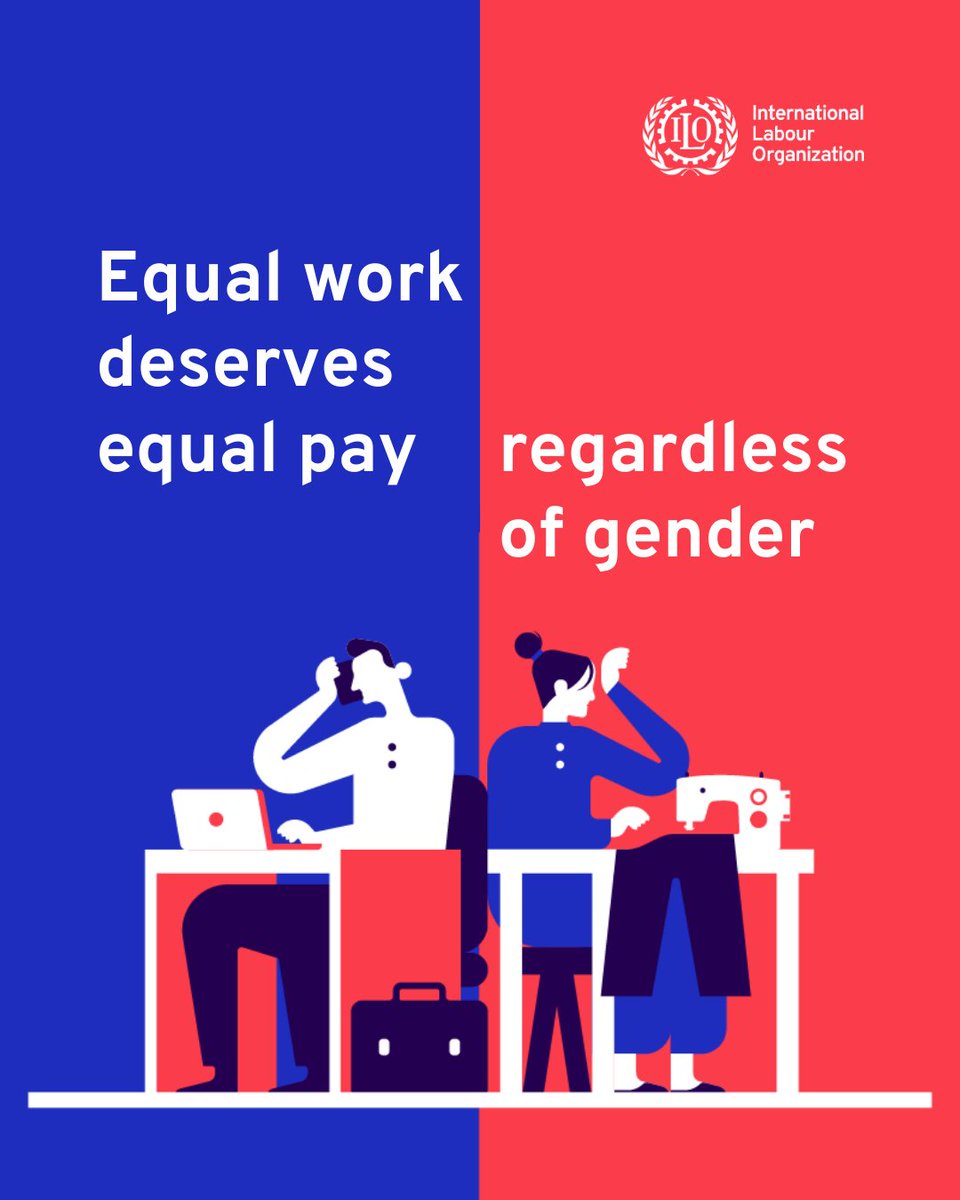
@DejiAdesogan A fair case of gender discrimination at work. All the police officers on duty are women and he took undue advantage of the situation to harass them in the most unconscionable manner. We must kick against all forms of gender discrimination at workplace and beyond
AI is reshaping how we hire, manage, and work. The real question: how do we govern it in Nigeria while protecting jobs and labour rights?
Join me this Friday (Workers’ Day) for a timely conversation.
🔗 https://t.co/CEMy0kQ7W0
⏰ 4:30 PM
#FutureOfWork#AI#LabourLaw#Nigeria
AI is reshaping how we hire, manage, and work. The real question: how do we govern it in Nigeria while protecting jobs and labour rights?
Join me this Friday (Workers’ Day) for a timely conversation.
🔗 https://t.co/CEMy0kQ7W0
⏰ 4:30 PM
#FutureOfWork#AI#LabourLaw#Nigeria
Grateful to God and my family.
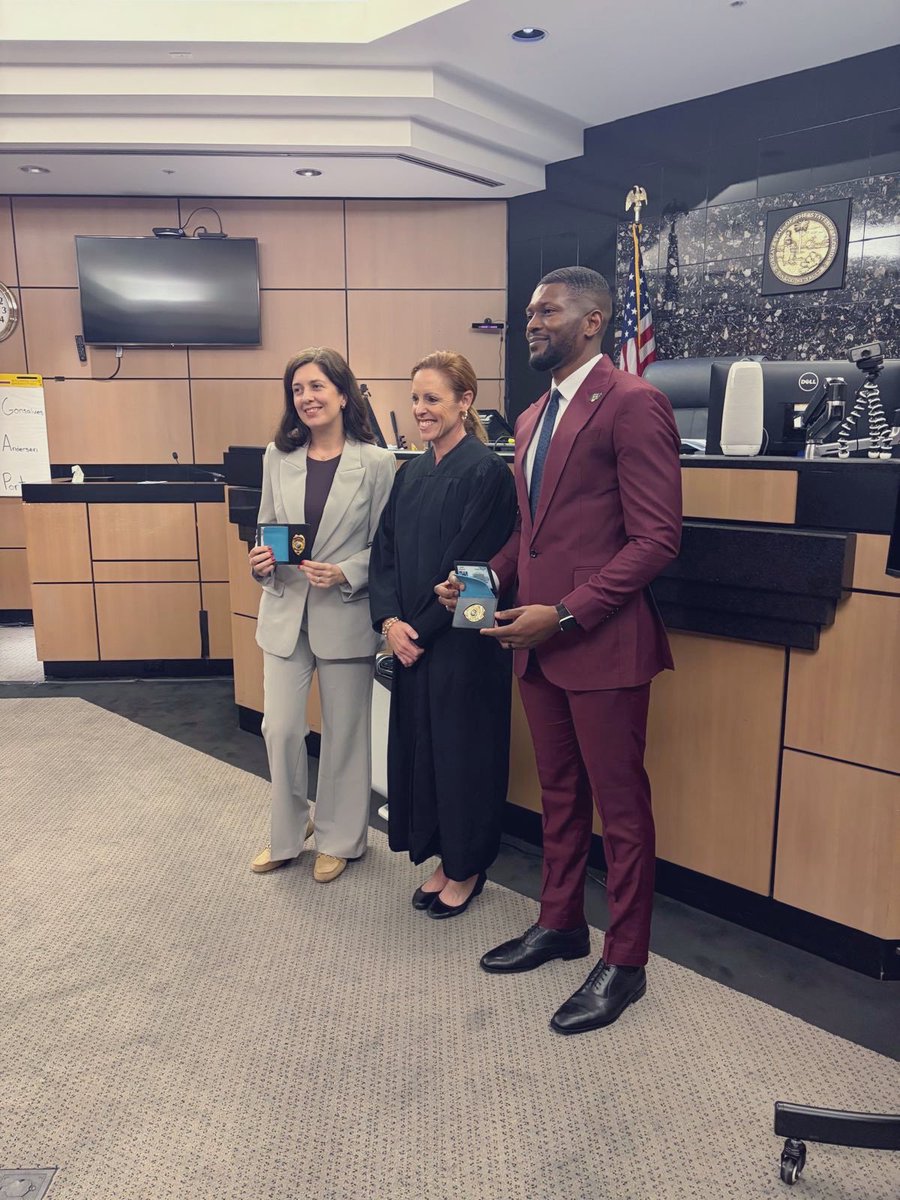
Truly a special moment being sworn in as an Attorney in Florida and subsequently as an Assistant States Attorney for the 15th Judicial Circuit.
Dual licensed in Nigeria and Florida, and proud of the journey.
In my interview with Channels TV yesterday, I explained why removal of qualification as a ground for challenging outcome of an election is not good for our democracy.
A UK Degree in Lagos Will Not Fix What Nigerians Are Actually Running From
Nigeria’s Minister of Education, Dr. Tunji Alausa, made a post about a potential partnership to bring UK degrees to Nigeria. While his intentions may be good, it is also a masterclass in solving the wrong problem with the right branding.
The announcement, a Coventry University campus in Alaro City, offering fully accredited UK degrees without leaving Nigeria, is being framed as a response to japa. To the exodus of young Nigerians seeking foreign education. The pitch is emotional: “We want Nigerian parents to enjoy having their children at home.” It is also, analytically, a category error.
Here is the thing about japa that Nigerian policymakers keep missing: the degree was never the destination. It was the ticket.
For a significant portion of Nigerians pursuing education abroad, the foreign university is the most legitimate pathway to a work permit, post-study residency rights, and eventually, a life in a functioning economy. The degree is the visa vehicle. Remove the geography,& you have not solved the problem. You have removed the one tool that made the solution accessible.
This is not me speculating, it is visible in the data and in the behavior. Nigerian students are among the fastest-growing international student populations in the UK. University apps from Nigeria have surged even as visa costs and living expenses have risen sharply. Families are stretching budgets, taking loans, selling property — not because they have a romantic attachment to British pedagogy, but because they are making a rational, generational bet. A bet on purchasing power. On a work environment where infrastructure functions. On optionality, the freedom to build savings and experience before deciding where to plant permanently.
A Coventry degree earned on Lagos Island does not come with a Tier 2 visa. It does not come with £12 per hour. It does not come with the NHS, reliable electricity, or a passport that opens doors. The credential, absent the ecosystem it was meant to unlock, is significantly devalued in the very transaction it was supposed to facilitate.
Then consider what is actually being compared.
Coventry University sits at #558 in the QS World University Rankings 2026. Nigeria’s best universities — the University of Ibadan and the University of Lagos — rank in the 1,001–1,200 band on the same table. On Times Higher Education, the gap nearly closes entirely: Coventry sits in the 601–800 band, while both UNILAG and UI land in the 801–1,000 range. These are not trivial gaps, but they are not Oxford-versus-a-roadside-polytechnic either. The credential being offered is a degree from a mid-tier British university — one that is not in the Russell Group, not in the global top 500 on THE, and not in the same conversation as the institutions whose graduates have the clearest pathways to UK employment and global mobility.
But the more searching question is not about UNILAG or UI. It is about Covenant University.
Covenant is a private Nigerian university founded in 2002 in Ota, Ogun State, running on a Christian mission ethos with just under 10k students. On the overall THE table, it sits in the 1,001–1,200 band — well below Coventry by conventional measures. By the headline numbers, it looks like an easy comparison to make in Coventry’s favor.
Except that in the 2026 Times Higher Education Interdisciplinary Science Rankings, which evaluated 911 universities across 94 countries on research funding, output, quality, and reputation, Covenant ranked 49th globally & first across the entire African continent. It was the only African institution to break into the global top 50 in that category.
A homegrown private university, built from scratch in Nigeria, is producing research that places it in the top 50 in the world in its category. And the govt’s response to the education crisis is to negotiate a franchise arrangement with a British university ranked #558 overall.
🎉 Celebrating 20 years of the Maritime Labour Convention!
Since 2006, the MLC has advanced decent living and working conditions, and fair competition, in shipping worldwide 🌍.
All seafarers must benefit from its protection.
⚓ #DecentWork at sea matters.