IMPACTIVE officially ends today. It's been four years of intense work, that has translated into great results. We can’t be prouder of us! Special thanks to our project coordinator @ColacinoEvelina for making this scientific journey possible. 💚
https://t.co/YdDcOnpVlH
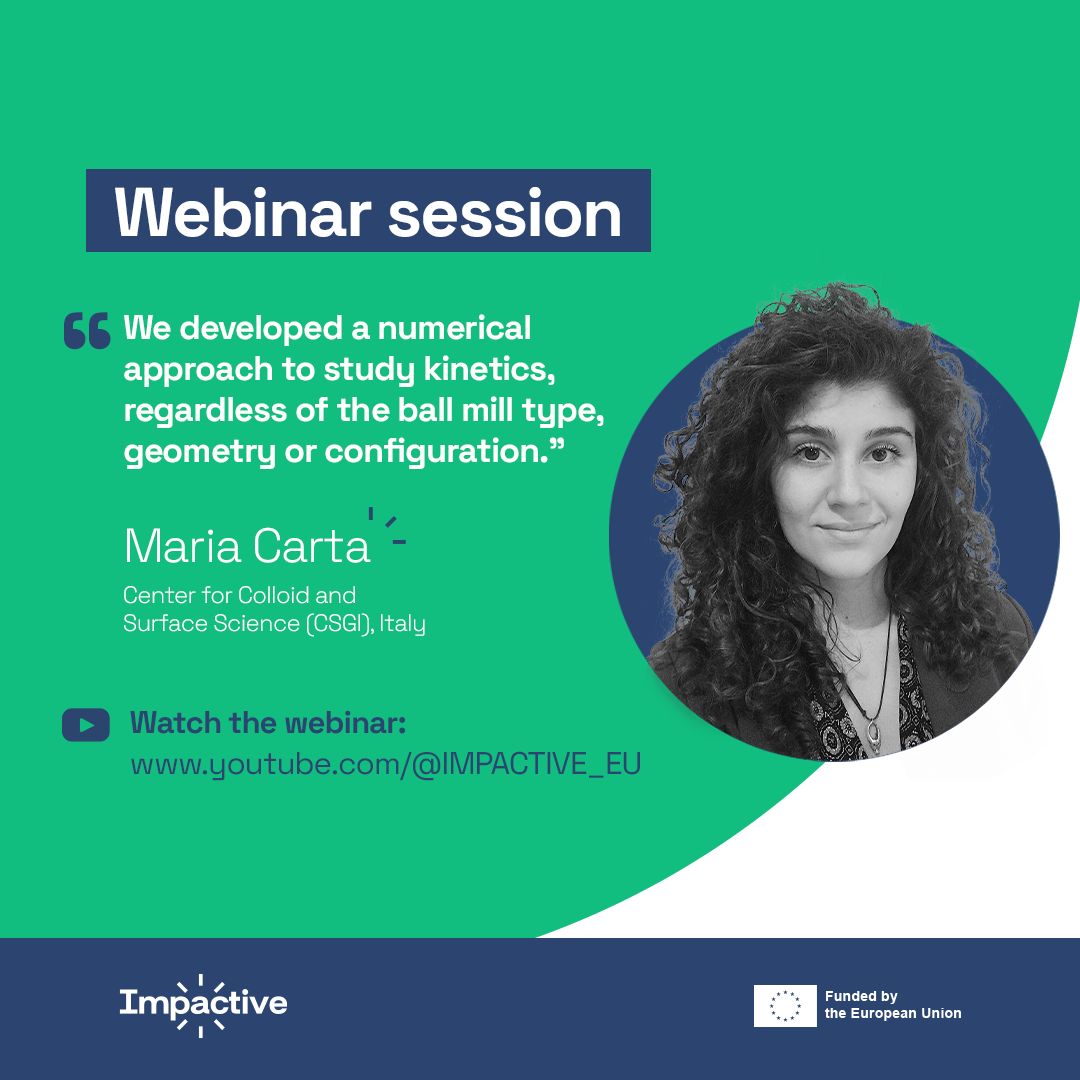
Developing the Athanor tool took our former researcher Maria Carta, from CSGI, a lot of time: she needed to be completely sure that the numerical codes running the tool accurately reflect the physical experiment. 👩💻
🔴 Discover more about it here: https://t.co/yreto2Ccnw
Scaling up mechanochemical processes to industrial production requires a very good understanding of the reactions and their mechanisms, and therefore a very good understanding of reaction #kinetics. 🏭
🔴 Discover more in our latest webinar: https://t.co/yreto2Ccnw
Our WP4 team studies what happens during our reactions. They do this experimentally, but also using a numerical approach to mathematically describe the trajectories of the balls inside the reactors. 👩🔬👩💻
🔴 Discover more in our latest webinar: https://t.co/yreto2Ccnw
To this end, she and our colleagues developed a versatile methodology that can be applied across different types of vibratory ball mills. The result? Athanor.
🔗Athanor website here: https://t.co/BqRPVtzmCm
5/5
In our last #webinar, our former researcher Maria Carta, from CSGI in Italy, introduced the Athanor simulation tool for mechanochemical reactions.
🔴YouTube link here: https://t.co/yreto2Ccnw
🧵👇 1/5
Within IMPACTIVE, one of Maria Carta’s tasks was to assess mechanical processing conditions, with the aim of understanding what really changes from one milling device to another and how these differences affect reaction #kinetics. 4/5
Our 10th #webinar was a success! 🎉 Many thanks to our former researcher Maria Carta, from CSGI, Italy. She explored how jar geometry and milling conditions affect the dynamics in ball mills and introduce the Athanor simulation tool.
🔴 Watch it here: https://t.co/yreto2Ccnw
🖥️ Yesterday, we hosted the final instalment in our #webinar series. Thanks to Maria Carta and to all the speakers who have taken part in these sessions. You can still access our previous sessions on the IMPACTIVE YouTube channel. Enjoy! 😊
https://t.co/UKQhJhkHQ3
Bead mills are another key technique we use ⚙️ These devices use fixed pieces to make chemicals collide. This generates high-energy collisions between particles through shear, impact and shock, driving #mechanochemical reactions.
🔗 Discover more: https://t.co/iBEfRBGMxy
We’ve just came back from Montpellier after celebrating our final general assembly. Many thanks to our management and coordination team at @umontpellier for hosting us. It's been two wonderful days! 💚
https://t.co/YdDcOnpVlH
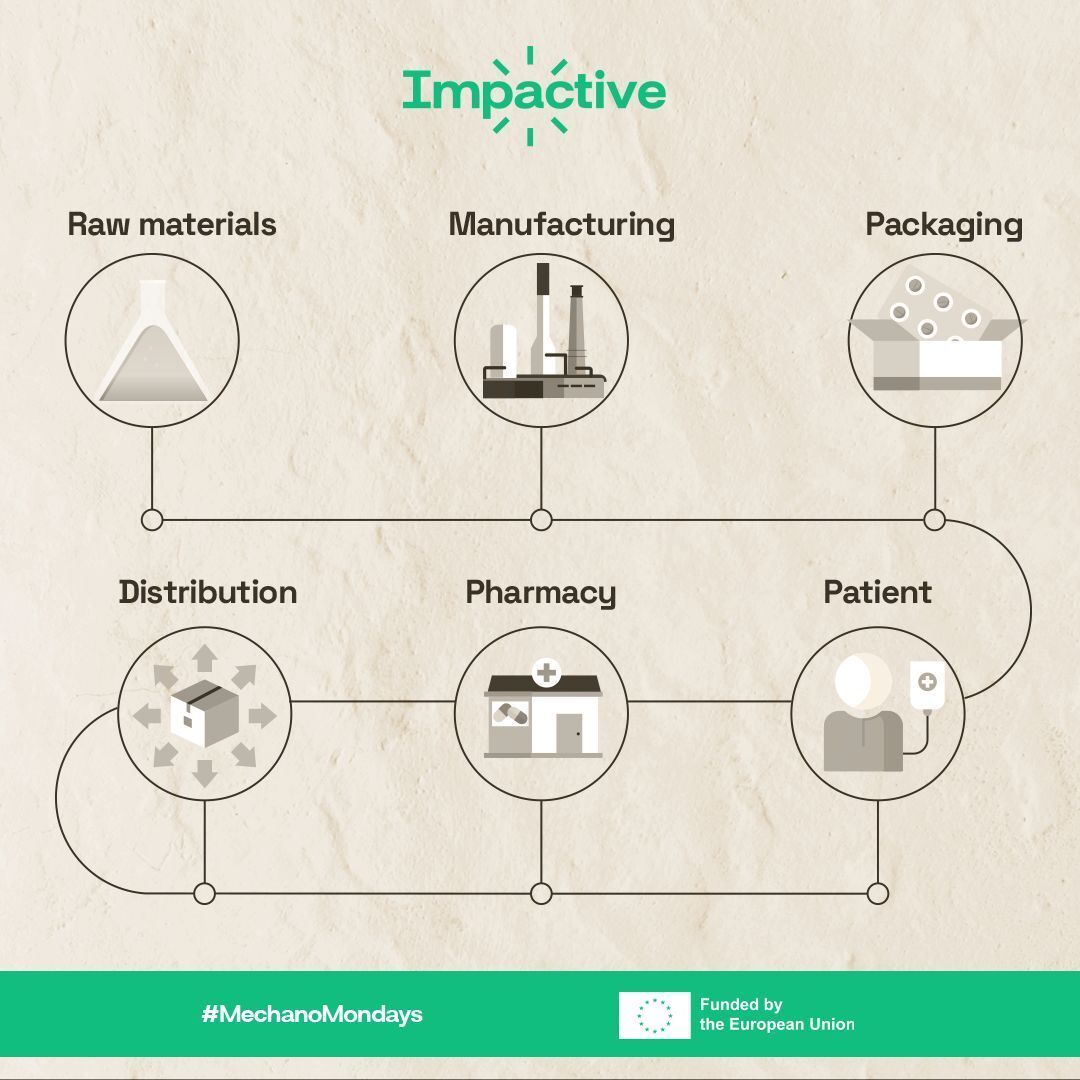
💊 🇪🇺 Mechanochemistry is an opportunity to reduce our reliance on shaky supply chains and strengthening European leadership during emergencies. The result is the democratisation of the development of life-saving medicines.
#MechanoMondays
We hope to have contributed – and to continue contributing – to giving #mechanochemistry a chance to make chemistry more sustainable. And that sentence is not yours, but from this article that we highly recommend: https://t.co/GlrAtB07rU
The future is green 💚
Everything comes to an end. Our IMPACTIVE project is officially ending this month, which means today’s post is the last of our #MechanoMondays series. 🧵 👇
To give just one example, we mechanochemically synthesised a novel cocrystal form of the anticancer drug lenalidomide. You can read the paper here: https://t.co/e3cuxY5GK1
⚙️Ideally, we aim for a balance of cascading and cataracting motion, striking a balance between abrasion and impact breakage while avoiding inefficient centrifuging.
Adjusting the rotational velocity in a ball mill is critical for achieving optimal mechanochemical reactions. 🏃♀️ As the drum mill begins to rotate and the speed increases, the balls and components behave differently. 🧵👇
Centrifuging: When a critical speed is reached, the balls remain stuck against the mill’s walls. This is not very useful for grinding and crushing, proving that, sometimes, less is more.