>be me, normal Japanese guy living in California
>just wanted a quiet Saturday morning coffee and a croissant at a local bakery
>step into a trendy Los Angeles café
>the guy behind the counter is 6'5", covered in neck tattoos, and has a beard that looks like a majestic owl lives in it
>he glares at me with the intensity of a prison warden: "What can I get started for you, boss?"
>my social anxiety spikes immediately; my brain short-circuits into "polite Japanese tourist" mode
>instead of saying "a black coffee," I accidentally blurt out: "I would like... one hot bean water, please."
>dead silence across the entire café
>the barista slowly stops wiping the counter, narrows his eyes, and stares into my soul
>oh god, I just called artisan, single-origin Colombian brew "hot bean water" to a heavily tattooed Los Angeles artisan
>he is going to throw me through the front window
>instead, a slow, terrifying grin spreads across his face
>he leans over the counter, lowers his voice, and whispers: "Hot bean water... damn. That's heavy. Real talk, man. I respect that."
>he turns to the espresso machine like he's mixing a chemical weapon in a Breaking Bad lab
>two minutes later, he slides a massive ceramic mug across the bar
>it's not a regular cup; it's a bowl-sized cauldron filled to the absolute brim with the darkest, most radioactive-looking liquid on Earth
>taste it: it is so strong it instantly cures my seasonal allergies and wakes up my ancestors
>I try to pay with a five-dollar bill, but he waves his hand dismissively:
>"Nah, man. The Bean Water is on the house for the philosopher. You keep that cash."
>try to politely explain that I am not a philosopher, just an idiot who forgot the English word for coffee
>he nods sagely, cutting me off: "Humble too. I dig it. See you next Saturday, Bean Water."
>now I am trapped.
>every weekend I have to walk into that hipster café looking dead-eyed, accept a lethal dose of black sludge, and nod solemnly at a man named Jax while he treats me like an underground cartel boss
>result: accidentally established dominance over a Los Angeles coffee shop using broken English and pure confusion
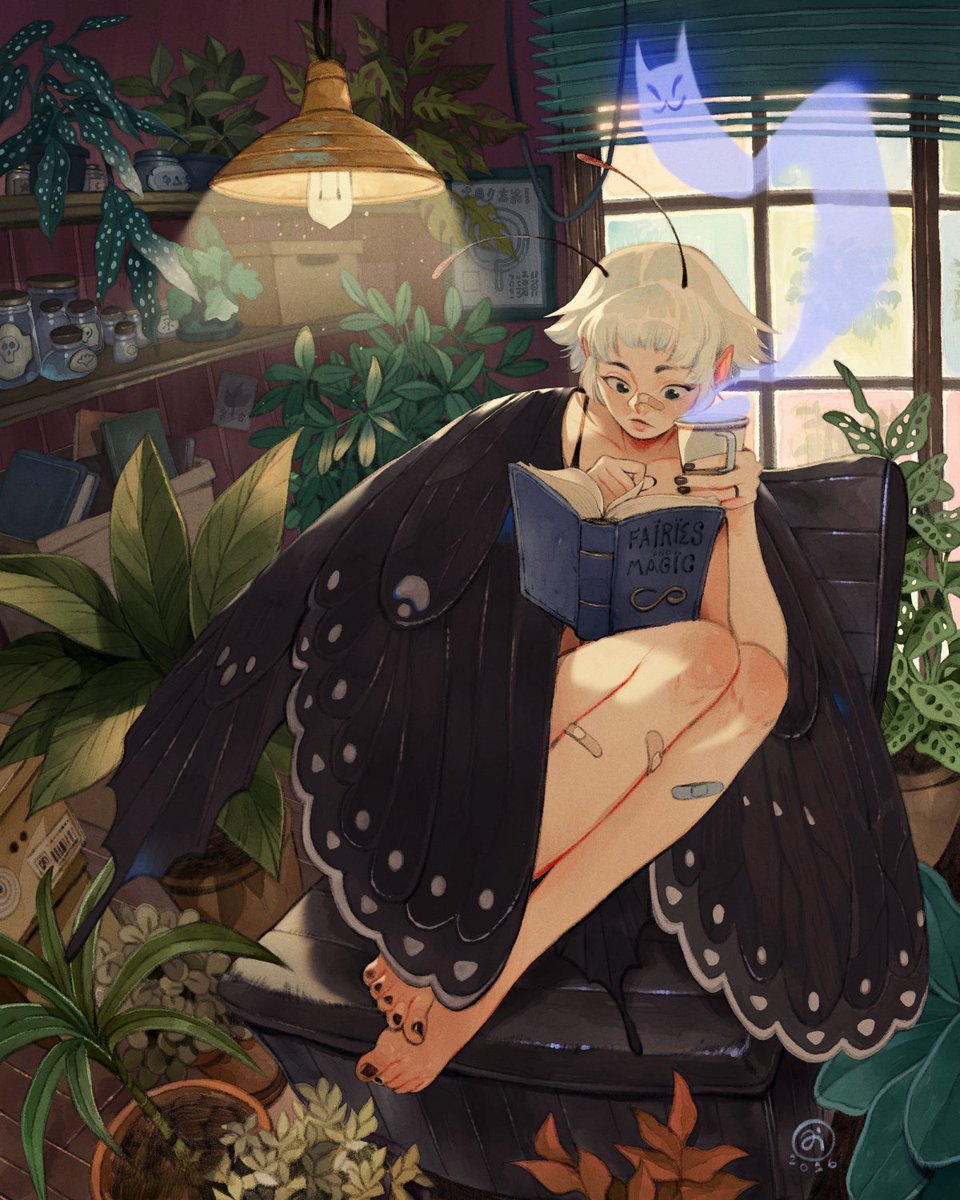
The Witch's Bakery is OUT NOW!
With inspiration from Kiki's Delivery Service and Persona 5, we tell the story of a witch-baker who can heal people's emotions with croissants🥐and baguettes 🥖
I was 16 when my father found out I lost my virginity. After a good ol’ ass whoopin, he took me to our LDS church for me to confess to our adult male bishop of my ‘sin’. There I was, in a small rectangular room sitting in a chair, directly across from this adult male bishop, to discuss me, a 16 year old girl, having relations with my 16 year old boyfriend of almost a year at the time. A picture of Jesus hung on the wall directly above him. All three of them with their eyes on me.
As soon as my father left the room I vehemently mumbled to the bishop, ‘I’m not talking about this.’ Surprisingly, the bishop just nodded his head and said ‘you’re right, we aren’t.’ Instead, he asked if I was safe, handed me a list of support numbers, and shifted the conversation to my classes and hobbies, what I liked most, what made me happy. He told me to focus on those and I’ll be alright. Then he said something I’ll never forget:
Female Draco/Malfoid is so genius that it’s possibly the biggest missed opportunity in the whole series. And what makes it crazy is that you barely have to change the story.
Most of the major scenes could happen almost exactly as written. You’d just add an entirely different layer underneath them. Harry and Malfoy still hate each other. They’re still rivals. She’s still an arrogant, spoiled pure-blood supremacist from a family that represents almost everything Harry despises. But somewhere underneath all of that, there’s an attraction neither one of them particularly wants.
Go all the way back to Madam Malkin’s. Their first meeting suddenly matters more. They meet before either knows who the other is, and there could be just the slightest flicker of interest before Harry realizes what kind of person she is. Then they get to Hogwarts, identities fall into place, and whatever possibility existed immediately turns into hostility.
From there, you almost don’t need to manufacture anything. The existing story keeps putting these two people in each other’s orbit.
The Quidditch rivalry becomes charged. The constant insults become a little too personal. Malfoy seems unusually interested in whatever Potter is doing. Harry insists he can’t stand her while nevertheless noticing her every time she walks into a room.
And then you get to Goblet of Fire, where some of the fanfiction versions of this idea have stumbled onto something that actually works remarkably well: Harry somehow gets stuck taking Malfoy to the Yule Ball.
The reason can be almost comically contrived. A magical obligation, a lost bet, McGonagall forcing some inter-house arrangement, whatever. That's hardly outside the operating logic of Harry Potter. The series routinely uses magical rules, school traditions and bizarre circumstances to force characters into situations they would never voluntarily choose.
The important part isn't how you get them there. It's what happens once they're there.
Because now Harry has to spend an entire evening with Malfoy when neither of them can retreat into their normal roles.
For the first time, Harry sees her dressed for a formal occasion instead of wearing Slytherin robes and a sneer. There's that horrible teenage moment of realizing, Oh no. Malfoy is actually beautiful.
And she gets the corresponding realization about him.
They're still antagonistic. They probably spend half the night insulting each other. But eventually they actually talk. Maybe they even have fun for ten minutes before remembering they're supposed to hate each other.
Then Malfoy goes home for Christmas.
And Lucius finds out that his daughter went to the Yule Ball with Harry Potter.
That's where this version could suddenly become much more serious.
Lucius beats her for it.
You wouldn't need to make it melodramatic or turn Draca into a helpless victim. In fact, it works better if Harry doesn't even know immediately. She comes back to Hogwarts acting exactly like Malfoy always acts; arrogant, hostile, determined that nobody see anything underneath.
But Harry notices something is wrong.
Eventually he discovers what happened.
And that would fundamentally alter the way he sees her.
Because Harry understands this.
Maybe better than almost anyone at Hogwarts.
Harry knows what it's like to be a child living in a house where an adult can hurt you and everyone outside that house has no idea. He knows what it's like to dread going home. He knows what it's like to cover up what's happening and then show up at school pretending everything is normal.
And suddenly Harry has to reconcile two apparently contradictory facts:
Malfoy is awful to him.
And Malfoy's father is awful to her.
One doesn't erase the other.
That's much more interesting than simply revealing that she was secretly nice all along. She can still be prejudiced. She can still call Hermione a Mudblood. She can still bully people. Harry can still genuinely dislike enormous parts of who she is.
But now he can't flatten her into Malfoy = bad anymore.
And crucially, she knows that he knows.
Imagine how humiliating that would be for her. Of all people, Potter knows.
So maybe she becomes even nastier toward him afterward.
And Harry can't understand why.
Hermione probably can.
That gives you an emotional thread that can sit quietly underneath the next several books without taking over the story.
Then Half-Blood Prince is where the idea becomes almost absurdly perfect, because the story Rowling already wrote starts behaving like a dark romance without actually being one.
Harry becomes obsessed with Malfoy.
Where is she? What is she doing? Why is she disappearing? What is she hiding?
Everyone else thinks Harry is being ridiculous. Ron could basically spend half the movie going, “Mate, you realize you talk about Malfoy constantly?”
And Harry's answer is completely sincere:
“Because she's a Death Eater!”
Which, of course, she actually is.
That's what makes it work. You don't have to turn her into a misunderstood sweetheart. In fact, doing that would ruin it. She's genuinely involved with something horrifying. Harry's attraction doesn't make his suspicions wrong; it makes the situation worse.
And now the earlier Lucius storyline pays off.
Harry knows what her father is capable of.
So when he realizes Voldemort has given Malfoy an impossible assignment, Harry can understand something the others might miss: this isn't necessarily an honor. It may be another form of punishment directed at the Malfoy family.
Then you get the bathroom scene.
Instead of simply being a brutal confrontation between two enemies, Harry finds the girl he's spent years fighting (and whom he now suspects of being a Death Eater) crying alone in a bathroom.
For once, there's nobody else around.
No Crabbe and Goyle. No Ron and Hermione. No audience.
Just Harry and Malfoy.
And everything explodes.
Harry nearly kills her.
Now imagine him standing there afterward, looking down at her bleeding on the floor.
Because he's seen Malfoy hurt before.
Her father did it.
And now Harry has too.
That realization would absolutely devastate him.
Then the Astronomy Tower takes it further. Harry watches her stand over Dumbledore and realizes she can't do it.
Not because she's secretly been good all along.
Because she's sixteen, terrified, trapped by her family and Voldemort, and discovering that becoming the person she was raised to be is much easier in theory than in reality.
And then you arrive at Malfoy Manor.
That scene barely needs to change at all.
She's asked whether the disfigured prisoner is Harry Potter.
She knows.
Harry knows she knows.
And she says she isn't sure.
That's the moment.
No kiss. No confession. No sudden declaration that she's joining the good guys.
Years earlier, Harry learned what happened to her when Lucius discovered she'd gone to a school dance with Harry Potter.
Now she's standing in Lucius Malfoy's house, surrounded by Death Eaters, with Voldemort potentially one summons away.
All she has to do is say:
“That's Harry Potter.”
And she can't do it.
Harry realizes that Malfoy may have just saved his life.
That also gives Harry saving her during the Battle of Hogwarts much more weight. Neither of them has formally switched sides for the other. They just keep reaching moments where the other person's life is actually in their hands and they can't let them die.
The crucial thing is that I wouldn't actually have them become a couple during the main story. That would make it too neat. Let the war finish first. Let Malfoy remain complicated: proud, damaged, occasionally awful, deeply attached to her family, and forced to reckon with what that family taught her.
Then, after Voldemort is gone, you finally allow all those years of hatred, fascination, attraction, guilt and reluctant respect to become something else.
And suddenly Harry's romantic story isn't something that appears relatively late in the series. It's been quietly developing since the first book.
It even reinforces one of the central ideas of Harry Potter: the family you're born into doesn't have to determine the person you become.
Harry isn't defined by the Dursleys. Sirius isn't defined by the Blacks. And Malfoy doesn't necessarily have to become what Lucius intended his daughter to become.
That's why I think the idea is so compelling. It's not just “Draco would be hotter as a girl” or an enemies-to-lovers gimmick. Changing one variable creates a seven-book romantic arc almost entirely out of material that's already there.
And then, after everything Harry Potter has been through, you get the most ridiculous possible final punchline:
Harry Potter marries a Malfoy.
Which means Lucius Malfoy has to spend the rest of his natural life knowing that the daughter he once beat for going to a school dance with Harry Potter eventually married Harry Potter.
And Harry Potter is now the father of his grandchildren.
Christmas at Malfoy Manor would be spectacular.
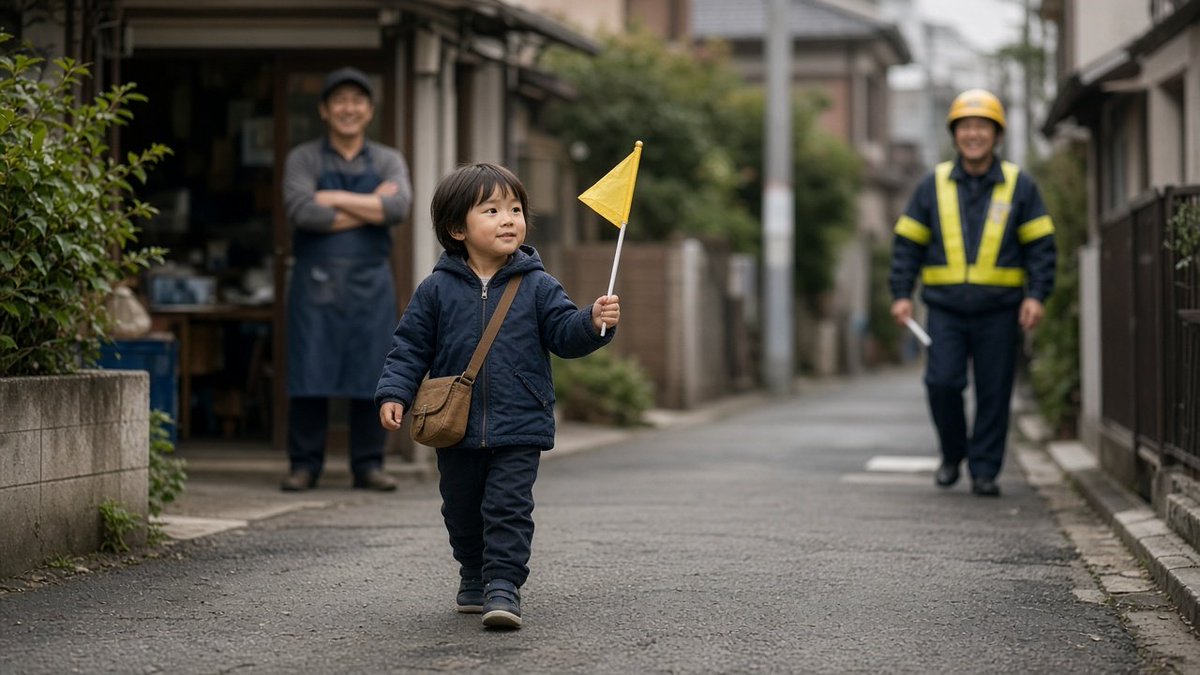
When the Japanese TV show "Old Enough!" hit Netflix, international viewers watched with their jaws on the floor.
A 4-year-old toddler in a tiny coat walks alone down public streets, holding a little yellow safety flag to buy fish for his mom.
Viewers kept waiting for disaster.
Instead, they witnessed pure communal love:
When the child reaches a crosswalk, cars stop instantly. Drivers wait patiently with gentle smiles, waving him across with zero honking.
The neighborhood baker steps outside just to keep an eye on him as he turns the corner.
The fishmonger greets the boy like his own grandson, carefully counting his coins and tucking a little treat into his shopping basket.
"You walked all by yourself? What a brave big boy!"
That child isn't actually alone.
The entire neighborhood is acting as an invisible safety net.
A society built so safely that the world outside a front door doesn't feel like a jungle—it feels like an extended living room.
When my little brother was about six, he was terrified of our basement. To get him to stop screaming every time Mom asked him to grab soda from down there, I told him the basement ghost was named Gary and Gary was legally not allowed to touch you if you were aggressively doing the Macarena. I completely forgot I made this up. Fourteen years later, I'm visiting him at his college house. It's 1 AM, we're making ramen, and he needs to go down to their dingy, unfinished basement to grab paper towels. I watch this 6'2", 200-pound college rugby player open the basement door, take a deep breath, and descend into the pitch black while violently and silently hitting the Macarena steps all the way down the stairs. I heard him whisper-yelling "HEEEEEY MACARENA" from behind the furnace. I didn't even have the heart to tell him. If Gary is real, Gary is definitely respecting the boundary.
Un animador de Pixar que trabajó en Ratatouille, WALL-E y Up se tomó un año sabático de la empresa para volver a España y hacer esto. 5 minutos que ganaron el LA Shorts Fest.
ALMA de Rodrigo Blaas, es terrorífico sin sustos.
Que puedas trasplantar depresión de un humano a una rata solo con su microbiota intestinal es de las cosas más fuertes que ha dado la neurociencia reciente. Cambia del todo cómo entendemos el ánimo: no todo empieza en la cabeza, buena parte se cocina en el intestino.