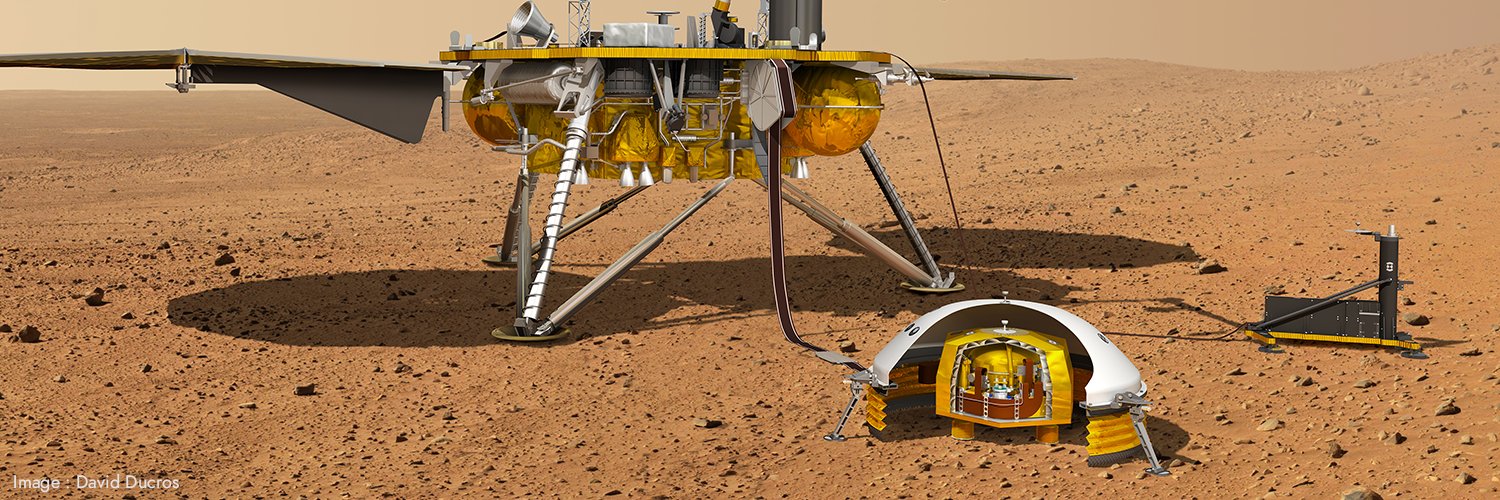
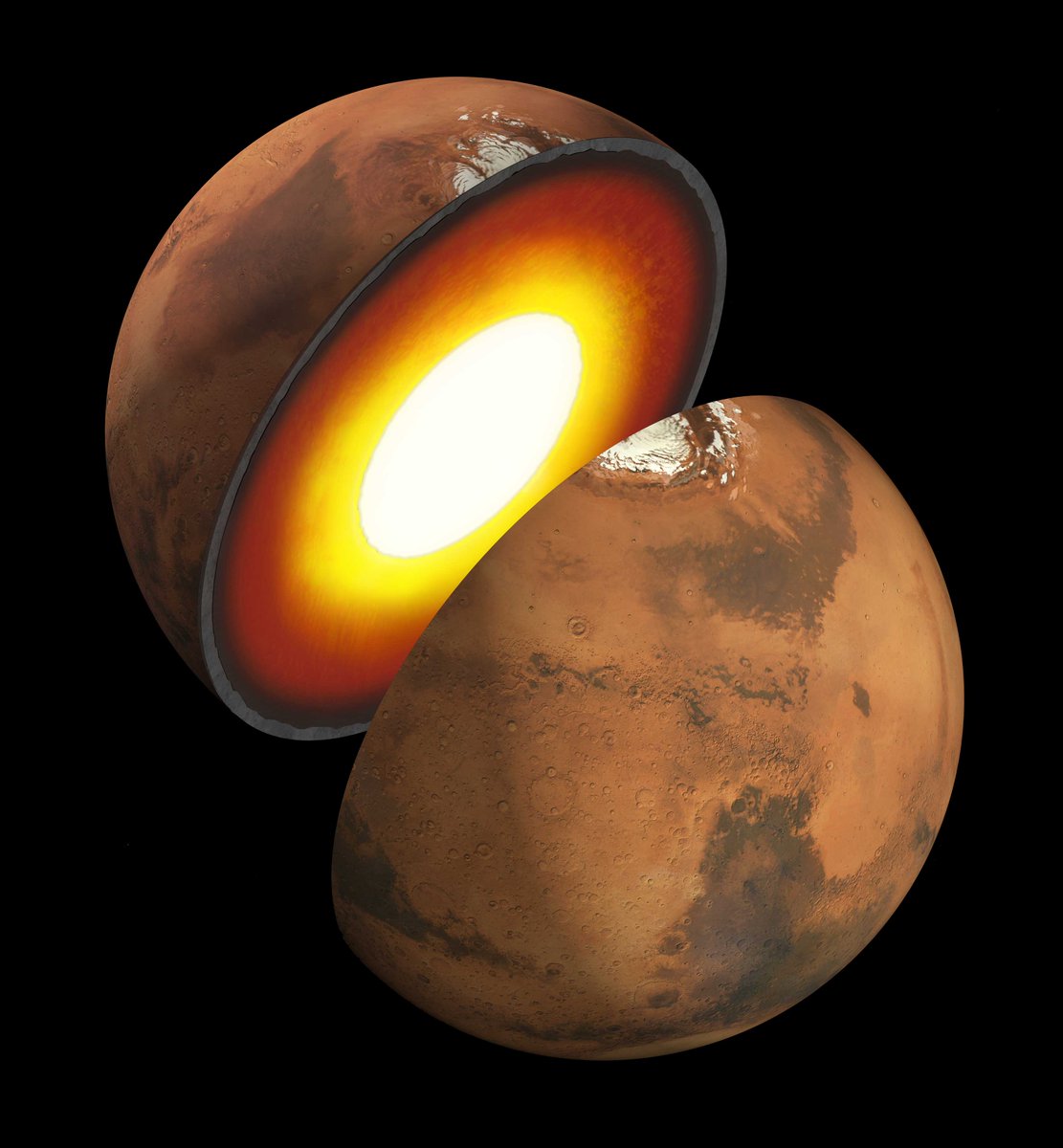
SEIS (Seismic Experiment for Interior Structures) écoute battre le ❤️ de Mars! Il permettra de mieux comprendre l’histoire de la planète et sa structure 🚀🔎🔴📡📻
🇺🇸 Tuned in to @NASAInSight mission on #Mars from your Home : starting Monday, March 30th, activities, questions, discoveries, a daily online appointment for the whole family!
https://t.co/AqrZyS8QVj
Here it is! Our last #VR app for @CNES dedicated to @NASAInSight! #seissurmars
>> a homemade 3D model of the lander and a huge work on real images. All processes of deployment are rendered as if you were there!!
>> more info: https://t.co/FCnHZ16DOp
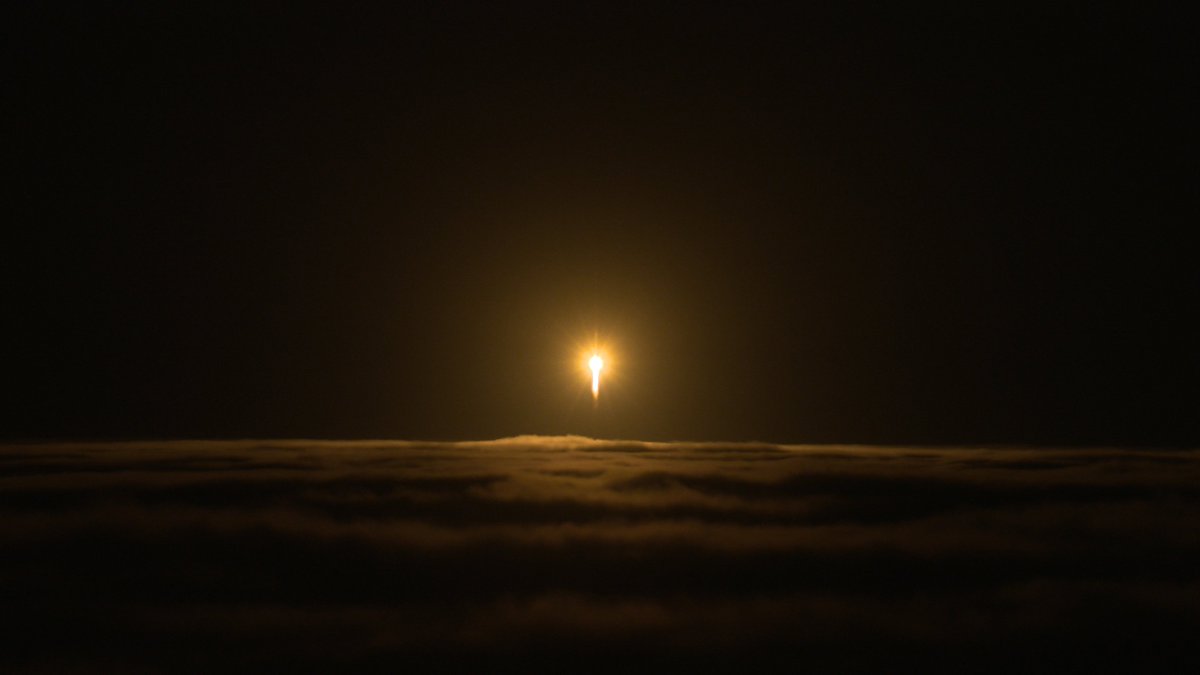
Two years ago today, I was on my way -- blasting off to Mars and bringing 2.4 million of your names with me. You’re part of a community of explorers that’s now up for a #Webby!
Vote by May 7: https://t.co/Bo1PvIK0Wu
Déjà de nombreux inscrits à notre #MarsMOOC.
🚨 Il vous reste encore 2 jours pour nous rejoindre📍 ici : https://t.co/RrD10im42Q
Many subscribed to our #MarsMOOC already.
🚨You still have 2 days to join us📍 here: https://t.co/RrD10im42Q
@APBG_National@InSight_IPGP
🇫🇷 La version la plus récente (v2) du catalogue sismique martien est désormais disponible. Elle comprend tous les événements enregistrés jusqu'à la fin de l'année 2019 :
https://t.co/Y3C4buwEKB
🇺🇸 The fourth set of SEIS data (covering the period from October 1st to December 31, 2019) is online. The Mars Quake catalog, compiled by the Mars Quake Service, will be updated soon.
https://t.co/xALYmwQQnV
🇫🇷 Le quatrième jeu de données SEIS (du 1er octobre au 31 décembre 2019) est en ligne. Le catalogue sismique martien, compilé par le Mars Quake Service, sera mis à jour prochainement.
https://t.co/drNW1fkBiV
🇺🇸 The newest version (v2) of the Mars Quake Catalog is now online. All the events recorded until the end of 2019 are included :
https://t.co/fLYsOGBBz8
Learn about #Mars and my mission from home, with lessons, activities, and even some new quizzes and games created by our partners on my seismometer team @InSight_IPGP. It’s all available for students, teachers and learners of any age, over at: https://t.co/NWxEqGoyRK
🇫🇷 Continuez à suivre la mission @NASAInSight sur
#Mars depuis chez vous : dès lundi 30 Mars, des activités, des questions, des découvertes, un rendez-vous quotidien en ligne pour toute la famille !
https://t.co/AqrZyS8QVj
🇺🇸 Tuned in to @NASAInSight mission on #Mars from your Home : starting Monday, March 30th, activities, questions, discoveries, a daily online appointment for the whole family!
https://t.co/AqrZyS8QVj
🇫🇷 L'article sur la sismicité de Mars (Giardini et al.) est maintenant en libre accès. Pour une vision complète du sujet, vous pouvez également vous plonger dans les articles scientifiques et techniques de Banerdt et al. ainsi que Lognonné et al.
https://t.co/mlr3LtbOOh
🇺🇸 "The seismicity of Mars" paper (Giardini et al.) is now in open access. For a complete picture, you can also burrow yourself into the science and technical pieces by Banerdt et al. and Lognonné et al.
https://t.co/Ub1gAK3i0G
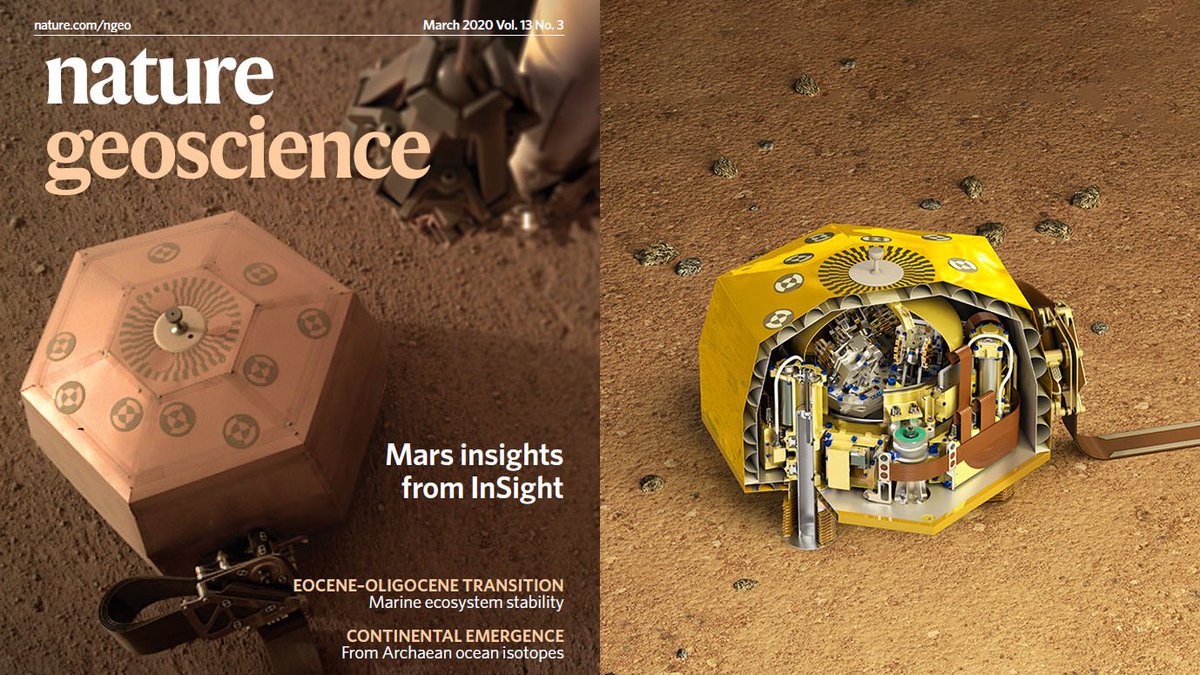
🇫🇷 En plus des articles scientifiques en accès libre, je vous suggère la lecture de "Mars gets geophysical", un éditorial de @NatureGeosci très intéressant sur la renaissance de la sismologie martienne et planétaire, avec les compliments de @NASAInSight !
https://t.co/6sR5GUdjeb
🇺🇸 In addition to the open access research papers, you can also enjoy reading "Mars gets geophysical", a very interesting @NatureGeosci editorial about the rebirth of Martian and extraterrestrial seismology, thanks to @NASAInSight !
https://t.co/6sR5GUdjeb
🇫🇷 Plusieurs articles @NASAInSight publiés dans @NatureGeosci sont en accès libre : résumé général (Banerdt et al.), propriétés de la croûte (Lognonné et al.), dynamique de l'atmosphère (Banfield et al.) et géologie du site d’atterrissage (Golombek et al.)
https://t.co/mlr3LtbOOh
🇺🇸 Several @NASAInSight papers published in @NatureGeosci are in open access : a results summary by Banerdt et al., Mars crustal properties by Lognonné et al., dynamics of Mars atmosphere by Banfield et al., geology of the landing site by Golombek et al.
https://t.co/Ub1gAK3i0G
@JaySelector As a side note, in the following months our outreach team will release lot of educational materials. One of the hands-on activity will offer the opportunity to perform detailed analysis of the most interesting marsquakes to date, such as the sol 173 and 235 events.
🇺🇸 This is what a low frequency (LF) marsquake looks like. Compared to high frequency (HF) events, they are less common, more powerful, and they find their origin in deeper regions of the Red Planet. For two of them, the signals were so clear that the epicenter has been located.
@JaySelector The color range indicates also the energy of the marsquake (deep blue : lowest energy release, light green : highest energy release). So you can see not only the most energetic frequencies of a given quake (above : sol 235 event), but also the variation of this energy over time.
@JaySelector The visual is a spectrogram (a graphic representation of seismic signals more commonly used than waveforms by SEIS seismologists). Time is indicated on the horizontal axis, and frequency on the vertical axis. The P and S lines are indeed arrival times.