@Retlouping I often find that research artices come in batches per year - as if something new was triggered & several researchers jumped on the bandwagon. When no other research was done on the same topic [new knowledge], the older research result is still the one to reference.
A psychologist at the University of North Carolina spent 20 years proving that a single 20-second hug rewires the human cardiovascular system, and the experiment she ran is so simple you can replicate it tonight at home.
Her name is Karen Grewen.
She works inside the UNC School of Medicine's Department of Psychiatry. The paper that made her famous was published in 2003, and almost nobody outside her field has read it.
Here is what she actually did.
She recruited 183 healthy adults living with a long-term partner. She split them into two groups. The warm contact group sat together for 10 minutes holding hands while watching a romantic video. Then they stood up and hugged each other for exactly 20 seconds.
The control group sat alone in a separate room for the same amount of time doing nothing.
Then she made every single one of them give a public speech in front of a panel.
Public speaking is one of the cleanest stressors in psychology. Heart rate spikes. Blood pressure climbs. Cortisol floods the system within minutes. It is the laboratory version of every stressful moment you have ever had at work.
The people who had been hugged for 20 seconds before walking into that room had measurably lower blood pressure responses to the stress. Lower systolic. Lower diastolic. Lower heart rate increases. Everything was the same.. the speech, the panel, and fear. But this time completely different physiological response.
The hug had not made the stress disappear. It had changed how the body was allowed to respond to it.
Two years later Grewen ran the follow-up study that explained why. She drew blood from 38 couples before and after the same warm contact protocol and measured what was actually changing inside them. The answer was a hormone called oxytocin.
Oxytocin is the chemical your body releases during childbirth, breastfeeding, and orgasm. It is the same molecule that makes a mother feel calm holding her newborn.
Grewen's data showed that 20 seconds of physical contact with a trusted partner triggered a measurable spike in plasma oxytocin in both men and women, and the size of that spike directly predicted how much their blood pressure dropped.
The mechanism turned out to be older than recorded history. Oxytocin binds to receptors in your heart, your blood vessels, and the part of your brainstem that controls how aggressively your nervous system reacts to threat.
When the hormone shows up, the entire fight-or-flight machine downshifts. Your blood vessels widen. Your heart slows. Your cortisol production gets suppressed.
This is not a feeling. This is a chemical instruction your body sends to itself that you can measure with a blood pressure cuff.
The detail Grewen kept emphasizing in her interviews was the duration. Three seconds is the average length of a hug between two humans. It is too short.
The hormonal cascade does not have time to start. 20 seconds is the threshold where the oxytocin actually crosses into the bloodstream in a quantity large enough to do something measurable.
A follow-up study tracked 59 premenopausal women over time and found that the ones who hugged their partners most frequently had lower resting blood pressure and higher baseline oxytocin levels than the ones who did not. The effect compounded. Daily hugs produced a permanent shift in the cardiovascular baseline.
A separate review of long-term partner contact research found that married adults with frequent affectionate touch had significantly lower rates of heart disease and all-cause mortality than equally healthy adults without it.
The American Heart Association now cites this body of research when explaining why social isolation is treated as a cardiovascular risk factor on the same level as smoking.
The most haunting line in Grewen's research is one she said in an interview after publishing the second paper. She pointed out that the average American touches another human being less than they did 50 years ago. Phones replaced eye contact. Texts replaced visits. Hugs at the door got shorter.
The thing that used to regulate our cardiovascular system multiple times a day quietly disappeared from most adult lives.
Your body still expects it. The hormone receptors are still there waiting. The system was designed to be reset by physical contact with people who feel safe, and the reset takes 20 seconds.
You can run the experiment yourself tonight. Hug someone you love for 20 full seconds. Count it out. The first 10 will feel awkward. Around 15 something shifts. By 20 the shoulders drop, the breathing slows, the chest opens.
That is not in your head. That is your bloodstream changing.
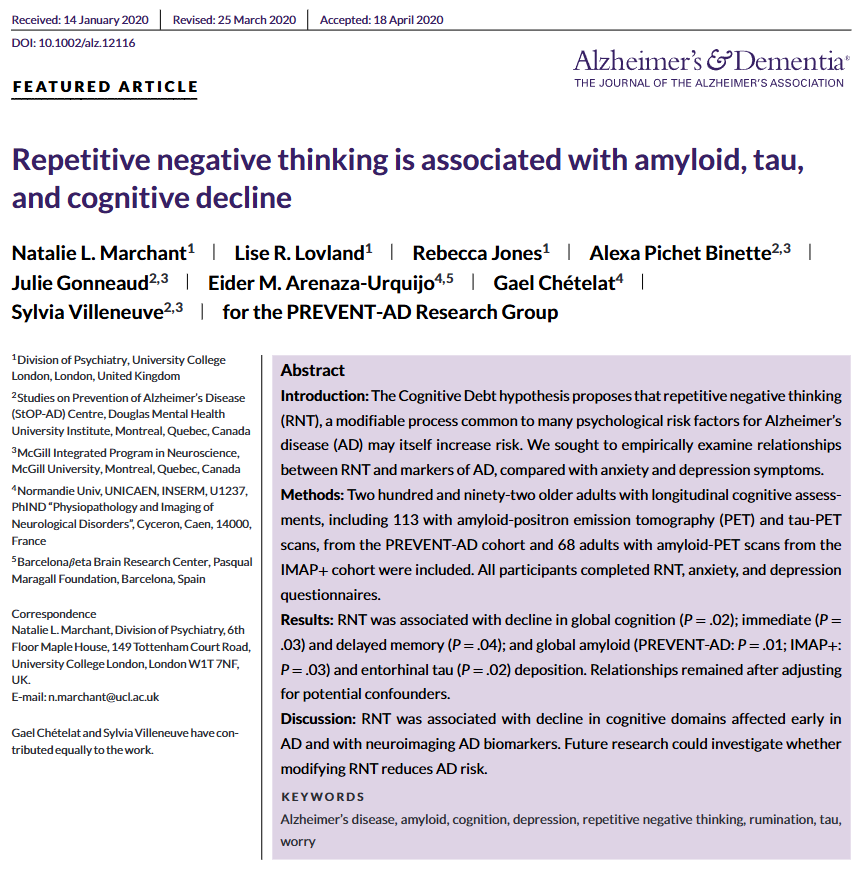
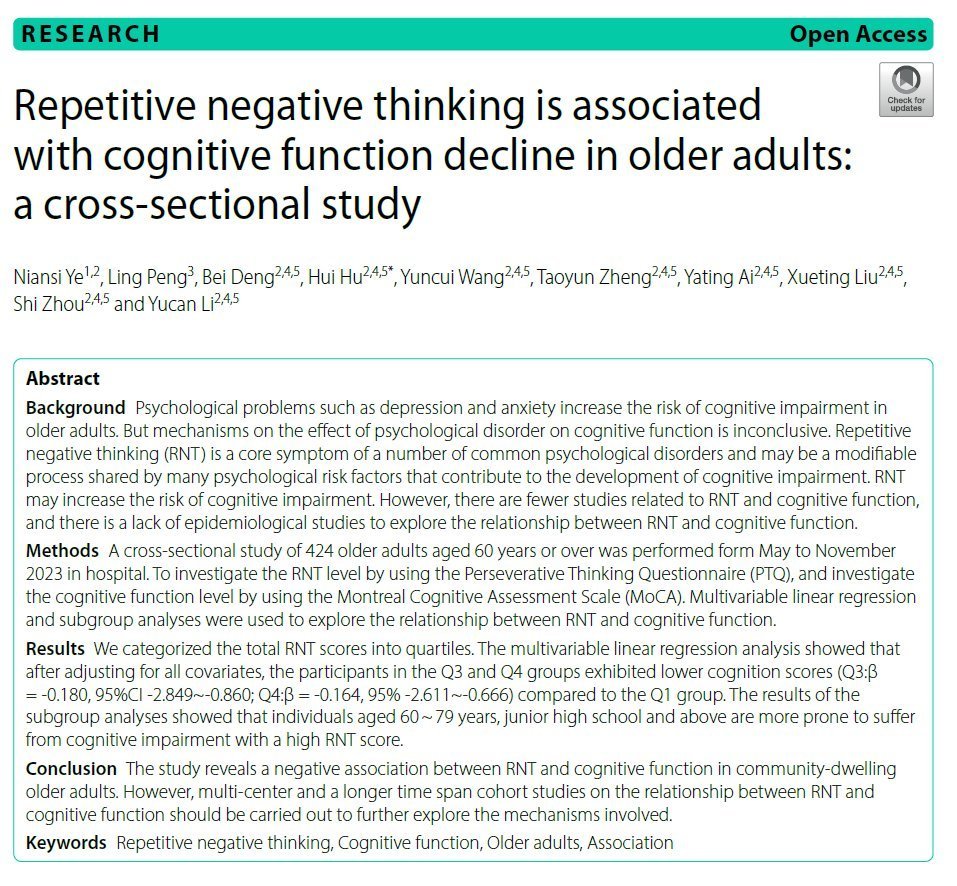
Repetitive negative thinking (RNT) may harm the aging brain.
A study of 424 adults aged 60+ found that higher levels of persistent negative thoughts were significantly associated with lower cognitive function scores.
Mental patterns matter for brain health.
DOI: 10.1186/s12888-025-06815-2
BREAKING: Music legend Bruce Springsteen drops a bomb on MAGA world by announcing a surprise nationwide tour to defend America against "our wannabe king" and his "rogue government."
Best of all? The first stop is in Minneapolis.
"Fans, friends, and good folk from coast to coast. We are living through dark, disturbing, and dangerous times, but do not despair. The cavalry is coming," The Boss said in an announcement video.
"Bruce Springsteen and the E Street Band will be taking the stage this spring from Minneapolis to California to Texas to Washington, D.C. for the Land of Hope and Dreams American Tour," he continued. "We will be rocking your town in celebration and in defense of America, American democracy, American freedom, our American Constitution, and our sacred American dream, all of which are under attack by our wannabe king and his rogue government in Washington, D.C."
"Everyone, regardless of where you stand or what you believe in, is welcome," Springsteen added. "So come on out and join the united free republic of E Street Nation for an American spring of rock and rebellion. I'll see you there."
By starting the tour in Minneapolis, Springsteen is intentionally drawing attention to the brutal violence and killings that Trump has inflicted on the city with his masked federal agents. The singer composed the hit song "Streets of Minneapolis" in response to the ICE crackdowns. It went on to chart #1 in 21 countries.
The tour starts March 31st and will entail 20-date arena showings. The timing is an absolute disaster for Trump, because it means the bard of blue collar America will be hammering his administration at one sold-out show after another. Given his rock bottom approval rating and worsening Epstein scandal, Trump can scarcely afford more bad press ahead of the midterm elections.
Springsteen has proven to be one of Trump's most formidable and outspoken foes. He recognizes that this president has betrayed the working class that populate so many of his hit songs and he despises the relentless attacks on our democracy.
Please ❤️ and share to thank Bruce Springsteen!
For anyone who would like to hear Mark Carney’s outstanding Davos speech in full here it is. This is what true global leadership looks like.
Canada should be immensely proud today, because they are leading the fight back when others dare not.
🎥 TikTok - https://t.co/BExGV2YIDq
Communication skills arent 'soft skills' - they are critical skills for clinicians and patients...
Thats one of the reasons we set up
@EvoolvePainCare
to support clinicians to develop these skills.
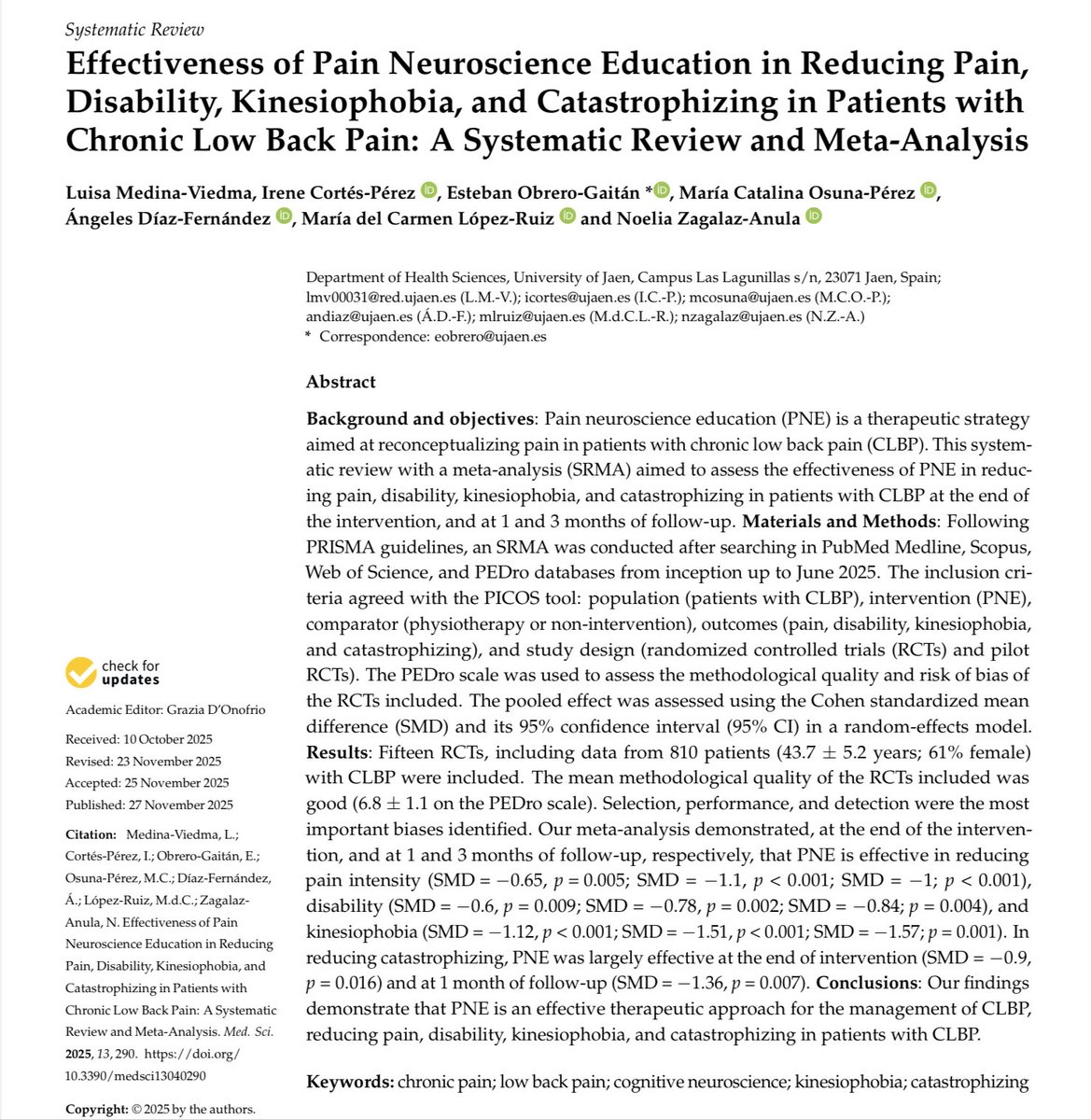
Effectiveness of Pain Neuroscience Education in Reducing Pain, Disability, Kinesiophobia, and Catastrophizing in Patients with Chronic Low Back Pain: A Systematic Review and Meta-Analysis
https://t.co/FDaDCprUGZ
@FFizzeo@Mattjones0203 I can honestly say that our PTs were first to change to contemporary pain neuroscience ( before the medical profession) It is now incorporated in all MSK courses and undergrad at most universities here
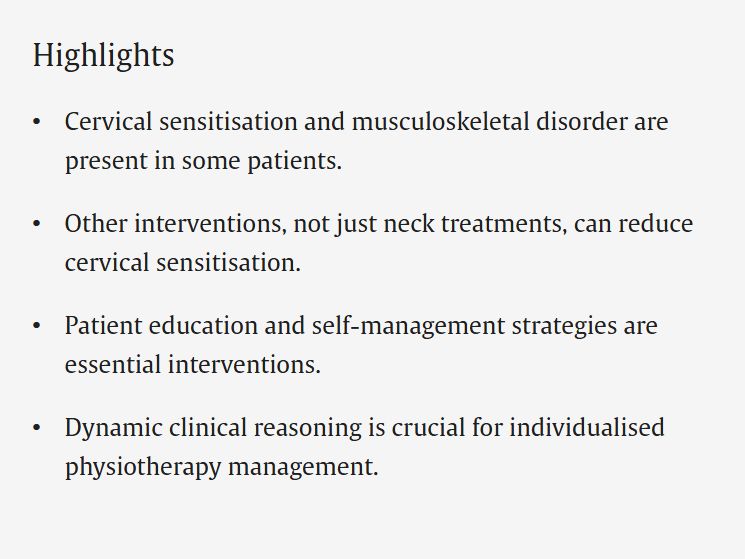
Migraine is not “just a headache”. And neck pain in migraine is not always a neck problem.
This clinical masterclass outlines an individualized physiotherapy assessment framework for migraine, centered on identifying cervical sensitization, determining the presence and relevance of cervical musculoskeletal disorders, and tailoring management accordingly. The paper challenges routine neck-focused interventions and emphasises when cervical findings are meaningful, when they are not, and how they should guide, not dictate, treatment decisions.
By integrating patient interview, selective physical examination, and mechanism-based reasoning, this approach supports more precise, patient-centered care and avoids over-treatment in a highly heterogeneous condition.
For the full link access here: https://t.co/g32GkX8Rcm
#Migraine #PainScience #Cervical sensitization #patient interviews
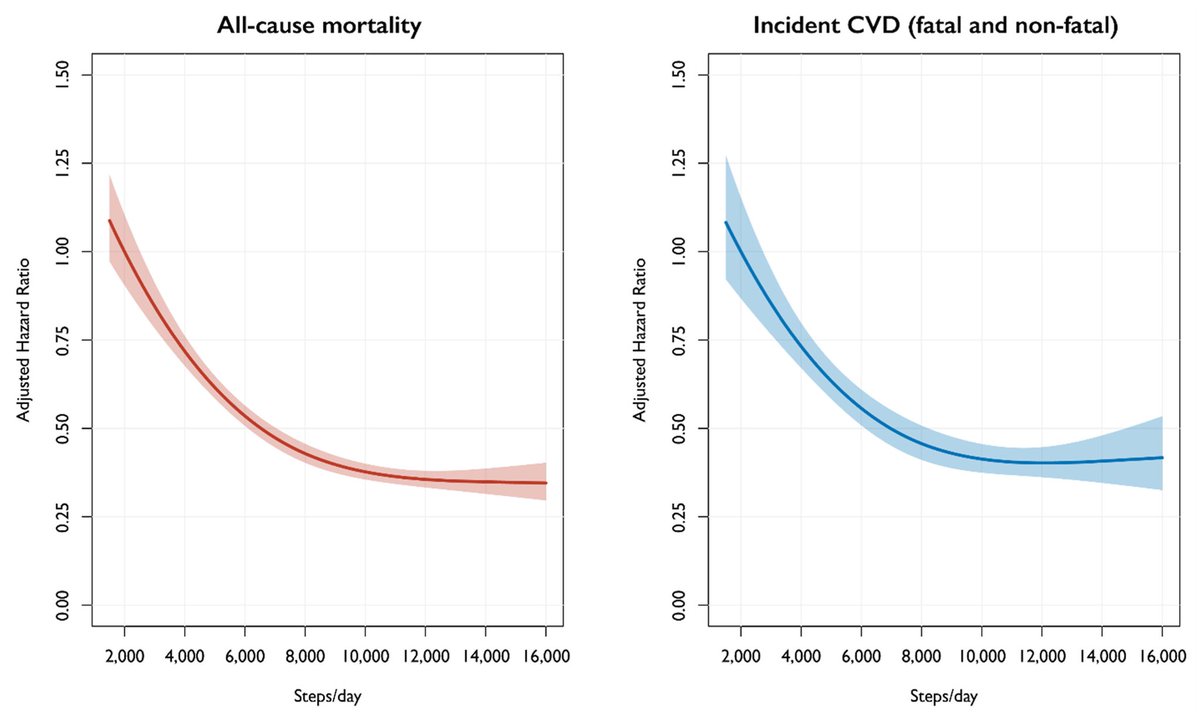
A clinical discussion I have every day. The benefits of physical activity happen well before 10k steps/day. Meet people where they are. More is better but a little goes a long way.
https://t.co/9cS9TicDti
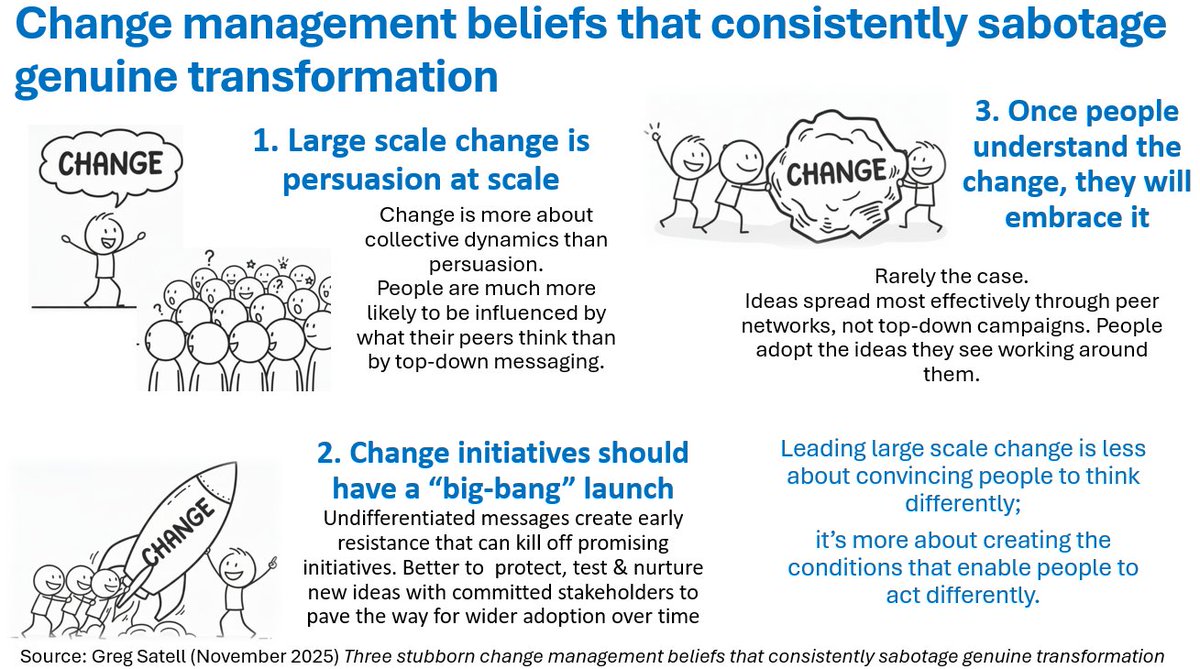
Our beliefs & assumptions about change are often the biggest barrier to leading & enabling effective change.
@DigitalTonto describes “change management beliefs that consistently sabotage genuine transformation”.
The first such belief is that large scale change is persuasion at scale; the idea that we can change opinion across an organisation by communicating a compelling case. However, change is much more about collective dynamics than about persuasion. People are more likely to be influenced by what their peers think than by top-down messaging. If we want change to spread, we need to help activate peer networks.
The second belief is that a large scale change initiative should have a “big bang” launch. The aim is to create widespread awareness that the change is happening & drive the message home. The problem is that undifferentiated messages create early resistance that can kill off promising initiatives. Much better to protect, test & nurture new ideas with committed stakeholders to pave the way for wider adoption over time, rather than trying to convince everyone at once.
The third belief is that once people understand the change, they will embrace it. The issue is that people are typically navigating many competing influences—prior beliefs, habits, social pressures & noise from many directions. That’s why ideas spread most effectively through peer networks, not top-down campaigns. People adopt the ideas they see working around them.
What might work better?
1. Deliberately starting where there’s already energy & enthusiasm & building out from a local majority (eg., three allies in a room of five) instead of trying to convert everyone first
2. Intentionally working through & connecting peer networks so people are influencing “others like us”, rather than relying on one-to-many broadcasts
3. Creating early proof through local majorities that “people like us are already doing this,” tapping into social proof rather than abstract persuasion techniques.
4. Expecting that some people will resist change & take steps to work with it, rather than assuming that better messaging will win “resistors” over
5. Focusing less on increasing information and more on enabling people to see others like them succeeding with the new behaviours, so they can appropriate and adapt the change as their own.
Leading large scale change is less about convincing people to think differently; it’s more about creating the conditions that enable people to act differently.
https://t.co/EWYFYVfxcO