Interested in learning more about the promises and pitfalls of #carbonfarming and soil-based #CDR? Join us for a one-week immersive course in Normandy this September!
https://t.co/GqCdSqMHne
Answers vary from facilitating good governance of an unstoppable trend, to creating fora for inclusive discussion, to uncovering hidden power dynamics. In all of this, we need to be more aware of how socio-material conditions from the past are shaping our present and our future
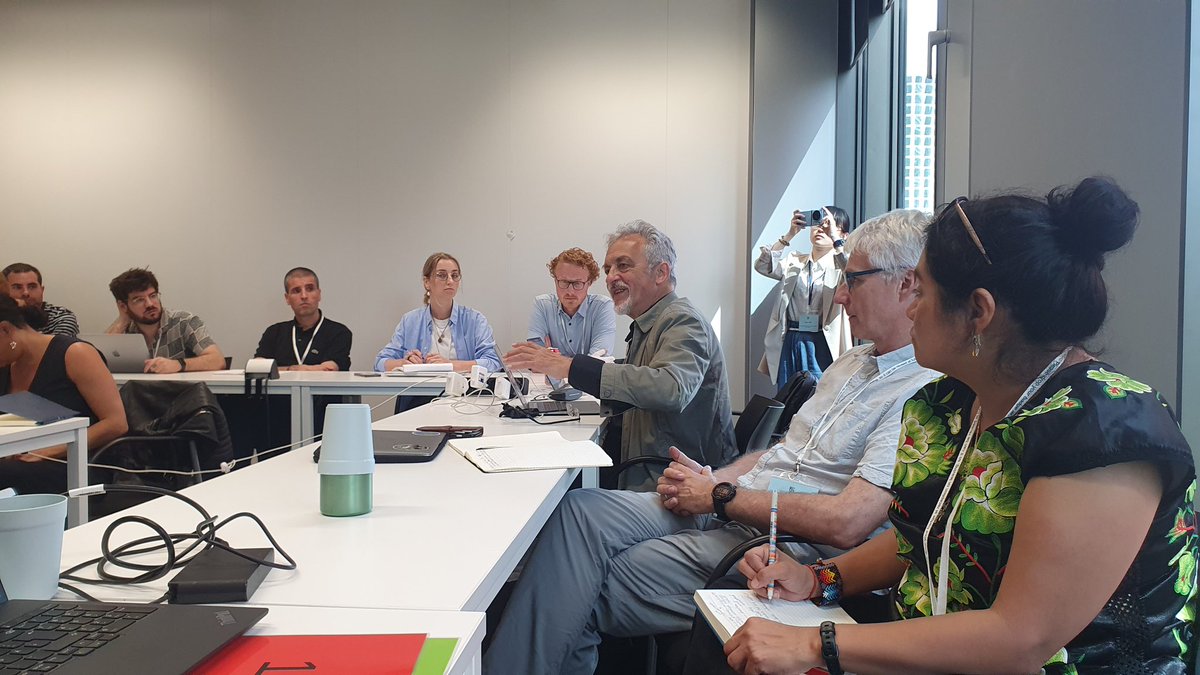
Thanks @motoko42 for co-organizing, and @Sergio_Uruena_, @mclaren_erc, @DanielBarben, @debsta4, @huayu58, Renee Michels, Kevin Witzenberger, and Matthew Harsh for presenting at the #EASST4S2024 panel on exploring anticipatory governance. What we discussed? A🧵.
As scholars of science and technology, we often emphasise the need for #interdisciplinarity, yet the question remains whose knowledge is most valued in the development of anticipatory governance and who is sitting at the decision making table. How do we see our own role in this?
Overall, a fruitful and insightful set of presentations across different fields and sectors that show similar dynamics in how we are struggling to govern and control uncertain technological and societal futures. Thank you all for participating!
Interested in learning more about the promises and pitfalls of #carbonfarming and soil-based #CDR? Join us for a one-week immersive course in Normandy this September!
https://t.co/GqCdSqMHne
Submit an abstract to our 4S/EASST panel (with Nils and Ina @InaMoller )! This session aims at bringing together the many usages of Anticipatory Governance as a normative concept, an analytical framework, and an actual practice. Conceptual and empirical papers are welcome.
We cannot know the future, so we are left to anticipate – is a belief, which supports the idea of Anticipatory Governance (AG). What’s AG able to achieve? How to use it in different contexts? - Let's discuss!
@InaMoller#governance#futures#anticipation
https://t.co/PEDkUoOuC7
@jpasztor Thank you @jpasztor, I'm glad to hear you liked the chapter. Given that many policy makers are struggling with the definitions around #GeoEngineering, I hope that taking an explicitly political perspective on these technologies can help us move the conversation forward.
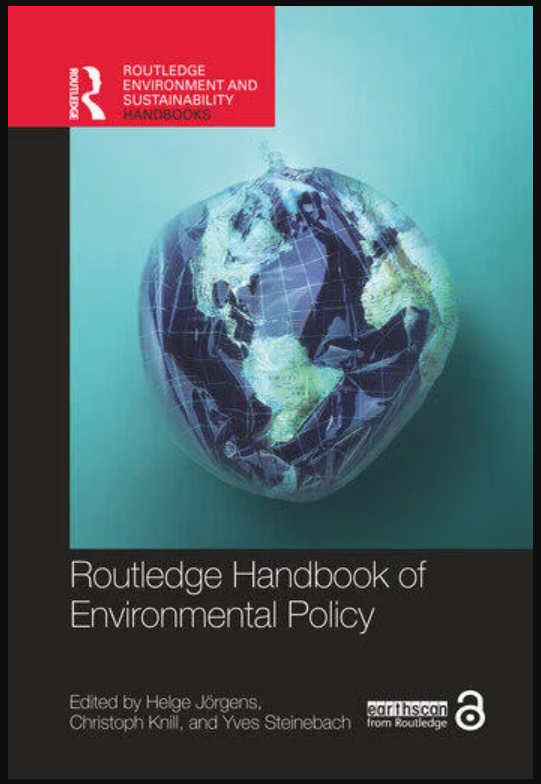
My book chapter on #GeoEngineering and public #policy is now freely available. In it, I suggest a new mode of distinguishing different geoengineering technologies (both CDR and SRM) according to their political mode of operation. https://t.co/ZqdobVm6dg
TRANSGOV PhD @Max_vDeursen reporting from #COP28! 🎥 Unveiling the significance of a little-known climate transparency report 📊 (See https://t.co/suk9W9Gg2U para. 182 and 150).
The Environmental Policy group at Wageningen University is looking for a lecturer. If you love teaching, innovation, inter- and transdisciplinarity, and the chance to dive into different areas of environmental politics and sociology, come and work with us! https://t.co/KBiUO9JvtN