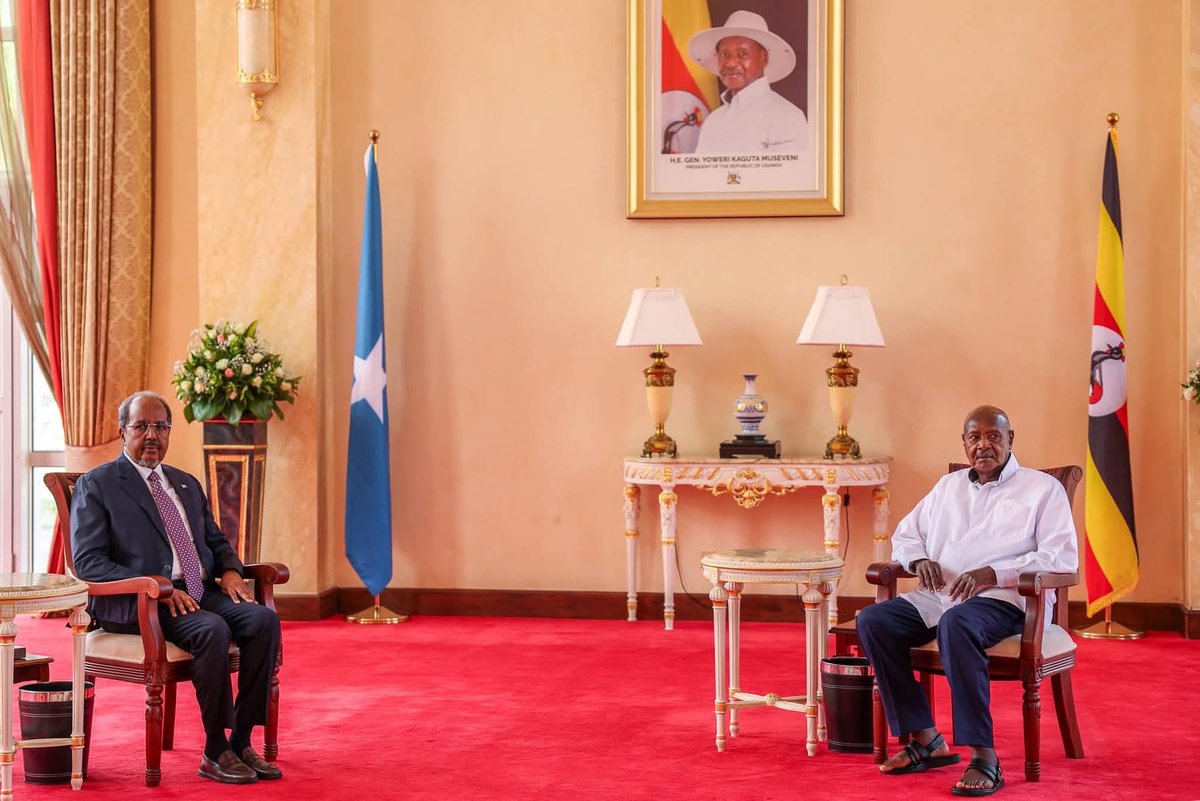
#BREAKING:
Forces of the newly formed South-East State have taken control of Merca (Marka), second Largest metropolitan in #Somalia. Local communities established the new state after decades without a regional administration.The crowds gathered to welcome & support the new admin
Ethiopia overtook Egypt to become Africa's largest producer of wheat with an annual output of 33 million tons of grains.
The area for cultivating wheat increased to 8 million hectares.
More of the Riverside Park in Addis Ababa, 🇪🇹
The amount of commerce this part of the park already supports is incredible! In 2 years' time, it'll be a shopping and entertainment district to rival any in the world. Exciting times ahead for Addis!
“Genuinely impressed!” She said
Looking to be impressed, fly from/via Addis Ababa Bole (ADD/HAAB)
This is the kind of seamless, passenger-first service that makes Bole more than just a transit point, it’s a well-managed gateway.
#EthiopianAirlines#AddisAbaba#BoleAirport #Aviation #TravelExperience #Stopover #Ethiopia
😂 @eritrean_post@FevenYemaney
Shabia askaris invited their Egyptian master and asked why don’t Egypt defend Eritrea , only to be reminded that Egypt has no justification to fight Ethiopia. Cairo serves its own interests, not its askaris. What a humiliating reality check!
#UPDATE: Somali State Minister Storms Transport Ministry Carrying an AK-47
Somalia’s State Minister for Transport and Civil Aviation, Abdikarim Abdow Haydar, has stormed the office of Transport and Civil Aviation Minister Mohamed Farah Nuh while carrying an AK-47 assault rifle and ammunition.
The reported armed confrontation has raised serious concerns over security within government institutions, the conduct of senior government officials and respect for institutional authority.
The two officials have reportedly been embroiled in a dispute in recent days, but Somalia’s cabinet is said to have failed to intervene promptly, allegedly due to both officials’ close ties to influential figures within the federal government. The apparent lack of intervention has raised further questions about political accountability and the government’s ability to address internal disputes among senior officials.
🇪🇹 "𝗢𝗨𝗥 𝗟𝗔𝗡𝗗 𝗜𝗦 𝗡𝗢𝗧 𝗝𝗨𝗦𝗧 𝗢𝗨𝗥𝗦 𝗕𝗨𝗧 𝗧𝗛𝗘 𝗪𝗛𝗢𝗟𝗘 𝗢𝗙 𝗘𝗧𝗛𝗜𝗢𝗣𝗜𝗔." 🇪🇹
Sultan Ali Mirah of Aussa, in his own words. April 1992, one year before the referendum.
On the land: "𝘁𝗵𝗲 𝗹𝗮𝗻𝗱 𝗼𝗳 𝘁𝗵𝗲 𝗔𝗳𝗮𝗿 𝗽𝗲𝗼𝗽𝗹𝗲 𝗶𝘀 𝗯𝗼𝘂𝗻𝗱𝗲𝗱 𝗮𝘀 𝗳𝗮𝗿 𝗮𝘀 𝗠𝗮𝘀𝘀𝗮𝘄𝗮 (to the northeast) 𝗮𝗻𝗱 𝗛𝗮𝗿𝗲𝗿 (to the southeast)."
On whose land it is: "Let it be clearly understood that 𝗼𝘂𝗿 𝗹𝗮𝗻𝗱 𝗶𝘀 𝗻𝗼𝘁 𝗷𝘂𝘀𝘁 𝗼𝘂𝗿𝘀 𝗯𝘂𝘁 𝘁𝗵𝗲 𝘄𝗵𝗼𝗹𝗲 𝗼𝗳 𝗘𝘁𝗵𝗶𝗼𝗽𝗶𝗮. Its development benefits all of Ethiopia."
On the sea: "𝗢𝗻 𝗼𝘂𝗿 𝗰𝗼𝗮𝘀𝘁𝗹𝗶𝗻𝗲 𝘄𝗵𝗶𝗰𝗵 𝗲𝘅𝘁𝗲𝗻𝗱𝘀 𝗳𝗿𝗼𝗺 𝗠𝗮𝘀𝘀𝗮𝘄𝗮 𝘁𝗼 𝗗𝗷𝗶𝗯𝗼𝘂𝘁𝗶, we can develop a fishing industry on the Red Sea."
Assab lies on that coastline.
𝗢𝗻𝗲 𝗹𝗮𝗻𝗱. 𝗢𝗻𝗲 𝗰𝗼𝗮𝘀𝘁𝗹𝗶𝗻𝗲. "𝗧𝗵𝗲 𝘄𝗵𝗼𝗹𝗲 𝗼𝗳 𝗘𝘁𝗵𝗶𝗼𝗽𝗶𝗮." 𝗛𝗶𝘀 𝘄𝗼𝗿𝗱𝘀
#Ethiopia #Assab #RedSea #Afar #HornOfAfrica #Eritrea
A city doesn’t become developed by accident. Someone has to care enough to build it properly.
During my recent visit to Addis Ababa, I saw what intentional development can look like. The roads, public spaces, urban organisation and ongoing transformation left me thinking about how much our own cities could achieve.
Africa is blessed with natural resources, young talent and enormous potential. Yet many of our cities still struggle with basic sanitation, waste management and the quality of public infrastructure.
We cannot keep talking about Africa’s future while neglecting the foundations that make that future possible.
Development must be intentional, and the results must be visible. We need to move faster, execute better, and build cities that make life easier for the people who live in them.
I love what Ethiopia is doing in Addis Ababa. It reminds me that progress is possible when a society decides to take its development seriously.
Africa doesn’t lack potential. We need to become more deliberate about turning it into progress.
According to USAID, the war between TPLF and Ethiopian government was started because TPLF slaughtered ENDF soldiers.
Page 14 says
“This war initially began when TPLF ethnic-profiled & massacred hundreds of Non-Tigrayan federal officers in November 2020; rejecting two years of peace-building attempts by the Nobel Peace Prize winning Ethiopian Prime Minister Abiy Ahmed. Since then, the Western corporate media-intelligence complex portrayed the TPLF rebels as victims facing the stereotypical African dictatorship:
Mr. @abdihakimkalal, isn’t @DirreOnline your page? Do you think people don’t recognize your account? This is exactly why I call you a proxy for Farah Maalim’s expansionist agenda. You want his statue in Moyale? 😂
Build it in your land like Mandera if you admire him so much!
Would Ethiopian leaders be open to mentoring or exchanging governance training with Indian ministers?
Indian ministers have been trying from a long time but failing miserably !
Beyond Factional Noise: Unilateralism, Aristocratic Capture, and Somalia’s Real Geopolitical Crossroads.
Most commentary on Somalia remains trapped in a narrow, partisan game cheering either for Villa Somalia or rival political camps while missing the deeper structural crisis unfolding beneath the surface. President Xasan Sheekh Maxamuud’s turn toward unilateralism altering the constitution without consensus, disregarding judicial rulings on expired mandates, and fracturing federal trust has created a dangerous distraction at the heart of the state. Rather than consolidating stability, top-down executive stubbornness hollows out national cohesion while leaving critical security fronts exposed.
To understand the true stakes, we must look past elite rivalries to the class structure that has hardened since 2000. Across both central and regional offices, an entrenched political aristocracy monopolises state power, clan gatekeeping, and international aid flows while sidelining Somalia’s underserved majority. For years, this ruling class operated under the illusion that UN missions, European funding, and African Union forces would endlessly cushion domestic governance failures. Yet with the UN political mission closed, international budgets tightening, and multipolar powers competing fiercely over the Horn of Africa, the era of permanent foreign life-support is over.
History leaves no doubt about where unchecked centralisation leads. Somalia’s underserved rural and peripheral communities paid the ultimate human price when the pre-1991 authoritarian regime collapsed. A catastrophe made possible because society once submitted to unilateral dictatorship. This is not the 1970s. Today’s underserved communities carry that trauma in their collective memory; they are politically conscious, decentralised, and determined never again to submit to another cycle of autocracy and state collapse.
Meanwhile, the external storm around Somalia is accelerating. President Xasan Sheekh’s recent engagements with Ethiopian Prime Minister Abiy Ahmed produced no real strategic breakthrough and even prominent Ethiopian opposition figures like Jawar Mohammed are now openly signalling that Addis Ababa is preparing a decisive, "now or never" move to secure sea access, a shift whose shockwaves are already visible across both Eritrea and Somaliland. At the very moment Ethiopia’s political class unites behind its maritime survival calculus. Ugandan forces have already vacated key positions in Lower Shabelle such as Barawe to consolidate around Mogadishu’s immediate perimeter, leaving the capital’s security architecture and key Turkish-backed strategic partnerships, exposed amid rising regional tensions.
Reflecting on President Xasan Sheekh’s urgent visit to President Yoweri Museveni in Entebbe after unsatisfying talks with Ethiopia. Just as voices from Addis Ababa like Jawar Mohammed warn of an imminent Ethiopian move across the Eritrea and Somaliland theatres that could upend the entire Horn. If Ugandan troops do return or extend their stay to shield Mogadishu and protect Turkish strategic interests, will Kampala be acting out of genuine peacekeeping, or purely calculating its own regional leverage while Somalia fractures from within?
#Somalia #Ethiopia #Somaliland #Eritrea #HornOfAfrica #Geopolitics #LowerShabelle @TheVillaSomalia@aussom_
@aliiroba You are not Ethiopia and you should stay away from Ethiopian internal issues. Don’t be proxy for expansionist Farah Malim. Respect Ethiopian sovereignty.
@AbdimalekFarah@Jigjigamedia Don't confuse multilingualism with language shift. The two are not the same. You can’t simply dismiss it as mere geographic proximity. Only possible reasons:
1. assimilating into a dominant linguistic group.
2. Subgroup of the group a 2. Conquest and forced adoption
@AbdimalekFarah@Jigjigamedia There are only 2 possibilities: either you were a minority in their country & gradually adopted the dominant group's language, or you were conquered & forced to adopt the conqueror's language. Which one explains your adoption of Afan Borana? There can never be be another reason