I see many KK bloggers claiming that GenZ are young, gullible & need mentorship.
For the avoidance of doubt, this movement is not a conversation between parents and their children about table manners. Rather, it is between citizens and their elected officials.
Stand guided.
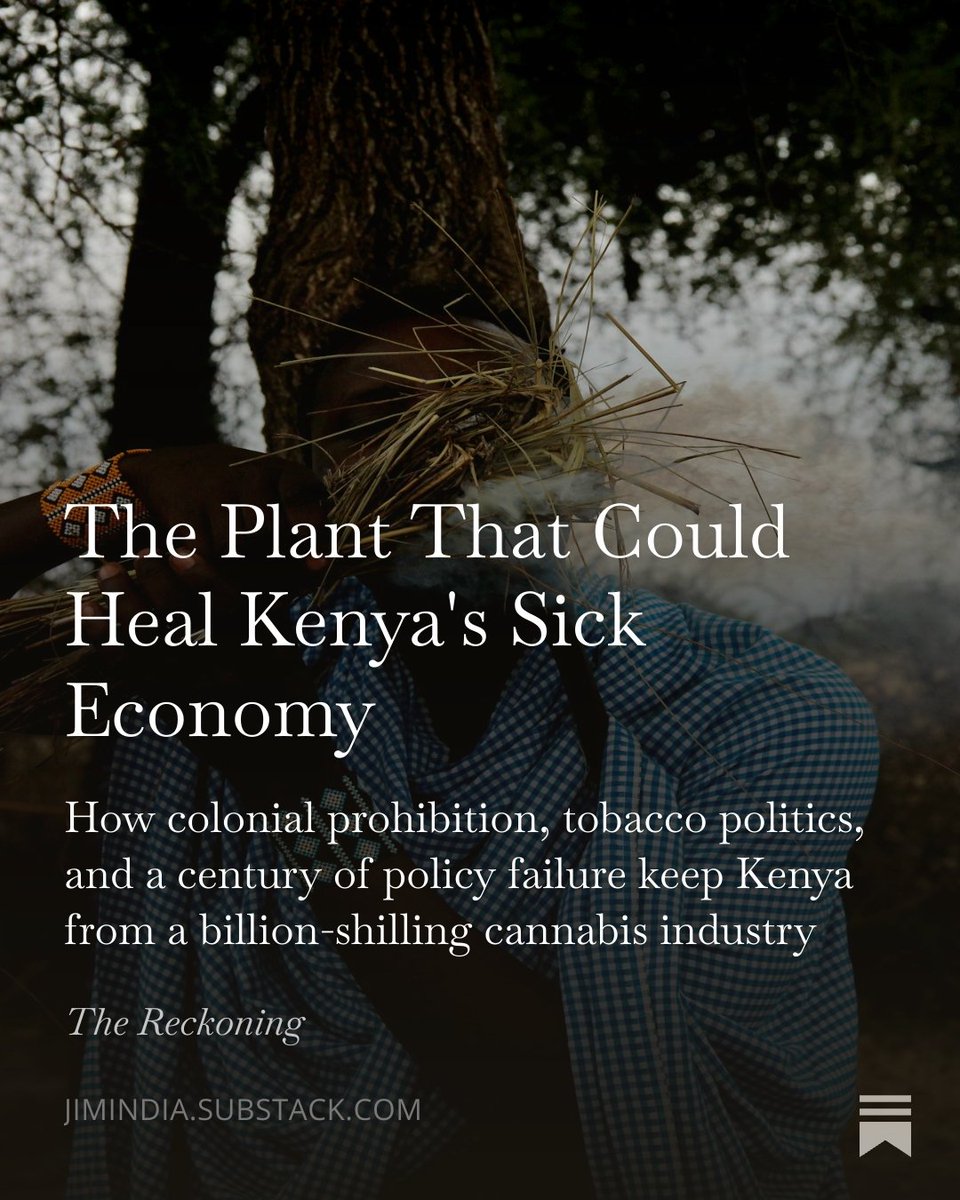
The prohibition of cannabis in Kenya did not arrive because our legislators looked at the evidence and found it dangerous, no!
It was banned because the British said so to protect the tobacco industry and to appease the missionaries. Read it all here -
https://t.co/WzOFWxv3EC
The Kenyan army, the Kenyan Police and all State instruments of this comprador regime of Ruto have been deployed in Laikipia to defend American intrests on our soil during Madaraka Day. We must complete our Indipendence through the NDR programme. Our People shall always resist !
I don't like him that much, not that it matters anyway, but he is right. Nliona Mahali wanasema imagine if Tarzan was black?
Or Ragnar Japanese? Or black panther Indian?
In my address titled "The Political Economy of Obedience," delivered last month at the Josef Korbel School of Global Affairs at the University of Denver, I identified five key mechanisms through which African populations have been trained into political compliance. I am sharing a summary here because they explain precisely what we are watching play out in real time every day on this continent.
The first is colonial education. The curriculum inherited from the French, the Brits or the Portugese administration was not designed to produce critical citizens. It was designed to produce a particular kind of political subject. one who understood authority as something to be respected rather than questioned, and who experienced his own political traditions as a source of shame rather than institutional possibility. As I said in Denver, the most effective political prisons are not made of concrete. They are made of curriculum. The Togolese school I attended taught us the genealogy of French kings with more precision than the history of the governance systems that predated French colonial presence on our territory.
The second is the economy of obedience itself. Authoritarian systems endure not primarily through permanent terror but because they structure the relationship between political compliance and material survival so that obedience becomes, for most people most of the time, the rational choice. Access to employment, scholarships, market licenses, import authorizations, health clinic access: none of it politically neutral, all of it conditioned on loyalty. People in these systems do not collaborate with power because they are morally deficient. They collaborate because the scaffolding of their daily lives has been designed to make non-collaboration economically catastrophic.
The third is the family as a site of control. In conditions of economic precarity, the individual who considers a dissident act must calculate not only her own risk but the risk she imposes on her parents, her siblings, her children, her cousins etc. I have watched people of intelligence and moral clarity retreat from political engagement not because they were afraid for themselves but because they could not justify the devastating exposure their activism would bring to their families. The authoritarian state does not need to threaten everyone. It only needs to ensure that the threat to one is visible and comprehensible to all.
The fourth is religion. In many parts of Africa, religious institutions have been deployed, not by their most honest practitioners but by their most politically convenient ones, to transmit a theology of earthly resignation and otherworldly reward that discourages political engagement. The pastoral instruction to render unto Caesar what is Caesar's sits very comfortably with the interests of Caesars who have no intention of rendering anything to anyone. Liberation theology, which in Latin America produced an extraordinary tradition of religiously grounded political resistance, has had a far more contested reception in much of African Christianity and Islam, partly because of the direct entanglement of many religious institutions with state power, which has made spiritual authority and political compliance structurally allied.
The fifth is media. In authoritarian African contexts, state and privately owned media aligned with power do not typically practice crude propaganda. They practice something more subtle and more durable: the selection of what is visible and what is invisible; the framing of social problems as natural phenomena rather than political choices; and the treatment of opposition voices as marginal or foreign-funded. The film industry participates in this discipline in its own way, through the systematic promotion of narratives that depict poverty and wealth as conditions of fate or personal failure, stories in which the distance between the poor and the rich has everything to do with luck, talent or divine favour and nothing to do with power, policy or the deliberate engineering of inequality.
The cumulative effect, over decades, is a population whose political imagination has been narrowed to the point where alternatives are genuinely difficult to conceive, not because the alternatives do not exist, but because the political ecosystem has ensured they remain invisible.
These are the operating manual of authoritarian systems on this continent. And authoritarianism today is not limited to regimes with a known dictator who has held power for decades. It extends equally to regimes that perform a change of leadership through placebo elections conducted every four to five years, producing a new face every eight to ten years while the same system of impunity, patronage and repression remains structurally intact.
I would argue that these are in fact the more dangerous form of authoritarianism because their citizens are deceived into believing they are living under a democracy when they are in reality governed by plutocrats. The citizen under an obvious dictatorship at least knows what he is fighting. The citizen under a rotating plutocracy has been convinced there is nothing to fight at all. He votes, he watches a new face take the oath, and he mistakes the performance of transition for the substance of change. He ends up with no voice, no justice, no agency, and worse, no drive to fight for his own dignity. For one can only fight for liberation after acknowledging one's condition of oppression.
Kenya's 2024 Economic Survey announced 5.6% GDP growth.
In the same document:
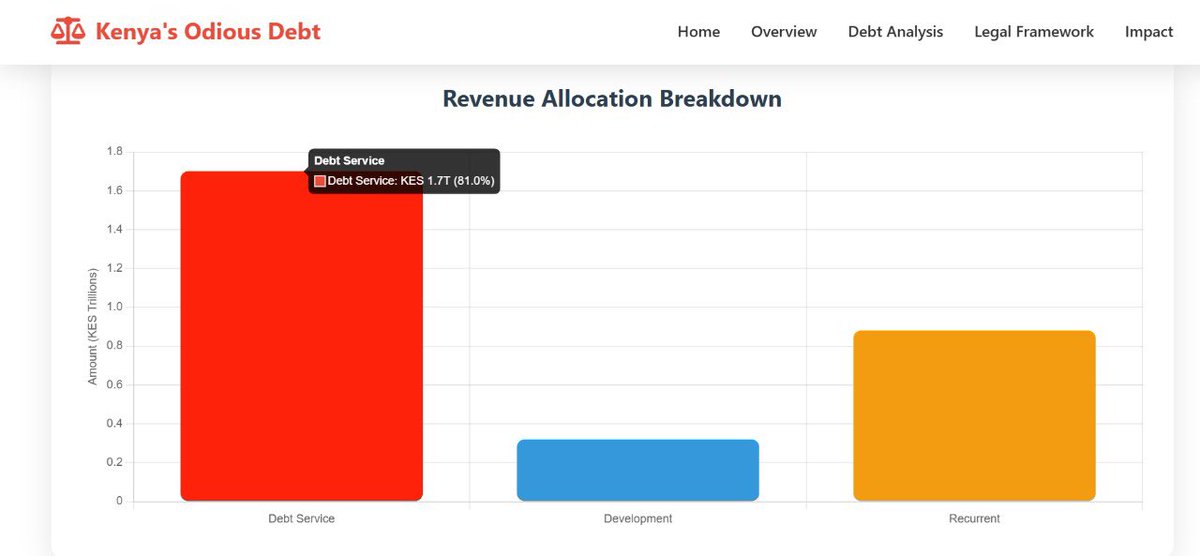
Real earnings fell 4.1%, 90% of new jobs were informal, Debt interest exceeded health + education budgets.
Full essay - https://t.co/Rig2ZabfUz
DID YOU KNOW? 🇰🇪
Under the Access to Information Act, any public office you write to for information MUST respond within 21 working days.
Whether you’re asking about a local road project’s cost or a national debt contract, they cannot simply ignore you. If they do, they are in breach of the law!
Pro-Tip: If the 21 days are up and your inbox is empty, it’s time to call the Ombudsman (CAJ). Accountability isn't just a request; it's your Constitutional right.
#AccessToInfo #AccountabilityNow
Edwin Sifuna for President.
I don't know why we ask our best, brightest, and boldest, to wait until such a time when they develop wrinkles for us to see them as presidential.
The longer they wait, the more bad manners they learn.
Sifuna is an exciting and sellable candidate.
When two heads of state meet to discuss how to whip and discipline citizens demanding accountability, we’ve crossed from democracy into dictatorship. President Suluhu’s call for President Ruto to join her in suppressing Gen Zs is a conspiracy against constitutional rights.
The audacity to frame calls for good governance as notorious behaviour that must be tamed is an insult to every freedom our constitutions guarantee. Democracy is anchored on the fundamental pillars of the rule of law, human rights and accountable leadership. These aren’t negotiable.
If exercising our constitutional right to protest makes us deserving of canes and whips then our leaders have forgotten who they serve. We will not be silenced. We will not be beaten into submission. The Constitution is our shield and defender and not the whims of those who fear accountability.
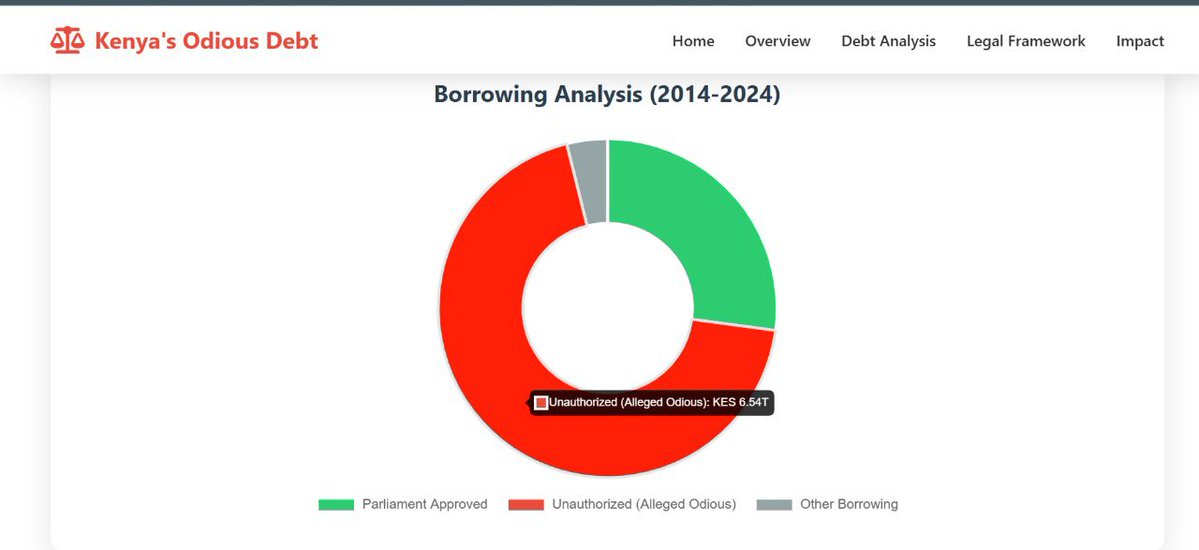
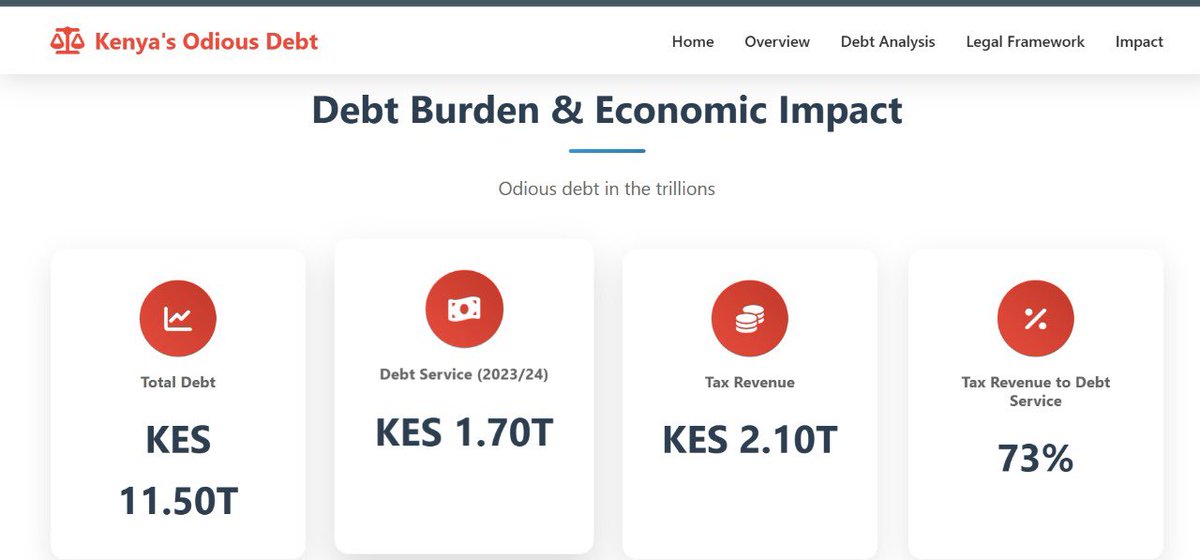
To those who are asking about where to read about the Odious Debts' Petition, @rtunguru made a website highlighting the Ksh 6.9T odious debts petition. Here is the link https://t.co/FyLjS5WA1y
#DeniBandia#ReKe#DrainTheSwamp
Kenya’s Debt Files!
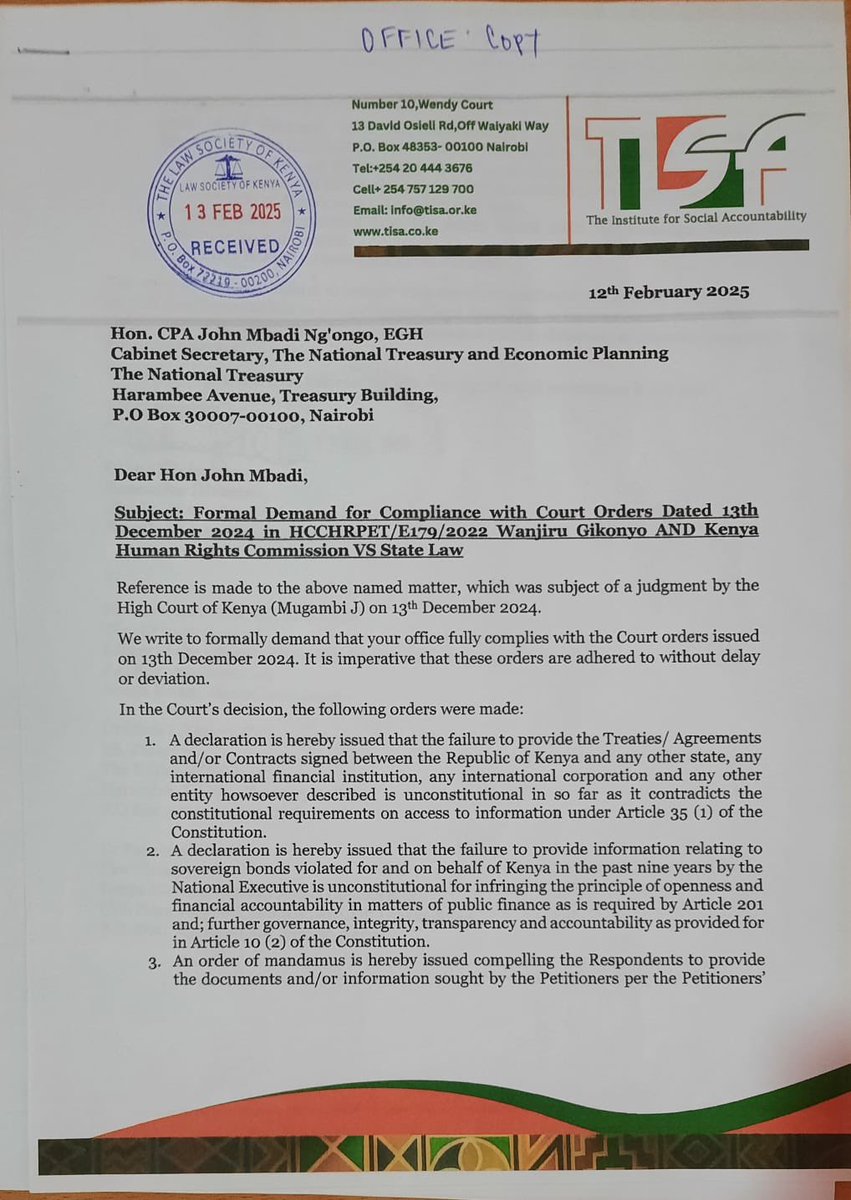
In 2022, TISA went to court demanding access to Kenya’s debt contracts and on 13th Dec 2024, the High Court (HCCHRPET/E179/2022) ruled in favour of transparency.
To date, the National Treasury has still NOT complied. We continue to demand the release of all sovereign bond agreements/contracts signed by the Government of Kenya, including their terms and conditions, and full disclosure on how sovereign bond funds have been spent over the past nine years.
Today’s case by Sen. Okiya Omtatah Okoiti is a separate case but it adds to the growing pressure for accountability on Kenya’s debt.
Article 35(1) of the Constitution guarantees access to information. Transparency in public finance is a right, not a privilege — and we’re hopeful this growing pressure finally delivers the accountability Kenyans deserve. 🇰🇪⚖️
#DeniBandia #OdiousDebt #PublicDebt
They've engineered the silence because they fear you more than they fear any judge. An informed public is their worst nightmare. So read the filings. Track the hearings. Ask the hard questions. The @IMFAfrica@KeTreasury, @NAssemblyKE, and every pen that signed these loans must answer.
Some politicians waiting in the wings will not speak because they hope to inherit the same broken system. To those seeking office: this is a test of principle. You cannot inherit a system you refuse to question.
We don't need their headlines to know our rights. The Constitution didn't give us a voice to whisper. The front page isn't theirs to give. It's ours to demand. Stay loud. Stay informed. The law is on our side
#OdiousDebtKenya #PeoplePower #DeniBandia
BRIEF ON TODAY’S PROCEEDINGS IN THE ODIOUS DEBT PETITION AT MILIMANI HIGH COURT
This morning, the Milimani High Court did not hear the substantive Odious Debt Petition. Instead, the matter was adjourned to allow the Court to address multiple interlocutory applications seeking either to dismiss the petition unheard or to strike out some parties from the suit.
The key applications before the Court are as follows:
1) The Attorney General argues that, because the Government has directed the Auditor‑General to conduct a special audit of Kenya’s huge odious debt stock, the petition is premature and the Court lacks jurisdiction to entertain it at this stage. The AG therefore contends that the Court should await the outcome of that audit. The National Assembly supports the AG’s position.
2) The @IMFNews seeks to exit the case, invoking immunity under a treaty it signed with Kenya in 1963, which grants it absolute immunity before Kenyan courts.
3) The Former Auditor General Edward Ouk and the former Controller of Budget Agnes Odhiambo claim personal immunity, asserting that they acted in good faith during their tenure and therefore cannot be held accountable for any shortcomings.
4) The Current Auditor General FCPA Nancy Gathungu, CBS, and the current Controller of Budget Dr. Margaret Nyakang’o maintain that they cannot be sued in their personal capacities; only their respective independent constitutional offices may be parties to the suit.
Although the petitioners had fully responded to all the applications and were ready to proceed, the @IMFAfrica and other parties stated that they were not ready and requested seven days to respond to the petitioners’ rebuttals of their applications.
The Court then directed that all parties wishing to file any responses (replying affidavits and/or submissions) do so within seven days of today. The Court will thereafter peruse the documents and render its ruling on the applications on 25th June 2026.
To fast‑track the matter, the Court will deliver its ruling on the applications without orally hearing the parties. There will be no highlighting of submissions.
If any of the parties are struck out, they will be dropped from the case, and it may become necessary to amend the petition before it is heard on the merits.
Finally, if the AG’s application to strike out the case unheard is dismissed, the petition will proceed to be heard and determined on the merits. If the application succeeds, the matter will end there.
The petitioners are fully prepared and are doing everything possible to succeed in this epic battle against Kenya’s huge odious debt stock. Kenyan taxpayers deserve accountability and fiscal justice. We shall not relent. The petitioners will not be the first to blink. #ReKe #DeniBandia #OdiousDebtKenya
I wrote an article about the absurdity of 14 days hearing for a presidential petition and the 60 days for a re-run election.
Plainly put - the timelines are encouraging judicial laziness and a coup of the will of the people - https://t.co/BmQEr4vDTv…
Faith Waigwa: In Nigeria, the timelines are 4-5 months for the entire process. In South Korea, the constitutional court is given up to 180 days to render its determination. In the US, there are no rigid timetables, but historically, it has been happening for around 2 months or more. You will find that from the countries we have drawn your attention to, they are more of an investigative process as opposed to a mob justice process that took place in our country at the national assembly. Kenya is an outlier when it comes to timelines for the removal of its President or DP. Where removal overturns a popular mandate, constitutional democracies favoured deliberation, investigation, and participatory legitimacy, not speed
From competition of ideas to competition of money!
From a government for the people to a government for the wealthy!
Elective politics now goes to the highest bidder!
@IEBCKenya must regulate campaign financing in 2027!
Read more here- https://t.co/rl39H6kC3o
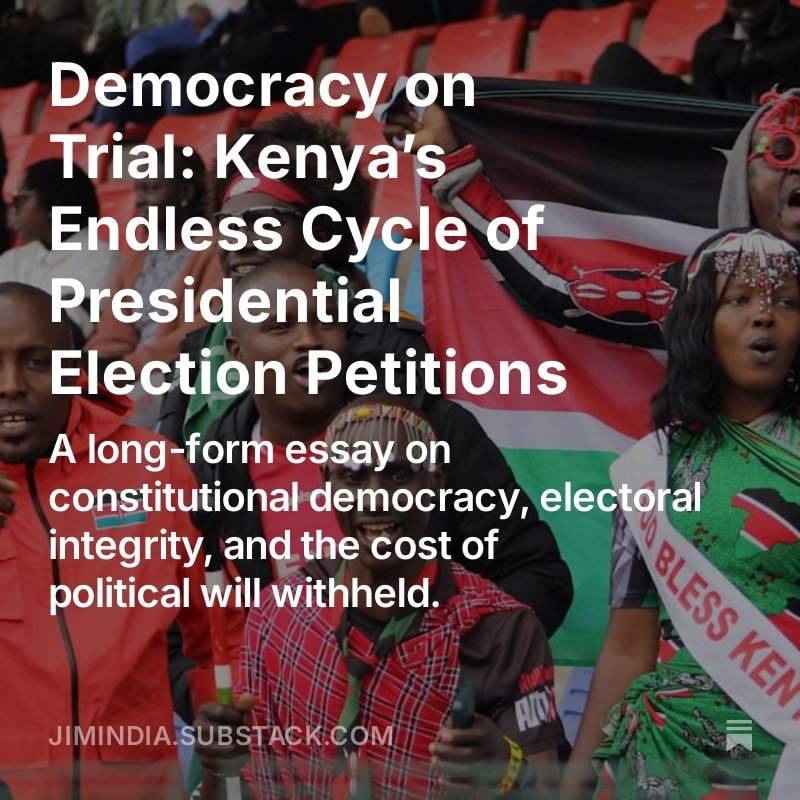
Three elections 2013, 2017, and 2022. Three petitions. Three Supreme Court rulings. The same question arrives each: Can we trust this?
In 2027, the question has to stop being what is broken and start being who benefits from leaving it broken?
https://t.co/jfyMfTHX1P
The 2027 presidential election in Kenya is likely to be decided at the Supreme Court again!
The 14-day window for hearing the case and 60-day window for a re-run needs to be amended.
Read more of my critique of 2013/17&22 petitions - https://t.co/jfyMfTHX1P