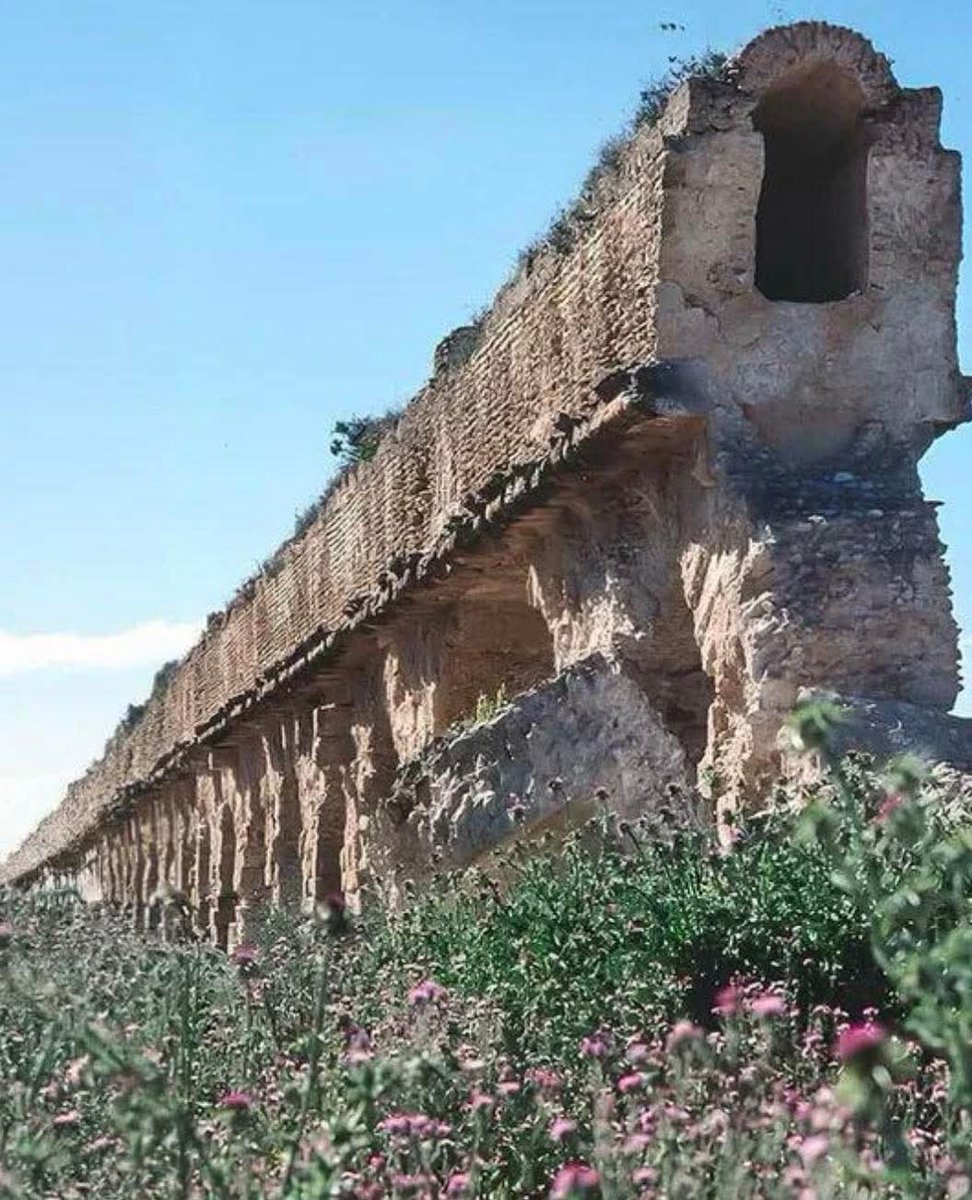
Almost 2,000 years in age, the Roman aqueduct located in Zaghouan, Tunisia 🇹🇳, an example of ancient engineering. Spanning 132km, this aqueduct supplied water to Carthage, a city that was once Romes greatest rival.
The Roman aqueduct of Zaghouan, located in modern-day Tunisia, is one of the most remarkable feats of Roman engineering in North Africa. Built during the reign of Emperor Hadrian in 2nd Century AD, it was constructed to supply fresh water from the springs at Zaghouan to the city of Carthage, which had grown into one of the most important urban centers of the Roman Empire.
Stretching an impressive 132km, the aqueduct is among the longest built by the Romans. It carried water through valleys and across open plains, using a combination of underground channels, bridges, and towering arches like the ones still visible today. This system provided a steady supply of clean water for Carthage’s population, supporting not only everyday life but also public baths, fountains, and agricultural estates.
The aqueduct highlights the sophistication of Roman hydraulic engineering. Its slight, precise gradient ensured that water could flow smoothly across great distances without modern pumps. Even after centuries of decline, parts of the structure remain standing, a testament to Roman craftsmanship. Today, the ruins serve as both an archaeological treasure and a reminder of how Rome’s infrastructure helped sustain its vast empire.
#archaeohistories