@Triunviratus_II No me importa que los aficionados generen imágenes con IA. Lo veo una vía para que creen contenido que no podrían realizar sino.
Aún así, me parece importante pararse a pensar que quieres realmente hacer y revisar que el resultado sea correcto.
Generar al tun-tun es un error.
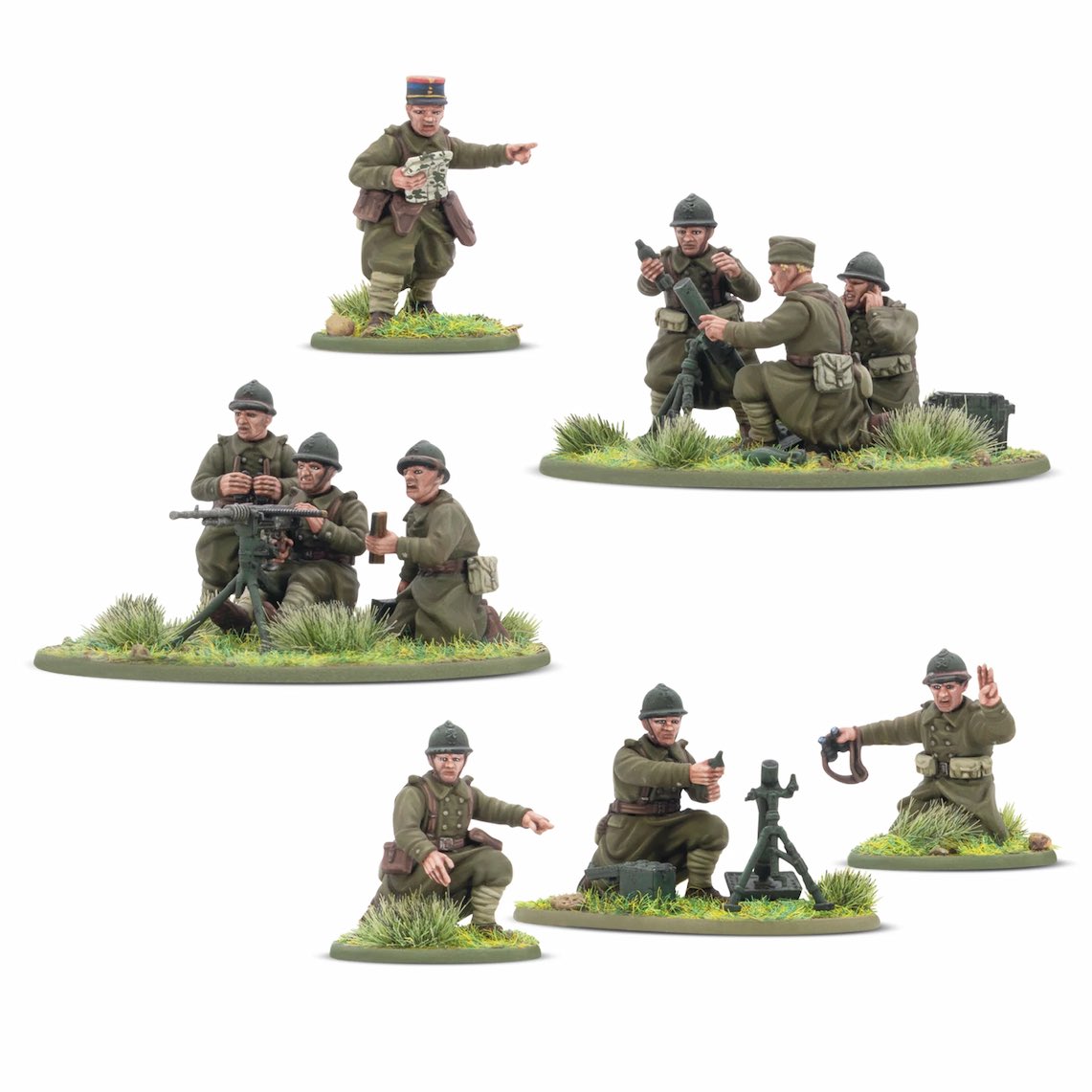
He estado mirando referencias para ir pillando ideas para las spearhead y me he topado con esto...
Alguien, por favor, me puede explicar que puta necesidad hay de crear toda esta puta basura de IA teniendo...TODAS LAS PUTAS FOTOS PROMOCIONALES Y DE LOS MOÑECOS DE VERDAD???
Se nota que les ha metido buen trabajo y el resultado tiene muchísima cohesión y carisma. Muy colorido 🥰 ¡Enhorabuena y gracias por compartirlas con la comunidad! Podéis seguir las miniaturas de Juantxo en su Instagram: https://t.co/zEr414ELTw
Amigos, nuestra Comunidad de Whatsapp de wargames es maravillosa. Hay un montón de aficionados que comparten miniaturas realmente increíbles.
Si queréis uniros os dejo aquí el enlace:
🔗 https://t.co/idpWJhqJPe
Hoy quiero mostraros estas pedazo de banda Muttatawi de Juantxo
Se nota que les ha metido buen trabajo y el resultado tiene muchísima cohesión y carisma. Muy colorido 🥰
¡Enhorabuena y gracias por compartirlas con la comunidad!
Si queréis uniros os dejo aquí el enlace:
🔗 https://t.co/idpWJhqJPe
Os recuerdo que en el canal tenéis muchísimos otros videos interesantes 😁 También podéis seguirme en redes sociales como Instagram y ver mis miniaturas.
https://t.co/idpWJhqJPe
Amigos, tras la vuelta del veranito os traigo un video nuevo. Es en mi opinión extremadamente interesante, ya que analiza las nuevas impresoras 3D a COLOR.
¿Qué impacto creéis que tendrán en la industria y en el hobby?
https://t.co/BW1BvkU8VE
Hace algún tiempo pinté esta pieza tan especial. Es @perezreverte en su época de corresponsal de guerra, inspirada en algunas de sus fotografías antiguas.
Si queréis ver más foto, os dejo el enlace a mi IG:
https://t.co/8jAuGJ3WY6
Te cuento algunos detalles sobre la figura 👇
Si os gusta la figura, pertenece al wargame Fire!, que introduce los medios de la prensa en los conflictos bélicos modernos.
El detalle es muy bueno y está muy bien modelada. Os dejo aquí el enlace:
https://t.co/AwEz73rSNv
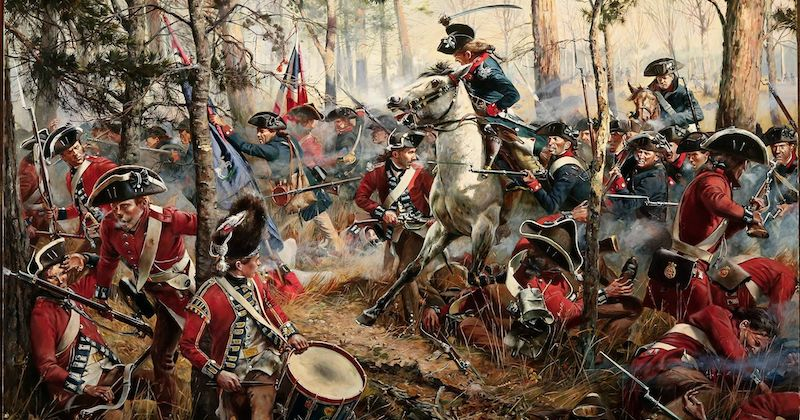
Está es sin duda una de mis batallas favoritas de la Guerra de Independencia Americana.
Tengo las figuras en escala epic para jugar este escenario. A ver si estos meses próximos lo monto 😎
On this day in 1780, an American army came apart so completely, so fast, that its commanding general ended the day roughly 60 miles from the battlefield, having fled faster and farther than any soldier he was supposed to be leading. It was the most humiliating battlefield disaster of the entire Revolution. It destroyed one reputation forever and, in the same few hours, sealed the legend of one of the bravest men ever to fight for America.
Start with the general, because Camden is partly a story about arrogance. Horatio Gates was the celebrated "Hero of Saratoga," the man given credit for the greatest American victory of the war so far. He arrived in the South glowing with that reputation and immediately began spending it recklessly. He drove his men on a brutal forced march through the Carolina summer with almost no proper food. The night before the battle, his hungry troops filled their bellies with green corn and molasses, and by dawn much of the army was doubled over, sick and cramping with dysentery. He also believed he had far more men than he actually did, and better ones.
The two armies blundered into each other in the dark, sometime around two in the morning, when advance parties collided on the road north of Camden. Both sides pulled back and waited for daylight to settle it. And in the gray early light, Gates made the single decision that doomed everything. He placed his greenest, shakiest troops, untested Virginia and North Carolina militia who had never seen a real battle, on his left, directly facing the most hardened, professional British regulars on the field. He put his weakest men against the enemy's strongest.
What happened next barely qualifies as a fight on that side. The British stepped off and came on with a bayonet charge, a wall of disciplined regulars advancing at a trot, cheering, steel leveled and flashing. The militia looked at that and their nerve simply shattered. Most of them never fired a single shot. They flung down their loaded muskets and ran, more than a thousand men dissolving into blind panic in a matter of moments, sweeping backward and tangling with the men behind them. Half the American army was gone before it had truly engaged. Gates himself was caught in that human flood and carried off the field in the rout, and he did not stop. He rode all the way to Hillsborough, roughly 180 miles in three and a half days, an escape so fast it became a national joke and a permanent stain on his name.
But turn to the other end of that field, because that is where the heroism lives. On the American right stood the Continentals, the real soldiers, tough, drilled, veteran, and they were commanded by Baron Johann de Kalb. And here is a detail most people never learn: de Kalb was not actually a baron at all. He was born a Bavarian peasant, the son of farmers, who had invented a noble-sounding name years earlier because a commoner could never rise as an officer in the armies of Europe. He had clawed his way up by sheer ability, crossed the Atlantic, and thrown his life in with a revolution of ordinary men trying to build a country where birth would not be destiny. Nobody had more reason to believe in the cause than the fake baron who embodied it.
When the militia vanished and the entire left of the army evaporated, de Kalb either did not know or did not care that the battle was already lost. He led his outnumbered Continentals forward, straight into the British, in a counterattack so fierce that for a time these abandoned, surrounded men were actually driving the enemy back. The British had to pour in everything, including their cavalry, to deal with them. In the thick of it de Kalb's horse was shot dead beneath him and he crashed to the ground. Before he could rise, the redcoats were on him. He was shot three times and bayoneted again and again, eleven wounds in all, and still he kept trying to fight and rally his men until his body finally failed him.
Even his enemies were staggered by it. British soldiers carried the broken old general off the field with something like reverence, and Lord Cornwallis sent his own personal physician to try to save him. It was hopeless. Eleven wounds are too many. De Kalb lingered a couple of days and then died. British officers, the very men whose army he had just tried to shatter with a handful of troops, attended his funeral out of respect. He was buried at Camden, and he lies there still, the peasant who called himself a baron and died like the noblest man on the field.
That contrast is the entire meaning of Camden. On one side, a celebrated general who lost his head and outran his own men to safety. On the other, a foreign-born commoner who chose to die on his feet in a battle everyone else had already fled. The defeat itself was catastrophic. The American army in the South was gutted, thousands killed, wounded, or captured, and the British looked, for a moment, like they had won the entire region. Gates was disgraced and stripped of command, replaced by Nathanael Greene, who would patiently, brilliantly turn the whole southern war around over the next year and set the road to Yorktown.
But the image that outlived the disaster was not the running general. It was the dying baron, propping himself up amid the wreck of his command, refusing to yield. Camden proved something the Revolution kept proving in its darkest hours: that a cause can survive a lost battle, and that how a man stands when everything is collapsing around him can matter far more than whether he won that day.
The Siege of Malta was wild.
When the Ottomans took Fort St. Elmo, they beheaded any surviving defenders, or crucified them and sailed them across the harbour to Fort St. Angelo.
In response, the Knights under Valette fired Turkish heads from cannon back at them.
In the final assault on St. Elmo, two wounded Spanish captains tied themselves to chairs to keep fighting to the very end.
There was a giant siege tower. A last minute cavalry charge that saved the day.
Incredible heroic actions happening all the time, and ultimately the outnumbered and outgunned Knights won the day.
One of the most fascinating and significant events of the entire 16th century.