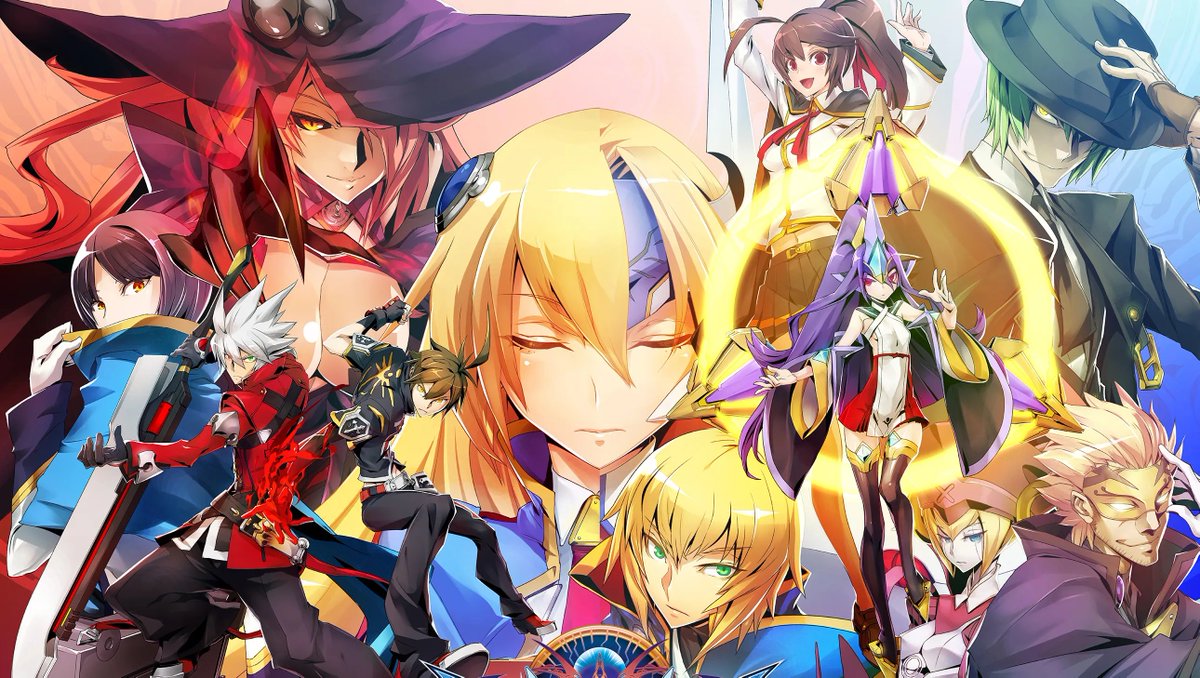
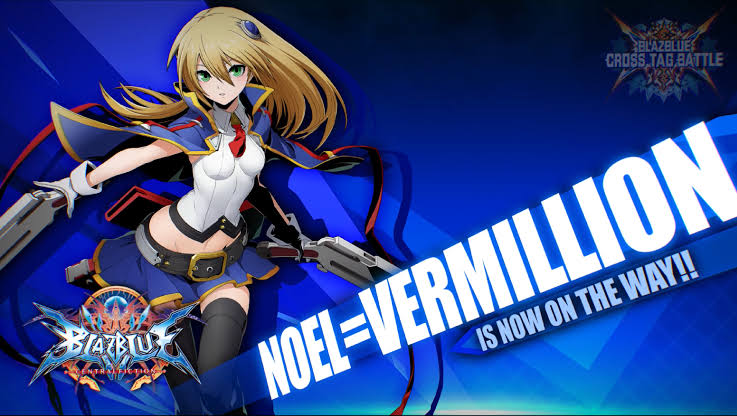
BlazBlue Anniversary? It's Been That Long, Huh? 🤔
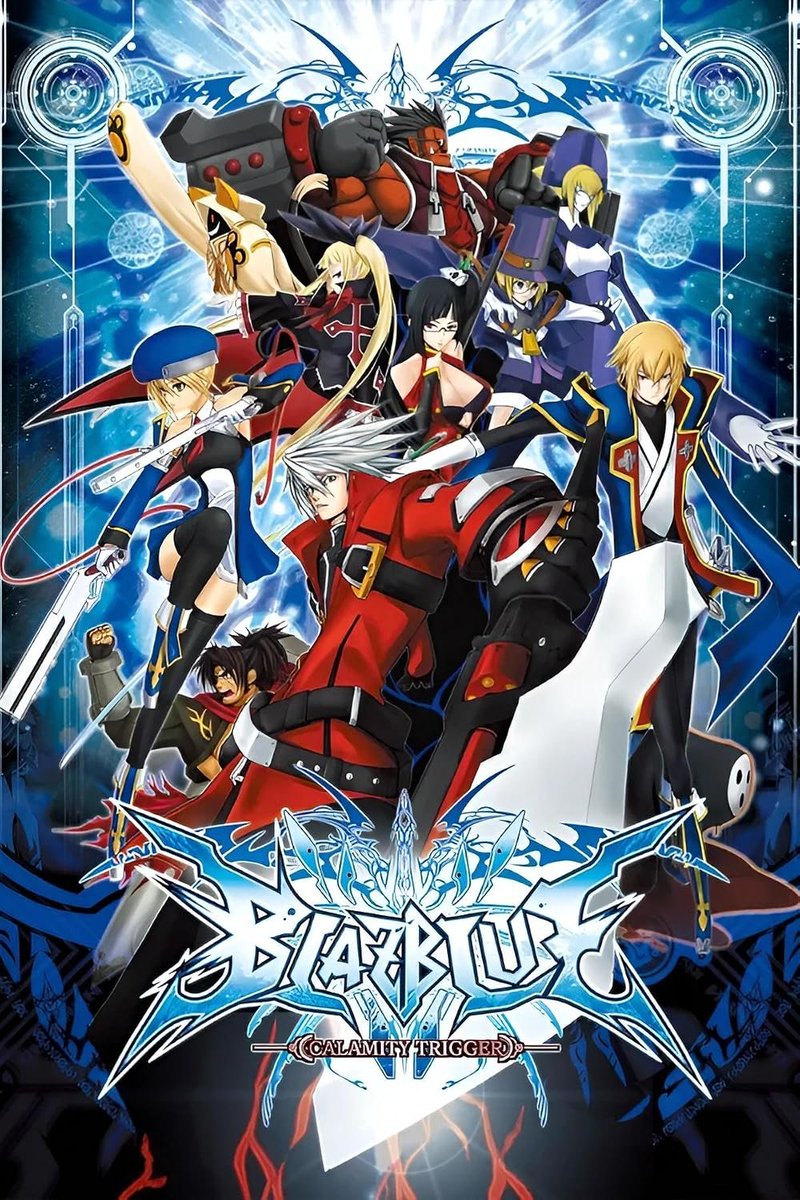
I remember the first entry in the Azure Saga, titled BlazBlue: Calamity Trigger. At the time of its release, it attracted considerable attention for its high-resolution, incredibly detailed sprite artwork. The visual quality was something rarely seen in games of that era. Sexy female characters would also become a staple of the series, while the soundtrack, which blended orchestral music with Japanese rock, became another one of the game's defining features.
However, one of the most unique aspects of the game was its diverse cast of characters and the brilliant concept behind the Drive mechanic. This system gave each character access to their own unique abilities. For example, Tager could magnetize opponents and pull them toward him, while Rachel had the ability to freely manipulate the wind. This mechanic gave the playable cast an incredible amount of individuality, ensuring that each character felt distinct from the others.
The biggest surprise for many players, however, was the sheer length and depth of its story. Before the game's release, most fighting games offered relatively basic story modes, typically consisting of an arcade mode with a brief ending for each character. BlazBlue, on the other hand, featured an extensive story mode that delved deeply into each character's backstory, motivations, desires, and goals. Furthermore, with full voice acting and beautiful artwork, its visual novel-style presentation made the story genuinely entertaining to experience.
BlazBlue: Calamity Trigger truly laid the foundation for the series, introducing many of the elements that would be further expanded upon and refined in future installments.
Which brings us to the most recent mainline installment, BlazBlue: Central Fiction, a game that is just as complex as it is unique. Its combat system offers multiple defensive options, including blocking, instant blocking, barrier, and instant barrier. Offensively, players have access to a wide variety of grounded and aerial attacks, all built around its distinctive four-button fighting system. There is an incredible amount of depth to the combat, and mastering all of its mechanics requires considerable time and dedication.
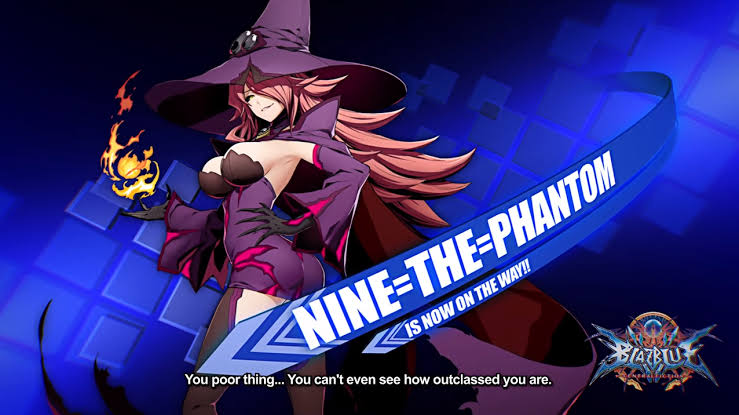
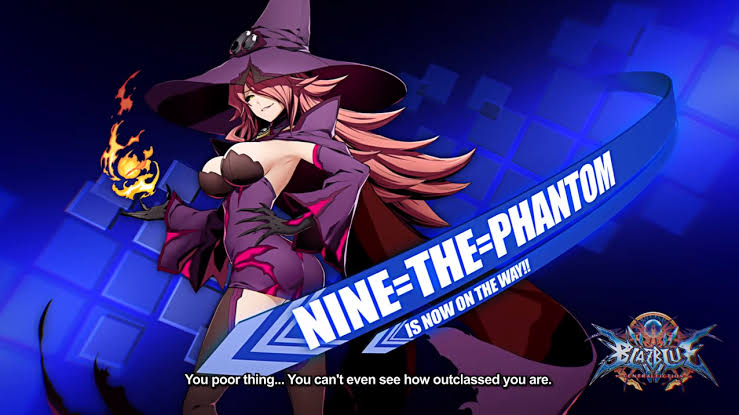
We would also see the introduction of even more unique characters who further expanded upon the possibilities of the Drive mechanic. Nine, for example, features an entirely different approach to combat through her spell-casting system, while Hazama offers one of the most distinctive playstyles in the entire roster.
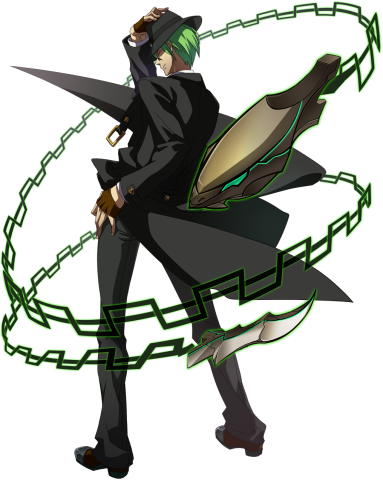
His Drive ability, "Ouroboros," is particularly interesting because it allows him to use chain-like blades to control the distance between himself and his opponent, pull himself toward enemies, and freely reposition himself across the battlefield. This gives him a playstyle that is significantly different from that of other characters.
What makes Hazama especially interesting is that he fights in a way that is completely different from traditional martial artists or conventional weapon users. By utilizing his chains, he possesses an extraordinary level of mobility and range, allowing him to attack from unexpected angles, rapidly close the distance between himself and his opponent, and maintain relentless offensive pressure without giving them much room to breathe.
Through these unique mechanics and movements, Hazama establishes a fighting style that feels fundamentally different from every other character in the game. It's these kinds of character-specific mechanics, combined with the complexity of the overall combat system, that give the BlazBlue series so much depth. The game genuinely rewards the time and effort players invest in learning its mechanics, and it makes sense that professional players have continued playing it for well over a decade since its initial release.
I'm really looking forward to seeing just how unique Trinity will be compared to an already incredibly diverse cast of playable characters.
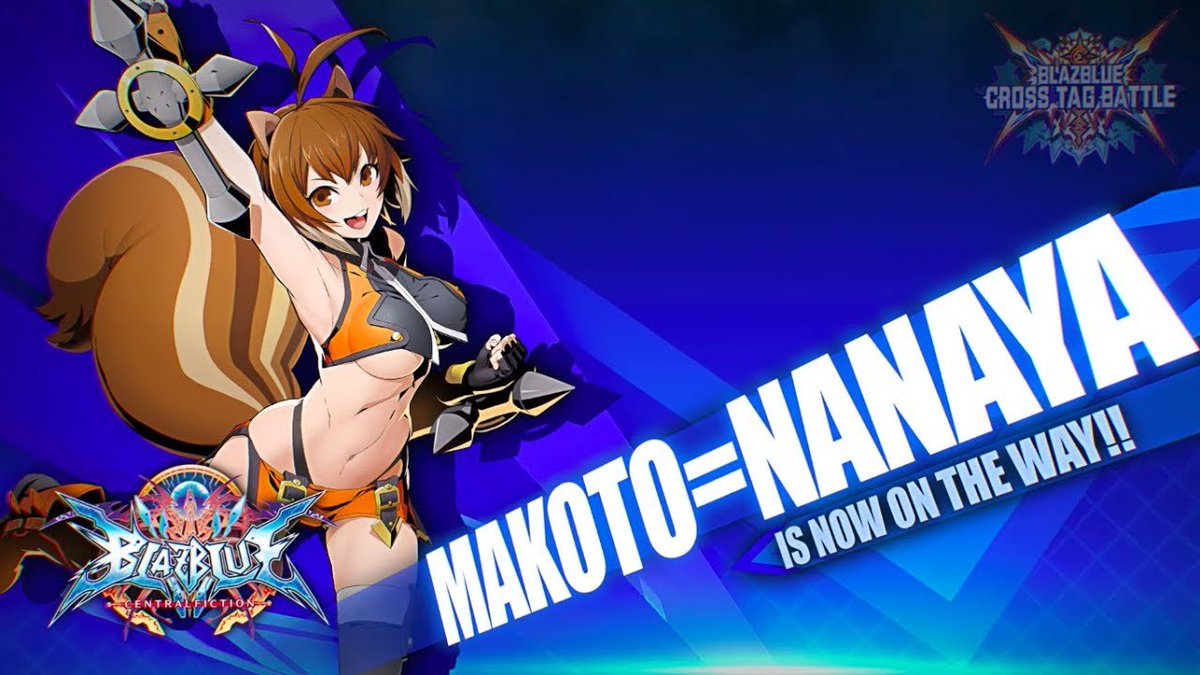
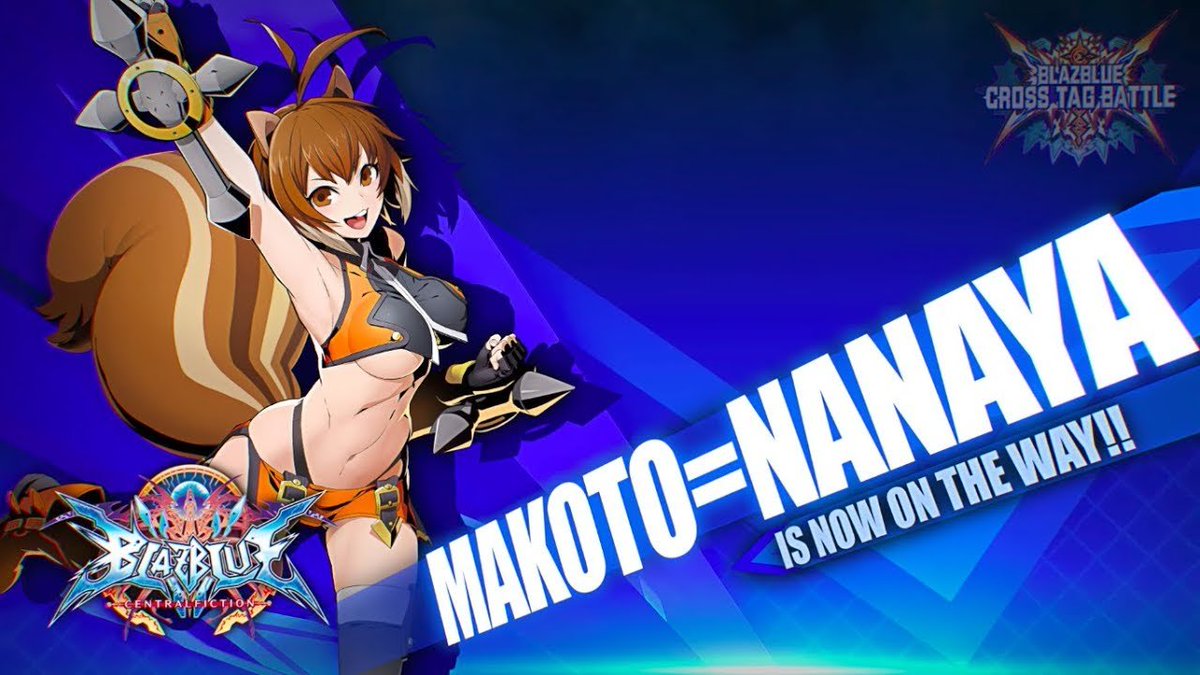
Among the female characters introduced between BlazBlue: Calamity Trigger and BlazBlue: Central Fiction, one of the most popular, particularly in the West, is Makoto Nanaya. And it's not difficult to understand why she has become so popular. She stands out from the series' other sexy female characters in several ways.
For starters, she is currently the only female character with a kemonomimi-inspired design. Her squirrel-like ears and large, fluffy tail are instantly memorable and captivating. Another major aspect of her appeal is her exceptionally voluptuous bust. Her outfit boldly accentuates her figure, including its prominent underboob design, which leaves little to the imagination. Combined with her fit, athletic physique, she strikes a wonderful balance between classic, healthy beauty and a more niche fan-service appeal.
Considering all these qualities, it's hardly surprising that I come across so much fan art and cosplay featuring her character.
In terms of story content, BlazBlue: Central Fiction offered an incredible amount of material. Not only did we get a three-act Arcade Mode featuring gorgeous, illustrated endings, but we also received an extensive Story Mode presented in a fully voiced visual novel format. Combined, these modes could take dozens of hours to complete. So, even if you weren't a competitive player or someone particularly interested in mastering the fighting mechanics, the sheer amount of story content was more than enough to justify the price of admission.
It's hard not to appreciate just how much BlazBlue: Central Fiction offered, both as a fighting game and as a story-driven experience. Looking forward to seeing what the future holds for the series! 🌪️
Happy Birthday, Pachi! 🎂
Arc System Works is a game developer renowned worldwide for its distinctive anime-inspired visual presentation, fully developed story modes, and flashy, technically sophisticated combat systems. What makes the company so special is undoubtedly the talent and creativity of the individuals who work behind the scenes to bring its games to life. Pachi's contributions to both GUILTY GEAR and BLAZBLUE certainly deserve recognition.
From developing gameplay systems and conceptualizing characters to handling character scripting, Pachi has contributed to many of the elements that make these games so memorable. When it comes to the fighting game genre, there aren't many developers that create games as innovative and mechanically distinctive as Arc System Works.
Personally, I consider BLAZBLUE to be Arc System Works' greatest masterpiece. One of the aspects I particularly appreciate is its Drive system. Rather than simply giving each character a conventional collection of special moves, the Drive system provides every fighter with unique gameplay mechanics, abilities, and strategies exclusive to them. This creates an incredibly diverse roster in which each character offers such a distinctive experience that playing them can almost feel like playing an entirely different game. This creativity and mechanical depth are among the reasons I have always held the series in such high regard.
Another essential aspect of Arc System Works' identity is its approach to character design, particularly its female characters. The company has developed a distinctive visual style that incorporates the sensibilities of Japanese anime, featuring attractive, voluptuous body proportions, expressive facial features, and striking silhouettes. Baiken from GUILTY GEAR is an excellent example of this approach. BLAZBLUE takes these qualities even further, featuring an extensive cast of female characters with beautiful designs, feminine curves, and bold, provocative outfits.
I also fondly remember when Arc System Works actively promoted merchandise, illustrations, and figurines that showcased the appeal of these characters. I always appreciated how the company celebrated its character designs beyond the games themselves, allowing their appeal to be enjoyed through various forms of merchandise. This approach to character presentation and fanservice has become an important part of what makes Arc System Works so recognizable.
Of course, I understand that working with Western intellectual properties and established franchises owned by other companies, such as MARVEL Tōkon: Fighting Souls, involves different creative considerations. The developers need to respect the original source material, the established visual identities of its characters, and the creative sensibilities associated with those properties. Consequently, it may be difficult to incorporate the same kind of sensual character designs and Japanese-inspired fanservice that can be found in Arc System Works' original creations. And I completely understand that.
However, precisely because of this, I hope Arc System Works continues to embrace its creative strengths when developing its own original intellectual properties. With franchises like BLAZBLUE and GUILTY GEAR, the company has the freedom to explore its own artistic vision and aesthetic sensibilities without being restricted by the established design conventions of another company's Western intellectual property. Beautiful, voluptuous female characters, daring and provocative outfits, and sensual character designs influenced by distinctly Japanese sensibilities are all important elements that make these franchises so recognizable and appealing.
What makes Arc System Works' approach to fanservice particularly appealing is that it goes beyond simply making its characters look sexy. By combining distinctive personalities, attractive costumes, expressive animations, and the company's exceptional artistic direction, Arc System Works gives its characters a unique presence and appeal. I believe this comprehensive approach to character design is precisely what distinguishes the company from other fighting game developers. That is why I hope it continues to preserve and celebrate these creative strengths in its original franchises, maintaining the qualities that have attracted so many fans over the years.
Whether through gameplay systems, character concepts, or character scripting, Pachi has demonstrated tremendous talent and creativity across various aspects of game development. Arc System Works' reputation as one of the most respected developers in the fighting game industry is also the result of the hard work and passion of talented individuals like Pachi and the many other people who contribute to its games.
Once again, happy birthday, Pachi!
Thank you so much for your contributions to these wonderful games. I sincerely look forward to seeing what you and the rest of the Arc System Works team create in the future.
Please keep making wonderful games! 🥳
Ah, BlazBlue: Continuum Shift was a game that made significant improvements over the original in practically every way. The characters' backstories are now much more detailed, with their personalities and individual histories being explored in greater depth. Through the newly added Story Mode, players can truly get to know the characters on a much deeper level. This is a stark contrast to the original, where character backgrounds and past experiences were relatively vague and not nearly as thoroughly developed.
The game balance has also improved considerably, with significantly more characters being viable in competitive tournaments compared to the original. In the first game, there was a substantial gap in strength between the weaker and stronger characters, whereas Continuum Shift does a much better job of narrowing that gap.
One of the major elements that sets BLAZBLUE: CONTINUUM SHIFT apart is how the Drive abilities give each character a unique identity. Rather than simply providing each character with a different set of special moves, these Drive abilities reflect the characters' personalities and abilities, creating distinctive fighting styles that make each one feel unique.
A perfect example of this is Hazama. His Drive ability, "Ouroboros," is particularly distinctive because it allows him to use chain-like blades to control the distance between himself and his opponent, pull himself toward enemies, and freely change his positioning across the battlefield. This gives him a playstyle that is significantly different from that of other characters.
What makes Hazama especially interesting is that he fights in a way that is completely different from traditional martial artists or conventional weapon users. By utilizing his chains, he possesses an extraordinary level of mobility and range, allowing him to attack from unexpected angles, rapidly close the distance between himself and his opponent, and maintain relentless offensive pressure without giving them much room to breathe.
Through these unique mechanics and movements, Hazama establishes a fighting style that is fundamentally different from every other character in the game.
Of course, the traditional appeal of the BlazBlue series, which has always placed a strong emphasis on sexy female characters, remains very much alive in this installment. Mu-12 (μ-No.12-) is a perfect example of this, with her provocative and daring outfit. Her incredibly revealing design leaves very little to the imagination, proving that sex appeal remains an important part of the series' core identity. This signature appeal is carried over seamlessly into BLAZBLUE: CONTINUUM SHIFT.
However, my personal favorite among the new characters is Makoto Nanaya. For anyone who loves the kemonomimi aesthetic, her squirrel-like ears and large fluffy tail are instantly captivating. At the same time, much of her visual appeal also comes from her exceptionally voluptuous bust, which is boldly revealed by her outfit, including its prominent underboob design. Combined with her fit, athletic physique, she strikes the perfect balance between classic, healthy beauty and more niche fan-service appeal.
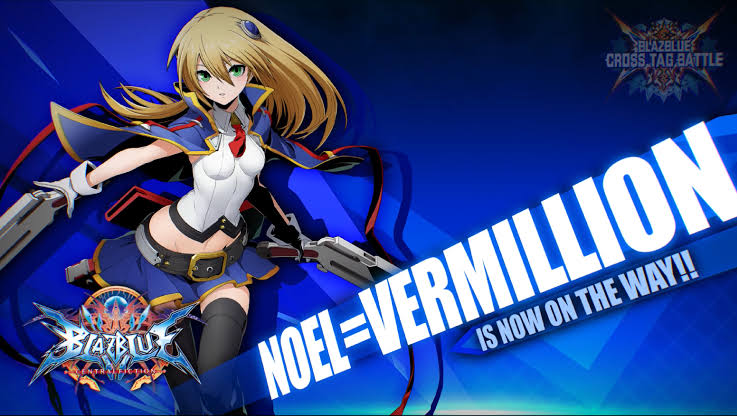
I also absolutely love her unique outfit, which is an adaptation of Noel Vermillion's military-inspired uniform. The black tights, ultra-short skirt, coat-style top, and orange-based color scheme create a striking contrast with Noel's predominantly blue design. It's an excellent example of character design: her outfit makes it immediately clear that she belongs to the same organization as Noel while still giving her a distinctive visual identity of her own.
Makoto Nanaya is an extremely popular character among Western fans, and her character design is one of the major reasons for her popularity. I really appreciate how the character designs of Makoto and many others are rooted in distinctly Japanese artistic sensibilities. This emphasis on fanservice and sex appeal has long been an integral part of BlazBlue’s identity, and I feel that the newly added characters complement that distinctive aesthetic perfectly.
BlazBlue: Continuum Shift was truly a massive step forward from the original, improving upon it in almost every conceivable way.
BlazBlue: Calamity Trigger!
BlazBlue: Calamity Trigger is the first entry in the Azure Saga. At the time of its release, it attracted considerable attention for its high-resolution, incredibly detailed sprite artwork. The visual quality was something rarely seen before in games of that era. Sexy female characters would also become a staple of the series, while the soundtrack, which blended orchestral music with Japanese rock, became another one of the game's defining features.
However, one of the most unique aspects of the game was its diverse cast of characters and the brilliant concept behind the Drive mechanic. This system gave each character their own unique abilities. For example, Tager could magnetize opponents and pull them toward him, while Rachel had the ability to freely control the wind. This mechanic gave the playable cast an incredible amount of individuality.
The biggest surprise for many players, however, was the sheer length of its story. Before the game's release, most fighting games offered very basic story modes, typically consisting of an arcade mode with a brief ending for each character. BlazBlue, on the other hand, featured an extensive story mode that delved deeply into each character's backstory, motivations, desires, and goals. Furthermore, with full voice acting and beautiful artwork, its visual novel-style story mode was genuinely entertaining to watch.
BlazBlue: Calamity Trigger truly laid the foundation for the series, introducing many of the elements that would be further expanded upon and improved in future installments.
@Mangalawyer Forget the lack of offensive jokes, and potential woke stuff.
Based on some of the footage I've seen, the game looks boring in general.
Even IF the game had all the old stuff, the game would still be a bore to play for me.
@ccireni If you want Persona, but with significantly better pacing, and a reasonable length to actually replay instead of 100 hours per playthrough, play Catherine.
It deals with some more adult themes, but is by the same folks at Atlus, so it has plenty of Persona’s DNA. (2/2)
@MushHog@ccireni EASILY my favorite Atlus game.
I've replayed the original so many times. I need to play the expansion version. Through I am nervous about some of the new content they added to the game.
@SavedAClickFGC Can someone explain to me how it's possible to have rollback for so many fighting games in such a short span of time all of a sudden?
Is this the work of AI?
What is a recomp?
I'm asking since I'm genuinely curious.
Why I Love Don't Toy with Me, Miss Nagatoro! 🌊🌊🌊
One of the things I love about Don't Toy with Me, Miss Nagatoro is its fun and rather unconventional premise.
To begin with, the protagonist, Hayase Nagatoro, is a particularly refreshing character who, especially during the earlier parts of the story, is anything but a traditional anime heroine. Rather than being quiet, polite, and sweet, Nagatoro is practically the complete opposite. She's loud, mischievous, and somewhat provocative. Above all, she absolutely loves teasing the people around her, particularly her beloved Senpai.
Her physical appearance also helps distinguish her from other heroines. Unlike the fair complexions commonly associated with anime girls, Nagatoro has a healthy, sun-kissed tan, which seems to reflect her active lifestyle and love of outdoor activities.
I also really appreciate her expressive character design. She can contort her face into all sorts of exaggerated, ridiculous, and mischievous expressions that never fail to make me laugh. It's this bold approach to her personality and character design that makes Nagatoro stand out. She's simply a joy to watch.
However, what makes Nagatoro particularly endearing is that there's much more to her than simply being a girl who enjoys teasing others. Beneath all the mocking, laughter, and playful mischief is someone who genuinely cares about Senpai.
Despite constantly giving him a hard time herself, she becomes surprisingly protective whenever someone else tries to bully or hurt him. There's something genuinely amusing and heartwarming about how she seems to operate under the rule that she's the only person allowed to tease Senpai. Her affection gradually becomes apparent through the little things she does, whether it's encouraging him, spending time with him, or standing up for him when he needs someone on his side.
I also have to give enormous credit to Sumire Uesaka's phenomenal voice performance. She does an outstanding job capturing Nagatoro's personality, particularly her mischievous nature and genuine delight in getting a reaction out of Senpai. Her energetic and confident voice, combined with just the right amount of playful aggression, makes Nagatoro an incredibly entertaining character.
One of my favorite aspects of her performance is Nagatoro's iconic laugh. Uesaka delivers it with such infectious enthusiasm, starting with a playful giggle before occasionally escalating into a much louder and more exaggerated laugh. There's an almost impish quality to it, as though Nagatoro genuinely cannot contain her excitement whenever she manages to embarrass Senpai.
It's not simply a generic anime laugh; it perfectly communicates her personality. You can practically hear just how much fun she's having at Senpai's expense!
I particularly love the way Uesaka delivers Nagatoro's frequent use of the word "Gross!" when addressing Senpai. There's a wonderfully exaggerated, almost sing-song quality to her delivery, combining mock disgust with mischievous enthusiasm. Rather than sounding genuinely contemptuous, it comes across as playful teasing, particularly as their relationship develops. It's one of those little vocal details that makes Nagatoro so recognizable and memorable.
Another aspect I particularly enjoyed was watching Nagatoro and Senpai's relationship gradually evolve throughout the series.
Initially, their relationship revolves around the awkward dynamic between an introverted boy and an overly confident girl who loves teasing him. During the earlier parts of the story, Senpai is practically intimidated by her presence, constantly getting flustered by her antics and struggling to stand up for himself.
However, as they spend more time together, Senpai gradually becomes more confident, learns to express his opinions, and begins interacting more comfortably with other people.
Nagatoro undergoes her own development as well. Her teasing gradually becomes less about simply provoking a reaction and more about expressing affection, encouraging Senpai, and finding excuses to spend time with him.
We also get to see more vulnerable sides of her personality, particularly when she's jealous, embarrassed, or unsure of how to express her genuine feelings.
Eventually, their relationship develops from two people who constantly tease one another into genuine friends and, ultimately, romantic partners. Watching them gradually become more comfortable with each other, support one another, and eventually acknowledge their feelings is incredibly heartwarming. Their relationship develops at a genuinely enjoyable pace, and it's one of the biggest reasons I became so invested in their romance.
I also found the series' approach to fanservice entertaining, particularly with the introduction of Sana Sunomiya. Her voluptuous figure and striking character design certainly make her stand out, and the nude artwork associated with her is particularly memorable. These elements are another example of the series embracing its playful sense of humor and appreciation for attractive character designs.
Ultimately, Don't Toy with Me, Miss Nagatoro is a series that I find incredibly charming. Between Nagatoro's unconventional personality, Sumire Uesaka's fantastic voice performance, the gradual development of the central romance, and the series' playful humor and fanservice, there's simply a lot to appreciate.
I'm genuinely glad I gave this series a chance, and I look forward to seeing what Nanashi creates next! 👍
Whether it's Begging for Your Life or the incredibly fun Killing Bites, I've always admired and appreciated Kazasa Sumita's distinctive art style. His illustrations have a unique charm that makes them instantly recognizable, and they're something I never get tired of looking at. 👍
Why I Love the BlazBlue Series! 🔥🔥🔥
Arc System Works has earned a strong reputation for its exceptional presentation, drawing inspiration from Japanese animation through striking visual designs, expressive animation, and a distinctive artistic identity. It is also one of the few fighting game developers that places just as much emphasis on its story modes as it does on delivering deep, engaging, and spectacular combat.
Nowhere is this philosophy more apparent than in BlazBlue. The series features a visual novel-style story mode that goes to great lengths to explore each character's motivations, ambitions, personal struggles, and desires. Rather than treating its narrative as a mere bonus feature, BlazBlue embraces storytelling as an essential part of the overall experience. Toshimichi Mori truly created something special with this franchise.
Furthermore, the series' excellent soundtrack adds another layer to its appeal, blending the sounds of classical orchestral instruments with energetic Japanese rock. This distinctive musical identity perfectly complements the game's atmosphere and the larger-than-life personalities of its characters.
And, of course, it would be impossible to discuss BlazBlue's presentation without acknowledging its unapologetic approach to fanservice. The series features plenty of attractive female characters, provocative and sexy character designs, and revealing outfits. These elements are part of the franchise's broader Japanese anime-inspired identity and are undoubtedly among the reasons it has attracted such a dedicated fanbase. Removing these elements or unnecessarily toning them down would only undermine what makes BlazBlue so distinctive.
Ultimately, BlazBlue is a franchise built around a clear creative vision, bringing together compelling storytelling, spectacular combat, memorable music, and a truly distinctive visual identity. I'm genuinely looking forward to seeing what the future holds for the series. 👍
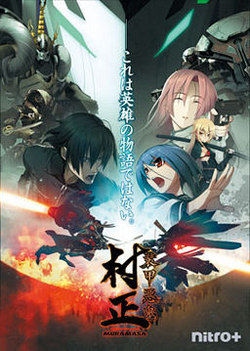
Full Metal Daemon: Muramasa – An Appreciation of Nitroplus's Masterpiece! 🔥🔥🔥
Nitroplus is easily my favorite company when it comes to developing visual novels. Unlike many of its competitors in the genre, which tend to focus on lighthearted stories and happy endings, many of Nitroplus's older titles explore considerably darker subject matter, including the consequences of war, murder, and rape. Some even venture into outright horror, as demonstrated by Saya no Uta. Thanks to its unique premise, excessive gore, and disturbing subject matter, it is arguably one of Nitroplus's most popular visual novels among Western audiences.
While I certainly enjoy Saya no Uta, my personal favorite work from Nitroplus is undoubtedly Full Metal Daemon: Muramasa, and there are numerous reasons why.
1. The Unique Premise and the Cruelty of the Law of Balance
One of the things I particularly love about Muramasa is its unique premise. An overwhelmingly powerful evil threatens the world, forcing the protagonist to acquire sufficient power to defeat it, even if doing so requires him to commit evil acts himself. The idea that one must become capable of committing evil in order to defeat evil is incredibly compelling.
For Kageaki, the people he kills are individuals he has deemed unworthy of living because of the threat they pose to society. However, wielding his cursed Tsurugi, Muramasa, comes with a strict and tragic Law of Balance.
To use its power to eliminate evil individuals and oppressors, he must pay an equivalent price. In other words, for every evil person he kills, he must also take the life of someone good or someone he loves.
This curse traps Kageaki in an extraordinarily cruel cycle in which protecting the innocent or avenging their deaths requires him to sacrifice the very people he holds dear. It fuels his intense self-loathing and overwhelming guilt, making him an exceptionally tragic protagonist.
More than anything, Kageaki himself wishes to achieve peace without resorting to violence.
We see this attitude demonstrated as early as Chapter One. Even when an innocent person is being threatened, Kageaki actively avoids resorting to violence. Instead, he allows a thug to insult, physically abuse, and publicly humiliate him. As long as there is a possibility of resolving a situation without violence, he is willing to swallow his pride and endure humiliation.
Despite this, even when he does everything in his power to act according to his principles, his actions repeatedly result in the deaths of people he holds dear.
At the heart of Kageaki's suffering is the question of whether this cruel mathematical balance between good and evil is genuinely a legitimate moral law or simply an unjust curse that he must somehow find a way to overcome.
Another aspect I particularly appreciate is how Kageaki's attitude toward the Law of Balance changes depending on the route. Each route presents a different conclusion to his struggle with the curse, shaped by his interactions and experiences with the people around him.
For example, in the Nemesis Route with Kanae Otori, Kageaki ultimately comes to reject the Law of Balance. By contrast, in the Hero Route with Ayane Ichijou, he comes to accept it. Finally, by the conclusion of the Final Route, he fully embraces the Law of Balance and makes it his own.
I find this particularly fascinating because it demonstrates just how significantly his interactions with different characters, especially the heroines of each route, influence his philosophy and worldview.
Kageaki isn't someone who stubbornly clings to the same beliefs regardless of the circumstances. Instead, he constantly questions his convictions, allows his perspective on the world to be challenged, and is sometimes forced to fundamentally reconsider the way he thinks.
2. Kageaki's Introspective Nature and Pragmatic Worldview
This brings me to another reason I love Kageaki as a protagonist: his introspective nature.
One particularly memorable example is his attitude toward Shogun Moriuji Ashikaga.
Kageaki understands that Moriuji is a dictator who treats his citizens harshly. However, even after accepting the mission to assassinate him, Kageaki questions whether doing so is genuinely the best course of action.
What if the people of the West are just as oppressive? If that is the case, wouldn't it potentially be better to allow Moriuji to continue ruling?
I absolutely love this level of introspection.
Kageaki isn't a simplistic idealist who believes that eliminating a tyrant will automatically make the world a better place. He understands the limitations of his own power. Although he possesses the ability to wield Muramasa, he isn't powerful enough to defeat an entire army by himself. Acting recklessly could result not only in his own death but also in the deaths of those who follow him.
That is precisely why he approaches the situation as a realist, carefully considering which of the available options represents the lesser of two evils.
I believe this combination of pragmatism, realism, and introspection is what makes Kageaki such a refreshing and compelling protagonist.
I rarely encounter protagonists who think this carefully about the consequences of their actions. Many would instinctively attempt to eliminate evil whenever they encountered it, without necessarily considering the broader implications of their decisions or whether they even possess the means to accomplish their objectives.
Kageaki, on the other hand, understands that good intentions alone do not necessarily produce good outcomes.
3. The Heroines and Their Individual Philosophies
And Kageaki isn't the only character who possesses this level of complexity.
The heroines in each route also have their own distinct philosophies, personal development, and struggles, all shaped by their respective upbringings and experiences.
I particularly appreciate that writer Ittetsu Narahara devoted just as much time and attention to developing these characters as he did to Kageaki. They aren't simply characters who exist to facilitate the protagonist's development. Each possesses her own motivations, beliefs, and values, which independently influence the direction of the story.
I think this is particularly important because it prevents the heroines from feeling like interchangeable characters whose sole purpose is to serve as romantic interests.
Instead, their individual perspectives and experiences contribute meaningfully to the narrative, and their interactions with Kageaki help challenge and reshape his worldview.
4. Politics, Geopolitics, and the Moral Ambiguity of Different Societies
I also absolutely love how much attention the story devotes to politics and geopolitics. In particular, I appreciate how rationally and realistically the characters respond to the circumstances surrounding them.
One thing I particularly appreciate is that, despite the protagonist being Japanese, the story doesn't portray Japanese society as morally superior to Western society.
There are just as many racist and despicable individuals among the Japanese characters as there are among Westerners. Even characters associated with General Headquarters (GHQ) display these attitudes.
One example is the thug who bullies Yuhi Nitta and his friends. Another is Shogun Moriuji Ashikaga himself, who holds racist beliefs.
Of course, Western society has its own share of racism and prejudice. One prominent example is George Gargett.
I believe this portrayal communicates a very important message: regardless of which country someone comes from, there will always be individuals who harbor abhorrent beliefs, prejudices, and malicious intentions.
No country has a monopoly on virtue or evil.
Another aspect I particularly appreciate is how Narahara gives many of his antagonists understandable motivations and rational reasons for their actions.
Take Clive Cannon, for example.
Despite being an antagonist, he demonstrates respect toward Kanae and Kageaki after they board his aircraft and break through his forces. Although the two ultimately fail to prevent the nuclear bomb from being dropped, resulting in the deaths of thousands of people, Clive still acknowledges their determination and capabilities.
I find this particularly interesting because it demonstrates that his conflict with them isn't necessarily motivated by personal hatred. Rather, he is acting in pursuit of what he believes will bring greatness to his homeland, America.
Another example is Suguru Oji, who appears in Chapter Three.
He causes a major accident that results in the driver's death. However, his actions aren't motivated by personal hatred toward the victim. Instead, he does it to ensure that his sister wins the race and to obtain the glory and recognition he has worked so hard to achieve.
The reality is that most people don't commit terrible acts simply for the sake of being evil.
More often than not, people do terrible things because they believe those actions will produce positive outcomes for themselves or the people they care about.
Of course, there are exceptions, such as Ichizo Sorimachi. Nevertheless, I greatly appreciate how the story explores the complicated motivations underlying human behavior.
Even George, despite his racist beliefs and conviction in Western superiority over the Japanese, has people he genuinely loves and wants to protect, particularly his wife and son.
I'm genuinely glad Narahara chose to explore these dimensions of his antagonists.
Rather than portraying them as one-dimensional villains who exist solely to oppose the protagonist, he makes them feel considerably more realistic and human.
5. The Darker Aspects of War and Historical Realism
I also greatly appreciate how the story incorporates elements such as violence, abuse, and slavery.
These are harsh realities of war, and I believe they are particularly important elements to include in a fictional world inspired by the 1920s, 1930s, and 1940s, which serves as the historical backdrop for this story. Such atrocities were tragically widespread throughout the world, becoming especially serious issues during and in the aftermath of the World Wars.
I believe incorporating these darker aspects of human history into the narrative adds another layer of realism to the worldbuilding, making the setting considerably more believable and immersive.
At the same time, it serves as a reminder of just how brutal and unforgiving war can truly be.
6. Namaniku ATK's Phenomenal Character Designs
Finally, I absolutely love Namaniku ATK's character designs!
The characters are not only vibrant and visually appealing, but their designs also complement their individual personalities, backgrounds, and overall presence remarkably well.
Kageaki, for example, is fundamentally a good person, but his rather drab appearance and intimidating demeanor can make him seem genuinely terrifying to others. His outward appearance reflects the burden he carries and the frightening nature of the power he wields.
Kanae Otori, on the other hand, is a beautiful woman who places considerable importance on her appearance, something that is reflected in her wardrobe. She frequently wears elegant, high-end outfits that complement her beauty and sophisticated personality.
I also appreciate the considerable variety in the characters' body types.
Ichijou has a petite and slender frame, with a relatively small bust. Kanae, who has Western ancestry, is considerably taller than Ichijou, which makes sense given the differences in average height between Japanese and Western populations.
Furthermore, Kanae has a considerably more voluptuous figure and a larger bust. I particularly love how Namaniku ATK designs her outfits to emphasize her curves and accentuate her feminine figure.
However, my absolute favorite character design is undoubtedly Chachamaru!
She has beautiful, radiant hair, and her outfits incorporate some genuinely creative designs. I particularly love the disguise she wears with her glasses.
I also absolutely love her military uniform. It does a fantastic job of highlighting her strong figure while giving her a distinctive and recognizable appearance.
Her body type is another aspect I appreciate.
Although she has a slender figure, she isn't as petite or delicate as Ichijou, nor does she have a particularly small bust. At the same time, she isn't as voluptuous as Kanae. She occupies a nice middle ground between the two, and I appreciate how her outfits incorporate a tasteful amount of skin exposure while maintaining her distinctive aesthetic.
Her personality is just as compelling as her character design.
I absolutely love the contrast between her normally cheerful, easygoing, and playful personality, where she enjoys joking around and teasing others, and her considerably more calculating, cunning, and manipulative side.
Chachamaru is an exceptionally intelligent woman who, because of her harsh upbringing, is perfectly capable of committing ruthless and despicable acts to accomplish her objectives.
Society abandoned her from birth, and she endured an extraordinarily difficult upbringing. She even faced assassination attempts from members of her own family. These experiences, combined with the advice she received from Hikaru during their chance encounter, shaped her belief that might makes right.
As a result, she is willing to do whatever it takes to protect herself, secure her position, and remain on top.
I find this worldview particularly compelling because it is rooted in her personal experiences rather than being an arbitrary personality trait.
I also find the humor surrounding her character incredibly entertaining.
She enjoys joking around and teasing other characters, even going so far as to casually make fun of Japan's dictatorial Shogun and his son.
These interactions demonstrate just how bold and carefree she can be, even while simultaneously manipulating situations behind the scenes.
Furthermore, her voice actress, Yuuki Kajita, deserves enormous praise.
She does a phenomenal job portraying the contrast between Chachamaru's cheerful, easygoing personality and her considerably more cunning and manipulative side. Her ability to transition between these different aspects of Chachamaru's personality makes the character even more enjoyable.
My only real disappointment with Chachamaru's route is that I wish she had received a more substantial ending, comparable to those of the other heroines.
Her ending feels somewhat abrupt, especially considering how engaging the events leading up to it are.
In particular, seeing her intelligence, scheming, and manipulative abilities put on full display while Kageaki works so closely alongside her was incredibly entertaining.
Another thing I wish the visual novel had included was a proper intimate scene with Subaru's mother.
Considering that the other heroines, including Kanae's maid, receive intimate scenes, I was surprised that she didn't receive one herself.
This is especially true given how strongly the story implies their relationship and how it eventually becomes an important turning point leading to Hikaru's birth.
Additionally, her character design is incredibly attractive.
Her figure is even more voluptuous and curvaceous than Kanae's, and her bust might very well be the largest in the entire story.
Considering the implications surrounding their relationship, it's a shame that we never received an intimate scene between them.
Of course, there may have been production time constraints and other limitations, and I understand that these things happen sometimes.
7. The Soundtrack and Its Contribution to the Experience
Another aspect of Muramasa that deserves considerable recognition is its incredible soundtrack.
What I find particularly impressive about the music is its willingness to incorporate a wide variety of musical genres and instruments while exploring their creative possibilities.
Rather than relying exclusively on traditional Japanese instruments to establish the atmosphere of its alternate-history setting, the soundtrack incorporates modern electronic music, techno, dubstep-inspired sounds, heavy metal, and even orchestral arrangements.
By blending these contemporary musical elements with traditional Japanese instrumentation, it establishes a distinctive musical identity that feels perfectly suited to a story where historical Japanese aesthetics coexist with futuristic mechanical warfare.
What I particularly appreciate is how effectively these diverse musical styles reinforce the personalities of individual characters, the intensity of the battles, and even the emotional weight of the quieter moments.
There are several compositions that stand out to me in particular, especially BLADE ARTS III, The Silver Star Rises, Kageaki's theme, and Defilement.
The soundtrack is another example of how much care and attention went into making Muramasa such a memorable experience. It doesn't simply accompany the narrative; it actively contributes to the atmosphere, characterization, and emotional impact of the story.
Final Thoughts.
Overall, Full Metal Daemon: Muramasa is a phenomenal visual novel because of its deeply introspective protagonist, equally complex heroines, fascinating political and geopolitical conflicts, believable character motivations, and incredibly memorable character designs.
Kageaki is one of the most interesting protagonists I have encountered in fiction.
His pragmatism, introspection, self-loathing, and willingness to question his own beliefs make him an exceptionally compelling character.
The heroines are equally fascinating. Each possesses her own philosophy, experiences, and motivations, all of which help shape the direction of their respective routes.
I sincerely want to praise Narahara for creating such a multilayered story and giving its characters the depth and attention they deserve.
And Namaniku ATK deserves just as much appreciation for bringing these characters to life through such phenomenal designs.
The vibrant colors, diverse body types, beautiful outfits, and distinctive visual identities make the cast incredibly memorable.
Chachamaru remains my favorite character design, and her personality only makes her even more enjoyable.
I don't normally write something this lengthy about a visual novel. However, I genuinely believe Full Metal Daemon: Muramasa excels in so many different areas that it deserves every bit of praise.
Personally, I consider it the greatest visual novel ever made.
Although I couldn't find a Twitter account through which I could directly express my appreciation to Ittetsu Narahara for his incredible writing, I can at least express my gratitude and admiration toward everyone else responsible for bringing his characters to life.
And if possible, I would be incredibly happy if you could also let Ittetsu Narahara know that he and everyone else at Nitroplus created something truly special.
I hope that someday we will receive a sequel to this masterpiece. If that happens, I sincerely hope both Namaniku ATK and Ittetsu Narahara will be involved.
Honestly, I simply cannot imagine a sequel to Full Metal Daemon: Muramasa without these two being involved!
Hopefully, we can also get Toshimichi Isoe, Yoh Ohyama, and the rest of the ZIZZ STUDIO team involved in the soundtrack once again.
Their musical contributions were an integral part of what made the original experience so memorable, and I would absolutely love to see them return.
Ultimately, Full Metal Daemon: Muramasa is a work that left an enormous impression on me. Its writing, characters, worldbuilding, artwork, and music all come together to create something genuinely special.
I cannot praise the people responsible for creating this masterpiece enough. 👍
Full Metal Daemon: Muramasa – An Appreciation of Its Incredible Soundtrack! 🔥🔥🔥
I recently finished Full Metal Daemon: Muramasa, and I came away thoroughly impressed by the experience as a whole. The storytelling, character designs, worldbuilding, and philosophical themes were all exceptional. However, one aspect I particularly want to highlight and give recognition to is the soundtrack.
What I find especially impressive about Muramasa's music is its willingness to incorporate a wide variety of musical genres and instruments while exploring their creative possibilities. Rather than relying exclusively on traditional Japanese instruments to establish the atmosphere of its alternate-history setting, the soundtrack incorporates modern electronic music, techno, dubstep-inspired sounds, heavy metal, and even orchestral arrangements. By blending these contemporary musical elements with traditional Japanese instrumentation, it establishes a distinctive musical identity that feels perfectly suited to a story where historical Japanese aesthetics coexist with futuristic mechanical warfare.
What I particularly appreciate is how effectively these diverse musical styles reinforce the personalities of individual characters, the intensity of the battles, and even the emotional weight of the quieter moments. There are several compositions that stand out to me in particular.
1. BLADE ARTS III – The Perfect Battle Theme
Perhaps one of the most recognizable and memorable battle themes in the entire soundtrack is BLADE ARTS III.
This track perfectly captures the tension and exhilaration of combat between two Tsurugi. Its fast tempo, energetic rhythm, and aggressive instrumentation immediately establish an intense atmosphere. Whenever two formidable opponents clash, the music communicates that these encounters are far more than ordinary sword fights. They are confrontations between extraordinary warriors whose abilities, techniques, and split-second decisions can determine the outcome of an entire conflict.
One of my favorite aspects of this composition is the interplay between its energetic instrumental sections and its more traditional Japanese musical elements, particularly the flute passages.
The fast-paced electronic rhythms and powerful instrumentation convey the incredible speed and kinetic intensity of aerial combat. Battles between Tsurugi frequently involve extraordinary mobility, rapid changes in positioning, and attacks executed at speeds that would be impossible for ordinary combatants to follow. The music captures this sensation remarkably well. It almost gives you the impression that you are sitting inside the cockpit yourself, struggling to keep up with the movements of two exceptionally skilled warriors.
The flute passages, meanwhile, introduce an entirely different dimension to the composition. Rather than simply emphasizing aggression, they give the music a distinctly Japanese identity while evoking the precision, discipline, and tactical considerations underlying these encounters.
I particularly enjoy this contrast. The electronic elements communicate speed and destructive power, while the traditional instrumentation evokes the martial traditions and sophisticated techniques behind the combat.
It is an excellent example of how Muramasa successfully combines modern and traditional musical influences without either feeling out of place.
2. The Silver Star Rises – Giving Musical Form to Hikaru's Overwhelming and Otherworldly Presence
Another composition I particularly enjoy is The Silver Star Rises, the musical theme associated with Hikaru.
What makes this track so appropriate is how effectively its musical presentation communicates Hikaru's extraordinary presence within the story.
Hikaru is not simply another exceptionally talented Tsurugi pilot. Her abilities and destructive potential place her in a category so far beyond everyone else that practically anyone standing against her seems insignificant by comparison. Her reputation as the Silver Star of Calamity is well deserved, and the devastation associated with her existence gives her an almost mythological quality.
For that reason, I think the musical direction is particularly fitting.
The vocal performance gives the composition an almost grandiose and otherworldly quality. Rather than sounding like an ordinary character theme, it feels as though the music is introducing something fundamentally different from the other characters inhabiting the story.
The combination of vocals and electronic instrumentation is especially effective. The modern electronic elements give the composition an imposing, almost overwhelming atmosphere, while the vocal passages elevate it beyond what one would typically expect from a conventional battle theme.
What I particularly appreciate is how this contrasts with the music associated with ordinary Tsurugi combat. Whereas BLADE ARTS III communicates the excitement and technical intensity of two skilled warriors fighting one another, The Silver Star Rises conveys the presence of an individual whose capabilities are so extraordinary that she almost seems to exist beyond the established boundaries of what should be possible.
There is something appropriately intimidating about that distinction.
Hikaru's music does not merely communicate that she is powerful. It makes her feel almost untouchable, like a force of nature whose arrival inevitably brings destruction.
The combination of electronic production and vocals works wonderfully in establishing that impression.
3. Kageaki's Theme – Military Discipline and the Weight of Duty
I also particularly appreciate the musical direction associated with Kageaki.
His theme has a distinctly militaristic quality, especially in the way its percussion is arranged. The drums maintain a consistent, disciplined rhythm that gives the composition a sense of structure, determination, and order.
I think this is particularly appropriate given Kageaki's personality and background.
Kageaki is someone whose identity is heavily shaped by his understanding of duty, responsibility, and the consequences of his actions. His previous association with the police, alongside his fundamentally disciplined personality, is an important aspect of his characterization.
The musical arrangement reflects these qualities remarkably well.
Rather than relying exclusively on an emotionally expressive or conventionally heroic composition, the militaristic percussion gives the music a sense of restraint and methodical determination. It almost resembles the steady rhythm of a marching formation, reinforcing the impression of someone who approaches his responsibilities with considerable seriousness.
However, what makes this particularly interesting is the contrast between the discipline suggested by the music and the moral contradictions that define Kageaki's character.
He is fundamentally a pacifist who nevertheless finds himself repeatedly confronting situations in which violence becomes unavoidable. His personal convictions are constantly tested by the harsh realities of the world around him.
That contradiction makes the militaristic quality of his music especially appropriate. It communicates discipline and resolve, but those qualities also carry an underlying sense of responsibility and burden.
Kageaki is not simply a warrior who enjoys fighting. He is someone who believes he must shoulder responsibility for the consequences of his actions, even when those actions contradict his own principles.
I think the music does a wonderful job of complementing that characterization.
4. Defilement – The Sound of Muramasa's Tragedy
Finally, my personal favorite composition in the entire game is Defilement.
In my opinion, this is the track that best captures the sorrowful and melancholic atmosphere underlying many of Muramasa's darkest moments.
What makes this composition so effective is that it does not simply communicate sadness. It conveys something considerably more complicated: the psychological and moral anguish experienced by individuals forced to confront circumstances that fundamentally challenge their beliefs.
This is particularly relevant to Kageaki.
One of the defining aspects of his character is his commitment to pacifism. Yet the circumstances surrounding his journey repeatedly force him into situations where maintaining that commitment becomes increasingly difficult.
A particularly memorable example is when he decides to abandon his vow and employ lethal force against the bandits. The significance of this moment extends far beyond the immediate violence. It represents a deeply personal contradiction: someone who has built his identity around refusing to kill is now choosing to take lives because he believes the circumstances demand it.
That is precisely the kind of emotional complexity that I think Defilement captures so effectively.
The composition also works beautifully during the more introspective and philosophical exchanges throughout the story. Conversations involving Muramasa's grandfather and the old man he encounters, for example, explore questions that extend far beyond the immediate circumstances of the characters.
These discussions touch upon morality, human nature, violence, responsibility, and the philosophical contradictions that underpin the world of Muramasa.
Rather than treating these conversations as simple exposition, the music helps establish an atmosphere of reflection and melancholy. It gives the listener room to absorb and contemplate the significance of what is being discussed.
I think this is particularly important because Muramasa is not simply a story about warriors fighting one another. Beneath all the action and spectacle lies a narrative deeply concerned with the moral implications of violence and the contradictions inherent in human nature.
Defilement complements these themes wonderfully.
It is not necessarily the most energetic or immediately memorable composition on the soundtrack, but its emotional atmosphere makes it incredibly effective. It captures the tragedy, moral uncertainty, and psychological exhaustion that permeate so much of the story.
For those reasons, Defilement is my personal favorite track in the entire game.
Final Thoughts.
Ultimately, what makes the soundtrack of Full Metal Daemon: Muramasa so impressive to me is how effectively it complements the narrative.
Each of these compositions serves a different purpose. BLADE ARTS III captures the exhilarating speed and technical intensity of Tsurugi combat. The Silver Star Rises establishes Hikaru's almost godlike and otherworldly presence. Kageaki's militaristic theme reflects his disciplined personality and complicated relationship with duty. Defilement, meanwhile, captures the sorrow, moral ambiguity, and philosophical introspection that give the story so much of its emotional depth.
I also appreciate the composers' willingness to experiment with different musical influences. The combination of electronic music, techno, dubstep-inspired elements, heavy metal, orchestral arrangements, and traditional Japanese instrumentation gives the soundtrack considerable variety without sacrificing its overall identity.
Most importantly, the music seems to understand the story it accompanies. It knows when to emphasize the excitement of combat, when to make a character feel overwhelmingly powerful, and when to step back and allow the emotional weight of a scene to take precedence.
I went into Muramasa expecting an excellent visual novel, but I did not anticipate becoming quite so attached to its soundtrack.
While BLADE ARTS III is arguably the most recognizable composition among overseas fans, particularly within the Western Muramasa community, Defilement remains my personal favorite. Nevertheless, the entire soundtrack deserves recognition.
The soundtrack was produced by ZIZZ STUDIO, and I genuinely believe the team created an absolute masterpiece. Their willingness to experiment with different musical genres and combine seemingly disparate influences resulted in something truly special.
If Nitroplus ever decides to revisit Muramasa with a sequel, I sincerely hope Toshimichi Isoe, Yoh Ohyama and the rest of the ZIZZ STUDIO team return to work on its music. Their contributions are such an integral part of what makes the original experience memorable that I would genuinely hate to see a continuation without their involvement.
Ultimately, this is one of those soundtracks that reminds me just how much music can contribute to storytelling, characterization, and atmosphere. Full Metal Daemon: Muramasa was already an exceptional visual novel, but its music elevated the entire experience to another level. 👍
Seeing Ashikaga Chachamaru receive increasing attention and recognition on Twitter always makes me happy. That said, honestly, I think all the female characters have fantastic character designs, each possessing a unique personality and a visually distinct appearance that sets them apart from one another. 👍
I've always thought that Alisa and Morrigan are two iconic sex symbols who represent their respective franchises, and I've long admired how beautiful they look in their dialogue portraits and character cut-ins. What particularly appeals to me about their artwork is how it highlights their beauty and feminine charm while still capturing each character's distinctive personality and individuality. Honestly, I think both characters look exceptionally captivating in these illustrations. 👍
@I__HATE_SOCCER BlazBlue has had many character designers throughout the life cycle of the series, and creator Toshimichi Mori is my personal favorite. That said, Konomi Higuchi is very close second!
There is a notable gap between there version of these characters and the rest.👍
Soul Eater: Why It's Currently My Favorite Work by Atsushi Ohkubo! 🔥🔥🔥
Recently, rumors have been circulating online about a potential remake of the Soul Eater anime, with expectations that the new adaptation would follow the original manga more faithfully.
With all the discussion and anticipation surrounding this possibility, I'd like to take this opportunity to explain why Soul Eater is currently my favorite work by Atsushi Ohkubo.
1. Character Designs and the Overall Aesthetic.
First and foremost, what I love most about Soul Eater is its character designs. Every character is incredibly stylish, distinctive, and memorable!
Atsushi Ohkubo masterfully creates this unique visual identity through an imaginative combination of gothic-punk fashion, exaggerated proportions, geometric shapes, and visual elements that reflect each character's personality.
The costumes incorporate dark, Halloween-inspired aesthetics alongside modern streetwear, punk rock, and even elements of Harajuku fashion. This combination gives the series a visual identity that feels edgy and fashionable while retaining a playful and unconventional charm.
Maka Albarn is an excellent example. Her outfit combines a plaid skirt with a sleek, predominantly black ensemble, while her weapon of choice is a scythe reminiscent of the Grim Reaper himself. This reinforces the Halloween aesthetic, while her chunky boots and dark clothing give her an edgy, gothic appearance. It's a wonderful combination that feels both fashionable and expressive.
This same stylish and edgy aesthetic extends to her partner, Soul Evans. His character design features fashionable jeans, a stylish jacket, and a headband, giving him a distinctive appearance that complements Maka's design. I particularly appreciate how their outfits share a similar aesthetic without making them look like copies of one another.
The Halloween theme is practically everywhere in Soul Eater.
Take Blair, for example. Her character design features an iconic black-and-white pointed witch hat, a dark dress, and purple hair, all of which reinforce the traditional Halloween aesthetic. Cats are also commonly associated with Halloween, making her witch-inspired design particularly fitting.
I also appreciate that Ohkubo incorporates witches into the cast, as they are such an iconic and recognizable part of Halloween imagery across different cultures.
Even the world itself embraces this Halloween-inspired aesthetic. One of the most recognizable examples is the crescent moon, which famously has a sinister and downright terrifying facial expression.
It's a relatively small detail, but it contributes enormously to the atmosphere and visual identity of the series. Rather than relying on conventional scenery, Ohkubo incorporates the series' distinctive aesthetic into even its celestial bodies.
Beyond the distinctive character designs, which are unlike anything I've encountered in other anime and manga, I also appreciate that attractive female characters and fan service are very much present.
Whether it's the numerous shots and panels showcasing Blair's voluptuous figure or the more suggestive situations and poses involving the Thompson sisters, Elizabeth "Liz" Thompson and Patricia "Patty" Thompson, there is certainly some enjoyable fan service for audiences who appreciate that sort of content.
In other words, alongside its unique, stylish, gothic, and edgy visuals, Soul Eater also offers some entertaining fan service. I genuinely appreciate that combination!
2. The Characters, Fights, and Humor
The fights are another aspect I particularly enjoy.
In particular, I like how Maka relies more on technique, intelligence, and strategic thinking than brute force. She's also considerably more intelligent and resourceful than the average protagonist, which makes her fighting style particularly enjoyable to watch.
Her hardworking and disciplined personality creates an entertaining contrast with Soul's more relaxed, laid-back, and easygoing nature. Their personalities complement one another nicely, making their partnership particularly enjoyable to follow.
The series also has some surprisingly funny moments.
For example, Maka's father is a notorious womanizer who constantly flirts with other women, with varying degrees of success. Meanwhile, Soul's reactions to Blair's voluptuous figure provide some entertaining comedic moments of their own.
However, what surprised me most about Soul Eater was the depth of its antagonists, which brings me to my favorite character in the entire series: Medusa.
3. Medusa: My Favorite Character in Soul Eater
Medusa is easily my favorite character in Soul Eater, and there are several reasons why.
First, I absolutely love her character design.
She has a distinctive body type that sets her apart from the other female characters. Her bust isn't as large as Blair's or the Thompson sisters', but she isn't as petite or flat-chested as Maka, either. Instead, she strikes an interesting middle ground, possessing an attractive, curvaceous figure of her own.
I also appreciate how the anime occasionally emphasizes her legs and feet, adding another distinctive visual element to her overall appearance.
However, what makes Medusa's character design particularly memorable is how effectively her clothing communicates different aspects of her personality.
Her Standard Hooded Outfit.
Her standard hooded outfit is especially interesting because it combines several distinctive visual elements that make her immediately recognizable while simultaneously reflecting her deceptive, manipulative, and mysterious nature.
The first detail that stands out is the hood itself, particularly its cat-like pointed ears.
This gives her an almost witch-like appearance, reinforcing the supernatural and Halloween-inspired aesthetic that defines Soul Eater. However, rather than looking like a conventional witch, Medusa's outfit incorporates a more modern, fashionable, and somewhat unconventional design.
I particularly love the various symbols incorporated throughout her hoodie. They give the outfit an almost occult appearance, reinforcing her identity as a witch while making the clothing visually interesting.
These symbols also contribute to her mysterious appearance, suggesting someone who possesses knowledge and powers beyond what ordinary people can comprehend. Her outfit doesn't simply communicate that she's a supernatural character; it gives her an aesthetic that feels enigmatic, unconventional, and slightly unsettling.
Another detail I particularly appreciate is the snake imagery incorporated into her character design.
The tattoos covering her arms are especially cool, and one of them even resembles a snake. I think this is an excellent representation of her personality.
Snakes are commonly associated with deception, cunning, danger, and manipulation, all of which describe Medusa remarkably well. She rarely approaches situations through straightforward confrontation when she can instead manipulate people, exploit their vulnerabilities, and carefully orchestrate events behind the scenes.
The snake imagery therefore serves as more than just an attractive visual detail. It reinforces her personality and gives her design an additional layer of symbolism.
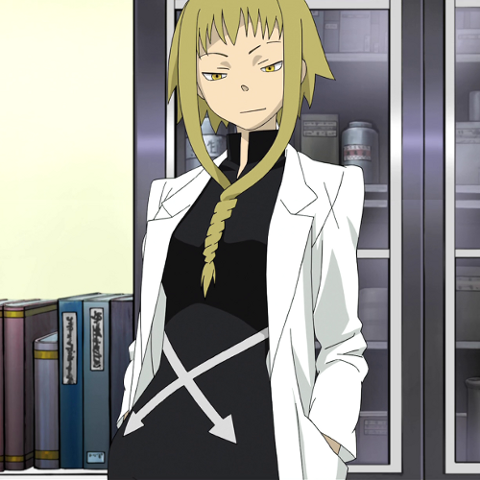
Even the way her hair is drawn is distinctive. Rather than following a conventional hairstyle, she has a section of hair brought forward and braided, giving her an unusual yet fashionable appearance.
It's another example of how Ohkubo manages to make even relatively small design choices contribute to a character's overall identity.
What I particularly appreciate is that her outfit manages to be stylish, sexy, and distinctive without sacrificing the mysterious personality that makes her so interesting. Her clothing incorporates an attractive silhouette while maintaining its witch-inspired aesthetic, making her immediately recognizable.
Her Alternative Outfits and What They Communicate About Her Personality.
Her alternative outfits are also worth appreciating. Although they aren't quite as visually extravagant as her standard appearance, they still retain her distinctive personality while emphasizing different aspects of her character.
For example, her nurse outfit, which she wears while undercover as Dr. Medusa, looks incredibly stylish.
I like how it emphasizes her sophistication, intelligence, and calculated nature. The outfit gives her a more professional and respectable appearance, which is particularly fitting considering that she uses her position as a medical professional to manipulate and deceive others.
There's an interesting contrast between the innocent and reassuring impression her medical appearance creates and the genuinely disturbing intentions behind it.
She looks like someone who should be trusted with people's well-being, yet she exploits that very trust to further her own objectives.
Her beautiful blue dress is another outfit I particularly appreciate.
Unlike her standard hoodie, which emphasizes her mysterious, witch-like, and unconventional appearance, the dress highlights her more glamorous and feminine side.
I particularly like how it accentuates her curvaceous figure, emphasizes her silhouette, and incorporates some skin exposure through its revealing back design. It's a beautiful outfit that manages to be both elegant and sexy while still feeling appropriate for Medusa's personality.
I appreciate that her alternative outfits don't simply change her appearance for the sake of variety. Each one emphasizes a different aspect of her character.
Her standard hooded outfit: Reinforces her mysterious, manipulative, and unconventional witch persona through its cat-like ears, occult-inspired symbols, and snake-themed imagery.
Her nurse outfit: Reflects her calculated intelligence, sophistication, and ability to disguise her true intentions behind a respectable professional appearance.
Her blue dress: Showcases her glamorous and feminine side while accentuating her attractive, curvaceous figure.
It's this combination of distinctive fashion, attractive body proportions, and personality-driven visual design that makes Medusa such a standout character for me.
Her Intelligence, Manipulation, and Psychological Cruelty.
However, what makes Medusa particularly fascinating isn't simply her appearance. It's her intelligence, manipulation, and psychological cruelty.
I find her ability to manipulate others both impressive and genuinely horrifying.
One particularly memorable example is her psychological manipulation of Dr. Franken Stein.
Medusa spends a significant portion of the story actively tempting and manipulating him. Rather than being a conventional romantic dynamic, their interactions are rooted in scientific obsession, psychological manipulation, and a mutual connection to the darker forces of madness.
Another particularly disturbing aspect of her character is how she manipulates and disciplines her own child, Crona.
Medusa is an exceptionally abusive mother, and one of the most disturbing aspects of their relationship is how she weaponizes basic necessities as a means of controlling Crona.
She explicitly withholds food and water as punishment when Crona fails to produce the results she desires.
Yet what's particularly disturbing is that she is also capable of praising Crona when they accomplish something she wants. For example, she rewards Crona by preparing their favorite food.
This combination of psychological abuse, conditional affection, and calculated manipulation makes their relationship particularly unsettling.
Medusa doesn't simply rely on physical intimidation; she systematically undermines Crona's emotional well-being and sense of self-worth to maintain control.
Her manipulation extends beyond her relationship with Crona, too.
One of the most interesting aspects of her character is how she exploits her position as a medical professional to gain access to her victims.
Exploiting her nurse persona: By pretending to be Dr. Medusa, she can examine students, Meisters, and Weapons without attracting suspicion. This gives her direct physical access to their bodies under the guise of routine medical examinations.
Monitoring Black Blood corruption: After Soul Eater Evans becomes infected with Ragnarok's Black Blood, Medusa uses medical examinations to monitor the progression of the corruption. While pretending to be a concerned physician, she secretly administers medication and pills designed to accelerate the Black Blood's influence and amplify fear.
I find this particularly fascinating because it demonstrates how she weaponizes positions of trust and authority.
Rather than simply overpowering her opponents, she exploits their vulnerabilities and manipulates them from within.
Of course, although manipulation is her preferred method of achieving her objectives, she isn't afraid to resort to force when necessary, as demonstrated by her coercion of Eruka.
Her fighting style is another aspect I appreciate.
Unlike characters such as Maka and Sid, who rely on weapons and conventional combat techniques, Medusa primarily relies on her powerful witch magic, the snakes concealed within her body, and her considerable hand-to-hand combat abilities.
Her hand gestures and poses during combat are particularly stylish, yet simultaneously intimidating and terrifying. They complement her character design while reinforcing just how dangerous she is.
I also like how her fighting style reflects her personality: calculating, unpredictable, and willing to exploit unconventional methods to defeat her opponents.
Ultimately, Medusa is my favorite character because she combines an incredibly distinctive appearance with an equally compelling personality.
Her standard character design is already fantastic, from her unusual hairstyle and snake-themed tattoos to her cat-eared hoodie covered in distinctive symbols.
Her alternative outfits, such as the beautiful blue dress that accentuates her curvaceous figure and the stylish nurse uniform that reflects her sophistication and intelligence, are equally enjoyable.
More importantly, her cunning, intelligence, psychological manipulation, and willingness to commit genuinely disturbing acts make her one of the most memorable antagonists in the series.
Final Thoughts.
Overall, Soul Eater is a series that immediately stood out to me because of its visual identity.
Its Halloween-inspired world, stylish gothic aesthetic, edgy fashion, and distinctive character designs give it an incredibly recognizable identity.
Whether it's the sinister crescent moon, the witch-inspired character designs, or the fashionable outfits worn by the cast, Atsushi Ohkubo has created a world that feels genuinely unique.
The characters are enjoyable, the fights are entertaining, and the humor provides plenty of memorable moments.
However, Medusa is undoubtedly the character who left the strongest impression on me. Her phenomenal character design, intelligence, manipulative personality, and psychological cruelty make her an incredibly fascinating antagonist.
The original Soul Eater anime, produced by Studio Bones, boasted exceptionally high-quality artwork and smooth, fluid animation, bringing the characters created by Atsushi Ohkubo beautifully to life.
With the rumors surrounding a potential anime remake, I genuinely hope we eventually get an adaptation that follows the original manga more faithfully.
I'd love to see Atsushi Ohkubo's complete story brought to the screen, preserving the distinctive visual style, character development, antagonists, and storytelling that make Soul Eater such an enjoyable series.
I'm definitely looking forward to the possibility of revisiting this world through a new adaptation! 👍
Ah, Susano'o! Yuuki Terumi's original form! 🔥🔥🔥
One of the things I particularly love about BlazBlue's storytelling is how closely the playable characters in the mainline games are connected to the overarching narrative. I think it's fantastic how many characters are foreshadowed and introduced into the story long before they actually become playable.
For example, Yuuki Terumi tells Hakumen that the armor had served as his body for a long time. This detail had already been revealed in Hazama's Arcade Mode in BlazBlue: Continuum Shift.
Additionally, both Makoto Nanaya and Tsubaki were already given significant roles in the Story Mode of BlazBlue: Calamity Trigger before eventually becoming playable characters in BlazBlue: Continuum Shift.Kokonoe, meanwhile, had been an important character deeply involved in the overarching narrative since the very beginning of the series, playing a prominent role in the story long before making her playable debut in BlazBlue: Chrono Phantasma.
This even applies to Trinity, one of the Six Heroes. I could go on and on with examples!
For the most part, nearly every character introduced as a playable character in a sequel had already appeared in the story of a previous installment. Even when they hadn't physically appeared, their names had at least been mentioned, establishing their existence within the world of the series.
I believe it was Toshimichi Mori's attention to these kinds of details that helped make BlazBlue not only a cohesive story but also one that felt carefully planned and thoughtfully constructed.
By introducing characters and foreshadowing their eventual roles long before they become playable, the series creates a much more interconnected world and gives its overarching narrative a stronger sense of continuity.
I'm genuinely looking forward to seeing what the future holds for this series! 👍
Full Metal Daemon Muramasa — A Masterpiece of Storytelling, Character Writing, and Character Design! 🔥🔥🔥
Namaniku ATK is truly a phenomenal character designer for a phenomenal story!
I recently finished playing through the visual novel Full Metal Daemon Muramasa, and for a multitude of reasons, I genuinely believe it is an absolute masterpiece.
First, one of the things I particularly love is its unique premise. An evil threat so overwhelmingly powerful that the protagonist must acquire power of his own to defeat it, even if doing so requires him to commit evil acts himself. The idea of having to become capable of committing evil in order to defeat evil is incredibly compelling.
For Kageaki, the people he kills are individuals he has deemed unworthy of living because of the danger they pose to society. However, wielding his cursed Tsurugi (sword armor), Muramasa, comes with a strict and tragic Law of Balance.
To use its power to slay evil individuals and oppressors, he must pay an equivalent price. In other words, for every evil person he kills, he must also take the life of someone good or someone he loves.
This curse traps Kageaki in an incredibly cruel cycle in which protecting the innocent or avenging them requires him to sacrifice the very people he holds dear. It fuels his intense self-loathing and overwhelming guilt, making him an exceptionally tragic protagonist.
More than anything, Kageaki himself wishes to achieve peace without resorting to violence.
We see this attitude demonstrated in Chapter One. Even when an innocent person is being threatened, Kageaki avoids resorting to violence and instead allows a thug to insult, physically abuse, and publicly humiliate him. If avoiding violence is possible, he is willing to swallow his pride and endure humiliation.
Despite this, even when he does his best and tries to act according to what he believes is right, his actions repeatedly lead to the deaths of people he holds dear.
The essence of Kageaki's suffering revolves around whether this cruel mathematical balance between good and evil is genuinely a legitimate moral law or simply a cruel trap that he must somehow find a way to overcome.
Another aspect I particularly appreciate is how Kageaki's attitude toward the Law of Balance changes depending on the route. Each route presents a different conclusion to his struggle with the curse, shaped by his interactions and experiences with the people around him.
For example, in the Hero Route with Ayane Ichijou, Kageaki ultimately concludes that he must reject the Law of Balance. In contrast, in the Nemesis Route with Kane Otori, he comes to accept it. By the end of the Final Route, he fully embraces the law and makes it his own.
I find this particularly fascinating because it demonstrates just how significantly his interactions with different characters, especially the heroines of each route, influence his philosophy and worldview.
He is not someone who stubbornly clings to the same beliefs. Instead, he constantly questions his convictions, has his perspective on the world challenged, and sometimes fundamentally changes the way he thinks.
This brings me to another reason I love Kageaki as a protagonist: his introspective nature.
One particularly memorable example is his attitude toward Shogun Moriuji Ashikaga.
Kageaki understands that Moriuji is a dictator who treats his citizens harshly. However, even after accepting the mission to assassinate him, Kageaki questions whether doing so is genuinely the best course of action. What if the people of the West are just as oppressive? If that is the case, wouldn't it potentially be better to allow Moriuji to continue ruling?
I absolutely love this level of introspection.
Kageaki isn't a simplistic idealist who believes that eliminating a tyrant will automatically make the world a better place. He understands the limitations of his own power. Even though he possesses the ability to wield Muramasa, he isn't powerful enough to defeat an entire army. Acting recklessly could result in not only his own death but also the deaths of those who follow him.
That is precisely why he approaches the situation as a realist, considering which of the available options represents the lesser of two evils.
I believe this combination of pragmatism, realism, and introspection is what makes Kageaki such a refreshing and compelling protagonist.
I rarely encounter protagonists who think this carefully about their actions. Many protagonists would instinctively attempt to stop evil whenever they encountered it, without necessarily considering the broader consequences of their actions or whether they even possess the power to accomplish their goals.
Kageaki, on the other hand, understands that good intentions alone do not necessarily produce good outcomes.
And Kageaki isn't the only character who possesses this level of complexity.
The heroines in each route also have their own distinct philosophies, personal development, and struggles shaped by their upbringing and experiences.
I particularly appreciate that writer Ittetsu Narahara devoted just as much time and effort to developing their characters as he did Kageaki. They aren't simply characters who exist to facilitate the protagonist's development. Each possesses her own motivations, beliefs, and values.
I also absolutely love how much attention the story gives to politics and geopolitics. In particular, I appreciate how rationally and realistically the characters respond to the circumstances surrounding them.
One thing I appreciate is that, despite the protagonist being Japanese, the story doesn't portray Japanese society as morally superior to Western society.
There are just as many racist and despicable individuals among the Japanese characters as there are among Westerners. Even characters associated with General Headquarters (GHQ) display these attitudes.
One example is the thug who bullies Yuhi Nitta and his friends. Another is Shogun Moriuji Ashikaga himself, who possesses racist beliefs.
Of course, Western society has its own share of racism and prejudice. One prominent example is George Gargett.
I believe this portrayal communicates a very important message: regardless of which country someone comes from, there will always be individuals who possess abhorrent beliefs, prejudices, and malicious intentions.
No country has a monopoly on virtue or evil.
Another aspect I particularly appreciate is how Narahara gives many of his antagonists understandable motivations and rational reasons for their actions.
Take Clive Cannon, for example.
Despite being an antagonist, he demonstrates respect toward Kanae and Kageaki after they board his aircraft and break through his forces. Although the two ultimately fail to prevent the nuclear bomb from being dropped, resulting in the deaths of thousands of people, Clive still acknowledges their determination and capabilities.
I find this particularly interesting because it demonstrates that his conflict with them isn't necessarily motivated by personal hatred. He is acting in pursuit of what he believes will bring greatness to his homeland, America.
Another example is Suguru Oji, who appears in Chapter Three.
He causes a major accident that results in the driver's death. However, his actions aren't motivated by hatred toward the victim personally. Instead, he does it to ensure that his sister wins the race and to obtain the glory and recognition he has worked so hard to achieve.
The reality is that most people don't commit terrible acts simply for the sake of being evil.
More often than not, people do terrible things because they believe those actions will produce positive outcomes for themselves or the people they care about.
Of course, there are exceptions, such as Ichizo Sorimachi. Nevertheless, I greatly appreciate how the story explores the more complicated motivations behind human behavior.
Even George, despite his racist beliefs and conviction in Western superiority over the Japanese, has people he genuinely loves and wants to protect, particularly his wife and son.
I'm genuinely glad Narahara chose to explore these dimensions of his antagonists.
Rather than portraying them as one-dimensional villains who exist solely to oppose the protagonist, he makes them feel considerably more realistic and human.
I also greatly appreciate how the story incorporates elements such as violence, abuse, and slavery. These are harsh realities of war, and I believe they are particularly important elements in a fictional world inspired by the 1920s, 1930s, and 1940s, which serves as the setting for this story. Such atrocities were tragically widespread throughout the world, becoming especially serious issues in the aftermath of the World Wars.
I believe incorporating these darker aspects of human history into the narrative adds another layer of realism to the worldbuilding, making the setting feel much more believable and immersive. At the same time, it does an excellent job of reminding us just how brutal and unforgiving war can truly be.
Namaniku ATK's phenomenal character designs.
Finally, I absolutely love Namaniku ATK's character designs!
The characters are not only vibrant and visually appealing, but their designs also complement their individual personalities, backgrounds, and overall presence remarkably well.
Kageaki, for example, is fundamentally a good person, but his rather drab appearance and intimidating demeanor can make him seem genuinely terrifying to others. His outward appearance reflects the burden he carries and the frightening nature of the power he wields.
Kanae Otori, on the other hand, is a beautiful woman who places considerable importance on her appearance, something that is reflected in her wardrobe. She frequently wears elegant, high-end outfits that complement her beauty and sophisticated personality.
I also appreciate the considerable variety in the characters' body types.
Ichijou has a petite and slender frame, with a relatively small bust. Kanae, who has Western ancestry, is considerably taller than Ichijou, which makes sense given the differences in average height between Japanese and Western populations.
Furthermore, she has a much more voluptuous figure and a large bust. I particularly love how Namaniku ATK designs her outfits to emphasize her curves and accentuate her feminine figure.
However, my absolute favorite character design is undoubtedly Chachamaru!
She has beautiful, glowing hair, and her outfits include some genuinely creative designs. I particularly love the disguise she wears with her glasses.
I also absolutely love her military uniform. It does a fantastic job of highlighting her strong figure while giving her a distinctive and recognizable appearance.
Her body type is another aspect I appreciate.
Although she has a slender figure, she isn't as petite or delicate as Ichijou, nor does she have a small bust. At the same time, she isn't as voluptuous as Kanae. She occupies a nice middle ground between the two, and I appreciate how her outfits incorporate a tasteful amount of skin exposure while maintaining her distinctive aesthetic.
Her personality is just as compelling as her character design.
I absolutely love the contrast between her normally cheerful, easygoing, and playful personality, where she enjoys joking around and teasing others, and her much more calculating, cunning, and manipulative side.
Chachamaru is an exceptionally intelligent woman who, because of her harsh upbringing, is perfectly capable of committing ruthless and despicable acts to accomplish her goals.
Society abandoned her from birth, and she endured an extremely difficult upbringing. She even faced assassination attempts from members of her own family. These experiences, combined with the advice she received from Hikaru during their chance encounter, shaped her belief that might makes right.
As a result, she is willing to do whatever it takes to protect herself, secure her position, and remain on top.
I find this worldview particularly compelling because it is rooted in her personal experiences rather than being an arbitrary personality trait.
I also find the humor surrounding her character incredibly entertaining.
She enjoys joking around and teasing other characters, even going so far as to casually make fun of Japan's dictatorial Shogun and his son.
These interactions demonstrate just how bold and carefree she can be, even while simultaneously manipulating situations behind the scenes.
Furthermore, her voice actress, Yuuki Kajita, deserves enormous praise.
She does a phenomenal job portraying the contrast between Chachamaru's cheerful, easygoing personality and her much more cunning and manipulative side. Her ability to transition between these different aspects of Chachamaru's personality makes the character even more enjoyable.
My only real disappointment with Chachamaru's route is that I wish she had received a more substantial ending, comparable to those of the other heroines.
Her ending feels somewhat abrupt, especially considering how engaging the events leading up to it are.
In particular, seeing her intelligence, scheming, and manipulative abilities put on full display while Kageaki works so closely alongside her was incredibly entertaining.
Another thing I wish the visual novel had included was a proper intimate scene with Subaru's mother.
Considering that the other heroines, including Kanae's maid, receive intimate scenes, I was surprised that she didn't receive one herself.
This is especially true given how strongly the story implies their relationship and how it becomes an important turning point that leads to Hikaru's birth.
Additionally, her character design is incredibly sexy.
Her figure is even more voluptuous and curvaceous than Kanae's, and her bust might very well be the largest in the entire story.
Considering the implications surrounding their relationship, it's a shame that we never received an intimate scene between them.
Of course, there may have been production time constraints and other limitations, and I understand that these things happen sometimes.
Final thoughts.
Overall, Full Metal Daemon Muramasa is a phenomenal visual novel because of its deeply introspective protagonist, equally complex heroines, fascinating political and geopolitical conflicts, believable character motivations, and incredibly memorable character designs.
Kageaki is one of the most interesting protagonists I have encountered in fiction.
His pragmatism, introspection, self-loathing, and willingness to question his own beliefs make him an exceptionally compelling character.
The heroines are equally fascinating. Each possesses her own philosophy, experiences, and motivations, all of which help shape the direction of their respective routes.
I sincerely want to praise Narahara for creating such a multilayered story and giving its characters the depth and attention they deserve.
And Namaniku ATK deserves just as much appreciation for bringing these characters to life through such phenomenal designs.
The vibrant colors, diverse body types, beautiful outfits, and distinctive visual identities make the cast incredibly memorable.
Chachamaru remains my favorite character design, and her personality only makes her even more enjoyable.
I don't normally write something this lengthy about a visual novel. However, I genuinely believe Full Metal Daemon Muramasa excels in so many different areas that it deserves every bit of praise.
Personally, I consider it the greatest visual novel ever made.
Although I couldn't find a Twitter account through which I could directly express my appreciation to Ittetsu Narahara for his incredible writing, I can at least express my gratitude and admiration toward the artist responsible for bringing his characters to life.
Namaniku ATK, thank you so much for designing such phenomenal and unforgettable characters!
And if possible, I would be incredibly happy if you could also let Ittetsu Narahara know that the two of you created something truly special.
I hope that someday we will receive a sequel to this masterpiece. If that happens, I sincerely hope both Namaniku ATK and Ittetsu Narahara will be involved.
Honestly, I simply cannot imagine a sequel to Full Metal Daemon Muramasa without these two being involved! 👍