Good morning & Happy Saturday!
During the Middle Ages, before the existence of mortuaries and when the majority of people passed away at home. When someone died, their body was placed on a bier and transported to the lychgate, a significant structure at the entrance of the churchyard or cemetery.
There, the departed would rest, safeguarded from potential bodysnatchers, until the funeral service, which might take place a day or two later.
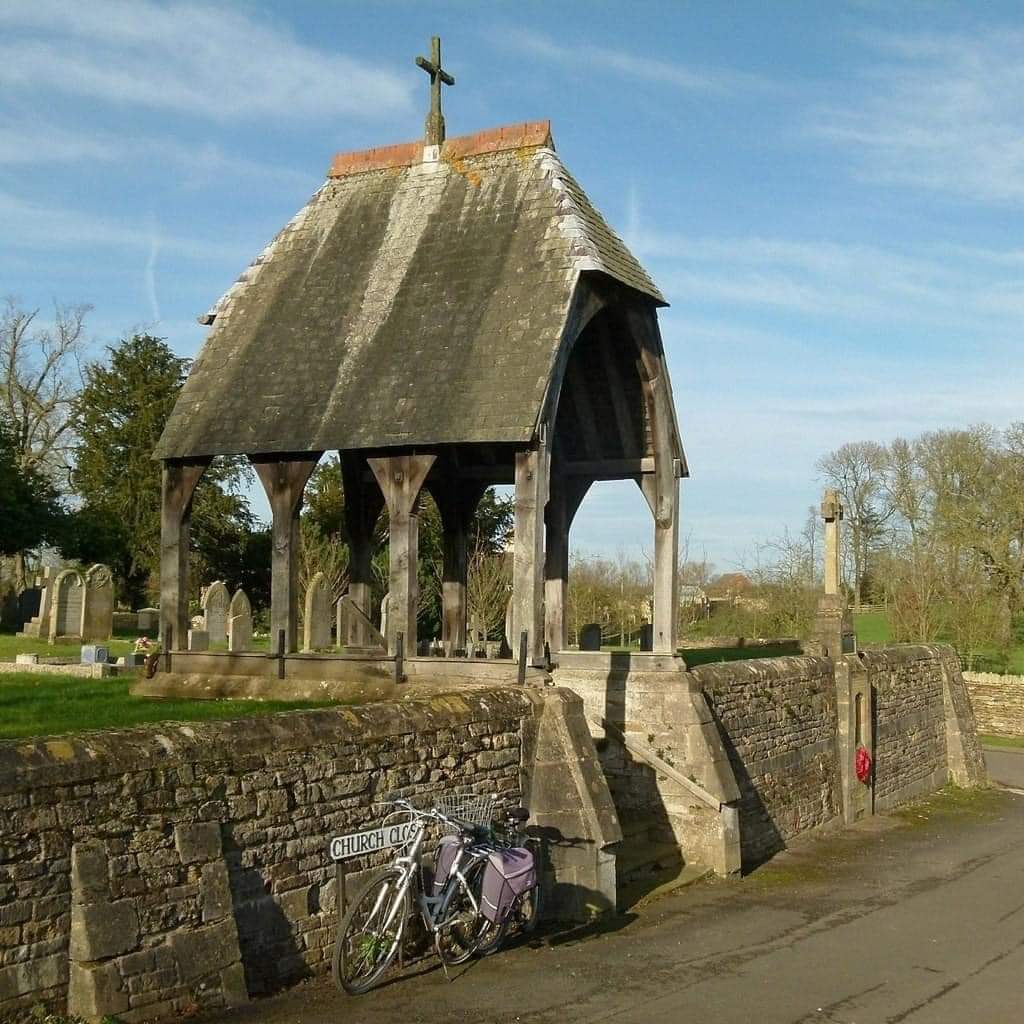
A Lych gate, also spelled "lodge gate" or "lich gate," is a traditional architectural structure often found at the entrance of churchyards or cemeteries in the United Kingdom and some other English-speaking countries.
The name "Lych" is believed to have originated from the Old English word "lic," meaning corpse or body, as the gate was historically associated with funeral processions and the dead.
Lych gates typically consist of a roofed structure with two side walls or wooden posts on either side, forming a narrow passageway or gateway. The gate usually serves as the main entrance into the churchyard or cemetery, and its design can vary in architectural style, reflecting the local traditions and historical periods.
The primary purpose of a Lych gate is to provide shelter for mourners and the coffin while the funeral party waits for the clergy to arrive or conducts the initial part of the funeral service.
It also symbolizes the transition between the outside world and the sacred grounds of the churchyard, often marked with a symbolic religious significance.
Many Lych gates are beautifully adorned with intricate carvings, engravings, or decorative elements, adding to their aesthetic appeal and cultural significance.
Over the centuries, Lych gates have become symbols of the close connection between the church and the local community, as well as a reminder of the passage of time and the continuity of traditions in rural areas.