The 2026 #AI boom looks less like a stable “new normal” and more like a classic bubble sustained by politics and narratives rather than cash flows.
In my last article of the year, I argue that the core problem is a growing #mismatch between the vast capital flowing into AI models and applications and the limited, highly concentrated profits actually being generated – mostly by chip vendors and cloud hyperscalers. At the same time, cases like #DeepSeek show that open, cheaper models are already eroding the supposed moats of proprietary leaders, putting further pressure on their business models.
What keeps the party going is an alignment of interests: AI‑driven capex and stock‑market gains are supporting the US economy under President Trump, while hashtag#BigTech needs the AI narrative to justify massive, loss‑making investments. The key question for 2026 is not whether there is an AI bubble, but how long this fragile equilibrium can last before valuations and cash flows are forced back into line.
Here the full article and best wishes for 2026! https://t.co/Tp6FWGaVjp
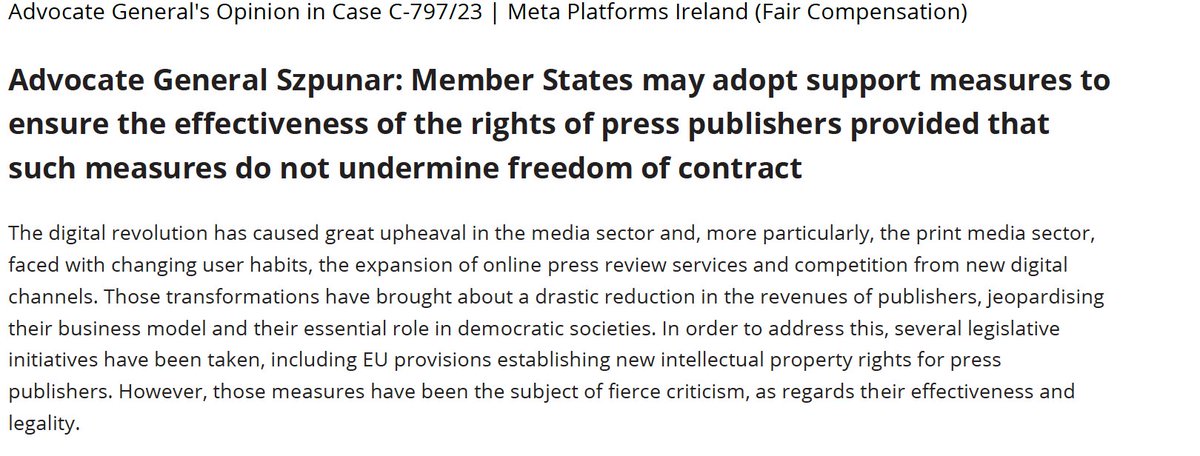
The Court's Advocate General #Szpunar is open to a creative interpretation of the Copyright Directive, aiming to expand Member States' implementation powers: in this case, the Italian model allows the regulator, #AGCOM, to impose negotiations between the parties—publishers and news aggregators—and, ultimately, even agreement on the price. This is a genuine suggestion to the Court, but it seems to entail a complete rewriting of the rules, so I don't know how far the Luxembourg judges will go. In any case, it's clear the tide has turned, especially with Trump's return to the White House and the fear of American companies being exploited for the purposes of the new US administration. Just a few months ago, such a decision seemed unthinkable, but now it's open to discussion, thanks to geopolitics.
Under US #Copyright is not enough to prevent the use of content in machine learning. To avoid content to be downloaded and used by a Foundation Model, on should install a #robotstxt, or introduce a specific variant in robots.txt
https://t.co/6rCC9fZfec
#Cloud is like a tap of water. What if at some moment the tap is closed?
Several years ago, specifically as early as 2015, I began raising the issue of digital sovereignty with European institutions, because I was assisting a small Italian cloud provider which was awarded a contract with the Commission. @ivanbotta and #MarianoCunietti remember well. At that time, the concept was largely overlooked, despite the fact that many EU bodies and organizations were already relying on cloud services provided by major American hyperscalers such as Amazon, Microsoft, and Google.
Back then, the European debate on #digitalsovereignty was only in its initial "awareness phase." While there was growing recognition of Europe’s dependence on foreign technology providers, concrete policy responses or strategic initiatives were still lacking. The European Commission’s first cloud strategy was approved in 2014 but initiatives primarily focused on enabling cloud adoption for efficiency and innovation, not on sovereignty or strategic autonomy.
Despite early warnings—including my own—about the risks of ceding control over critical data and infrastructure to non-European providers, the dominant approach was to embrace the benefits of cloud computing, such as lower costs and scalability, without fully considering the implications for European control over data and compliance with EU law. The market was, and remains, heavily dominated by American hyperscalers, who today control around 70% of the EU cloud market.
It was only in the following years, especially after 2018, that the notion of digital sovereignty became a top priority for the EU (culminating in high-profile initiatives such like GAIA-X and others). These efforts were driven by a belated realization of the strategic and geopolitical importance of controlling Europe’s digital infrastructure, as well as growing concerns about privacy, security, and the extraterritorial reach of foreign laws over European data.
https://t.co/DZkAW1y3nQ
I am really not surprised of the declarations of Commissioner Virkkunen regarding the fact that in the #telecom sector “not only size matter”. In a network business what really matters is the density of population, therefore a good business plan in a well-populated area has good chance to be profitable, irrespective of the size of the company. Accordingly, in a scarce populated area investments may need public help - again, it does not matter if you are a small or a big operator. As long as telecoms continue to operate within national boundaries, this is the reality. It is good to see that the new commissioner looks focussing on facts and less on (financial) narratives. This is very important for the next year to come, because the review of the telecom framework needs to be based on facts
https://t.co/jZRyMj6aip
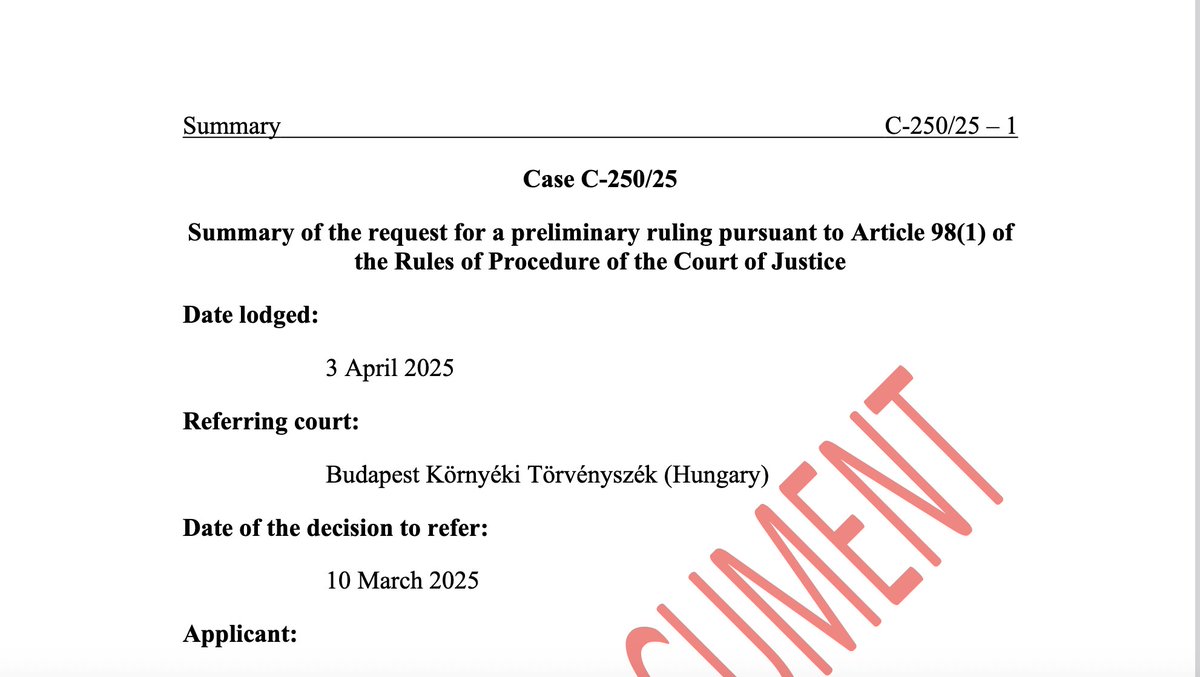
A Hungarian court is referring an interesting #copyright question regarding publishers and news aggregators, focussing on #ancillaryrights and #AI. The question is about summaries provided by Google’s Gemini chatbot, whether they constitute a use of publishers’ news publication under Article 15 Press Publishers’ Right of the #DCDSM, thereby requiring consent and compensation.
So, the US Congress is passing a kind of #AI moratorium, preventing US States to legislate on AI for the next 10 years. It could be seen as a wise move, to avoid the proliferation of discordant national laws, unless it hides instead the purpose of preventing any regulation on AI, both at US national and federal level. Even the European #AIACT is designed to harmonize legislation, but it does not prevent Member States from legislating on issues not covered. https://t.co/Ymtyk4cLaR
Il tema delle #fusioni tra operatori mobili è da sempre prioritario nel dibattito sulle #telecomunicazioni. Ho esaminato la letteratura economica che ha analizzato le fusioni avvenute nel settore mobile europeo dal 2012 in poi ed il risultato porta a ridimensionare determinati miti e narrative a cui però alcuni stakeholder tengono molto:
- se la #DGCOMP miri, in modo politico, ad un numero preciso di MNO nel mercato (4 o 3);
- se nell’analisi #antitrust contino soprattuto i prezzi o altro (sostenibilità, investimenti ecc);
- quale sia stato fino ad ora l’impatto delle fusioni sugli investimenti.
Si tratta di un’analisi per che niente preclude ad un futuro consolidamento nel settore italiano, ma che spero contribuisca ad indirizzare il dibattito sui dati pertinenti, e meno sulle narrative.
Il mio articolo per Agenda Digitale
https://t.co/aeUNmwGxEa
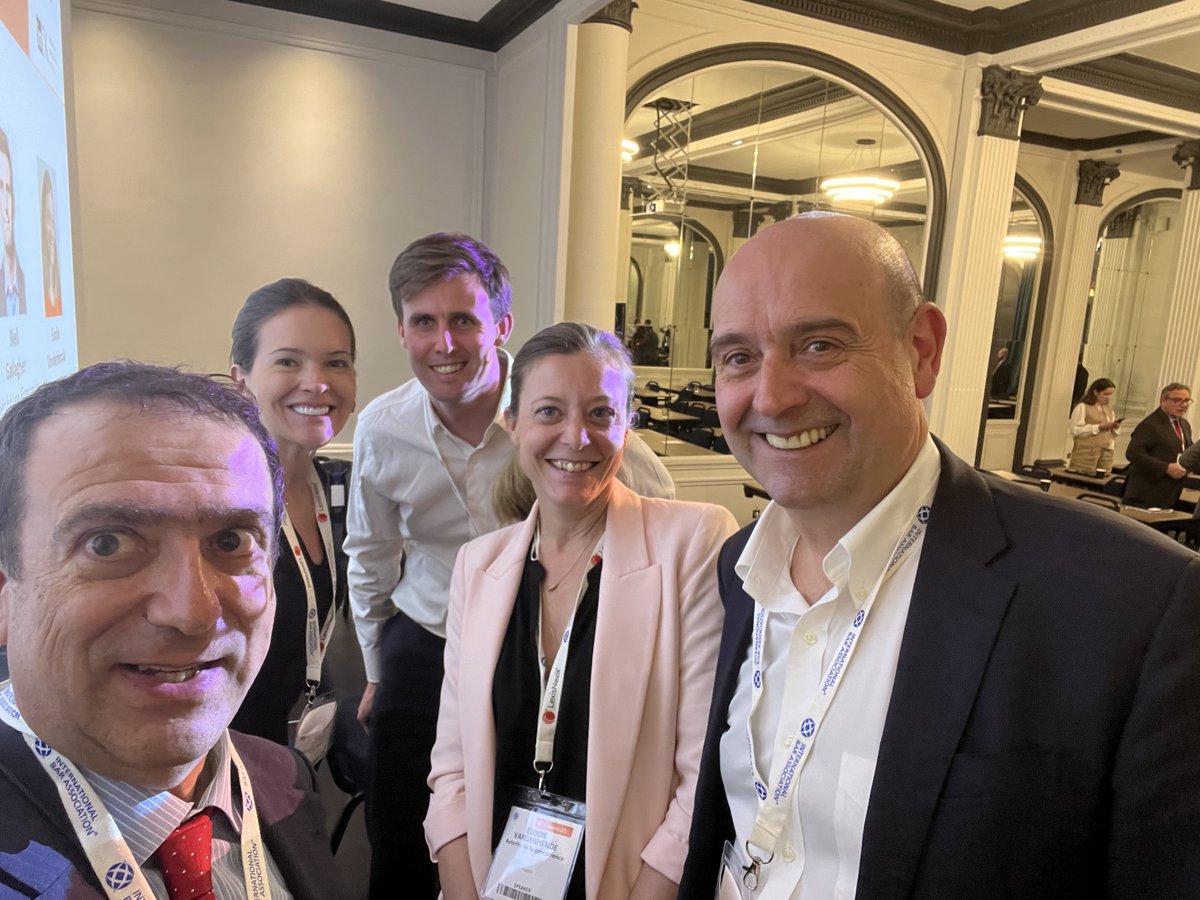
At #IBA Communications Conference in Paris we hold a very interesting debate about #cloud and #competition. Many thanks to @LeonorCordovil who coordinated the panel and to @AntonioBaldassarra @NeilGallagher and @ElodieVandenhende who made the discussion vibrant. Amongst the topics we focus on:
- How can antitrust enforcers address lock-in and data portability issues in cloud infrastructure markets dominated by a few large players?
- To what extent should bundling cloud services with other digital tools (like productivity software or AI models) be considered an anticompetitive practice, or even relevant for the DMA?
- Do pricing practices such as egress fees and long-term cloud credits constitute barriers to entry or switching, and should they be subject to antitrust scrutiny or ex ante regulation?
- Is there a need for ex ante regulation or structural separation in the cloud industry, as it happens in telecom markets, or similar to proposals for digital gatekeepers in the EU DMA?
- Are current competition frameworks equipped to address market power that stems from control over cloud infrastructure or software layers, rather than from end-user services?
- Do you see the borders between cloud and telecom markets to blur, as currently suggested by the European Commission and if so, what would be the consequences in terms of antitrust or regulatory scrutiny?
- How should policymakers balance concerns over cloud market concentration with geopolitical goals such as digital sovereignty and national security?