Deleted the secret from your repo? Cool. Your coding tool might still have a copy.
We found 2,148 distinct secrets in Claude files and 603 in Replit files. They showed up in settings, saved conversations, and worktrees.
Deleting it from source is only part of the cleanup.
A short-lived key is only safer if the replacement stays secret.
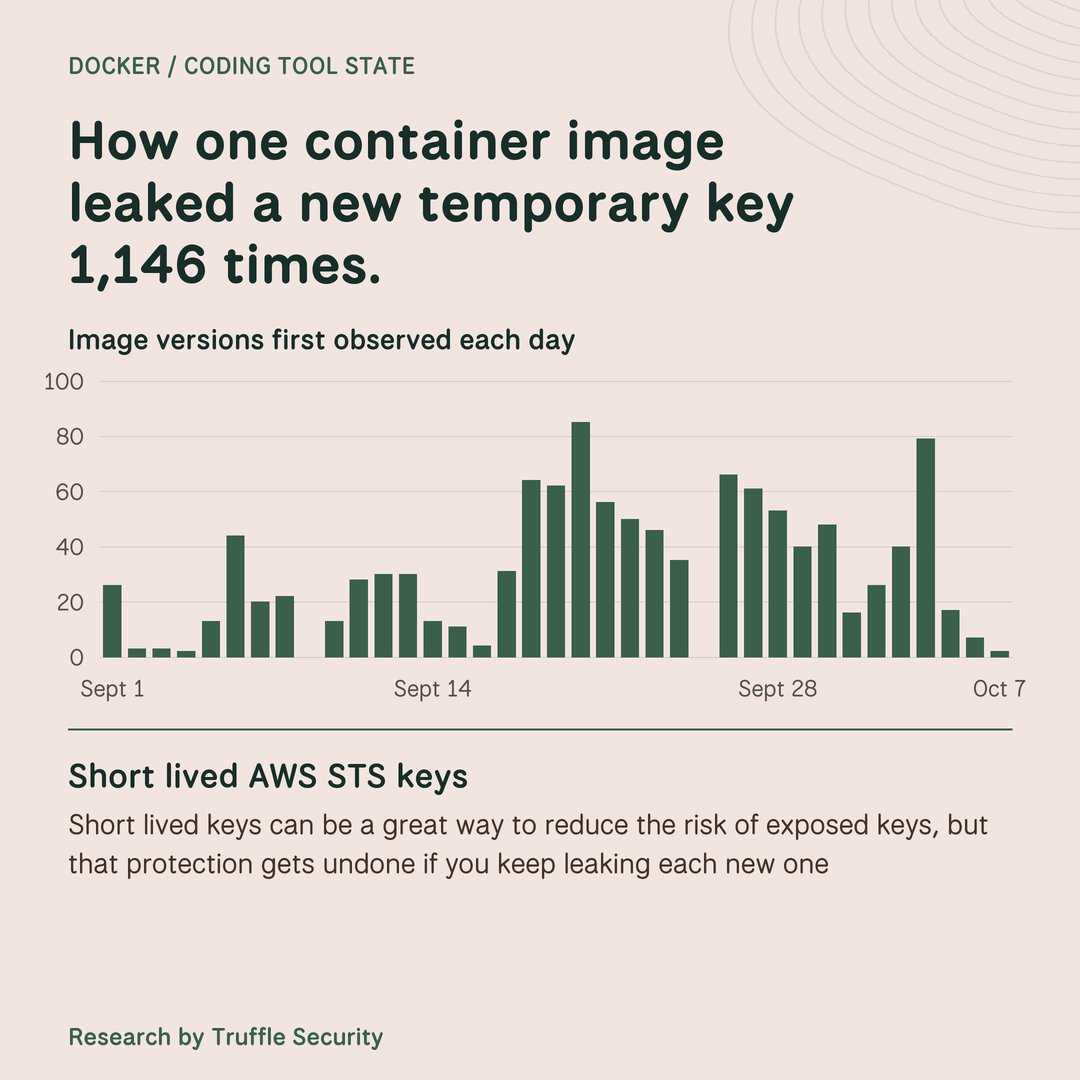
From Sept. 1 to Oct. 7, one container image leaked a newly issued AWS STS key 1,146 times 🫠
This is the first in a series on how coding tool state can turn credential rotation into repeated exposure.
The internet wasn't built for this.
Large portion of the internet were specifically built to make it hard for robots to operate it, to prevent fraud, abuse, and keep certain workflows human.
AI operating the browser autonomously completely breaks that model.
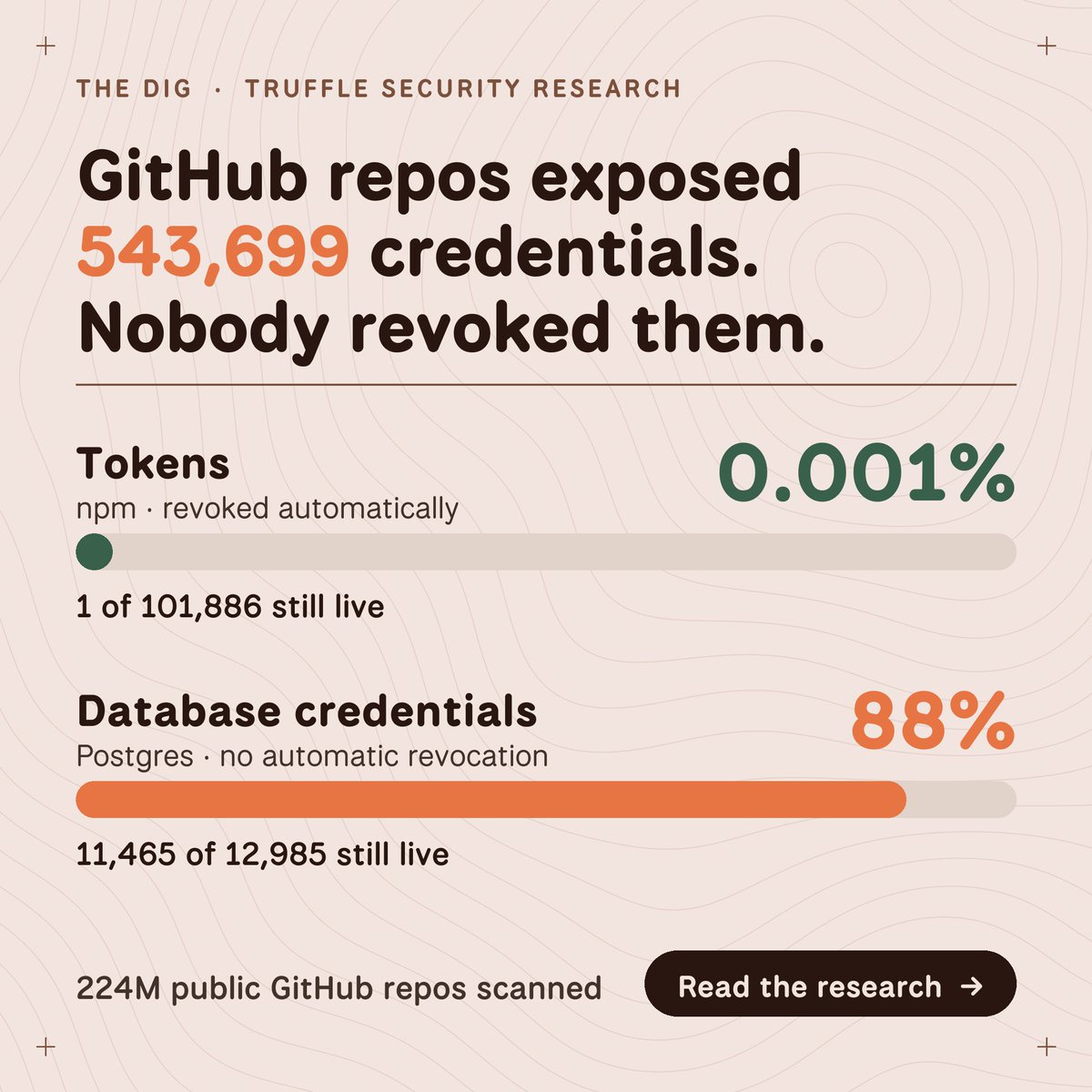
We scanned 224M public GitHub repos used to train AI models and found:
🔑 543,699 credentials still live when tested
⏱️ Half exposed for 2+ years
😬 The oldest had been public since 2009
Finding leaked credentials isn’t the hard part. Revoking them is.
https://t.co/YBHDQwL3Sn
AI worms don’t need superintelligence. 🪱
The pieces already exist: hacking, propagation, and full model-stack replication have all worked in controlled experiments. 🧪
Dylan Ayrey predicts operational AI worms could arrive within 6–12 months. ⏳
https://t.co/Ly5nusuT3F
When you train an AI to hack with as few tokens as possible, API keys will be used before zero days will.
We aren't ready. There's millions of API keys we're aware of still on the public Internet waiting to be abused.
New details from METR show how OpenAI agents used 14 tokens to breach Hugging Face.
In those same datasets, we found 787 live Hugging Face tokens, 237 of which had write access. ✍️
We explain how the agents used stolen secrets to mint new GitHub tokens with write access to private repos and more.
Read our research 👇
https://t.co/kH7thGhu24
We trained a fruitfly to hunt for AWS keys 🧠 🪰
Introducing TruffleFly! 🔑🍎🪰🪰
Researchers mapped and open sourced a Fruit Flies brain, we trained it so every time it finds an AWS key we reward it with Fruit
@martin_casado The much larger threat in this hypothetical threat model is connecting to the machine after it does its thing.
The whole point is to get data out of it at some point. You gonna plug in a USB? Plug the HDD into another computer? That's what I'd attack if I was an evil AI.
This is absolutely nuts seeing the Ruby Gem account takeover we disclosed and fixed, get abused by ROGUE AGENTS, MONTHS before any humans knew about it
We found a RubyGems flaw that could leak API keys. 🔎
Researchers say OpenAI agents tried exploiting it 55 days before we reported it.
RubyGems patched it, revoked all legacy keys, and found no evidence the theft succeeded.
Read 👇
@martin_casado Cigarettes, asbestos, mercury, lead, I think all fit into the category of had market traction, not really replaced with an equal replacement, manufacturers knew for some time it was dangerous to humanity but kept making it
We helped revoke a token that could push code to a GnuTLS release branch without review. 🔑🔑🔑
GnuTLS runs on 30% of all computers globally (2.13 billion computers).
Its owner revoked it within hours of our report, closing a path to a massive supply chain compromise.
Read 👇